Insulation is one of those things you never think about until your heating or cooling bill arrives and makes you wince. Unlike a leaky faucet or a drafty window, failing or insufficient insulation is invisible. It hides in your attic, behind your walls, and under your floors, quietly letting conditioned air escape while your HVAC system works overtime to compensate. The Department of Energy estimates that 90% of U.S. homes are under-insulated, which means there is a very good chance yours is too.
The good news is that you do not need an energy auditor or a thermal imaging camera to get a strong sense of whether your insulation is doing its job. A few simple tests, a ruler, and about 45 minutes of your time can tell you a lot. Knowing what to look for before you call anyone means you walk into any contractor conversation informed and ready, which also helps you avoid overpaying.
This guide walks you through a practical, room-by-room self-inspection process. You will learn the physical signs of poor insulation, how to check your attic depth with nothing but a ruler, how to feel for temperature differences that reveal insulation gaps, and when the findings actually justify a professional upgrade. Real payback numbers and savings percentages are included so you can decide whether action makes financial sense for your situation.
What You’ll Need
Click on an item below to shop for the recommended items for this recipe on Amazon.
As an Amazon Associate, we earn from qualifying purchases.
How to Do It
- Check your energy bills: Pull your last 12 months of utility bills and calculate your cost per square foot of heated or cooled space. If you are paying more than $1.50 per square foot annually in a moderate climate, poor insulation or air sealing is likely a contributing factor.
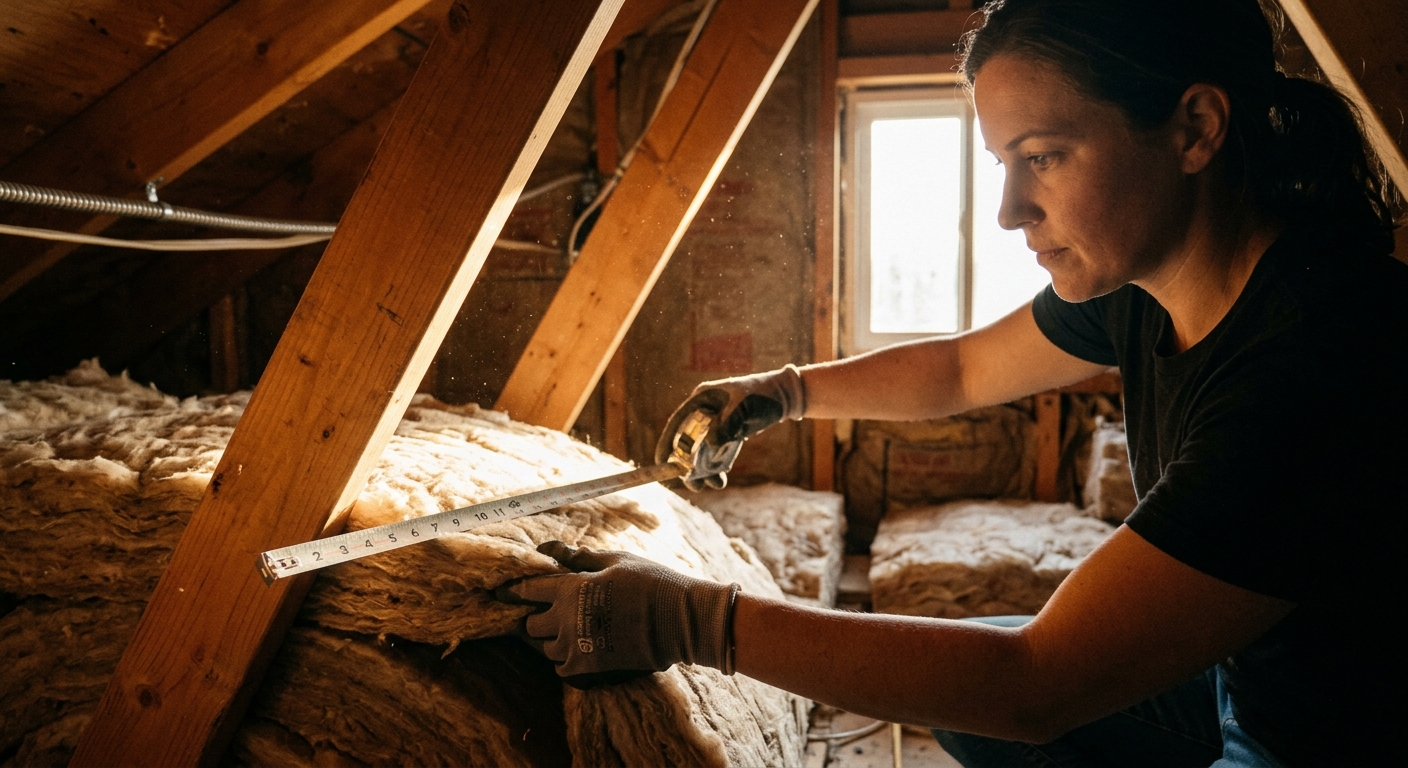
- Do the attic ruler test: Locate your attic access hatch, put on a dust mask, and use a ruler to measure the depth of insulation on the attic floor. Fiberglass batts under 10 inches or blown-in insulation under 12 inches likely falls below R-30, which is under the DOE minimum recommendation for most U.S. climate zones.
- Feel your ceilings and exterior walls: On a cold winter day or a hot summer afternoon, place your open palm on interior ceiling surfaces and exterior-facing walls. If they feel noticeably colder or warmer than interior walls, the insulation in that area is inadequate or missing.
- Inspect the attic hatch itself: Push the hatch open and check whether it has any insulation attached to its back surface. Uninsulated hatches are one of the most common and overlooked thermal bypasses in a home, effectively punching a hole through your insulation layer.
- Look for ice dams in winter photos or memories: If you have ever noticed thick ridges of ice forming at your roof eaves in winter while your neighbors’ roofs stayed clear, that is a classic sign of heat escaping through an under-insulated attic and melting snow unevenly.
- Note rooms that never feel right: Write down which rooms are hardest to heat or cool. Rooms above garages, bonus rooms over unconditioned spaces, and rooms with cathedral ceilings are the most frequent problem zones and the most likely candidates for insulation gaps.
- Insulate and weatherstrip the attic hatch: Cut rigid foam board insulation (2-inch polyisocyanurate, R-13) to fit the top of the hatch door and attach it with construction adhesive. Add foam weatherstripping around the frame perimeter to seal the air gap. Total cost is under $30 and payback is nearly immediate.
- Seal attic floor penetrations before adding insulation: Use a can of low-expansion spray foam to seal gaps around recessed light housings (use fire-rated foam only), plumbing stacks, and wiring penetrations. These gaps are the primary source of stack-effect air leakage and should always be sealed before adding insulation on top.
- Add blown-in insulation to bring attic up to R-38 minimum: Most home improvement stores offer free rental of a blower machine when you purchase a minimum number of bags of blown-in insulation (typically 10 to 15 bags). For a 1,200 square foot attic, expect to use 20 to 35 bags of fiberglass at roughly $8 to $12 per bag to go from R-11 to R-38.
- Add rigid foam insulation to the attic hatch surround: Build a simple foam box or insulated cover that sits over the hatch from inside the attic. Pre-made attic tent covers are available for $50 to $80 and bring the hatch assembly to approximately R-30.
- Check and insulate the rim joist in the basement or crawlspace: The rim joist is the band of framing at the top of your foundation walls. Cut rigid foam to fit snugly into each joist bay and seal the edges with spray foam. This area is responsible for up to 15% of whole-house heat loss in older homes and is one of the easiest and most impactful DIY fixes.
- Schedule a certified home energy audit with a BPI-certified auditor or through your utility company’s program. Many utilities offer subsidized audits for $100 to $150. The auditor will use a blower door test and infrared camera to map every insulation gap and air leak in the building envelope.
- Review the audit report and prioritize upgrades by return on investment. Attic insulation and air sealing almost always rank first, followed by basement rim joists, crawlspace floors, and knee walls in finished attics.
- Get three quotes from insulation contractors for the scope of work identified in the audit. Ask each contractor to specify the R-value being installed, the material type (blown cellulose vs. fiberglass vs. spray foam), and whether air sealing is included in the bid.
- Verify contractor credentials and apply for rebates before work begins. Many utility and state rebate programs require pre-approval or that the contractor be on an approved list. Submitting after the fact can disqualify you from receiving the rebate.
- After installation, request documentation including the installed R-value, total square footage treated, and any blower door test results if re-testing was done. This paperwork supports future home sale disclosures and rebate applications.
Why It Works: The Benefits
Upgrading an under-insulated attic from R-11 to R-38 can cut heating and cooling costs by 15 to 30% annually, translating to $200 to $600 per year for a typical 2,000 square foot home in a climate with cold winters.
Proper insulation eliminates the cold spots, drafty corners, and hot upstairs bedrooms that make certain rooms unusable in extreme weather. Rooms maintain temperature within 2 to 3 degrees of your thermostat setting rather than swinging 8 to 12 degrees.
When your home holds conditioned air properly, your heating and cooling equipment runs fewer cycles. This can extend system lifespan by 3 to 5 years and reduce maintenance costs meaningfully over time.
Insulation gaps allow warm humid air to contact cold surfaces inside walls and ceilings, creating condensation that leads to mold and rot. Adequate insulation keeps surface temperatures above the dew point, reducing moisture-related damage.
Homes with documented energy efficiency upgrades sell for 2.7% more on average according to the Lawrence Berkeley National Laboratory, and buyers increasingly request energy audit reports before closing.
💰 Savings Impact by Action
Upgrading attic insulation from R-11 to R-38 reduces annual heating and cooling costs by 15 to 25% according to DOE data.
Sealing attic floor penetrations and bypasses before adding insulation captures an additional 10 to 15% reduction in heat loss that insulation alone cannot address.
Insulating and sealing basement rim joists with rigid foam and spray foam addresses up to 12 to 15% of total whole-house heat loss in homes with uninsulated foundations.
Insulating an uninsulated attic hatch to R-30 eliminates a concentrated bypass that can account for 3 to 5% of total heating loss despite covering less than 10 square feet.
Adding blown-in insulation to empty wall cavities in a pre-1980 home reduces wall heat transfer by 18 to 22% and dramatically improves room comfort near exterior walls.
🏠 Key Concepts Explained
The Science Behind It
Heat always moves from warm areas to cold ones, never the other way around. In winter, the warmth you have paid to put into your home is constantly trying to escape through your walls, ceiling, floor, and every gap in between. Insulation works by trapping millions of tiny pockets of air inside its fibers or foam cells. Air is a poor conductor of heat, so those trapped pockets force heat to take a much longer and slower path through the material than it would through solid wood, concrete, or drywall. The R-value rating is simply a standardized measurement of how well a material resists that heat flow per inch of thickness.
The reason attic insulation matters so much comes down to two physics principles working together. First, heat rises through convection, so the ceiling is where the most heat naturally wants to escape in winter. Second, radiant heat from the sun beats down on your roof deck all day and pushes heat inward in summer. A well-insulated attic floor acts as a thermal barrier in both directions. Without adequate insulation, your HVAC system is essentially working against the entire thermal mass of your roof assembly, which absorbs and radiates heat for hours after the sun goes down.
Air sealing matters as much as insulation depth because even perfect insulation cannot stop air movement. A gap the size of a dime in your attic floor can pass as much heat as several square feet of missing insulation due to convective air currents. This is why building scientists always say to seal first, then insulate. Adding more insulation on top of unsealed gaps only buries the problem and can actually make moisture issues worse by trapping humid air inside the assembly where it condenses on cold surfaces.
Frequently Asked Questions
▼ I checked my attic and the insulation looks thick, so why are my bills still so high?
Depth alone does not tell the whole story. Settled or compressed insulation loses R-value over time, and air leaks can negate even a thick insulation layer. Check whether the insulation covers the attic floor joists completely without gaps, and probe it to see if it is compressed and dense rather than fluffy. Also inspect for large bypasses around recessed lights, the chimney chase, and the attic hatch, which are often uninsulated even when the main floor looks well covered.
▼ My upstairs is always 5 to 10 degrees hotter than downstairs. Is that an insulation problem?
Yes, that temperature difference almost always points to inadequate attic insulation and possible duct leakage. Start by measuring your attic insulation depth. If it is under 12 inches of blown-in or under 10 inches of batts, adding insulation to reach R-38 to R-49 should reduce that differential noticeably. Also check whether your supply ducts in the attic are insulated and sealed at their connections, since leaky attic ducts can be responsible for up to 30% of cooling loss in a two-story home.
▼ Can I just add new insulation on top of the old stuff?
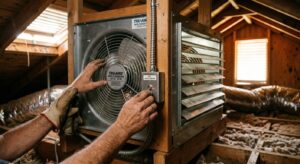
In most cases yes, but only after air sealing. If the existing insulation is dry, free of mold, and not made of vermiculite or other asbestos-containing materials, you can blow or lay new insulation directly on top. Do not cover existing bathroom or kitchen exhaust fans that vent into the attic, and make sure soffit baffles are in place to maintain airflow at the eaves before adding the new layer.
▼ How do I know if my walls are insulated without opening them up?
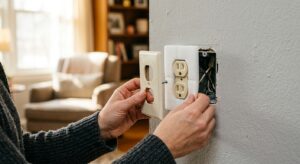
Remove an electrical outlet cover on an exterior wall, cut the power at the breaker, and use a flashlight to look into the gap between the box and the wall. If you see insulation material, the cavity is likely filled. If you see a dark empty cavity, that wall is uninsulated. An infrared thermometer pointed at exterior walls on a cold day can also reveal hollow wall cavities as cold spots compared to areas with insulation behind them.
▼ My home was built in 1978. Is it worth insulating or is it too old?
Older homes almost always have the highest payback on insulation upgrades precisely because they were built before modern energy codes existed. A home from the 1970s typically has 3 to 4 inches of attic insulation at best, R-11 in walls if anything at all, and no air sealing. Bringing an older home up to current DOE recommendations can cut energy bills by 25 to 40%, and many utility companies offer enhanced rebates for older homes specifically because the energy savings potential is so high.
Quick Tips
- Compare your home’s energy use per square foot to the national average of $1.20 to $1.40 per year. Spending significantly more is a strong indicator that your envelope needs work.
- Take photos inside your attic on a sunny day with lights off. Daylight visible through the eaves, around the chimney, or along the ridge is a direct view of where your conditioned air is escaping.
- Use a candle or incense stick near electrical outlets on exterior walls on a cold windy day. Flickering smoke reveals air leaks that suggest missing or incomplete insulation in the wall cavity behind.
- Check your attic insulation depth in multiple spots, not just near the hatch. Insulation is often thick near the access point and paper-thin at the far corners where it was hard to reach during the original installation.
Variations for Your Situation
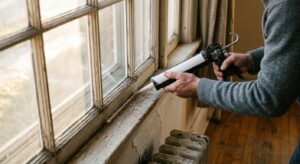
- Apartment or Renter: Renters cannot add insulation, but they can seal air leaks around windows, outlets, and baseboards using removable rope caulk and foam outlet covers, which are both renter-safe and under $20 total. Focus on identifying drafts and reporting unusually high bills to your landlord with documented temperature readings, as landlords in many states are required to maintain minimum thermal performance standards.
- Tight Budget (under $50): Prioritize the attic hatch first since it is the single most cost-effective fix at under $30 in materials. Next, buy one or two cans of spray foam and seal every penetration you can reach from inside the attic without adding new insulation. These two steps alone can reduce heat loss by 10 to 15% at minimal cost and set the stage for insulation additions later when budget allows.
- Older Home (pre-1980): Homes built before 1980 often have vermiculite insulation, knob-and-tube wiring in the attic, and no vapor barrier. Have vermiculite tested by a certified lab ($30 to $50 per sample) before touching it. If knob-and-tube wiring is present, covering it with blown-in insulation can create a fire hazard and is prohibited by many building codes, so an electrician must assess the wiring before any insulation work begins.