You pull the lint screen out, swipe it clean, and toss it back in. Job done, right? Not quite. That quick habit handles maybe 30% of the lint problem. The rest, the residue coating the screen mesh, the buildup lining the exhaust duct, and the clog forming at the exterior vent cap, keeps growing load after load until your dryer is working twice as hard to do the same job. That extra effort shows up directly on your electric or gas bill every single month.
A partially blocked dryer exhaust system is one of the most overlooked energy drains in the home. The U.S. Department of Energy estimates that a clogged dryer vent can add 30 minutes or more to each drying cycle. Multiply that across 300 loads a year for an average household, and you’re paying for hours of unnecessary run time. Beyond the money, lint accumulation inside ducts is the leading cause of dryer fires, responsible for roughly 2,900 home fires annually according to the NFPA.
This post walks you through exactly what most homeowners are missing, from washing the lint screen with dish soap to cleaning the full exhaust duct run. You’ll learn how each layer of the system affects your energy use, how to spot warning signs of a clogged system, and how to tackle the fix yourself in under an hour with basic tools. A cleaner dryer system means faster drying, lower bills, and a safer home.
What You’ll Need
Click on an item below to shop for the recommended items for this recipe on Amazon.
As an Amazon Associate, we earn from qualifying purchases.
How to Do It
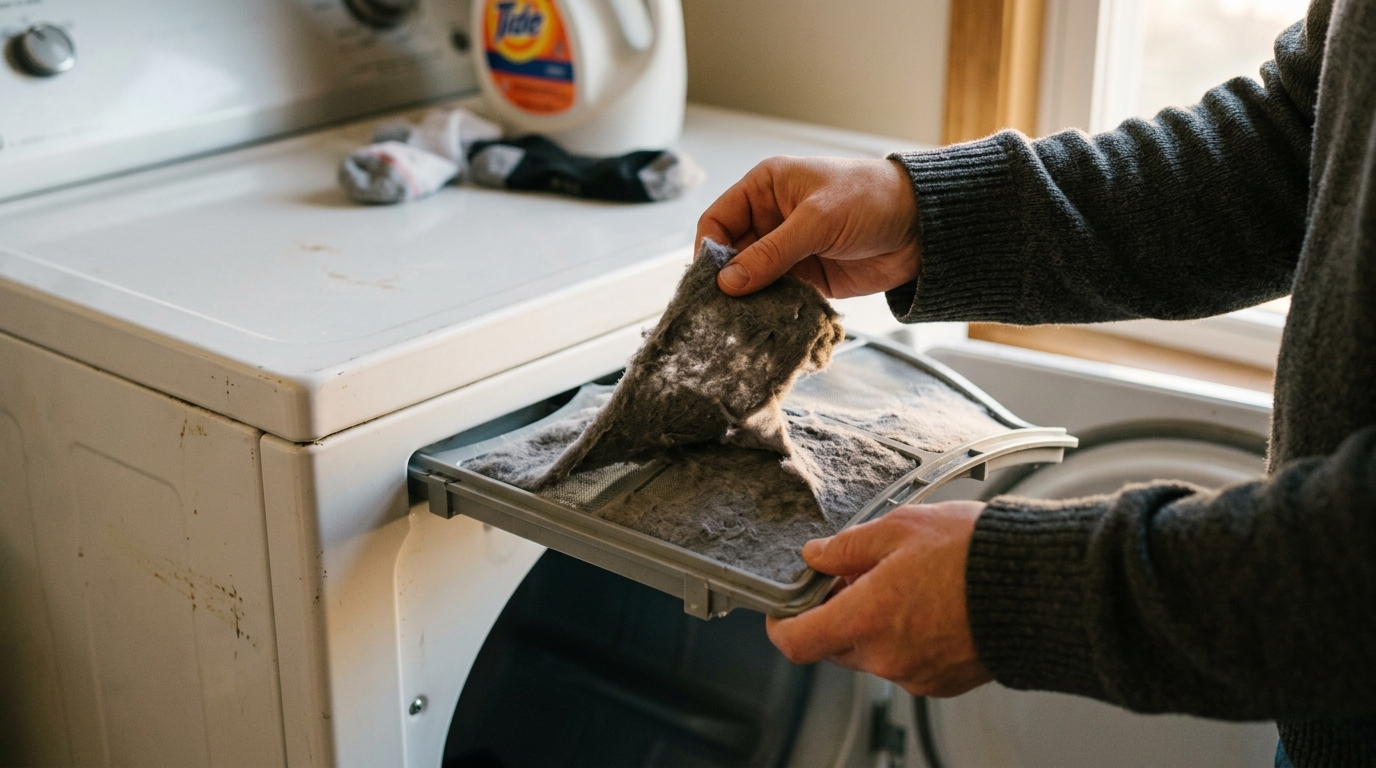
- Remove the lint screen and hold it under running warm water. If water beads up instead of flowing freely through the mesh, the screen is coated with dryer sheet residue. Scrub both sides gently with a soft brush and a drop of dish soap, rinse thoroughly, and let it air dry completely before reinstalling.
- Use a vacuum cleaner with a crevice attachment to reach down into the lint trap housing slot where the screen sits. Lint accumulates in the walls of this cavity and never gets removed by screen cleaning alone. Work the crevice tool around the full perimeter and extract as much buildup as possible.
- Run the dryer empty on a timed heat cycle for 10 minutes, then go outside and confirm the exterior vent flap is opening and you can feel a strong, steady airflow. Weak airflow or a flap that barely moves confirms a duct obstruction that requires the deeper cleaning in the DIY approach.
- Check the back of the dryer where the exhaust hose connects. Look for kinks, sharp bends, or a hose that has been crushed against the wall. Straighten any kinks by pulling the dryer forward slightly. Even a pinched flexible hose can cut airflow by 40% or more.
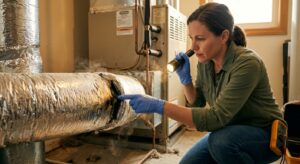
- Unplug the dryer from the electrical outlet, or shut off the gas valve if you have a gas dryer, before pulling it away from the wall. Disconnect the exhaust hose from the back of the dryer and from the wall duct connection. Inspect the hose itself and replace it if it is the plastic accordion type. Building codes and fire safety guidelines recommend rigid or semi-rigid metal ducting, which reduces lint adhesion and fire risk significantly.
- Insert the flexible cleaning rod with brush attachment into the wall duct opening. Attach the rod to a cordless drill and run it at low speed in a clockwise direction as you push it deeper into the duct. Work in 12-inch increments, pulling the rod back periodically to remove the dislodged lint clumps with your hand or a vacuum.
- Go outside and remove the exterior vent cap cover. Many vent caps accumulate a dense lint mat just inside the opening that is invisible from indoors. Clear this blockage by hand or with the brush rod inserted from outside, and confirm that the flap or louvers move freely without obstruction.
- Vacuum out the lint trap housing one more time now that the duct has been disturbed. Cleaning the duct often dislodges accumulated lint back toward the dryer, and this material needs to be removed before you reconnect the system.
- Reconnect the dryer using semi-rigid metal transition hose for the section between the dryer and the wall, keeping it as short and straight as possible with a maximum of one 90-degree bend. Secure both connection points with metal foil duct tape, not standard plastic duct tape, which degrades from heat over time.
- Restore power and run a timed 10-minute heat cycle while monitoring outside to confirm strong, continuous airflow from the exterior vent. A load of damp towels that completes in under 60 minutes confirms you have restored full system efficiency.
Why It Works: The Benefits
Restoring full airflow to a clogged dryer system reduces average cycle time by 20 to 30 minutes per load. For a household running 300 loads per year on an electric dryer, that translates to $100 to $150 in annual savings at average U.S. electricity rates.
A clean, unobstructed exhaust system allows the dryer to complete a standard load in 45 to 60 minutes instead of 80 to 100 minutes. Clothes come out fully dry the first time, eliminating repeat cycles that silently double your per-load cost.
Dryers running in restricted airflow conditions run hotter and longer, stressing the heating element, motor, and drum bearings. Regular duct cleaning can add 2 to 4 years to the typical 10 to 13 year dryer lifespan, delaying a $600 to $1,200 appliance replacement.
The NFPA identifies failure to clean dryer vents as the leading cause of dryer fires. Removing accumulated lint from the duct and vent cap eliminates the primary fuel source for ignition, making this one of the highest-impact home safety tasks per hour invested.
A restricted or disconnected exhaust duct can push lint particles and excess humidity back into the laundry room. Keeping the system clean and sealed prevents moisture buildup that feeds mold growth and keeps fine particulates out of your breathing air.
💰 Savings Impact by Action
Removing lint buildup from the full exhaust duct restores airflow and reduces average cycle time by 20 to 30%, cutting dryer energy use proportionally.
Scrubbing dryer sheet residue from the lint screen mesh with dish soap can improve airflow by up to 10%, recovering energy lost to invisible mesh clogging.
Replacing flexible plastic accordion duct with smooth rigid metal reduces airflow resistance by 15% or more and slows lint adhesion between cleanings.
Clearing lint blockage from the exterior vent cap eliminates back pressure at the exhaust exit point, recovering up to 10% of lost airflow capacity.
🏠 Key Concepts Explained
The Science Behind It
A dryer is essentially a controlled airflow appliance. The heating element or gas burner raises the air temperature inside the drum to around 125 to 135 degrees Fahrenheit, and the blower motor forces that hot, dry air through the tumbling clothes. As moisture evaporates from the fabric, it is carried by that moving air through the exhaust duct and expelled outside. The entire system depends on a continuous, unrestricted column of moving air to function efficiently.
When lint narrows the duct diameter or the exterior vent cap partially blocks the exit point, the system experiences back pressure. The blower motor pushes against this resistance, moving less air volume per minute than it was designed to move. Less airflow means less moisture is removed per minute of run time, so the cycle takes longer. The heating element or burner also cycles more frequently to compensate for the heat escaping more slowly, which increases energy consumption per pound of laundry dried. Studies and field data from ENERGY STAR and appliance manufacturers consistently show that a fully restricted vent can double run time per load and increase energy consumption by 20 to 30%.
The lint screen mesh clogging issue is subtler but measurable. Dryer sheets deposit a thin layer of silicone-based coating onto the screen fibers over dozens of uses. This coating does not trap lint the way physical buildup does, but it dramatically reduces the open area of the mesh, cutting airflow before air even reaches the duct. A simple test confirms the problem: hold a clean-looking screen under a running faucet. Water should flow straight through. If it pools and beads, the pores are blocked. Scrubbing with dish soap dissolves the coating and can restore meaningful airflow in under five minutes, making it one of the highest-return actions in home appliance maintenance.
Frequently Asked Questions
▼ I cleaned the lint trap but my dryer is still taking two cycles to dry clothes. What am I missing?
The lint trap screen is only the first filtration point. The most common cause of slow drying after screen cleaning is a buildup inside the exhaust duct between the dryer and the exterior wall. Pull the dryer out, disconnect the exhaust hose, and insert a dryer vent brush kit into the wall duct. If the duct run is long or has multiple bends, you may also have a blockage near the exterior vent cap that needs to be cleared from outside.
▼ My dryer vent exits through the roof instead of a side wall. Can I still clean it myself?
Roof exits are significantly harder to clean safely and are not recommended for DIY. The duct angle and length make it very difficult to remove lint thoroughly without professional equipment, and working on a roof carries fall hazards. Budget $100 to $150 for a professional dryer vent cleaning service, which will have the correct rotary tools to clean a full vertical or rooftop run. Note that rooftop dryer exhausts are also prone to bird intrusion and rain infiltration, so ask the technician to inspect the cap condition while they are up there.
▼ How do I know if my dryer vent is actually clogged versus my dryer just being old and slow?
Run the dryer on a heat cycle for 10 minutes and then hold your hand about an inch in front of the exterior vent opening. You should feel a strong, warm airflow that can noticeably push against your palm. Weak or barely detectable airflow confirms a duct restriction. If airflow is strong but drying is still slow, the issue is more likely a failing heating element, a worn drum seal, or a faulty moisture sensor inside the dryer itself.
▼ Can renters do this without landlord permission?
Cleaning the lint screen and the lint trap housing is routine maintenance any renter can and should do without any approval. Pulling the dryer away from the wall and cleaning the flexible exhaust hose is also generally considered normal appliance care. If the exhaust duct runs into the building’s walls or the exterior vent cap needs replacement, notify your landlord in writing and request that they arrange a professional cleaning, since it is the landlord’s responsibility to maintain building systems and document it as a fire safety matter.
▼ I replaced the flexible accordion duct with rigid metal but now the dryer barely fits back into its alcove. What should I do?
For tight spaces where a rigid straight section cannot connect directly to the wall, use a dryer offset vent kit or a 90-degree rigid elbow rated for dryer exhaust. These allow you to route the connection at a low profile while keeping the metal duct smooth inside. Periscope-style dryer vent kits are specifically designed for dryers installed in shallow alcoves and reduce the required clearance between the back of the dryer and the wall to as little as 2.5 inches.
Quick Tips
- Mark your calendar for a full duct cleaning every 12 months. Households that dry more than 5 loads per week should clean every 6 months.
- If your dryer has a moisture sensor, wipe the two metal sensor bars inside the drum with a cotton ball and rubbing alcohol every 3 months. Dryer sheet residue coats these sensors and causes the dryer to shut off early or run too long.
- Check the exterior vent cap every spring for bird nests. Sparrows and starlings frequently build nests in vent openings during nesting season, creating a near-total blockage overnight.
- Always use the manufacturer-specified duct diameter, which is typically 4 inches for residential dryers. Reducing to a 3-inch duct with an adapter increases air velocity and lint adhesion, making blockages form faster and more densely.
Variations for Your Situation
- Apartment or Condo: In-unit dryers in apartments typically have shorter duct runs, often 6 to 10 feet, making them easier to clean but also easier for landlords to neglect. Clean the lint screen housing with a crevice vacuum at least monthly. For the duct itself, use a short 12-inch dryer vent brush ($10 to $15) to reach into the wall opening from behind the dryer. If the dryer vents into a shared building duct, report slow drying to building management since shared systems must be cleaned by a licensed contractor and are a serious fire liability.
- Tight Budget (under $20): Skip the full brush kit and start with what you already own. Use a vacuum crevice tool to clean the trap housing and the wall duct entrance as far as the attachment will reach. Clean the mesh screen with dish soap and a toothbrush. Go outside and manually clear any visible lint from the exterior vent cap flap. These three steps cost nothing and can recover 50 to 70% of the efficiency lost to a partially blocked system. Save up for a $20 to $25 brush kit as your next home maintenance purchase.
- Older Home (pre-1980): Homes built before modern dryer vent standards were established often have undersized 3-inch ducts, plastic flexible runs that have become brittle, or vents that terminate in the crawlspace or attic rather than outdoors. These are fire code violations in most jurisdictions today and cannot simply be cleaned. Hire a licensed HVAC or dryer vent specialist to reroute the exhaust to the exterior using code-compliant 4-inch rigid metal duct. The cost is typically $150 to $400 depending on run length, but it resolves both the energy waste and the fire hazard permanently.