There is nothing more frustrating than paying to run your air conditioner all day and still walking into a home that feels like a locker room. The air might be cool on the thermostat, but something is off. It feels heavy, stale, or just plain uncomfortable. Most homeowners assume the AC is undersized or broken, but that is rarely the case.
The truth is that stuffiness is almost never about temperature alone. It is about moisture, airflow, air quality, and the invisible ways your home interacts with the outdoor environment. Your AC is designed to cool air, but it can only do so much when other building problems are working against it. Understanding those five underlying causes is the difference between endlessly tweaking your thermostat and actually solving the problem.
In this post, we break down the five most common reasons homes feel stuffy despite running the AC, explain the building science behind each one, and give you practical steps you can take today to fix them. Whether you rent or own, whether your home is new or decades old, at least one of these culprits is almost certainly at work in your house right now.
What You’ll Need
Click on an item below to shop for the recommended items for this recipe on Amazon.
As an Amazon Associate, we earn from qualifying purchases.
How to Do It
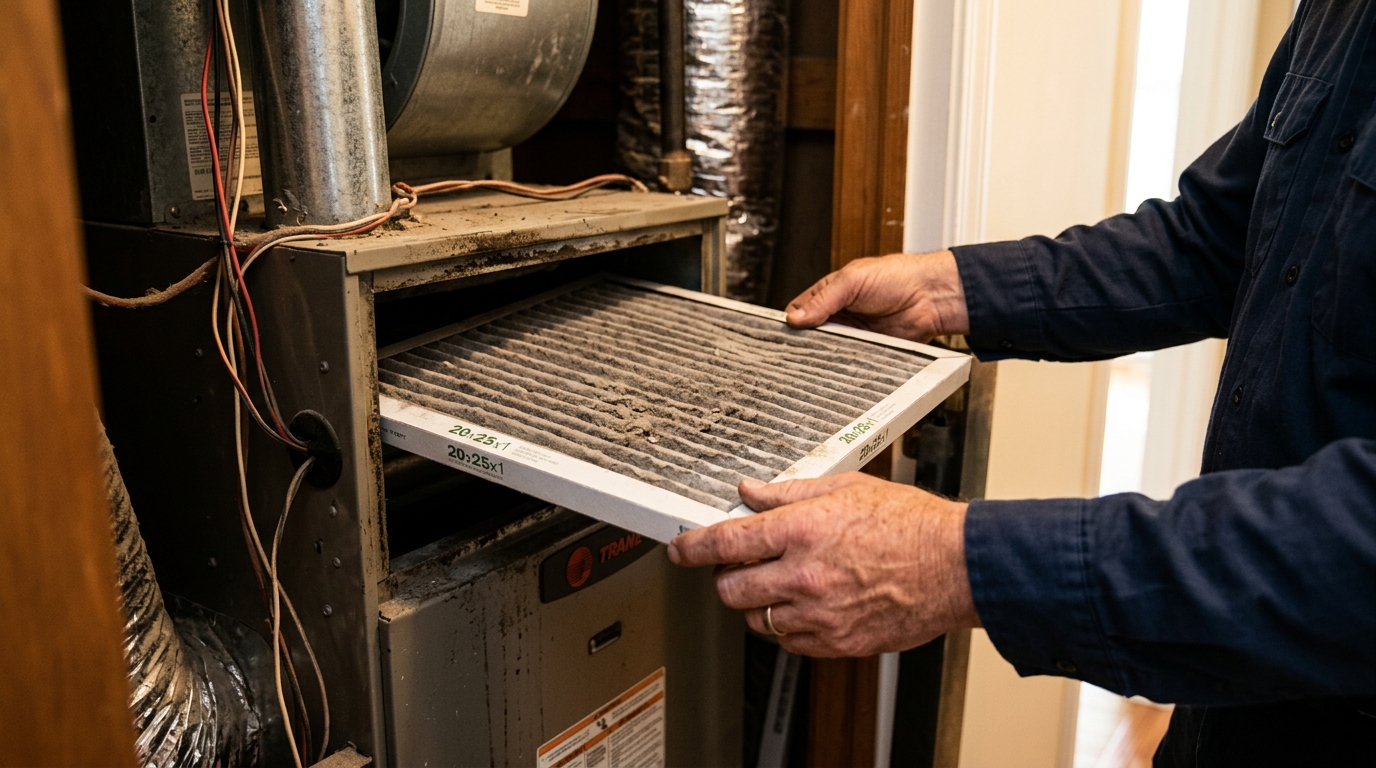
- Check and replace your air filter if it has not been changed in the last 60 to 90 days. A clogged filter reduces airflow across the evaporator coil, limiting the AC’s ability to dehumidify. A MERV 8 filter is the sweet spot for most systems.
- Walk through your home and make sure all supply and return vents are fully open and not blocked by furniture, rugs, or curtains. Blocked vents cause pressure imbalances that reduce airflow in stuffier rooms by 30 to 40%.
- Set your thermostat fan to AUTO, not ON. When the fan runs continuously, it blows moisture that condensed on the evaporator coil back into the air before it can drain, raising indoor humidity noticeably.
- Locate and close any bathroom or kitchen exhaust fans that might be left on accidentally. These fans depressurize the home and pull in hot humid outdoor air to replace what they exhaust.
- Open interior doors throughout the home if they are habitually closed. Closed doors block return air pathways, starving the air handler of the return flow it needs to dehumidify and circulate properly.
- Buy a digital hygrometer ($10 to $20) and measure relative humidity in your main living areas. If readings are consistently above 55%, you have a moisture control problem, not just a cooling problem, and the steps below target it directly.
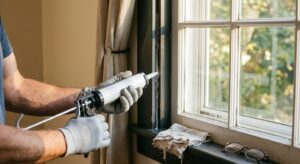
- Seal visible air leaks in the building envelope using caulk and foam backer rod. Focus on gaps around window frames, baseboards, electrical outlets on exterior walls, and where pipes or wires enter from outside. The EPA estimates this alone reduces energy waste by up to 20%.
- Inspect accessible ductwork in your attic, basement, or crawlspace for disconnected joints or visible gaps. Use UL 181-rated metal foil tape (not standard cloth duct tape) to seal any gaps you find. Even sealing obvious joints can recover 10 to 15% of lost conditioned air.
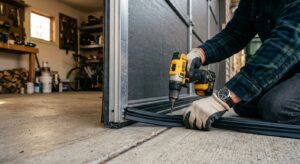
- Install door sweeps on the bottoms of exterior doors if you can see light underneath them. Exterior doors are a major pathway for humid outdoor air infiltration and take under 20 minutes each to address.
- If humidity remains above 55% after these steps, add a portable or whole-home dehumidifier. A 50-pint portable unit ($150 to $250) can drop a floor’s humidity by 10 to 15 percentage points within 24 hours, complementing what the AC cannot handle alone.
- Check that your AC condensate drain line is flowing freely by pouring a cup of water into the drain pan near the air handler. If it backs up or drains slowly, clear it with a wet-dry vac or a flush of diluted white vinegar to prevent humidity from rising inside the unit.
- Schedule a duct leakage test (also called a duct blaster test) with an HVAC contractor or home performance auditor. This pressurizes your duct system and measures exactly how much air is escaping. The national average home loses 25 to 30% of airflow through leaky ducts.
- Ask for a Manual J load calculation if your system is older or was installed when the home was first built. Oversized systems short-cycle and cannot dehumidify, and this calculation tells you definitively whether your AC capacity matches your actual home load.
- Request a blower door test from an energy auditor if infiltration is suspected. This test quantifies how much outdoor air is entering the home and identifies the specific locations of major leaks, making remediation targeted and efficient.
- Ask the technician to check refrigerant charge and clean the evaporator coil. A dirty coil or low refrigerant charge reduces dehumidification capacity significantly, even when the system appears to be cooling to the set point.
- If the home has a crawlspace, ask about encapsulation. An unencapsulated vented crawlspace can raise whole-home humidity by 10 to 15 percentage points by letting ground moisture evaporate directly into the air handler’s return pathway.
Why It Works: The Benefits
Addressing the root causes of stuffiness can reduce indoor relative humidity from an uncomfortable 65 to 70% down to the ideal range of 45 to 55%, which feels significantly cooler even at the same thermostat setting.
Fixing duct leaks alone can cut cooling energy use by 20 to 30% according to the U.S. Department of Energy, since your system stops conditioning air that was never reaching you in the first place.
Addressing ventilation and infiltration reduces CO2 buildup, VOC concentrations, and airborne allergens. Studies show elevated CO2 above 1,000 ppm noticeably impairs focus and makes air feel stale, a common complaint in tight homes with poor ventilation.
When your system is not fighting against humidity infiltration and duct losses, it runs fewer total hours to maintain comfort. This translates to less wear on the compressor and blower, potentially adding years to the life of a unit that costs $5,000 to $12,000 to replace.
Correcting duct imbalances and improving airflow distribution can eliminate rooms that are 5 to 10 degrees warmer than the rest of the house, a direct result of leaky or undersized supply runs.
💰 Savings Impact by Action
Sealing leaky ducts recovers up to 25% of conditioned air that would otherwise escape into unconditioned attic or crawlspace before reaching the living space.
Caulking and weatherstripping gaps in the building envelope reduces uncontrolled outdoor air infiltration by up to 20%, directly cutting the moisture load on the AC.
Keeping a clean MERV 8 filter in place maintains proper airflow across the evaporator coil, preserving up to 10% of the system’s rated dehumidification capacity.
Switching the thermostat fan from ON to AUTO prevents re-evaporation of condensed moisture, reducing indoor humidity by 3 to 5 percentage points with no cost.
Adding a standalone dehumidifier to target 50% relative humidity allows the AC thermostat to be set 2 to 3 degrees higher while maintaining the same comfort level, saving roughly 6 to 9% per degree raised.
🏠 Key Concepts Explained
The Science Behind It
Your air conditioner removes humidity from the air through condensation. Warm humid air from your home passes over a cold evaporator coil, and because the coil surface is below the dew point of the air, moisture condenses out just like it does on a cold glass of water on a summer day. That moisture drips into a drain pan and exits through the condensate line. The drier, cooler air is then blown back into your living space. The key detail is that this dehumidification process requires time. The air must stay in contact with the cold coil long enough for meaningful moisture to condense out, which is why runtime length matters more than cooling speed.
When an AC unit is oversized for the space it serves, it drops the air temperature too quickly and shuts off before completing the dehumidification process. This is called short cycling, and it is one of the most common causes of stuffy homes. The space reaches the thermostat’s temperature set point in 5 to 8 minutes, the compressor shuts down, and humidity climbs back up almost immediately. You are left with cool but clammy air, a cycle that repeats all day without ever getting ahead of the moisture load. The fix is not running the system more aggressively; it is letting it run in longer, steadier cycles.
The stack effect explains the other half of the humidity problem. Because warm air is less dense than cool air, it naturally rises and exits through gaps at the top of your home, including recessed lights, attic hatches, and top-floor ceiling penetrations. As that air escapes, it creates negative pressure at lower levels that pulls outdoor air in through gaps at the foundation, around windows, and under doors. In summer, that incoming air is hot and humid, continuously loading your home with the exact moisture your AC is trying to remove. Air sealing at both the top and bottom of the building envelope breaks this loop and dramatically reduces the moisture your AC has to fight against every hour it runs.
Frequently Asked Questions
▼ Why does my home feel stuffy even when the thermostat says it is 72 degrees?
Temperature and comfort are not the same thing. At 72 degrees with 65% relative humidity, the air still feels heavy and uncomfortable because high moisture content prevents your body from cooling itself through perspiration. Buy a hygrometer and check your humidity. If it is above 55%, the AC is cooling the air but not dehumidifying it adequately, which points to short cycling, a dirty coil, or excessive infiltration.
▼ My AC runs all day and my house still feels stuffy. Does that mean it is undersized?
Not necessarily. Constant runtime actually suggests the system is the right size or even undersized, but something is overwhelming it, usually duct leakage, air infiltration, or a dirty evaporator coil that limits dehumidification. Check that all vents are open and unobstructed, replace the air filter, and inspect accessible ductwork for obvious gaps before assuming the system is too small.
▼ Can renters fix a stuffy apartment without landlord permission?
Yes, several fixes require no permission at all. Replace the air filter if you have access to the air handler, make sure all vents are unblocked, switch the fan setting to AUTO on the thermostat, and add a portable dehumidifier if humidity is the issue. A 30 to 50 pint dehumidifier costs $150 to $250 and can dramatically improve comfort without touching any building systems.
▼ How long does it take to notice a difference after sealing air leaks?
Most homeowners notice improved comfort within one to two days as the AC no longer has to fight a constant stream of incoming humid outdoor air. Energy savings will show up on the following month’s bill. For significant sealing projects, the DOE estimates payback periods of one to three years depending on the size of the leaks addressed and local energy prices.
▼ What if my home is older than 30 years and stuffy no matter what I do?
Older homes typically have higher baseline air leakage rates due to decades of settling and dried-out caulk and weatherstripping, but they also often lack adequate return air pathways, meaning the AC starves for return airflow. Start with a professional blower door test to identify the worst leakage points, and ask the HVAC technician to evaluate whether return air capacity is adequate. Adding a return air grille or a transfer grille between rooms can make a dramatic difference in homes where the ductwork was never properly designed.
Quick Tips
- Aim to keep indoor relative humidity between 45 and 55 percent for optimal comfort and to prevent mold growth. Buy a $15 hygrometer and check it regularly during summer.
- Run kitchen and bath exhaust fans only as long as needed. These fans exhaust 50 to 100 cubic feet per minute of conditioned air and pull humid outdoor air in to replace it every time they run.
- On mild days when outdoor humidity is below 50 percent, open windows in the early morning and use window fans to flush the house with fresh air instead of running the AC. This also resets indoor CO2 levels and reduces that stale feeling.
- Schedule an annual AC tune-up in spring before the cooling season. A technician will clean the evaporator coil and check refrigerant charge, both of which directly affect dehumidification performance throughout summer.
Variations for Your Situation
- Apartment or Rental: Renters cannot modify ductwork or seal the building envelope, but portable dehumidifiers ($150 to $250 for a 50-pint unit) are the single most impactful tool available. Also ensure the landlord is maintaining the HVAC filter and that the fan setting on the thermostat is on AUTO rather than ON. A box fan in a window on a drier evening can flush stale air without any permanent changes.
- Tight Budget (under $50): Focus on the free and near-free fixes first. Set the thermostat fan to AUTO, unblock all vents, close interior doors only at night, and replace the air filter ($10 to $20). A $15 hygrometer tells you whether you have a humidity problem or an airflow problem, which determines every other step. These zero-to-low-cost steps alone can recover a meaningful portion of lost comfort.
- Older Home (pre-1980): Homes built before 1980 often have leaky duct systems with uninsulated trunks running through hot attic spaces, single-pane windows, and wall cavities without continuous air barriers. Prioritize duct sealing with metal foil tape on any accessible joints, add weatherstripping to all exterior doors, and caulk around window frames inside and out. These homes typically lose 30 to 40% of conditioned air through the envelope and duct system combined, so even partial improvements yield outsized comfort and savings gains.