For most homeowners, the electric bill in July feels like a punishment. The air conditioner runs constantly, the house still feels stuffy by afternoon, and the bill climbs past $150, $200, or even higher without any clear explanation. The frustrating truth is that most of that money is not buying comfort. It is escaping through leaky ducts, under-insulated attics, and HVAC systems working twice as hard as they need to because of a few overlooked problems.
Keeping cooling costs under $100 a month is a realistic goal for most homes under 2,000 square feet in moderate climates, and achievable even in hotter regions for larger homes when the right strategies are layered together. This is not about suffering through the heat or setting your thermostat to 82 degrees. It is about stopping the waste before you pay to cool air that leaks out before it ever reaches you.
This checklist covers everything from zero-cost habit changes you can do today to weekend DIY upgrades that pay for themselves in a single season. Each section includes real numbers so you know exactly what to expect and where to start first for the biggest bang for your dollar.
What You’ll Need
Click on an item below to shop for the recommended items for this recipe on Amazon.
As an Amazon Associate, we earn from qualifying purchases.
How to Do It
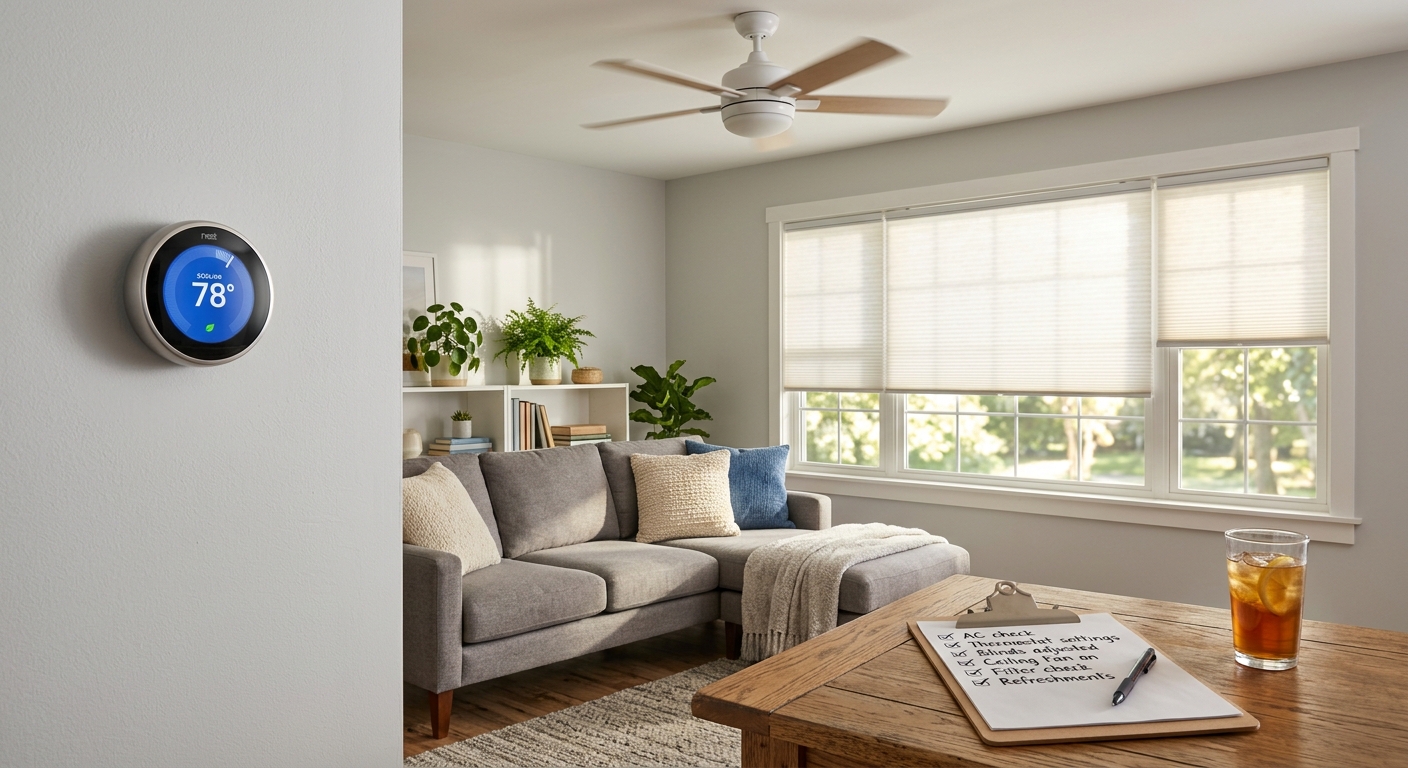
- Set your thermostat to 78 degrees when home and 85 degrees when away for 8 or more hours. Every degree of setback saves roughly 3% on cooling costs.
- Switch ceiling fans to counterclockwise rotation at medium or high speed. The wind chill effect lets you feel comfortable at 78 degrees instead of 74, reducing AC load with no extra cost.
- Close blinds and curtains on south- and west-facing windows between 10 AM and 6 PM. This single habit can reduce solar heat gain through glass by 30 to 45%.
- Run the bathroom exhaust fan during and for 15 minutes after every shower. Removing humid air before it mixes into the house reduces the latent load on your AC.
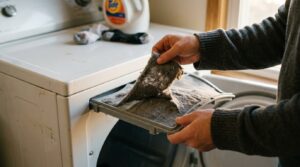
- Check your air filter and replace it if it is gray or visibly clogged. A restricted filter reduces airflow and can increase cooling energy use by 10 to 15% while shortening equipment life.
- Grill outside or use the microwave instead of the oven on hot days. A standard oven adds 3,000 to 5,000 BTUs of heat to your home, directly adding to your cooling load.
- Install a programmable or smart thermostat ($25 to $80). Program a setback schedule for occupied and unoccupied hours. The EPA estimates proper scheduling saves an average of 10% annually on heating and cooling combined.
- Apply foam backer rod and paintable caulk to gaps around window frames and door casings on the interior. Pay special attention to corners and where drywall meets the frame. This can reduce air infiltration by 10 to 20% in older homes.
- Add adhesive-backed foam weatherstripping to the door stop on all exterior doors. A door with a visible light gap around the frame is leaking significant conditioned air. Replace door sweeps on any exterior door where you can see daylight at the bottom.
- Install reflective window film on south- and west-facing windows ($20 to $60 for a typical home). Quality film blocks 55 to 70% of solar heat gain while maintaining visibility, reducing cooling load on those exposures by up to 30%.
- Go into your attic or basement and wrap exposed accessible ductwork with R-6 or higher duct insulation ($30 to $60). Seal any visible duct joints with foil tape or mastic sealant before wrapping. Insulating just 10 linear feet of uninsulated supply duct in a 140-degree attic can prevent hundreds of BTUs of heat transfer per day.
- Add insulating cellular (honeycomb) blinds to your two or three largest south- or west-facing windows ($20 to $50 each). These provide R-3 to R-4 at the glass surface and dramatically reduce solar gain compared to standard blinds.
- Schedule a professional duct leakage test and sealing (duct blaster test). Professionally sealed ducts can recover 20 to 30% of lost airflow and are the single highest-impact measure for most homes with central HVAC.
- Add attic insulation to bring the total depth to R-38 to R-60 depending on your climate zone. Blown-in cellulose costs roughly $1 to $2 per square foot installed and typically pays back in 2 to 4 cooling seasons. Check for a federal tax credit of up to 30% of installation cost through the Inflation Reduction Act.
- Install an attic radiant barrier (reflective foil stapled to the underside of roof rafters). A radiant barrier alone reduces attic peak temperatures by 20 to 30 degrees Fahrenheit, reducing cooling load by 5 to 10% in hot climates.
- Replace any window AC units older than 10 years with modern inverter-based units. A modern ENERGY STAR window unit uses 10 to 25% less energy for the same cooling output.
- Have your central AC refrigerant charge and coil condition inspected by a licensed HVAC technician if the system is 5 or more years old and you have not had it serviced. An undercharged system or dirty coil can increase energy use by 15 to 30% while delivering less cooling.
Why It Works: The Benefits
Stacking the measures in this checklist can reduce cooling energy use by 20 to 40%, which translates to $40 to $100 or more in monthly savings for a home spending $200 or more on summer cooling.
Air sealing and duct improvements distribute conditioned air more evenly, eliminating the hot spots in back bedrooms or upper floors that push you to lower the thermostat unnecessarily.
An AC that runs less frequently experiences less wear on the compressor and fan motor. Reducing runtime by even 20% can add years to the life of a system that costs $4,000 to $8,000 to replace.
Blocking solar gain, sealing leaks, and improving airflow raise the effective comfort level at higher thermostat settings, meaning 76 degrees feels as cool as 72 used to.
Most measures in this checklist cost between $0 and $150 and pay back within one cooling season, giving them an effective ROI of 100% or more in the first year alone.
💰 Savings Impact by Action
Sealing gaps around windows, doors, and penetrations reduces conditioned air loss by 10 to 20% annually according to DOE data.
Raising the setpoint by 7 to 10 degrees for 8 hours per day saves approximately 10% on annual cooling and heating costs.
Upgrading attic insulation to R-38 or higher reduces ceiling heat transfer by 15 to 25% during peak summer hours.
Blocking direct sun from south- and west-facing windows with film or blinds reduces solar heat gain through glass by 30 to 70%, cutting total cooling load by up to 12%.
Sealing leaky ducts in unconditioned spaces recovers 20 to 30% of airflow that would otherwise be lost before reaching living areas.
🏠 Key Concepts Explained
The Science Behind It
Your air conditioner does not create cold air. It moves heat from inside your home to outside, running refrigerant through a cycle of compression and expansion to carry that heat across the coil. Every BTU of heat that enters your home from the outside, whether through the attic, through glass, or through air leaks, is a BTU your AC must remove. Reducing the heat that gets in is always cheaper than removing it after the fact, which is why air sealing, shading, and insulation have such a dramatic effect on runtime and bills.
Heat moves in three ways: conduction (through solid materials like framing and glass), convection (through moving air carrying thermal energy), and radiation (infrared energy traveling through space, like sunlight through a window). A comprehensive summer efficiency strategy addresses all three. Insulation slows conduction through the attic floor. Air sealing stops convective losses through gaps. Window film and exterior shading intercept radiant solar energy before it reaches the glass, which is far more effective than trying to block it once it has already become heat inside your home.
Humidity is the hidden multiplier. Your AC operates as both a dehumidifier and a cooling device, and in humid climates, latent load (removing moisture from the air) can account for 30 to 50% of total cooling energy. When you cook, shower without exhaust fans running, or have significant air infiltration from humid outdoor air, you are adding moisture load that forces the compressor to run longer. Reducing those moisture sources directly reduces electricity use, even if the thermostat setting never changes.
Frequently Asked Questions
▼ Why is my AC still running all day even after I tried these fixes?
If your AC runs continuously without reaching the set temperature, the most common causes are an undersized system, a dirty evaporator or condenser coil, low refrigerant charge, or extreme duct leakage. Start by checking that the outdoor condenser unit fins are clean and unobstructed, then schedule an HVAC technician to check refrigerant levels and coil condition. A system running constantly while failing to cool is costing you maximum energy with minimum comfort.
▼ Can renters do this without landlord permission?
Yes, most of the high-impact steps in this checklist require no permanent modifications. Setting thermostat schedules, using ceiling fans, adding removable window film, closing blinds, replacing air filters, and adjusting cooking habits are all renter-safe. For weatherstripping and window film, choose removable or peel-and-stick products that leave no damage, and document the condition of the apartment before installing anything.
▼ How long before I actually notice savings on my bill?
Free behavior changes like thermostat scheduling, fan use, and closing blinds show up on your very next monthly bill. Physical improvements like weatherstripping and duct insulation typically show measurable results within 30 days of completion. Compare the same month year-over-year rather than month-to-month since temperatures vary, and check your utility’s online usage dashboard if available for near-real-time feedback.
▼ My upstairs is always 5 to 10 degrees hotter than downstairs. What is the fastest fix?
This is almost always a combination of attic heat transfer and duct imbalance. The fastest fix is to close supply vents slightly on the first floor during summer to force more airflow upstairs, and to add a box fan in a shaded north-facing upstairs window at night to flush hot air out. For a lasting fix, adding attic insulation and sealing attic bypasses (holes where wiring and plumbing penetrate the ceiling) makes the biggest difference in multi-story homes.
▼ What if my home is older than 30 years?
Older homes typically have higher baseline air leakage, minimal wall insulation, and duct systems that have developed significant gaps over decades of thermal expansion and contraction. The good news is that older homes have the most room for improvement and the highest potential savings percentages. Prioritize air sealing and duct sealing first since these deliver the highest ROI, and budget for a professional energy audit (typically $150 to $400) to identify the top three or four issues specific to your home before spending money on upgrades.
Quick Tips
- Set your AC fan to Auto, not On. Running the fan continuously without the compressor re-evaporates moisture off the coil back into the air, raising humidity and making the thermostat feel warmer.
- Park your car in the garage if you have one. A car radiating heat in a garage attached to the house adds measurable load through the shared wall, especially in the first hour after parking.
- Plant fast-growing deciduous shrubs or install a shade sail on the west side of your home. West-facing walls receive intense late-afternoon sun and shading them can reduce wall surface temperatures by 20 to 40 degrees Fahrenheit.
- Check your refrigerator door seal by closing the door on a dollar bill. If the bill slides out easily, the gasket is leaking and the refrigerator motor is adding unnecessary heat to your kitchen, compounding your cooling load.
Variations for Your Situation
- Apartment/Rental: Renters cannot modify central HVAC but can still achieve meaningful savings. Focus on portable measures: a smart plug-in thermostat for window units ($25 to $50), removable window film rated for solar heat rejection (3M or Gila brand, $20 to $40 per window), cellular shades on west-facing windows, and a box fan in a north-facing window for nighttime purging. These measures combined can reduce a window AC unit’s runtime by 15 to 25%.
- Tight Budget (under $50): Start with zero-cost habit changes (thermostat setback, fan rotation, closing blinds) and spend your $50 on a single tube of caulk, a pack of foam weatherstripping for the two worst exterior doors, and a new air filter. These three purchases address air leakage and HVAC efficiency, the two highest-return categories, and should deliver $20 to $40 in monthly savings during peak cooling season.
- Older Home (pre-1980): Homes built before modern energy codes often have air leakage three to five times higher than newer construction and little or no wall insulation. Begin with an incense or smoke pencil walk-through to locate the worst leaks, then prioritize attic air sealing (foaming top plates and bypasses) before adding insulation. Schedule a utility-sponsored energy audit first since many utilities offer them free or subsidized, and check whether your state offers weatherization assistance programs that may cover significant upgrade costs.