If your home feels stuffy in summer, drafty in winter, or like the thermostat is constantly playing catch-up, your HVAC system’s motor type is probably the culprit. Most older systems use single-speed compressors and blowers that operate at 100% capacity or not at all. That on-off cycling creates temperature swings of 3 to 5 degrees Fahrenheit and leaves humidity uncontrolled for long stretches between cycles.
Variable-speed HVAC systems solve this with a fundamentally different approach. Instead of blasting on full-blast and shutting off, they ramp up and down continuously, running at anywhere from 30% to 100% of capacity depending on what conditions actually demand. The result is steadier temperatures, dramatically lower indoor humidity, quieter operation, and energy bills that are 20 to 40% lower than comparable single-speed equipment. These systems have become one of the highest-impact upgrades a homeowner can make for whole-home comfort.
In this post, we break down exactly how variable-speed technology works, what it costs, how long it takes to pay back, and what to expect during and after installation. Whether you are replacing aging equipment or evaluating your first upgrade, you will leave with a clear picture of whether this investment makes sense for your home.
What You’ll Need
Click on an item below to shop for the recommended items for this recipe on Amazon.
As an Amazon Associate, we earn from qualifying purchases.
How to Do It
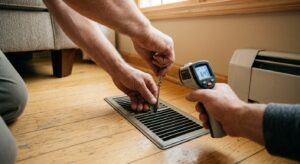
- Walk your home and seal obvious duct leaks at joints, take-offs, and registers using metal foil tape (not standard cloth duct tape). Even a 10% improvement in duct sealing adds meaningfully to system efficiency.
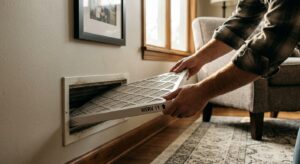
- Replace your air filter with a MERV 8 to 11 rated filter sized for your existing system. Variable-speed systems are more sensitive to airflow restriction than single-speed units, and a clogged filter reduces performance.
- Check that all supply and return registers are open and unobstructed by furniture, rugs, or drapes. Closing registers does not save energy on a variable-speed system and can increase static pressure enough to reduce capacity.
- Note your home’s hottest and coldest rooms and flag these for the HVAC technician. Sharing this information helps them properly size and commission the new system for your specific duct layout.
- Research federal tax credits and utility rebates before your installation date. The 25C Energy Efficient Home Improvement Credit covers 30% of equipment and installation costs up to $2,000 per year for qualifying high-efficiency heat pumps and furnaces.
- Request a Manual J load calculation from each contractor you interview. This calculation determines the correct system size for your home’s actual heat loss and gain. An oversized variable-speed system will short-cycle and fail to dehumidify properly, wasting the technology’s main advantages.
- Choose between a variable-speed central AC plus gas furnace, or an all-electric variable-speed heat pump. Heat pumps deliver 200 to 300% efficiency in heating mode and qualify for larger incentives, but require evaluation of your local climate and utility rates.
- Ask your contractor to verify and if necessary repair duct sizing and sealing before commissioning the new equipment. A high-efficiency system on a leaky duct system delivers only a fraction of its rated savings.
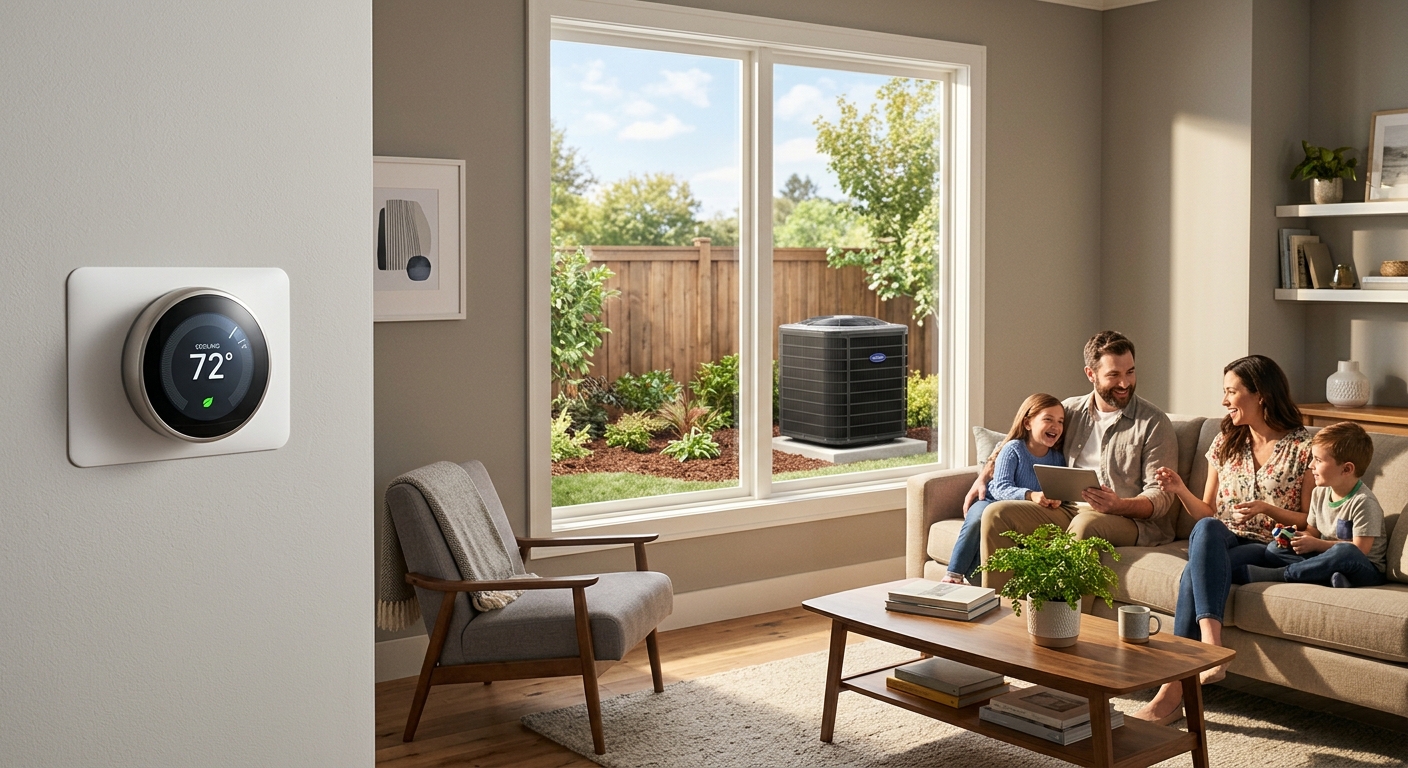
- Have the contractor install a compatible communicating thermostat or smart thermostat that can access multi-stage or full modulation settings. Basic thermostats often cannot take full advantage of variable-speed staging.
- After installation, request a commissioning report showing measured airflow at each register, static pressure readings, and refrigerant charge verification. Improper refrigerant charge alone can reduce efficiency by 15 to 20%.
- Set your thermostat fan to AUTO rather than ON. Variable-speed systems are designed to manage humidity during cooling cycles, and running the fan continuously between cycles can re-evaporate moisture collected on the coil back into your air.
Why It Works: The Benefits
Variable-speed systems hold indoor temperatures within plus or minus 0.5 degrees Fahrenheit of the setpoint, compared to the 3 to 5 degree swings typical of single-speed equipment. Most homeowners notice the difference within the first day of operation.
By running longer cycles at reduced capacity, variable-speed systems can reduce indoor relative humidity to 45 to 55% even on humid days, compared to 60 to 65% with single-speed units. Lower humidity makes 76 degrees feel as comfortable as 72, allowing thermostat setbacks that cut cooling costs further.
Compared to a 14 SEER single-speed system, a 20 SEER2 variable-speed system typically cuts cooling energy use by 25 to 35%. On a $200 monthly summer cooling bill, that is $50 to $70 back in your pocket every month the AC runs.
Variable-speed blowers start and ramp up gradually rather than slamming on at full speed. Most homeowners report the system becomes nearly inaudible at low capacity, dropping from 65 to 70 decibels for a single-speed blower to 50 to 55 decibels at part load.
Fewer hard starts and lower average operating temperatures reduce compressor wear. Variable-speed equipment typically carries 10-year parts warranties versus 5 to 7 years for standard equipment, and real-world service data suggests 18 to 25 years of service life versus 12 to 15 for single-speed units.
💰 Savings Impact by Action
Upgrading from a 14 SEER to a 20 SEER2 variable-speed system reduces cooling energy consumption by up to 35% for the same amount of cooling delivered.
Eliminating frequent compressor start-stop cycles eliminates the startup energy spike that accounts for roughly 15% of total system energy use in single-speed equipment on mild days.
Better dehumidification allows thermostat setpoints 2 to 4 degrees higher with equivalent comfort, reducing cooling runtime by approximately 20% on humid summer days.
Sealing duct leaks before or during installation recovers up to 20% of conditioned air that would otherwise be lost to unconditioned spaces like attics and crawlspaces.
🏠 Key Concepts Explained
The Science Behind It
The physics behind variable-speed comfort come down to one principle: most HVAC energy waste and discomfort happen at the extremes of the operating cycle, not the middle. When a compressor starts, it spikes to 3 to 5 times its running current and takes 2 to 4 minutes to reach stable refrigerant pressures and peak efficiency. When it shuts off, residual heat in the refrigerant circuit dissipates unused. Single-speed systems trigger these inefficient start and stop events 8 to 12 times per hour on mild days.
Variable-speed compressors use electronically commutated motors with inverter drives that vary the electrical frequency powering the motor. Lower frequency means slower motor speed, less refrigerant flow, and reduced capacity output. The system finds a stable operating point that just barely keeps up with the home’s heat gain or loss at any given moment, staying in that efficient middle range for hours at a time rather than cycling. The thermodynamic efficiency of a refrigeration cycle improves significantly at part load because pressure differentials are lower, reducing the work the compressor must do per unit of heat moved.
Humidity control works on the same principle. An evaporator coil removes moisture from air only when that air is in contact with the cold coil surface. Short cycles mean less contact time and warmer average coil temperatures, both of which reduce moisture removal. A variable-speed system running at 40% capacity for 40 minutes removes significantly more total moisture than a single-speed system running at 100% capacity for 15 minutes, even if both move the same amount of sensible heat. This is why indoor humidity levels drop so noticeably after a variable-speed upgrade, often without changing the thermostat setpoint at all.
Frequently Asked Questions
▼ My new variable-speed system runs almost constantly. Is something wrong?
No, this is normal and expected. Variable-speed systems are designed to run long cycles at low capacity rather than short cycles at full blast. Constant low-level operation is far more efficient than frequent on-off cycling. If the system runs continuously at high capacity and still cannot reach the setpoint on a moderate-temperature day, that could indicate an undersized system, refrigerant issue, or significant duct leakage worth investigating.
▼ Will a variable-speed system work with my existing ductwork?
In most cases yes, but duct condition matters more with variable-speed equipment than with older single-speed systems. Have your contractor measure static pressure in your existing duct system before installation. If static pressure is above 0.5 inches of water column, duct repairs or resizing may be needed to get full benefit from the new equipment. Leaky ducts can reduce system efficiency by 20 to 30% regardless of how high-tech the equipment is.
▼ How much can I really save, and when will I see it on my bill?
Savings depend on your climate, how much you run the system, and how inefficient your old equipment was. A realistic range for replacing a 10-plus-year-old 13 to 14 SEER system with a 20 SEER2 variable-speed unit is 25 to 40% lower cooling energy use. You will see lower bills in the first full billing cycle after installation during the cooling or heating season. Track your usage in kilowatt-hours rather than dollar amounts, since utility rates fluctuate.
▼ What rebates and tax credits are available for variable-speed systems?
The federal 25C tax credit covers 30% of equipment and installation costs up to $2,000 per year for qualifying heat pumps and $600 for qualifying central AC or furnaces. Many utilities offer additional rebates of $200 to $1,500 for high-efficiency HVAC equipment. Check the ENERGY STAR rebate finder at energystar.gov with your zip code to see current offers in your area. Rebates and credits combined can reduce net cost by $1,500 to $3,500 on a typical installation.
▼ Can I add a variable-speed air handler to my existing outdoor unit to save money?
Sometimes, but this is only worthwhile if the outdoor unit is variable-speed compatible and relatively new, typically less than 5 years old. Mixing a variable-speed air handler with a single-speed outdoor compressor captures some benefits like quieter air distribution but does not deliver the full humidity control and efficiency gains that make variable-speed systems worth the investment. Get a contractor’s assessment of your specific equipment before going this route.
Quick Tips
- Use your new system’s dehumidification mode or set a humidity target on a compatible thermostat. Many variable-speed systems can prioritize humidity control independently of temperature, which is especially valuable in shoulder seasons when temperatures are mild but humidity is still high.
- Do not judge the new system by the old system’s behavior. It will feel like it is running constantly at first because it is, by design. That steady low hum replaces the blast-and-silence pattern you were used to, and it means the system is working exactly as intended.
- Keep up with filter changes every 60 to 90 days. Variable-speed blowers are more sensitive to airflow restriction than single-speed motors. A dirty filter forces the blower to work harder, increasing static pressure and cutting into the efficiency gains that justify the upgrade.
- Take a photo of your energy bills for the 12 months before installation and compare them to the 12 months after. Actual savings vary widely by climate, usage patterns, and how well the old system was performing, but tracking your own numbers is the only way to confirm real-world results.
Variations for Your Situation
- Apartment/Rental: Renters cannot replace central HVAC, but can capture similar comfort benefits in individual rooms using a mini-split portable or window unit with inverter technology. Look for inverter-driven window AC units (Midea and LG both offer them in the $350 to $550 range) marked with ENERGY STAR Most Efficient designation. These modulate output like whole-home variable-speed systems and dramatically outperform standard window units on both comfort and energy use.
- Tight Budget (under $50 upfront): If a full system replacement is not in reach right now, focus on maximizing your current system’s performance as a bridge strategy. Seal duct leaks with metal foil tape ($12 to $18), upgrade to a MERV 8 filter ($10 to $20), and install a smart thermostat with humidity display ($50 to $130) so you can monitor whether your current system is controlling humidity effectively. These steps also increase the return on a future variable-speed upgrade.
- Older Home (pre-1980): Older homes often have undersized or deteriorated ductwork that will limit the performance of any new HVAC equipment. Before upgrading to variable-speed, budget $500 to $2,000 for a duct inspection, sealing, and possible resizing. Also prioritize attic insulation to at least R-38, since reducing the home’s overall heat gain and loss allows the new system to operate at lower capacity for longer periods, which is exactly the condition where variable-speed technology shines most.