There’s a frustrating disconnect that happens in millions of homes every winter: the thermostat reads a perfectly comfortable temperature, but the living room still feels chilly. You add a blanket, nudge the heat up a degree or two, and your energy bill climbs while the comfort problem stays. The issue isn’t your heating system – it’s the room itself bleeding warmth faster than the furnace can replace it.
Perceived warmth isn’t just about air temperature. It’s shaped by radiant heat from surrounding surfaces, air movement across your skin, humidity levels, and how well the room holds onto the heat it receives. A room with cold walls, drafty windows, and low humidity can feel several degrees colder than the thermostat indicates – a phenomenon building scientists call the “mean radiant temperature” effect. Fixing these root causes costs far less than running your furnace harder, and the results are immediate.
In this post, you’ll learn the six physical factors that control how warm your living room feels, practical steps you can take today for free, and affordable upgrades that pay for themselves in one heating season. Whether you rent or own, live in a new build or a century-old colonial, there are options here that will make a real difference.
What You’ll Need
Click on an item below to shop for the recommended items for this recipe on Amazon.
As an Amazon Associate, we earn from qualifying purchases.
How to Do It
- Close your curtains or blinds at sunset. Windows lose two to three times more heat per square foot than an insulated wall, and pulling drapes closed creates a still-air buffer that cuts that loss significantly.
- Rearrange seating away from exterior walls and windows. Moving your main sofa 18 inches from a cold outside wall eliminates the radiant chill those surfaces project toward occupants.
- Reverse your ceiling fan to run clockwise on the lowest speed setting. This pushes warm air that has risen to the ceiling back down along the walls without creating a cooling draft.
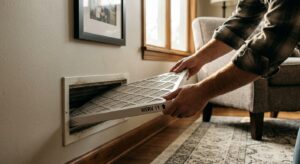
- Check your HVAC vents and make sure none are blocked by furniture or rugs. A blocked supply vent reduces airflow to the room and forces the system to work harder for less comfort.
- Roll a tightly-folded towel or blanket along the base of any door leading to an unheated space, garage, or exterior. This immediately stops cold air from flowing in at floor level.
- Install foam gaskets behind every electrical outlet and switch plate on exterior walls. These $5 packs take about 20 minutes to install and seal a surprisingly common source of cold-air infiltration.
- Apply V-strip weather stripping to the channels of double-hung windows that rattle or let in cold air. This material costs about $10 to $15 per window and can reduce window-related drafts by up to 70%.
- Hang heavy thermal or insulated curtains on curtain rods mounted as close to the ceiling as possible, and long enough to reach the floor. Properly fitted thermal drapes can reduce window heat loss by 25 to 35% compared to bare glass.
- Add a large area rug (at least 5×8 feet) over any hard flooring in the main seating area. Bare floors can feel 10 to 15°F colder than room air, and a rug with a felt pad underneath dramatically raises the perceived floor temperature.
- Place a humidifier in the living room and target 35 to 45% relative humidity using a hygrometer to measure. Raising humidity from 25% to 40% makes the room feel 2 to 3°F warmer at the exact same thermostat setting.
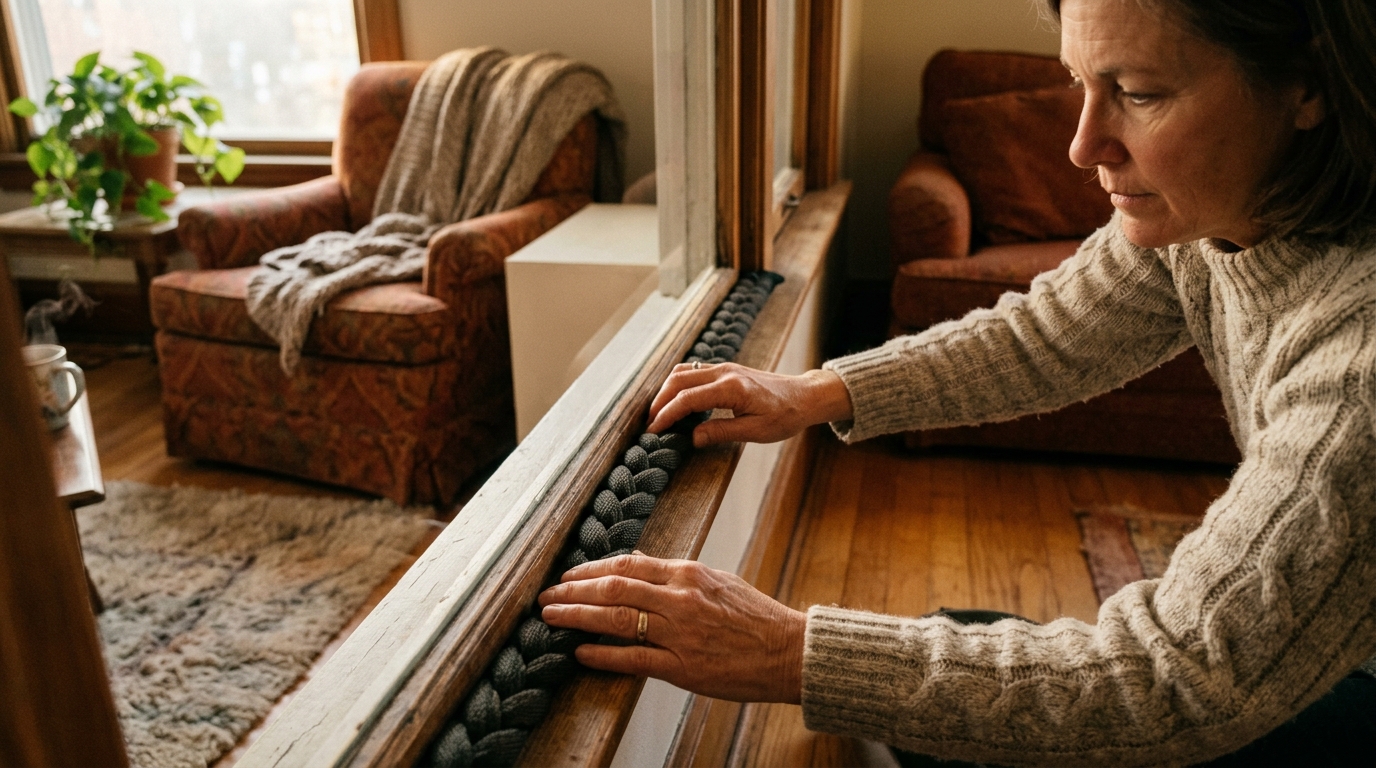
- Use rope caulk – a removable, putty-like product – to temporarily seal gaps around window frames and sashes. It peels off cleanly in spring, making it ideal for renters or anyone who wants a seasonal fix.
- Have a home energy auditor perform a blower door test to pinpoint hidden air leakage sites behind walls, under baseboards, and around recessed lights. This costs $150 to $400 and creates a prioritized action list for air sealing.
- Install interior window insulation film or magnetic interior storm window panels on the coldest windows. These add a second glazing layer and can cut window heat loss by 30 to 50%, with a payback period of one to two heating seasons.
- Hire a weatherization contractor to air-seal the band joist, attic hatch, and top plates in walls adjacent to the living room. These are the three highest-impact air sealing locations in most homes and are difficult to access without experience.
- If baseboard electric heat or a radiator serves the room, have a technician verify it is sized and calibrated correctly. Undersized or poorly balanced heating systems force you to overheat other areas just to keep the living room comfortable.
Why It Works: The Benefits
Addressing drafts and adding insulating window coverings can reduce heat loss enough to cut heating costs by 10 to 20%, which translates to $100 to $300 per season for a typical home.
Eliminating cold drafts and raising mean radiant temperature evens out hot and cold spots, so the whole room feels comfortable without anyone fighting over the thermostat.
Sealing air leaks reduces the infiltration of cold, dry, and sometimes polluted outdoor air, leading to more stable humidity levels and fewer airborne particles entering the living space.
When radiant warmth and humidity are optimized, most households can drop their thermostat 2 to 3°F and feel the same level of comfort, and every 1°F reduction saves roughly 1 to 3% on heating costs.
Insulating window treatments and rugs help the room retain heat so it reaches a comfortable temperature faster after a setback period, reducing how long your furnace needs to run in the morning.
💰 Savings Impact by Action
Sealing gaps around windows, outlets, and doors reduces conditioned air loss and can cut heating costs by 10 to 20% according to DOE estimates.
Properly fitted insulating drapes reduce window heat loss by 25 to 35%, cutting the share of total heat loss attributed to windows by roughly 12% overall.
Raising indoor humidity to 38 to 42% allows most households to lower their thermostat setting by 2°F, saving approximately 4 to 6% on heating costs.
Comfort improvements that allow a 3°F thermostat setback save roughly 3 to 9% on annual heating costs based on DOE guidance of 1 to 3% per degree.
Reversing a ceiling fan to clockwise in winter redistributes stratified warm air and can reduce heating energy use by 5 to 10% in rooms with ceilings above 8 feet.
🏠 Key Concepts Explained
The Science Behind It
The sensation of warmth is governed by your body’s net heat exchange with its environment, and air temperature is only one part of that equation. Thermal comfort researchers use a measure called mean radiant temperature (MRT), which accounts for the temperature of all surfaces surrounding a person. When you sit near a cold window or an exterior wall, your body radiates infrared heat toward that surface faster than the warm air replaces it, creating a chill that has nothing to do with the thermostat reading. A room where walls and windows are at 55°F can feel 5 to 7°F colder than a room where all surfaces are at 68°F, even if the air temperature is identical.
Humidity amplifies this effect through evaporative cooling. In dry winter air below 30% relative humidity, moisture evaporates from your skin continuously, carrying body heat with it. Raising indoor humidity to 38 to 42% slows this evaporation rate enough that most people feel 2 to 3°F warmer with no change in air temperature. This is why the same 68°F setting feels comfortable on a humid spring day but uncomfortably chilly on a dry January morning. A $20 to $40 hygrometer and a modest humidifier can address this with minimal energy cost.
Air movement multiplies heat loss through convection. The convective loops created by cold windows – where chilled air sinks, flows across the floor, and displaces warm air upward – lower the effective temperature in your seating zone even when the room average is adequate. Thermal curtains break this loop by insulating the window surface and stopping cold air from descending in the first place. Meanwhile, rugs and upholstered furniture act as thermal buffers: their higher surface temperatures reduce the radiant heat drain from floors and walls, keeping your body’s heat loss rate lower and your perceived comfort higher.
Frequently Asked Questions
▼ Why does my living room feel so much colder than the rest of the house?
Living rooms often have larger windows, higher ceilings, or more exterior wall exposure than other rooms, all of which increase heat loss. Check whether the supply vent in the room is sized appropriately and fully open, and use a candle to test for drafts around windows and outlets. If the room has cathedral ceilings or shares a wall with a garage, those are likely the primary culprits and may benefit from added insulation.
▼ I sealed the drafts and added curtains but the room still feels cold – what am I missing?
Check your indoor humidity with a hygrometer: if it reads below 30%, that alone can make a room feel 3 to 5°F colder than it should. Also verify that your ceiling fan is running clockwise at low speed to push stratified warm air back down. If both of those are addressed and the room still feels cold, the issue may be insufficient insulation in the walls or floor, which requires a professional energy audit to diagnose.
▼ Can renters make these changes without landlord permission?
Most of these fixes are completely renter-safe: rearranging furniture, using a humidifier, hanging curtains on tension rods, adding a rug, reversing a ceiling fan, and using removable rope caulk on windows all require no permanent modifications. For outlet gaskets and weather stripping, they are easy to install and remove, and many landlords will approve them in writing if asked since they reduce heating costs. Avoid any permanent caulking or structural changes without written approval.
▼ How much will these changes actually show up on my heating bill?
Quick fixes like draft sealing and thermal curtains typically produce noticeable savings within the first full billing cycle after implementation. The DOE estimates that air sealing alone can reduce heating and cooling costs by 10 to 20%, and proper window treatments add another 10 to 15% reduction in window heat loss. Most homeowners see a combined savings of $80 to $250 over a heating season depending on climate, home size, and utility rates.
▼ Is it better to use a space heater or fix the room’s heat loss issues?
Fixing heat loss is almost always more cost-effective long-term. A typical 1,500-watt space heater costs about $0.18 to $0.25 per hour to run, which adds up to $50 to $100 or more per month if used regularly. The same money invested in weather stripping, thermal curtains, and a rug will pay for itself in one season and continue saving money every year without ongoing operating cost.
Quick Tips
- Set your humidifier to turn on when humidity drops below 35% – a simple humidistat attachment automates this and prevents over-humidifying.
- Thermal curtains only work when they are actually closed. Get into the habit of closing them 30 minutes before sunset to trap the day’s solar heat gain in the room.
- Place a small bookcase or tall furniture against your coldest exterior wall. The air gap between the furniture and the wall creates an insulating buffer and raises the effective surface temperature facing the room.
- If you use a space heater as a supplement, position it so it blows warm air across the floor toward seating areas – this counteracts the cold convective loop at ankle level where drafts are most noticeable.
Variations for Your Situation
- Apartment/Rental: Focus on no-modification solutions since HVAC access is limited. Add a large area rug with a felt pad, hang thermal curtains on tension rods (no drilling required), use a cool-mist or warm-mist humidifier targeting 38 to 42% humidity, and apply removable rope caulk to drafty windows. A $30 draft snake at the front door and foam outlet gaskets on exterior walls round out a complete renter-friendly kit for under $100.
- Tight Budget (under $50): Start with the free steps: close curtains at dusk, reverse your ceiling fan, move furniture away from cold walls, and block door gaps with a rolled towel. Then spend selectively: outlet foam gaskets ($5), rope caulk ($6 for two rolls), and a V-strip weather stripping kit ($12 to $15) give you the highest comfort return per dollar. These three purchases address air infiltration, which building scientists consistently rank as the top source of winter heat loss.
- Older Home (pre-1980): Homes built before modern energy codes typically have single-pane or early double-pane windows, minimal wall insulation, and far more air leakage than newer construction. Prioritize a professional blower door test ($150 to $400) to locate the worst leakage sites before spending money on surface fixes. Interior magnetic storm window inserts ($50 to $150 per window) offer a significant upgrade over single-pane glass without the cost of full window replacement, and the payback period is typically one to two heating seasons in cold climates.