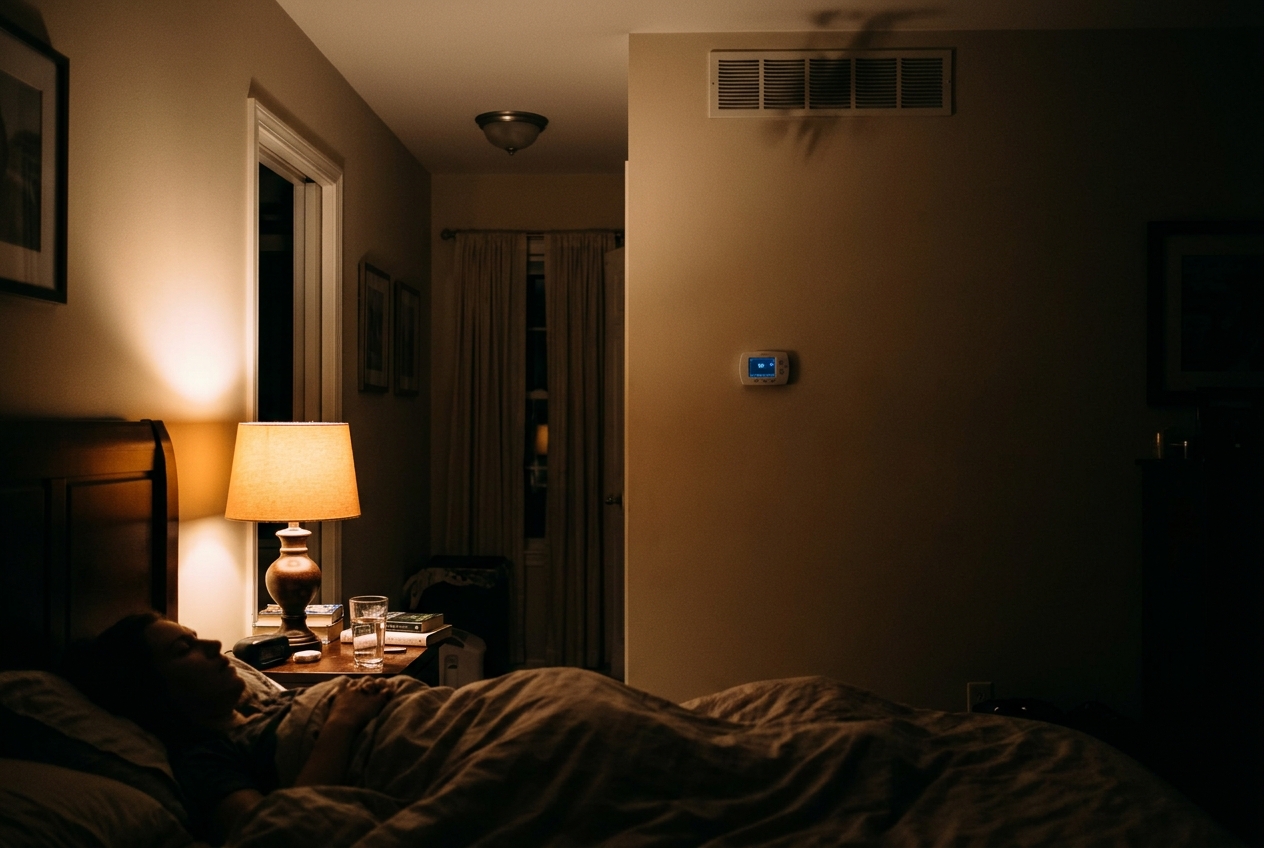
If your furnace or air conditioner kicks on for five or six minutes, shuts off, then starts again ten minutes later, you are probably hearing short cycling. It often gets worse at night, when outdoor temperatures drop, the sun is gone, and your home needs far less heating or cooling than it did at 3 p.m. An oversized system that is merely loud and fast at noon can become a stop-and-start energy drain after dark.
Here is why it matters: heating and cooling equipment is least efficient during startup and shutdown. The compressor, blower, and burners spend those first minutes ramping up before they reach steady-state efficiency. A system that never gets past that phase wastes energy, wears out parts faster, and does a poor job controlling humidity. Oversizing is common, with many homes carrying equipment 25 to 50 percent larger than needed because contractors rounded up or sized by rule of thumb instead of a proper load calculation.
This post explains why oversized systems cycle so much more at night, what it costs you, and what you can do about it. We cover a quick-fix approach you can try this evening, a DIY airflow and thermostat approach for the weekend, and a professional approach for when the equipment itself is the problem.
What You’ll Need
Click on an item below to shop for the recommended items for this recipe on Amazon.
As an Amazon Associate, we earn from qualifying purchases.
How to Do It
- Replace a dirty filter with a clean one. Restricted airflow causes the evaporator coil to ice up or the furnace to overheat, both of which trigger abrupt shutoffs that mimic short cycling.
- Widen your thermostat differential if your model allows it. Many programmable thermostats have a setting called cycle rate, swing, or differential. Setting it to a wider range (for example 1.5 degrees F instead of 0.5) lets each cycle run longer.
- Stop using large overnight setbacks of more than 3 to 4 degrees F. Aggressive recovery calls for full-blast runs and rapid cycling in the morning, while a modest schedule keeps cycles steadier.
- Open all supply registers at least 80 percent. Closing vents in unused rooms raises static pressure and makes an oversized system cycle even faster.
- Place a few days of notes on when the system starts and stops, or use a smart thermostat’s runtime history, so you can tell whether cycles run under 10 minutes. You will want this data if you call a professional.
- Inspect and seal accessible ducts in the attic, crawlspace, or basement with mastic or foil tape (not cloth duct tape). Leaky ducts waste 20 to 30 percent of airflow in typical homes and worsen pressure problems.
- Install a smart or advanced thermostat with cycle-rate and minimum-runtime controls. Models from major brands let you set a minimum compressor on-time, which prevents tiny 3-minute cycles.
- Set the fan to run on a low-speed circulation schedule if your system has an ECM (variable-speed) blower. Continuous gentle airflow evens out bedroom temperatures so the thermostat is not constantly triggered by the one room that drifts.
- Add or balance returns. Bedrooms with closed doors and no return path become pressurized, causing the main thermostat room to over-cool or over-heat. Install a transfer grille or jumper duct (about $30 to $80 each) to fix this.
- Check the thermostat location. A thermostat near a supply vent, a sunny window, or a kitchen wall will satisfy quickly and shut the system off early. Move it to an interior wall away from direct airflow, or add a remote room sensor.
- Add a standalone dehumidifier in humid climates if the house still feels clammy. This takes the latent load off the AC so it is not trying to do two jobs with short runs.
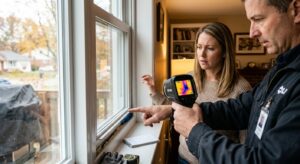
- Hire a contractor or energy auditor to perform a Manual J load calculation and a Manual D duct design check. Expect to pay $300 to $500 as a separate service, or ask for it to be included with a replacement quote.
- Request a duct leakage and static pressure test. A technician measuring static pressure above 0.8 inches of water column is a clear sign that ducts and equipment are mismatched.
- Consider a two-stage or variable-speed (inverter) heat pump, furnace, or air conditioner. These systems run at 40 to 70 percent capacity most of the time, almost eliminating nighttime short cycling and often cutting energy use 20 to 40 percent versus an oversized single-stage unit.
- If the system is under 10 years old, ask about adding a staged or modulating upgrade, such as a variable-speed blower or a thermostat designed for staging, rather than full replacement.
- Improve the building envelope first when possible. Air sealing and attic insulation can lower your home’s load by 15 to 30 percent, which may make a smaller replacement system sufficient and cheaper to buy.
Why It Works: The Benefits
Reducing short cycling can trim heating and cooling energy by roughly 5 to 15 percent, since the system spends more time at steady-state efficiency and less time in startup mode.
Longer, slower cooling cycles can remove noticeably more moisture, often bringing indoor humidity from the clammy 60 percent range down to the comfortable 45 to 50 percent range.
Fewer starts means fewer sudden blower roars and temperature swings. Many homeowners notice bedrooms stay steadier through the night.
Compressors and igniters wear mostly at startup. Cutting cycles from 8 per hour to 3 or 4 can meaningfully extend component life and reduce repair calls.
Air only gets filtered while the blower runs. Longer cycles, or continuous low-speed fan operation, move more of your home’s air through the filter.
💰 Savings Impact by Action
Longer cycles keep equipment at steady-state efficiency and can trim energy use by about 5 to 15 percent.
Sealing leaky ducts recovers the 20 to 30 percent of airflow typically lost and often reduces runtime by 10 to 20 percent.
Wider differentials and modest setbacks prevent tiny cycles and avoid inefficient recovery runs.
A properly sized two-stage or variable-speed system can cut heating and cooling energy 20 to 40 percent compared with an oversized single-stage unit.
Air sealing and attic insulation can lower the home’s load by 15 to 30 percent, reducing total runtime and cycling.
🏠 Key Concepts Explained
The Science Behind It
Heating and cooling systems are designed to match the heat your house gains or loses at its peak design conditions, such as the hottest afternoon or coldest night of the year. For about 98 percent of the year, the actual load is much smaller. A single-stage system has only one output level, so when the load is small it has to compensate by running in short bursts. At night, solar gain disappears, outdoor temperatures drop toward your setpoint, and internal heat from cooking and electronics fades, so the load shrinks further and cycles get even shorter.
Equipment efficiency ratings such as SEER and AFUE describe steady-state or seasonally averaged performance, but real-world efficiency depends heavily on runtime. A compressor takes roughly 2 to 3 minutes to stabilize refrigerant pressures and reach its rated capacity, and a furnace loses heat up the flue during the warm-up and cool-down phases. When every cycle lasts only 5 minutes, a large portion of the energy goes to those transitions instead of useful conditioning.
Humidity control suffers for a related reason. An air conditioner dehumidifies by chilling the air below its dew point on the evaporator coil, and water only drains off after the coil has been cold for several minutes. Short cycles cool the air quickly, satisfy the thermostat, and shut down before much moisture is removed. Water that condensed on the coil can even re-evaporate into the airstream when the unit stops. This is why oversized systems often leave a home cool but sticky, and why homeowners lower the thermostat even further, wasting more energy.
Frequently Asked Questions
▼ How do I know if my HVAC is oversized or just broken?
Oversizing is a chronic condition: the system has always cycled quickly, heats or cools the house fast, and leaves rooms clammy or uneven. A repair issue usually appears suddenly, often with symptoms like ice on the coil, error codes, or strange noises. A technician can measure runtime, static pressure, and temperature split to tell the difference.
▼ Can renters do anything about short cycling without landlord permission?
Yes, to a point. Replace the filter, keep vents open, move or shield the thermostat from direct sun if the lease allows, and use a portable dehumidifier for humidity. For anything involving the equipment or ducts, send your landlord your cycle log and ask them to have a technician check it.
▼ Will adding a smart thermostat fix short cycling by itself?
Sometimes it reduces it by 20 to 40 percent if the thermostat has minimum runtime or differential settings, but it cannot change the fact that the equipment is physically too big. Think of it as a helpful bandage, not a cure. Combine it with airflow fixes for the best results.
▼ How long before I notice savings on my bill?
Settings and filter changes can show up in your next bill, usually as a 3 to 8 percent drop in heating or cooling energy. Duct sealing and return upgrades usually show their full effect over a full season. Equipment replacement savings are measured over years, so compare against a full year of bills.
▼ What if my home is older than 30 years?
Older homes commonly have leaky ducts, uneven insulation, and equipment sized for much worse insulation than the home has today after upgrades. Start with air sealing and duct sealing, then get a new load calculation before replacing equipment, since your actual load may be well below what the old unit provides.
Quick Tips
- Aim for cycles that run at least 10 to 15 minutes in mild weather. Shorter than that is a sign of oversizing or a control problem.
- Do not buy a bigger system just because the old one seemed to struggle on the hottest day of summer. Check ducts, insulation, and airflow first.
- If you add insulation or replace windows, tell your HVAC contractor, because the new load calculation will likely be lower than the original.
- Use a smart thermostat’s runtime reports to track how many cycles per hour your system makes, and compare before and after any changes.
- Ask contractors about variable-speed or inverter equipment even if it costs 20 to 40 percent more up front, since it handles low-load nights far better than single-stage units.
Variations for Your Situation
- Apartment/Rental: Focus on what you control. Replace filters monthly ($5 to $15), keep supply vents and returns clear, use a $25 to $40 plug-in thermometer to check for temperature swings, and run a portable dehumidifier ($150 to $250) if humidity stays high. Send your landlord your cycle-time notes and request a technician visit.
- Tight Budget (under $50): Replace the filter, open all vents, widen your thermostat differential, reduce overnight setback to 2 or 3 degrees, and seal visible duct joints with foil tape ($8 to $12 per roll). These steps are inexpensive and can cut cycling noticeably.
- Older Home (pre-1980): Expect leaky ducts and uninsulated attic spaces to be the main problem. Prioritize attic air sealing and insulation to R-38 or higher ($1,500 to $3,500 professionally, less DIY), and have ducts tested for leakage. A lower load may mean your existing system is even more oversized than you thought.
- Humid Climate: Prioritize humidity control. Consider a variable-speed system or a whole-home dehumidifier ($1,000 to $2,000 installed), and avoid oversized equipment that sacrifices moisture removal for fast cooldowns.