You brush your hand across the wall and notice it: the light switch feels warm to the touch. Maybe even hot. Your first instinct is probably to wonder if something is wrong, and honestly, that instinct is worth trusting. Warm switches are one of those home signals that can mean nothing at all or something quite serious, depending on what type of switch it is and how hot it actually feels.
The good news is that diagnosing a warm light switch does not require an electrician on the first call. There is a clear decision tree based on switch type, temperature, and a few visual checks that will tell you whether you are dealing with normal physics, a fixable wiring issue, or a genuine fire hazard. This post walks you through exactly that process, with specific temperature thresholds, the building science behind why switches warm up, and the right action for every scenario.
We will also cover the energy angle, because some of the same issues that cause warm switches, like outdated dimmers, overloaded circuits, and poor connections, also waste electricity and quietly inflate your monthly bill. A few targeted fixes can solve the safety concern and trim your energy costs at the same time.
What You’ll Need
Click on an item below to shop for the recommended items for this recipe on Amazon.
As an Amazon Associate, we earn from qualifying purchases.
How to Do It
- Touch the switch plate and estimate the heat level: slightly warm (under 90F) is often normal for dimmers, noticeably hot (you pull your hand away) is a warning sign, and hot enough to smell plastic is an emergency requiring you to cut power at the breaker immediately.
- Identify the switch type: is it a standard toggle, a dimmer, or a combination outlet-switch? Dimmers are expected to feel warm. Standard toggles and outlet-switches should never feel more than barely warm.
- Check the bulb type connected to the dimmer. If you have LED bulbs on an older dimmer not rated for LEDs, that mismatch causes excess heat in the switch. Look for ‘LED compatible’ labeling on the dimmer faceplate.
- Smell the switch plate with your nose close to the wall. A burning plastic, fishy, or electrical smell indicates arcing at the connections and means you should cut power to that circuit and call a licensed electrician before using it again.
- Check the circuit breaker for that switch. If the breaker has tripped recently or feels warm itself, you likely have an overloaded circuit that needs load reduction or a panel evaluation.
- If the switch passes all checks (dimmer, no smell, no excessive heat, no tripped breaker), label it and monitor it for two weeks. If warmth increases or spreads to the faceplate screws, move to the DIY inspection approach.
- Turn off the circuit breaker controlling the switch. Confirm power is dead using a non-contact voltage tester held near the switch wires before removing anything.
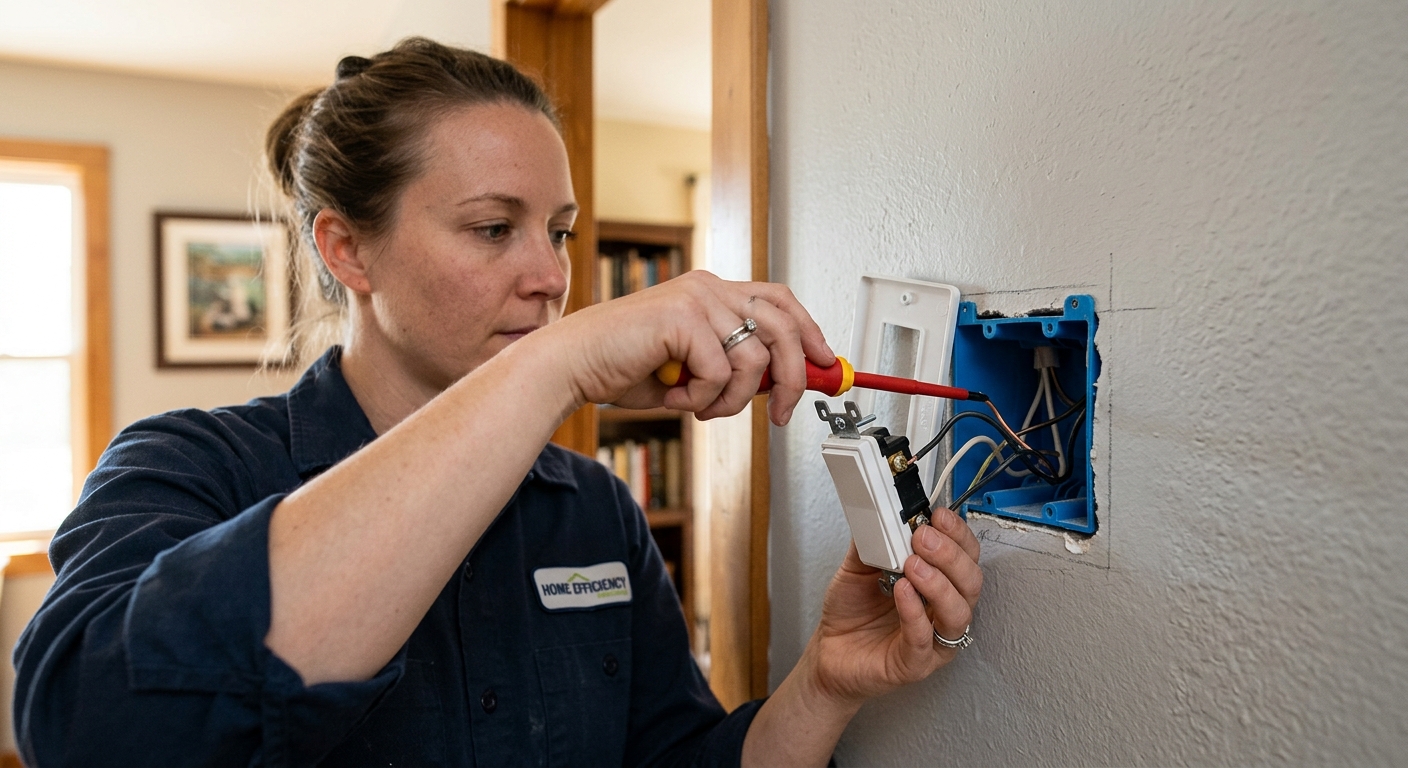
- Remove the faceplate and unscrew the switch from the electrical box. Gently pull it out to expose the wiring, leaving wires connected for now.
- Inspect all wire connections. Look for scorch marks, melted insulation, wires that pull free easily, or green corrosion on terminals. Any of these findings means the switch and possibly the wiring need professional evaluation before proceeding.
- Check the switch rating printed on its back or side. Compare it to the total wattage of all bulbs it controls. If the load exceeds 80% of the switch rating, replace with a higher-rated switch or reduce the bulb count.
- Install a replacement switch rated correctly for your load. If it is a dimmer circuit with LED bulbs, purchase an LED-compatible dimmer (Lutron Caseta or Leviton DSL06 are well-reviewed options in the $15 to $45 range). Connect wires to the same terminals as the original, using the screw terminals rather than the backstab holes for a more reliable connection.
- Reinstall the switch, restore power, and recheck the plate temperature after 30 minutes of use. A correctly installed LED-compatible dimmer should feel no warmer than slightly warm, roughly the temperature of a book left in mild sunlight.
- Cut power to the affected circuit at the breaker and do not restore it until a professional has inspected it, especially if you detected any burning smell or visible scorch marks.
- Document the issue with photos of the switch, faceplate, and any visible wiring before the electrician arrives. This helps them assess severity quickly and may affect what parts they bring.
- Request that the electrician check not just the one switch but the full circuit, including the panel connection, wire gauge, and any other devices on the same breaker, since a hot switch often indicates a systemwide issue.
- Ask specifically whether your home has aluminum branch circuit wiring, which was common from 1965 to 1973. Aluminum wiring requires special anti-oxidant compound and CO/ALR-rated devices at every connection point to be safe.
- Get a written estimate covering both the diagnosis and any remediation, and ask whether the work will be permitted and inspected by your local building department, which is required for most electrical repairs in most jurisdictions.
Why It Works: The Benefits
Loose connections and overloaded circuits are among the top causes of residential electrical fires. Identifying and fixing a hot switch eliminates one active ignition risk in your home.
Replacing an inefficient leading-edge dimmer with a modern LED-compatible trailing-edge dimmer reduces the energy wasted as switch heat by up to 80%, and pairing it with LED bulbs cuts the circuit’s total energy draw by 50 to 75%.
Overloaded or incompatible dimmers cause LED bulbs to flicker, buzz, and fail prematurely, sometimes within months. A matched dimmer-bulb combination can extend LED bulb life to the full rated 15,000 to 25,000 hours.
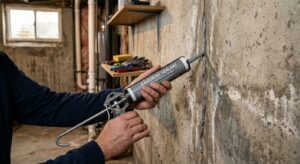
Sealing the electrical box gap as part of this fix reduces drafts and cold spots near switch plates, cutting air infiltration by a measurable amount in older homes.
Knowing exactly why your switch is warm, and confirming it is either safe or already fixed, eliminates ongoing worry without requiring an expensive service call for every case.
💰 Savings Impact by Action
Replacing an incandescent dimmer with an LED-compatible trailing-edge dimmer reduces wasted switch heat and cuts dimmer energy dissipation by up to 80%, contributing roughly 10 to 12% savings on that circuit.
Switching from incandescent bulbs to LEDs on a dimmable circuit reduces lighting energy consumption by 75%, which also eliminates the high-wattage load that causes dimmer overheating.
Installing foam gaskets behind switch plates and outlet covers on exterior walls reduces air infiltration at those penetrations and can trim whole-home heating and cooling costs by 3 to 5%.
Redistributing devices across circuits to eliminate overloading reduces resistive losses in wiring and connections, recovering 5 to 8% of energy that was previously lost as heat.
🏠 Key Concepts Explained
The Science Behind It
Electricity produces heat whenever it flows through resistance, a relationship described by Joule’s Law: heat generated equals current squared times resistance times time. This is why even a perfectly healthy circuit produces some warmth at connection points. The key variable is whether the resistance is expected and within design limits, or whether it is elevated by a loose connection, an overloaded wire, or a device mismatch.
Traditional incandescent dimmers work by using a TRIAC (a type of semiconductor) to chop the AC waveform, reducing the average voltage delivered to the bulb. The energy that does not reach the bulb is not destroyed: it is dissipated as heat inside the dimmer housing. This is physics that cannot be avoided with a leading-edge dimmer, which is why a warm dimmer switch is often completely normal. Modern trailing-edge dimmers designed for LED loads use a different switching method that wastes far less energy as heat, which is why an LED-compatible dimmer feels cooler under the same conditions.
A loose wire connection creates what electricians call a high-resistance fault. At that tiny gap or corroded contact point, electrons must jump or squeeze through a constricted path. The energy lost in that jump converts directly to heat and, in extreme cases, to visible arcing. Over time, arcing carbonizes the surrounding plastic, which is itself flammable. This is why a burning smell at a switch is treated as an emergency: the switch housing may already be in the early stages of ignition. Building codes require switches and receptacles to be rated for the load they carry precisely because undersized or damaged devices cannot safely dissipate the heat their resistance generates.
Frequently Asked Questions
▼ My dimmer switch feels warm but the bulbs are LEDs. Is that normal?
It depends on whether your dimmer is rated for LED loads. An old incandescent dimmer running LED bulbs will run warmer than it should because the two technologies are electrically incompatible. Check the dimmer faceplate for an LED compatibility label. If it does not have one, replace it with a current LED-compatible dimmer ($15 to $45) and the warmth should drop noticeably.
▼ My light switch smells like burning. What should I do right now?
Cut power to that circuit at your breaker panel immediately and do not restore it. A burning smell from a switch indicates arcing or overheating at the wire connections, which is a fire hazard. Call a licensed electrician the same day. Do not simply reset the breaker and continue using the switch.
▼ Is a warm switch covered under homeowners insurance if it causes a fire?
Coverage depends on your policy and whether the cause is deemed negligence or a sudden accident. Documenting that you investigated a known warm switch, ignored it, and had a fire could complicate a claim. Fixing a known hazard promptly protects both your home and your insurance position.
▼ Can I just replace a warm switch myself or do I need a permit?
Replacing a like-for-like switch in most jurisdictions is considered minor electrical repair and does not require a permit. However, if the underlying cause is an overloaded circuit, damaged wiring, or aluminum branch wiring, any remediation work typically does require a permit and inspection. When in doubt, call your local building department and ask before starting.
▼ How do I know if my home has aluminum wiring?
Look at the wire insulation in your electrical panel or any open junction box. Aluminum wiring is silver-colored rather than copper-colored, and the insulation jacket may be printed with ‘AL’ or ‘Aluminum.’ Homes built between 1965 and 1973 are most likely to have aluminum branch circuit wiring. If you find it, have a licensed electrician evaluate all your devices, since standard switches and receptacles are not safe for aluminum wiring without CO/ALR-rated replacements.
Quick Tips
- Replace any dimmer older than 10 years with a current LED-compatible model, even if it seems to be working. Older dimmers were designed for incandescent loads and run measurably hotter with LED bulbs.
- Use the screw terminals on a new switch rather than the push-in backstab holes. Backstab connections have more resistance over time and are a leading cause of warm outlets and switches in homes 10 to 20 years old.
- If you have multiple warm switches in the same area of your home, suspect a shared circuit issue rather than multiple independent switch failures.
- Install an air sealing gasket behind the switch plate in exterior walls. It takes 30 seconds per switch and reduces drafts and energy loss with no electrical work required.
Variations for Your Situation
- Apartment/Rental: Renters should not open switch boxes or attempt wiring repairs. If your switch feels hot or smells like burning, document it with a photo, notify your landlord in writing, and request written confirmation of when it will be repaired. In most jurisdictions, a landlord is legally required to address electrical hazards within a short timeframe. You can safely install an air sealing gasket behind the faceplate without tools and without violating your lease.
- Tight Budget (under $50): Start with the free diagnostic steps to rule out emergencies. If the switch is a dimmer with incompatible LED bulbs, switching to a non-dimming standard toggle costs $3 to $8 and eliminates the heat immediately. A pack of outlet and switch air sealing gaskets costs under $10 and addresses the insulation bypass issue. Reserve budget for a non-contact voltage tester ($15 to $20) if you do not already own one, since it is the single most important safety tool for any electrical work.
- Older Home (pre-1980): Homes of this age are more likely to have backstab wiring connections that have loosened over decades, undersized 60-amp panels, and potentially aluminum branch wiring. Warm switches in older homes warrant more caution than in newer construction. Start with the diagnosis approach, and if you find anything other than a simple dimmer mismatch, budget for a licensed electrician evaluation. The cost of a service call ($100 to $200) is modest compared to the risk of ignoring aging connections in older wiring.