That gap under your front door might not look like much, but it behaves like a small window left open all winter long. Door thresholds take a beating from foot traffic, UV exposure, and seasonal temperature swings, and once the rubber or vinyl seal compresses or cracks, conditioned air leaks out and cold outside air floods in. The U.S. Department of Energy estimates that air leaks around doors and windows account for 25 to 30 percent of a home’s heating and cooling energy use, and a failed threshold is one of the biggest single-point offenders.
The good news is that replacing a threshold is one of the most cost-effective home improvements you can make before winter arrives. Materials run between $25 and $80 for most exterior doors, the job requires basic hand tools, and you will feel the difference immediately, both in comfort and in reduced drafts. Whether your threshold is visibly cracked, has a compressed sweep that no longer contacts the door, or simply lets daylight through at the bottom of the door, this post walks you through exactly how to fix it.
Below you will find two approaches: a quick temporary fix for homeowners who need immediate relief, and a full DIY replacement for a lasting solution. We cover the building science behind why thresholds matter, what to buy, how to measure and install correctly, and how to troubleshoot common problems so you can head into winter with a properly sealed home.
What You’ll Need
Click on an item below to shop for the recommended items for this recipe on Amazon.
As an Amazon Associate, we earn from qualifying purchases.
How to Do It
- Open the door fully and inspect the threshold. If you can see daylight under the closed door or feel a draft, confirm whether the metal base is still solid or if it is cracked, loose, or rocking underfoot.
- Locate the screw slots on the top face of the threshold. Some thresholds have two to four screws that allow you to raise the body to press the insert tighter against the door bottom. Try tightening or raising these first before buying any parts.
- If the insert itself is cracked or compressed flat, pull it straight out of the slot. Take the old insert to a hardware store to match the profile, or measure the slot width and pick up a universal vinyl bulb insert for $8 to $15.
- Cut the new insert to the exact door width with scissors or a utility knife. Press or slide it firmly into the channel until it seats fully along the entire length.
- Close the door and check for light gaps. The insert should lightly contact the door bottom across its full width. If a gap remains, raise the threshold body using the adjustment screws (turn clockwise to raise).
- Measure the door opening width precisely from jamb to jamb at floor level. Also measure the depth of the existing threshold and the height of the finished floor on both sides, as you may need to trim the new threshold to clear flooring transitions.
- Remove the old threshold by backing out the screws and prying it up gently with a flat pry bar. If it is caulked in place, score the caulk line with a utility knife first to avoid pulling up finish flooring.
- Clean the sill area thoroughly. Remove old caulk, adhesive, and debris. Inspect the wood sill for soft spots or rot. Firm up any soft areas with wood hardener before proceeding, or call a contractor if structural damage is extensive.
- Apply a continuous bead of exterior-grade siliconized acrylic caulk to the underside of the new threshold and along both jamb sides where it will contact wood. This seals the bottom edge and prevents water infiltration.
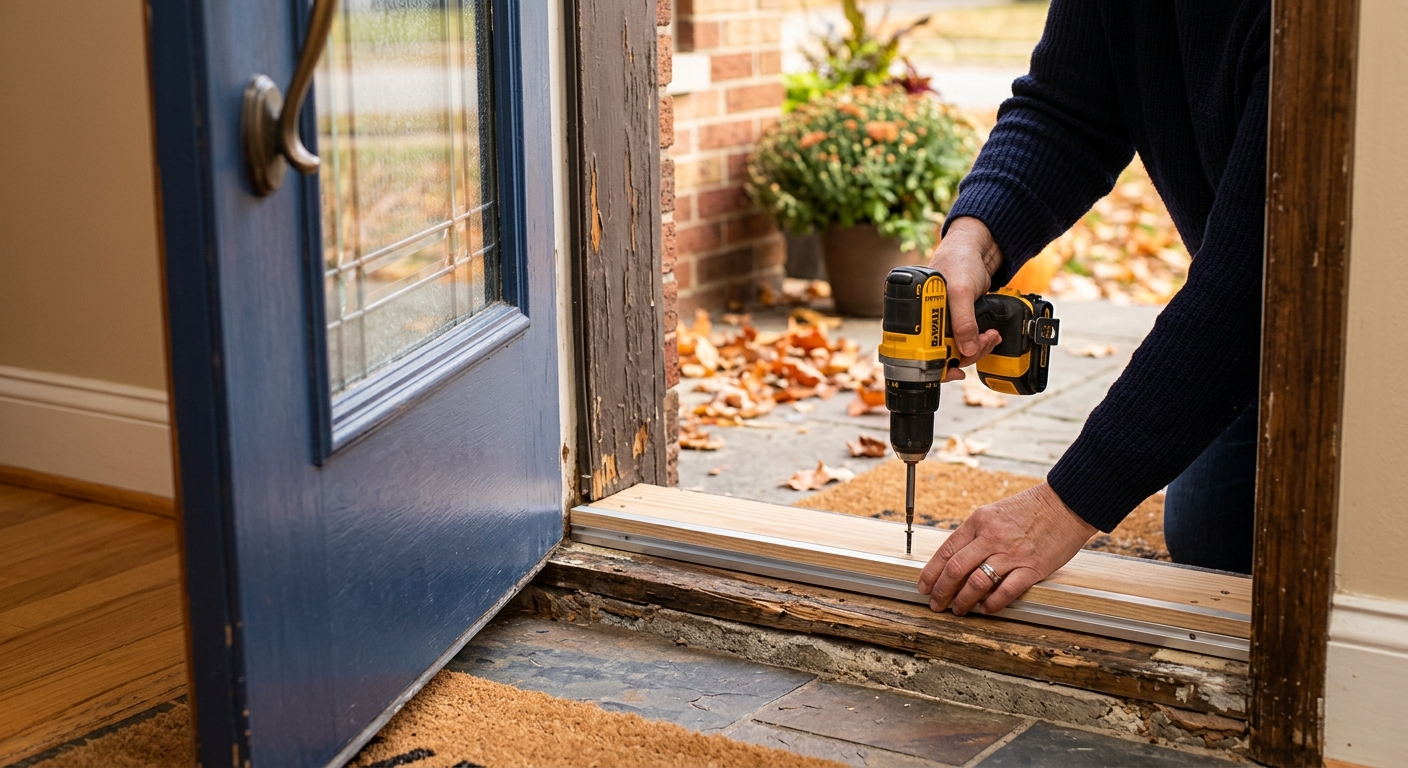
- Set the new threshold in place, pressing it firmly into the caulk bed. Align it so the vinyl insert contacts the bottom of the door evenly. Drill pilot holes to avoid splitting and drive the included screws snugly, not over-tight.
- Close the door and test the seal. The threshold insert should make light, even contact with the door bottom. Use the adjustment screws to fine-tune height until no light is visible and the door swings freely without dragging hard on the threshold.
- Call two or three licensed carpenters or door specialists for estimates. Describe the visible rot or soft flooring near the threshold and ask whether the door frame itself needs assessment.
- Request that the contractor inspect the sill pan flashing while the threshold is out. Missing or failed flashing is the root cause of most threshold rot and must be corrected before installing a new threshold.
- Have the contractor install new sill pan flashing or self-adhering flashing tape, replace any rotted sill wood with pressure-treated lumber, and install a commercial-grade adjustable threshold with a multipoint seal.
- Ask the contractor to re-examine weatherstripping on the door stops and hinges side while the door is accessible. A full door perimeter seal performed at the same visit maximizes the efficiency gain and reduces total labor cost.
Why It Works: The Benefits
A properly sealed threshold can reduce whole-home air leakage by 5 to 15 percent depending on baseline conditions, translating to $80 to $200 in annual heating savings for an average home spending $1,500 or more on winter energy.
Eliminating the cold draft at floor level makes the area near the door noticeably warmer, which matters most in entryways, kitchens with back doors, and any room where occupants sit near the floor.
A sealed threshold stops rain infiltration and condensation at the sill, protecting hardwood floors, subfloor sheathing, and the door frame from moisture damage that can cost $500 to $3,000 or more to remediate.
Mice can squeeze through a gap as small as 1/4 inch. Insects, including ants and centipedes, need even less space. Replacing a worn threshold closes one of the most common pest entry points in a home.
When cold air pours in at floor level, homeowners often compensate by raising thermostat setpoints, running the furnace harder and longer. A sealed threshold reduces furnace runtime, extending equipment life and reducing maintenance costs.
💰 Savings Impact by Action
Sealing a failed door threshold and sweep can reduce whole-home air infiltration by up to 13 percent, directly cutting heating load.
Sealing the complete door perimeter including threshold, sweeps, and weatherstripping together reduces door-related air leakage by up to 20 percent.
A properly installed threshold with caulked base reduces water infiltration at the sill by up to 80 percent, protecting against costly rot repairs.
Replacing a worn threshold insert lowers perceived cold drafts at floor level, allowing thermostat setpoints to be reduced by 1 to 2 degrees and saving roughly 3 percent per degree on heating costs.
🏠 Key Concepts Explained
The Science Behind It
A door threshold sits at the intersection of two pressure zones: the warm, positively pressurized interior of a heated home and the cold, lower-pressure exterior. Physics dictates that air moves from high pressure to low pressure, and in winter that means interior heat is constantly pushing toward any available exit, including the small channels created by a worn threshold seal. Researchers at Lawrence Berkeley National Laboratory have measured air infiltration through door perimeters accounting for 5 to 15 percent of whole-home air leakage, with the threshold contributing a disproportionate share because it spans the full door width at the lowest, most exposed point of the assembly.
The mechanism is compounded by the stack effect. As warm air rises through a building and escapes near the roofline or upper floors, it creates a slight negative pressure at ground level. This negative pressure actively draws cold outside air inward through low gaps, including a failed threshold. The taller the building and the greater the indoor-outdoor temperature difference, the stronger this suction becomes. On a 20-degree-Fahrenheit day with a 20-mile-per-hour wind, infiltration through a 1/8-inch threshold gap can reach several cubic feet per minute, continuously robbing the furnace of its work and driving up fuel consumption.
Threshold materials also matter beyond the seal. Bare aluminum conducts heat roughly 1,500 times more efficiently than still air and about 200 times more efficiently than wood. An aluminum threshold without a thermal break functions as a small heat fin, conducting warmth from the subfloor to the cold exterior slab or stoop. Modern thresholds address this by embedding a low-conductivity vinyl or composite insert that interrupts this conductive pathway while simultaneously providing the flexible air seal. Choosing a threshold with an adjustable, replaceable vinyl bulb insert gives you both the thermal break and a seal you can restore in 15 minutes years down the road without replacing the entire assembly.
Frequently Asked Questions
▼ I replaced the threshold but there is still a draft under my door. What am I missing?
Check the door sweep attached to the bottom of the door itself, not just the threshold on the floor. The threshold and door sweep work as a pair and both must be in good condition for a complete seal. Also verify the threshold adjustment screws are raised evenly across the width so the insert contacts the door bottom uniformly with no low spots in the middle.
▼ My door drags badly on the new threshold. How do I fix it without lowering the seal?
Lower the threshold slightly using the adjustment screws until the door swings freely, then check whether a worn door sweep is the real gap source. If the door itself has dropped due to sagging hinges, tighten all hinge screws first and replace any that are stripped with longer screws to bite into fresh wood before adjusting the threshold height.
▼ Can I replace a threshold on a door with tile flooring on one side without damaging the tile?
Yes, but proceed carefully when removing the old threshold. Score the caulk line on both sides with a utility knife before prying to avoid cracking grout or popping tiles. Some thresholds are screwed directly into a mortar bed under tile, so expect to use a multi-tool or oscillating saw to cut old fasteners rather than trying to pry up the whole assembly.
▼ How do I know if I need a full threshold replacement versus just adjusting the existing one?
If the metal threshold body is solid, level, and not cracked or corroded, try the two-minute adjustment first. Use a screwdriver to raise the body until the vinyl insert just contacts the door bottom. If the insert is cracked, crushed flat, or falls out, buy just a replacement insert for $8 to $15. Replace the entire threshold only if the metal base is bent, corroded, loose from the sill, or if the sill underneath is damaged.
▼ Will replacing the threshold actually show up on my energy bill?
Yes, though the magnitude depends on how leaky the original threshold was. In a home with a visibly drafty door, homeowners commonly report a $15 to $40 reduction in monthly heating bills after sealing the full door perimeter, which includes the threshold. The effect is most noticeable in months with sustained below-freezing temperatures and in rooms where the door is the primary exterior opening.
Quick Tips
- Replace the door sweep on the door bottom at the same time you replace the threshold. The two components seal against each other, and a new threshold paired with a worn door sweep will still leak.
- In climates with heavy snowfall or rain, apply a second bead of clear exterior caulk along the front edge where the threshold meets the exterior stoop to stop water from wicking underneath.
- Aluminum thresholds with a bronze anodized finish hold up better to UV and foot traffic than painted or unfinished versions, and they resist corrosion from road salt tracked in during winter.
- If your door has an active leak during rain, check that the sill pan flashing slopes outward at a 5-degree minimum angle before installing a new threshold, or water will pool and re-enter.
Variations for Your Situation
- Apartment/Rental: Renters typically cannot replace a threshold permanently but can install an adhesive door draft stopper or a weighted fabric draft snake on the interior side for $10 to $25. These products reduce infiltration by 30 to 50 percent compared to an open gap and require no tools or landlord permission. Document the worn threshold with photos and submit a written maintenance request so the landlord is on record for the repair.
- Tight Budget (under $50): Skip the full threshold replacement and start with a $15 vinyl bulb insert replacement plus a $10 adhesive-backed door sweep on the door bottom. This combination addresses both sealing surfaces for under $30 and delivers 70 to 80 percent of the benefit of a full replacement. Add a tube of $5 rope caulk at the base of the door frame interior for additional air sealing at zero tools required.
- Older Home (pre-1980): Pre-1980 homes commonly have non-standard door widths of 30 or 32 inches and may have oak or fir sills that are partially rotted but still serviceable with wood hardener. Measure twice before ordering any threshold, as standard 36-inch units will not fit. Also check that the door frame itself is plumb and square, as older homes often have settled frames that cause uneven gaps. A tapered threshold shim or adjustable unit with a wide height range is the best choice for out-of-square openings.