Your refrigerator runs 24 hours a day, 7 days a week, making it one of the biggest energy consumers in your home. Yet most homeowners never think about maintaining it beyond wiping down the shelves. Hidden underneath or behind the unit, condenser coils quietly collect dust, pet hair, and debris until the refrigerator has to strain just to keep your food cold.
When condenser coils are clogged, the compressor overheats and runs longer cycles to maintain temperature. Studies and appliance manufacturer data consistently show that heavily soiled coils can increase energy consumption by 25 to 35%. Over a full year, that can add $40 to $80 to your electricity bill depending on your rate and the size of your fridge. More critically, that constant overwork accelerates compressor wear, the single most expensive repair on any refrigerator, often costing $300 to $500 or more.
The good news: cleaning condenser coils takes about 10 minutes with basic tools, requires no technical skill, and pays for itself immediately. This post walks you through two approaches, from a quick coil vacuum to a thorough DIY deep clean, so you can pick the one that fits your schedule and see real results on your next power bill.
What You’ll Need
Click on an item below to shop for the recommended items for this recipe on Amazon.
As an Amazon Associate, we earn from qualifying purchases.
How to Do It
- Unplug the refrigerator from the wall outlet or switch off its dedicated circuit before doing anything else. Never clean coils while the unit is energized.
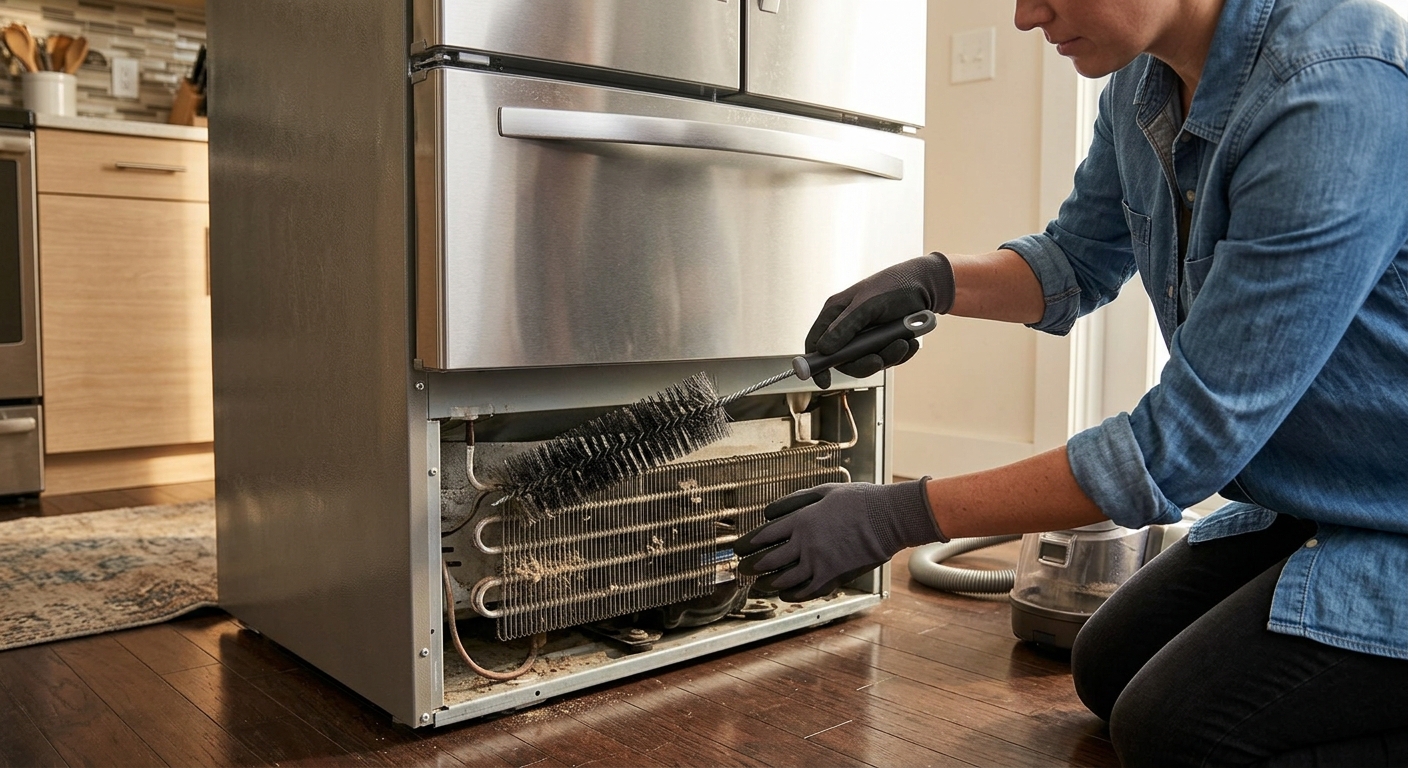
- Locate the condenser coils. On most refrigerators made after 2000, they are behind a snap-off grille at the bottom front of the unit. On older models, coils are on the back of the fridge as exposed black tubing.
- Remove the front grille by pressing the tabs on each end and pulling it toward you. Set it aside.
- Use a vacuum cleaner with a crevice or brush attachment to vacuum all visible dust, lint, and debris from the coil fins, the floor underneath, and the area around the compressor.
- If you have a refrigerator coil cleaning brush (a long, flexible bristle brush sold for under $10 at hardware stores), run it through the coil fins to dislodge embedded debris, then vacuum again.
- Replace the grille, plug the refrigerator back in, and check that it returns to normal operation within 30 minutes.
- Unplug the refrigerator and pull it away from the wall to give yourself at least 2 feet of clearance on the back and sides.
- Remove the front bottom grille if present and vacuum the coil area from the front as described in the quick fix approach.
- Move to the back of the unit. If your model has a cardboard or thin metal access panel covering the condenser and compressor area, remove the screws holding it in place and set the panel aside.
- Use a coil cleaning brush to work through the entire length of the condenser coils, using short strokes to pull debris out rather than pushing it deeper into the fins.
- Vacuum thoroughly after brushing, including the compressor motor housing, the condenser fan blades if accessible, and the floor beneath the unit.
- Wipe down the condenser fan blades with a damp cloth to remove any caked-on grease or debris, then allow to dry before replacing panels.
- Reattach the access panel, push the refrigerator back into position leaving 1 to 2 inches of clearance from the wall, and plug it back in.
Why It Works: The Benefits
Clean coils can reduce refrigerator energy consumption by 25 to 35%, saving the average household $40 to $80 per year depending on local electricity rates and fridge size.
Reducing compressor strain can add 3 to 5 years to a refrigerator’s working life. Since a new mid-range refrigerator costs $800 to $1,500, delayed replacement represents hundreds of dollars in avoided cost.
A refrigerator struggling with dirty coils often experiences temperature swings inside the cabinet. Clean coils allow the thermostat to cycle normally, keeping food between 35 and 38 degrees F as intended.
An overworked refrigerator dumps excess heat into your kitchen, adding to your cooling load in summer. Cleaning coils reduces this waste heat, slightly lowering your AC workload as a secondary benefit.
Compressor replacement is the most common major refrigerator repair at $300 to $500 installed, often prompting early appliance replacement. Regular coil cleaning is the single best preventive measure against compressor failure.
💰 Savings Impact by Action
Removing heavy dust buildup from condenser coils can reduce refrigerator energy consumption by 25 to 35% by restoring proper heat transfer.
Cleaning the condenser fan blades improves airflow across the coils, contributing an additional 5 to 10% efficiency gain on top of coil cleaning alone.
A compromised door gasket allows warm air infiltration that forces the compressor to run continuously, and replacing a failed seal can cut energy use by up to 15%.
Ensuring 1 to 2 inches of clearance behind and around the refrigerator reduces ambient heat buildup at the condenser, saving up to 8% on operating energy.
🏠 Key Concepts Explained
The Science Behind It
Refrigerators work by circulating a refrigerant that absorbs heat inside the cabinet and releases it outside through the condenser coils. This heat release depends entirely on the temperature difference between the coil surface and the surrounding air, a principle known as convective heat transfer. When a layer of dust insulates the coil surface, it reduces this temperature difference and slows the rate at which heat can escape, exactly like wrapping a hot pipe in a blanket.
To compensate, the refrigeration system raises refrigerant pressure and temperature until enough heat can still be pushed out through the insulating debris layer. This means the compressor must do more work per cooling cycle, consuming more electricity and generating more waste heat in the process. Engineering data from appliance manufacturers shows that a coil surface covered in just 1/8 inch of dust can reduce heat transfer efficiency by 30% or more, which directly translates to higher energy draw.
Over time, the elevated operating temperatures caused by dirty coils degrade compressor oil viscosity, accelerate motor winding breakdown, and increase the likelihood of refrigerant leaks at fittings and joints. These are the mechanisms that shorten refrigerator lifespan. By simply restoring proper airflow and heat transfer with a 10-minute cleaning, you reset the system to its designed operating conditions and eliminate the root cause of premature wear.
Frequently Asked Questions
▼ My refrigerator is still running constantly after I cleaned the coils. What else could be wrong?
Constant running after a coil cleaning points to a few other culprits: a failing door gasket letting warm air in, a thermostat set too cold, or a malfunctioning defrost system causing frost buildup on the evaporator coils inside. Check the door seals by closing the door on a piece of paper and pulling, if it slides out easily the gasket needs replacement. If the inside of your freezer compartment has heavy frost buildup, call an appliance technician to test the defrost heater and timer.
▼ Where exactly are the coils on my refrigerator? I cannot find them.
On most refrigerators made after 1995, the condenser coils are underneath the unit and accessed by removing the snap-off grille at the bottom front. On older or some higher-end models, the coils are mounted on the back as a visible grid of black tubing. If you are unsure, search your model number followed by ‘condenser coil location’ or check the owner’s manual, both will tell you exactly where to look.
▼ How often should I really be cleaning my refrigerator coils?
For most homes, once a year is sufficient. If you have one or more pets that shed, increase to every 6 months. If you have multiple pets, live in a dusty environment, or have noticed your refrigerator running more than usual, check the coils every 3 months until you establish a baseline for how quickly they get dirty in your specific home.
▼ Will cleaning coils actually show up as a lower number on my electric bill?
Yes, though the exact savings depend on how dirty the coils were and your electricity rate. If the coils were heavily soiled, you may see a noticeable drop within your first full billing cycle after cleaning. A typical household refrigerator uses 400 to 600 kWh per year, and a 25% efficiency improvement at $0.15 per kWh saves roughly $15 to $22 per year, less dramatic than HVAC savings but genuinely real and measurable over time.
▼ I noticed an oily residue near the compressor when I cleaned the coils. Is that normal?
A small amount of dried dust or minor residue on the compressor housing is normal, but a wet or spreading oily film is not. This often indicates a refrigerant oil leak, which means the sealed refrigerant system has a breach. Stop using the refrigerator for heavy cooling until a certified appliance technician or HVAC-R professional can inspect it, as refrigerant leaks require licensed handling.
Quick Tips
- Buy a dedicated refrigerator coil brush for around $8 to $12 and keep it with your vacuum. The long flexible design reaches areas a vacuum attachment cannot.
- If your refrigerator sits on a rug or carpet, consider placing it on an appliance mat or hard surface section. Carpet dramatically increases the rate of debris pulled into bottom-mounted coils.
- After pushing the refrigerator back into position, leave at least 1 inch of space from the back wall and 1/2 inch on each side to allow the condenser to breathe properly.
- Check the condenser fan while the grille is off. It should spin freely without wobbling. A noisy or stiff fan is an early warning sign that is cheap to fix but expensive if ignored.
Variations for Your Situation
- Apartment/Rental: Coil cleaning is maintenance that benefits your appliance without any modifications, so renters can and should do it without landlord permission. If the refrigerator belongs to your landlord, document its condition with photos before and after cleaning, and notify your landlord in writing if you find signs of malfunction like constant running or temperature problems. A $10 coil brush from a hardware store is all you need.
- Tight Budget (under $50): This task is nearly free. A vacuum you already own handles 80% of the job. The only optional purchase is a refrigerator coil brush for $8 to $12, which dramatically improves results but is not strictly required. Skipping the brush entirely and using just your vacuum crevice attachment is still meaningfully better than doing nothing, and costs $0.
- Older Home with Older Refrigerator (pre-1990): Refrigerators from this era typically have rear-mounted coils visible as black tubing on the back of the unit. These are actually easier to clean than under-mounted designs since they are fully accessible. However, older compressors are already under more wear stress, so be especially gentle with the coil fins and do not use stiff brushes that could damage corroded tubing. If the coils show rust or the unit is over 20 years old, consult an appliance professional about whether repair or replacement makes more financial sense.