If your energy bills feel stubbornly high no matter how much you adjust the thermostat, the culprit is almost certainly air leakage. The average American home has enough gaps, cracks, and unsealed penetrations to equal a 2-square-foot hole in the wall. That means your HVAC system is constantly fighting to condition air that leaks straight outside, driving up costs month after month without you ever knowing why.
The good news is that weatherproofing is one of the highest-return home improvement projects you can tackle. The U.S. Department of Energy estimates that air sealing and weatherstripping can reduce heating and cooling costs by 15 to 30%, and most of the materials cost less than a single utility bill. Unlike major upgrades such as new windows or HVAC systems, weatherproofing pays for itself fast, often within 30 days during peak heating or cooling season.
This checklist walks you through exactly where air sneaks in and out of your home, how to prioritize the biggest leaks first, and two clear approaches depending on how much time and money you want to invest. Whether you have 45 minutes or a full Saturday afternoon, you will find actionable steps here that deliver real, measurable savings.
What You’ll Need
Click on an item below to shop for the recommended items for this recipe on Amazon.
As an Amazon Associate, we earn from qualifying purchases.
How to Do It
- Do the candle or hand test first: on a windy day, slowly move a lit candle or your damp hand around door frames, window edges, electrical outlets on exterior walls, and where pipes enter walls. Mark leaks with painter’s tape so you know exactly where to seal.
- Replace or add door sweeps on all exterior doors. A $6 to $12 adhesive door sweep takes 5 minutes per door and stops the most common and largest single source of air leakage in homes. Look for a gap you can see daylight through at the base of the door.
- Press foam outlet gaskets behind the cover plates of all electrical outlets and switch plates on exterior walls. A pack of 10 costs under $5 and installation requires only a screwdriver. These small gaps collectively account for a surprising amount of infiltration.
- Apply a fresh bead of rope caulk around drafty window frames on the inside. Rope caulk is removable, costs about $4 per roll, and takes no tools. Press it into the gap between the window sash and frame anywhere you felt air movement during your test.
- Check the fireplace damper and make sure it closes fully when not in use. An open damper is equivalent to a 48-square-inch hole in your ceiling. If the damper is broken or missing, install an inflatable chimney balloon ($40 to $50) to block the flue opening completely.
- Start in the attic if accessible. The attic floor is the single most important air sealing location in most homes because of the stack effect. Use a can of low-expanding spray foam to seal around every pipe, wire, and duct penetration where the attic floor meets the top of interior walls. This one step alone can cut heating bills by 10% or more.
- Replace worn weatherstripping on all exterior doors. Remove the old strip completely, clean the frame with rubbing alcohol, and install new V-strip or door seal foam tape rated for at least 3 to 5 year durability. Budget $8 to $15 per door. A properly sealed door should require slight resistance to close and show no daylight around the perimeter.
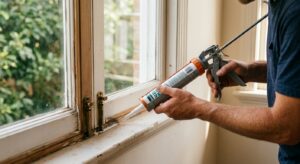
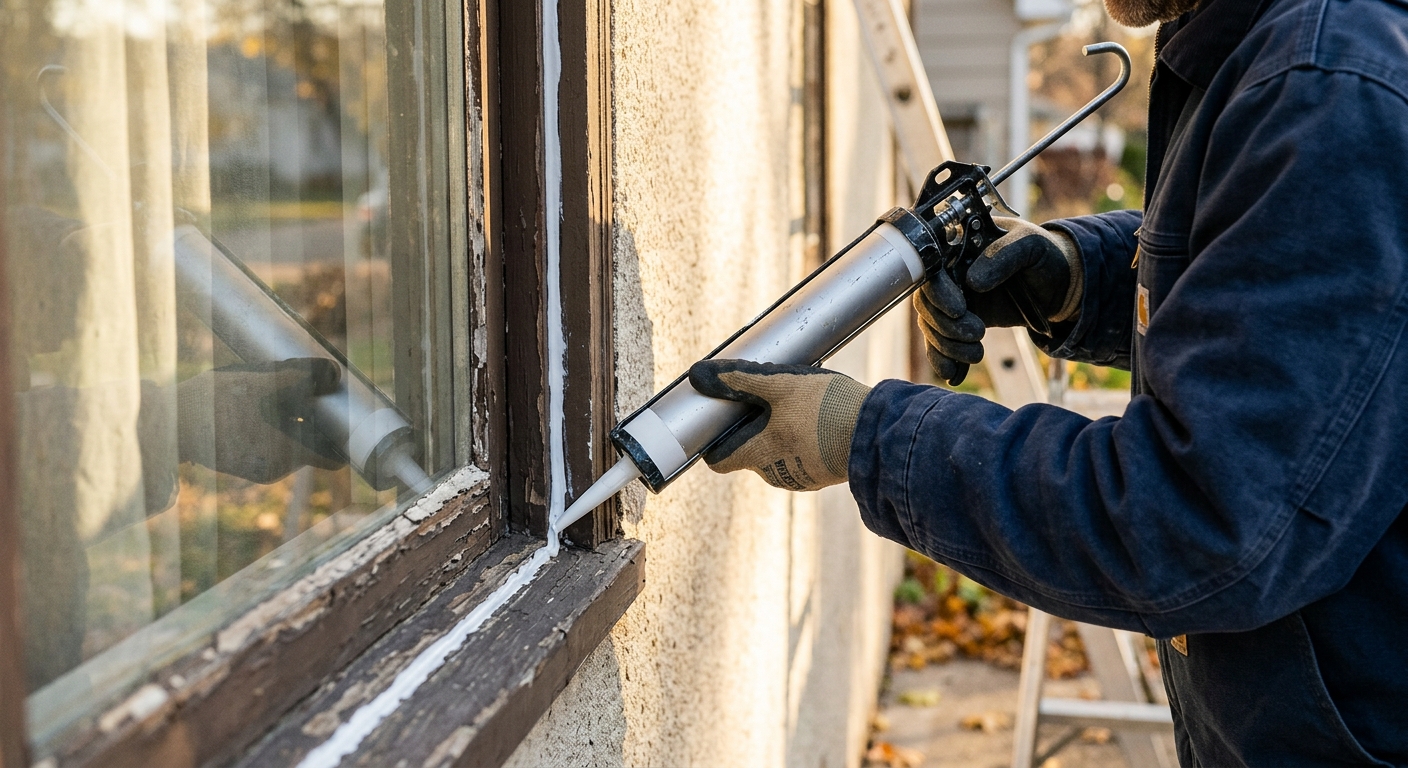
- Caulk all exterior window frames where the frame meets the siding or brick, and where the interior trim meets the drywall. Use a paintable silicone-latex caulk rated for exterior use on outside surfaces and standard acrylic latex caulk on interior trim. One $6 tube covers approximately 30 linear feet.
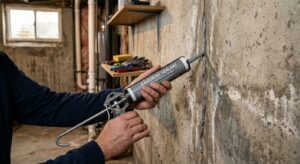
- Seal around all penetrations in exterior walls including pipe entries under sinks, dryer vents, and cable or internet lines entering the house. Use expanding foam for gaps wider than 1/4 inch and caulk for hairline cracks. Pay special attention to the band joist area in basements and crawl spaces, which is among the leakiest areas in older homes.
- Insulate and seal the attic hatch or pull-down stairs. This often-overlooked opening connects your conditioned living space directly to the unconditioned attic. Attach rigid foam board to the attic side of the hatch and add weatherstripping around the perimeter. Prefabricated attic stair covers cost $50 to $100 and are worth every dollar.
- After completing all sealing work, re-run the candle or hand test to confirm the leaks are addressed. On very cold or windy days you can feel remaining drafts with your palm and return to spot-seal any areas you missed.
Why It Works: The Benefits
The DOE estimates proper air sealing reduces heating and cooling costs by 15 to 30%. For a household spending $200 per month on energy, that translates to $30 to $60 in monthly savings, often exceeding the cost of materials in the first billing cycle.
Sealing drafts eliminates cold floors, chilly corners, and rooms that never quite reach the thermostat setpoint. Homeowners consistently report more even room-to-room temperatures within days of completing weatherproofing work.
Every hour your furnace or AC does not have to run extends equipment life. Cutting runtime by even 10 to 15% through air sealing can add years to a system that costs $5,000 to $12,000 to replace.
Uncontrolled air leaks pull in outdoor pollutants, pollen, dust, and in some regions radon gas. Sealing the envelope forces incoming air through your filtered HVAC system instead of through random gaps in the structure.
Draft elimination is felt immediately, not just seen on a bill. Sealing the gap under an exterior door or around a window frame that was letting in a steady cold breeze produces noticeable comfort improvement the same day.
💰 Savings Impact by Action
Sealing penetrations at the attic floor stops stack-effect-driven air loss and reduces annual heating costs by 8 to 12% on its own.
Replacing worn door seals and sweeps on all exterior doors eliminates one of the largest single sources of infiltration, saving up to 8% on heating and cooling.
Recaulking the perimeter of exterior windows reduces infiltration through frame gaps and can cut window-related air loss by up to 7% of total energy use.
Foam gaskets behind exterior wall outlet and switch covers block small but numerous leaks that collectively account for about 2 to 3% of total infiltration.
Sealing and insulating the band joist in older homes addresses one of the leakiest zones in the building envelope, reducing infiltration by up to 15% in pre-1980 construction.
🏠 Key Concepts Explained
The Science Behind It
Air moves through your home’s envelope due to pressure differences created by three forces: wind pressure pushing against the outside of the building, the stack effect caused by temperature-driven buoyancy of warm air, and mechanical pressure from your HVAC system itself. In a typical home, these forces are strong enough to completely replace all the air inside the house one to two times per hour, and every cubic foot of outside air that enters has to be heated or cooled back to your thermostat setpoint at your expense.
The physics of heat transfer make air leakage especially costly compared to conductive losses through walls. When outside air at 20 degrees Fahrenheit infiltrates your 70-degree home, your furnace must add exactly 50 BTUs of heat energy for every cubic foot of that cold air to bring it up to temperature. Unlike a poorly insulated wall that slows heat loss, a gap or crack allows direct unrestricted air exchange with no resistance at all. This is why air sealing consistently delivers better return on investment than adding insulation in a home that already has some insulation in place.
Weatherstripping and caulk work by eliminating the physical pathways through which this pressure-driven air exchange occurs. Caulk fills rigid, static gaps in framing, masonry, and trim that do not move. Weatherstripping addresses operable gaps around doors and windows that open and close. Together they form a continuous air barrier around the conditioned space. Building scientists refer to this as the building envelope, and its continuity, meaning no unintended holes, is the single most important factor in determining how hard your HVAC system has to work to maintain comfort.
Frequently Asked Questions
▼ I sealed everything I could find but my house still feels drafty. What am I missing?
The most commonly missed locations are attic penetrations above interior walls, the band joist in the basement or crawl space, and recessed light fixtures on the top floor ceiling that open directly into the attic. Recessed can lights are among the worst air leakers in older homes and require either airtight retrofit covers or replacement with IC-rated airtight fixtures. If you have already addressed these, consider scheduling a professional blower door test, which pressurizes the house and reveals every remaining leak location precisely.
▼ Can renters do this without landlord permission?
Yes, for the most part. Rope caulk, adhesive door sweeps, outlet gaskets, and peel-and-stick weatherstripping are all removable and leave no permanent marks, making them renter-safe in virtually all situations. Avoid spray foam or permanent caulk in rental units without written permission. Focus your effort on the four or five items in the 45-Minute Draft Blitz approach, which can deliver 10 to 15% savings without any permanent modifications.
▼ How long before I actually see savings on my bill?
If you complete the work during peak heating or cooling season, the savings will appear on your very next utility bill, typically within 30 days. The magnitude depends on how leaky your home was to begin with and your local energy rates. A home in a cold climate spending $250 per month on heating can realistically see $30 to $60 in savings in the first full billing cycle after a thorough weekend weatherproofing project.
▼ What if my home is older than 30 years?
Older homes typically have higher baseline leakage and more penetrations from older plumbing and wiring that was never sealed during construction. The savings potential is actually higher in older homes, often reaching the top of the 15 to 30% range or beyond. Be aware that pre-1978 homes may have lead paint around windows and doors, so avoid sanding surfaces before testing. Also inspect for asbestos-containing materials in mechanical areas before working around duct penetrations, and consult a professional if you find anything suspect.
▼ Is it possible to seal a house too tightly and cause problems?
In very rare cases involving extremely tight newer construction, excessive sealing can reduce fresh air ventilation below healthy levels or starve combustion appliances of the air they need to burn cleanly. For the vast majority of existing homes built before 2000, you are far more likely to under-seal than over-seal. If your home has gas appliances and you are undertaking a major sealing project, have an HVAC technician verify combustion appliance venting after the work is complete.
Quick Tips
- Do your leak detection on a cold, windy day when pressure differences are greatest and drafts are easiest to feel by hand or with a candle flame.
- Prioritize sealing high locations first (attic penetrations) and low locations second (basement band joist) before worrying about windows, because the stack effect drives the most airflow at the top and bottom of the house.
- Use a tube of caulk within 12 months of opening it. Old caulk skins over in the tube and applies unevenly, leading to gaps that look sealed but are not.
- Check your weatherstripping annually every fall by closing a door on a dollar bill. If you can pull the bill out easily without resistance, the seal has degraded and needs replacement.
Variations for Your Situation
- Apartment/Rental: Renters can still capture meaningful savings using only removable products. Focus on rope caulk pressed into drafty window frames, adhesive V-strip weatherstripping on the front door frame, foam outlet gaskets behind exterior wall plate covers, and a draft stopper at the base of the entry door. Total cost is typically under $25, no tools are required, and everything comes off cleanly at move-out. Expect 5 to 12% savings on your portion of heating and cooling costs.
- Tight Budget Under $30: Do the five-step Draft Blitz using only the highest-impact items: one tube of rope caulk ($4), a foam outlet gasket pack ($5), one adhesive door sweep ($8), and one can of minimal-expanding foam for the single worst pipe penetration you find ($10). Prioritize the front door sweep and the worst window draft first. Even this minimal investment typically returns its cost in savings within two to three weeks during peak season.
- Older Home Pre-1980: Older homes often have gaps that have been painted over for decades, making a systematic approach more important than a quick visual scan. Use a stick of incense or a smoke pencil to trace airflow around baseboards, window sills, and where walls meet the ceiling, since older plaster construction hides gaps differently than drywall. Budget $100 to $150 for materials because the number of penetrations and degraded seals will be higher. Pay particular attention to the basement rim joist, which in pre-1980 homes is almost always completely unsealed and can account for 15 to 25% of total air leakage on its own.