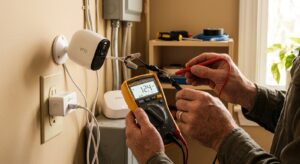
You live in roughly the same size home, in the same neighborhood, with the same weather hitting both houses equally. Yet somehow your neighbor’s energy bill is noticeably lower than yours every single month. It is frustrating, and it feels unfair. But here is the good news: that gap almost always has a concrete, fixable explanation.
The difference between two similar homes can range from $30 to $120 per month, adding up to $360 to $1,440 per year in wasted spending. The most common causes include air leaks, outdated equipment settings, poor insulation performance, and behavioral habits around heating and cooling. None of these require a full home renovation to fix. Many homeowners can recover half or more of that gap with a weekend of focused effort and less than $200 in materials.
This post breaks down exactly why energy bills diverge between neighboring homes, ranks the fixes by impact and effort, and gives you two clear action plans depending on how much time and money you want to invest right now.
What You’ll Need
Click on an item below to shop for the recommended items for this recipe on Amazon.
As an Amazon Associate, we earn from qualifying purchases.
How to Do It
- Walk your home on a windy day and hold a lit incense stick or damp hand near door frames, window sashes, electrical outlets on exterior walls, and where plumbing or wiring enters the home. Flickering smoke or a cold sensation indicates a leak worth sealing.
- Set your thermostat to 78°F in summer when home, 85°F when away, and 68°F in winter when home, 60°F when away. If you do not have a programmable or smart thermostat, manually adjust before leaving each day. This single habit change saves 10 to 15% annually.
- Replace any HVAC air filter that is gray or visibly clogged. A dirty filter forces your system to work harder, increasing energy use by 5 to 15% and reducing airflow to rooms that already feel uncomfortable.
- Unplug or use smart strips to cut power to entertainment centers, gaming consoles, and secondary appliances like garage refrigerators when not in use. Audit anything with a clock, light, or standby indicator.
- Apply foam backer rod and weatherstripping to exterior doors with visible light gaps around the frame. A door you can see daylight around can leak as much air as a basketball-sized hole in your wall.
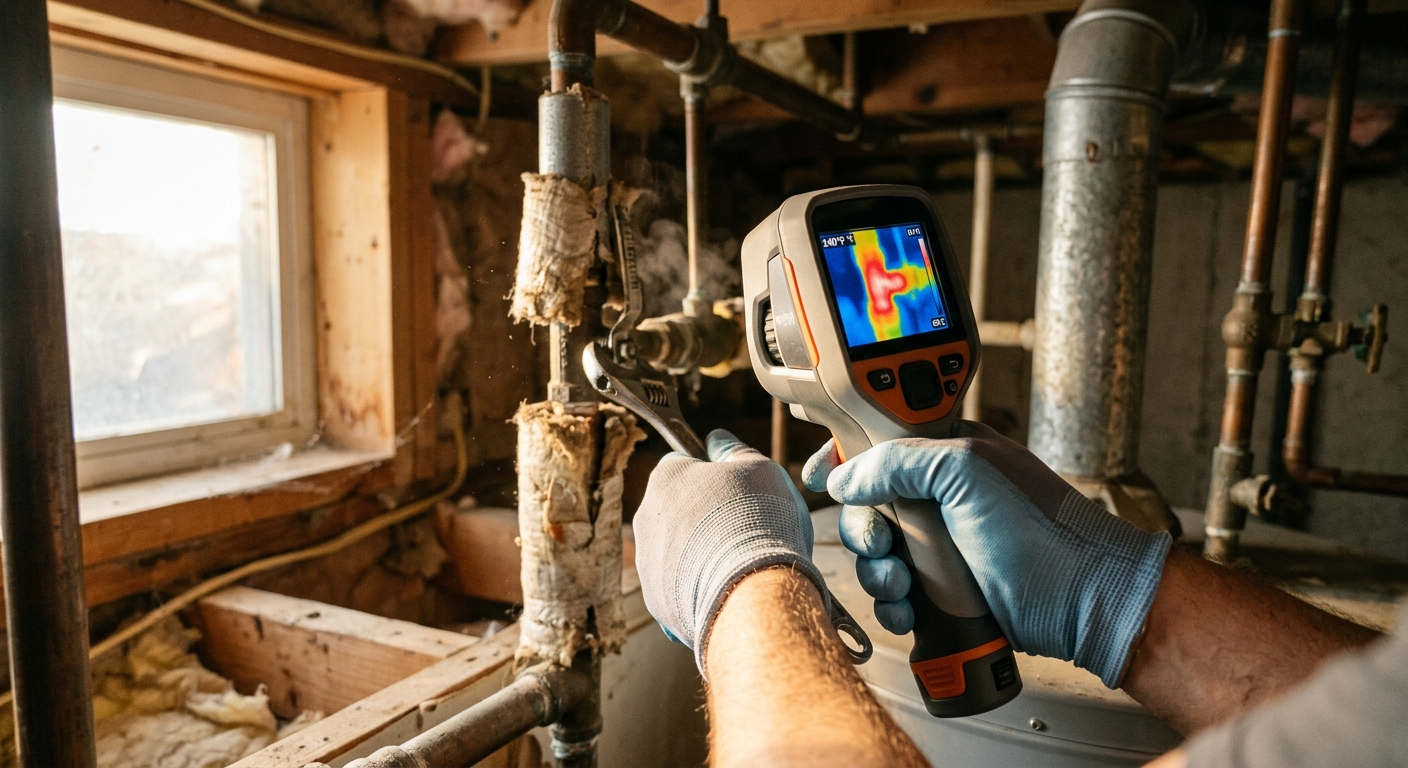
- Check your water heater temperature. Most are factory-set to 140°F. Lowering to 120°F reduces water heating energy use by 4 to 22% and eliminates scalding risk.
- Buy two to three cans of low-expanding spray foam and seal all penetrations where pipes, wires, cables, or ducts pass through walls, floors, and ceilings. Pay special attention to the attic hatch, plumbing chases, and recessed light fixtures in the ceiling below the attic.
- Pull back attic insulation near the eaves and top plates and apply spray foam to any gaps between framing and drywall before replacing the insulation. These top-plate gaps are a major thermal bypass that most homeowners never see.
- Install a programmable or smart thermostat if you do not already have one. Models from Honeywell or Ecobee run $30 to $150 and pay for themselves in 6 to 18 months through automated setback schedules. Follow manufacturer wiring instructions carefully.
- Inspect exposed duct connections in your attic, basement, or crawlspace. Use UL-181 rated foil tape (not standard duct tape) to seal any joints that show gaps, disconnections, or visible light through the seam. Do not use cloth duct tape as it fails within two to three years.
- Add door sweeps to all exterior doors that show a gap between the door bottom and the threshold. A standard door sweep costs $10 to $20 and installs with a screwdriver in under 10 minutes per door.
- If your attic insulation is below R-30, rent a blower from a home improvement store and add blown-in cellulose or fiberglass to reach R-38 or higher. Many utilities offer rebates of $0.10 to $0.25 per square foot, cutting your out-of-pocket cost significantly.
- Contact your utility company and ask if they offer free or subsidized home energy audits. Many utilities provide blower door testing and infrared camera scans at no cost or for $50 to $150, identifying every significant air leak in ranked order of impact.
- Request the full written audit report with a prioritized list of upgrades and estimated payback periods for each. Use this document to compare contractor bids and apply for rebates from your utility, state, or the federal Residential Clean Energy Credit.
- Have a certified HVAC technician perform a full tune-up including refrigerant level check, coil cleaning, and duct pressure testing. A system running low on refrigerant can use 10 to 20% more electricity while delivering less comfort.
- If your HVAC system is over 15 years old and running below 13 SEER, get quotes on replacement. A new 16 to 18 SEER system typically cuts cooling costs by 30 to 50% and qualifies for a federal tax credit of up to 30% of the installed cost under current law.
- Ask your auditor about air sealing the attic floor as a professional job if the DIY approach did not fully resolve the issue. Professional attic air sealing typically costs $500 to $1,500 and reduces heating and cooling loads by 10 to 20% in older homes.
Why It Works: The Benefits
Targeting the top three culprits, air sealing, thermostat scheduling, and HVAC maintenance, can realistically reduce monthly energy costs by 20 to 35%, which translates to $30 to $100 per month for a typical household spending $250 on utilities.
Closing air leaks and improving insulation reduces hot and cold spots dramatically, so your home holds a steadier temperature without the system cycling on and off constantly.
A well-sealed, well-insulated home reduces runtime hours on your HVAC system by 15 to 25%, which directly extends compressor and furnace life and delays expensive replacement costs.
Basic air sealing materials cost $20 to $80 and can reduce heating and cooling loads by up to 20%, meaning most homeowners recover their investment within one to three billing cycles.
Homes with lower energy costs and documented efficiency upgrades sell for 2 to 3% more on average according to studies by the Lawrence Berkeley National Laboratory, and buyers increasingly ask for utility bill history.
💰 Savings Impact by Action
Sealing gaps, cracks, and penetrations reduces conditioned air loss by up to 20% of total heating and cooling costs according to DOE data.
Programming setbacks of 7 to 10 degrees for 8 hours per day saves approximately 10 to 15% annually on heating and cooling.
Upgrading attic insulation to R-38 or higher reduces heat gain and loss through the ceiling by 15 to 25% depending on climate zone.
Sealing leaky ducts recovers 20 to 30% of conditioned air that would otherwise dump into unconditioned spaces like attics and crawlspaces.
Eliminating phantom loads from idle electronics and appliances reduces total household electricity use by 5 to 10% with no lifestyle change.
🏠 Key Concepts Explained
The Science Behind It
Heat always moves from warm areas to cooler ones, and air always flows from high pressure to low pressure. These two laws of physics are the root cause of most energy bill differences between neighboring homes. A home with more gaps and cracks experiences higher air infiltration, meaning the conditioned air you paid to heat or cool constantly escapes while unconditioned outdoor air flows in to replace it. Your HVAC system then has to run longer to compensate, which is the direct mechanism behind a higher bill.
Insulation works by slowing the rate of heat transfer through walls, ceilings, and floors. The R-value rating describes thermal resistance: the higher the R-value, the slower heat moves through the material. When insulation settles or is insufficient, the rate of heat gain in summer and heat loss in winter accelerates, increasing the temperature difference your system has to overcome. A home with R-19 attic insulation in a hot climate might see attic temperatures reach 140°F on a summer afternoon, while a home with R-49 holds that same attic closer to 110°F. That 30-degree difference dramatically cuts the heat flowing into the living space below.
Duct leakage adds another compounding layer. When your air handler pushes conditioned air through ducts, any leak in those ducts dumps that air directly into an unconditioned space like your attic or crawlspace before it reaches a vent. Your thermostat, sensing the room is still too warm or cool, signals the system to keep running. You pay for the energy, but the comfort goes to your attic. Fixing duct leaks recovers that lost output without changing the equipment at all, which is why the EPA consistently ranks duct sealing among the highest-return efficiency upgrades available to homeowners.
Frequently Asked Questions
▼ I sealed everything I could find but my bill is still higher than my neighbor’s. What am I missing?
At this point, the most likely culprits are duct leakage (which requires pressure testing to detect properly), HVAC system age or efficiency, or a difference in appliances like a second refrigerator or older water heater. Schedule a professional blower door test through your utility, which will identify any remaining leaks ranked by size. Also pull up your water heater and refrigerator specs to check their estimated annual energy use.
▼ How do I know if my insulation is actually the problem without pulling it all out?
Pull back a small section of attic insulation and measure its depth. Fiberglass batts should reach at least 10 to 14 inches for R-38, and blown-in insulation should be 12 to 15 inches deep depending on the material. If you see the ceiling joists clearly or your insulation is less than 8 inches deep, it is almost certainly underperforming and worth topping off.
▼ Can renters do anything about a high energy bill if they cannot modify the apartment?
Yes, renters can address a surprising amount without touching the structure. Draft snakes or door seals on interior-facing apartment doors, thermal curtains on windows, smart power strips for electronics, and thermostat adjustment all cost nothing or very little. Ask your landlord in writing to seal visible gaps under doors or around window frames, as this is a maintenance issue they are often responsible for.
▼ My neighbor has a newer home and I have an older one. Is it even realistic to match their bill?
You may not reach parity, but you can close the gap significantly. Older homes built before 1980 have more structural air leakage by design and often have undersized or degraded insulation. Focusing on attic air sealing, insulation top-off, and HVAC maintenance will deliver the biggest returns. Many utility programs offer rebates specifically for older homes, so check before spending anything out of pocket.
▼ How long will it take to actually see the savings reflected on my bill?
Thermostat and behavioral changes show up on your very next billing cycle. Air sealing and weatherstripping improvements are typically visible within one to two months. Larger upgrades like insulation or HVAC replacement may take a full year of bills to clearly measure because seasonal variation makes month-to-month comparison tricky. Compare the same month year-over-year for the clearest picture.
Quick Tips
- Request 12 months of energy usage data from your utility and graph it month by month. Spikes in July and January tell you whether cooling or heating is your bigger problem, which helps you prioritize fixes.
- Check the age of your refrigerator. Units older than 15 years can use two to three times more electricity than current ENERGY STAR models. A secondary fridge in the garage can add $100 to $200 per year to your bill all by itself.
- Close fireplace dampers tightly when not in use. An open damper is essentially a 48-square-inch hole straight to the outside, leaking warm or cool air continuously.
- Shade your outdoor AC condenser unit with a nearby tree or awning. A shaded condenser operates up to 10% more efficiently than one baking in direct sun all afternoon, according to the DOE.
Variations for Your Situation
- Apartment or Rental: Renters cannot modify HVAC systems or add insulation, but they can still cut bills meaningfully. Install thermal blackout curtains ($25 to $60 per window) to reduce solar heat gain in summer by up to 33%. Use draft snakes or adhesive foam weatherstripping on drafty doors, which most landlords allow as removable fixtures. Unplug standby devices using smart strips, and request your landlord seal any visible gaps around windows and pipes as a maintenance obligation.
- Tight Budget (Under $50): Focus first on thermostat setbacks, which cost nothing. Then buy one can of spray foam ($6 to $10) and one roll of weatherstripping ($8 to $15) and tackle the attic hatch, exterior door frames, and any penetrations you can see in under-sink cabinets. These three steps alone can cut 10 to 20% off your bill with a total investment under $30 and two hours of time.
- Older Home (Pre-1980): Homes of this era were built without a continuous air barrier, so leakage rates are often two to three times higher than modern construction. Prioritize professional attic air sealing first since the top plate gaps in older framing are usually extensive. Also check for single-pane windows, which transfer heat six times faster than modern double-pane glass. Many states offer income-qualified weatherization programs through the DOE Weatherization Assistance Program that cover these upgrades at no cost.