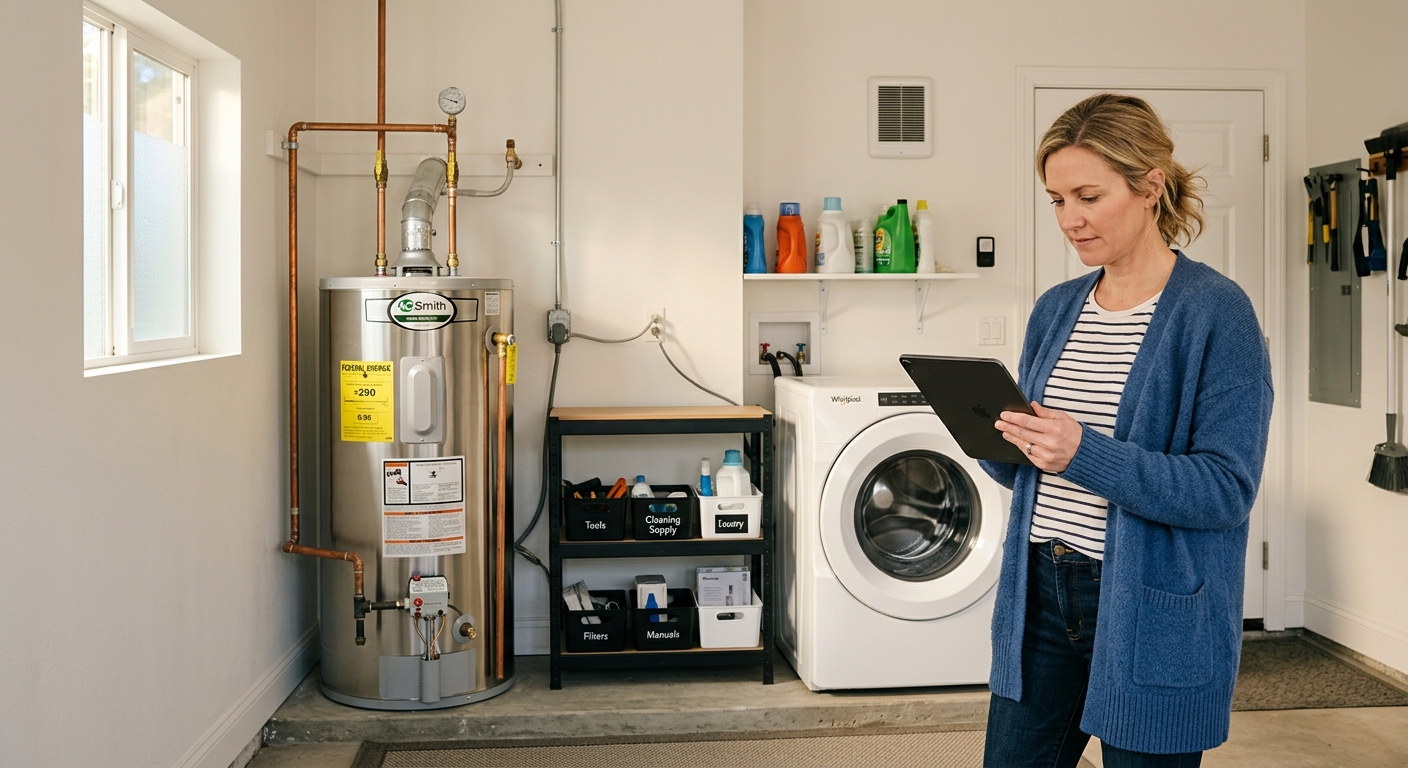
Most homeowners focus on obvious energy upgrades like better windows or smart thermostats, but the single biggest energy drain in many homes is something far less glamorous: an aging major appliance that was never very efficient to begin with, and has only gotten worse with age. A refrigerator from 1995 can use three times the electricity of a current ENERGY STAR model. A water heater installed in 2001 may be running at 60% of its original efficiency after years of sediment buildup. These are not minor inefficiencies; they can add $150 to $400 per year in unnecessary energy costs.
The tricky part is that old appliances rarely announce themselves. They just keep working, running longer cycles, drawing more current, and heating your utility bill one kilowatt-hour at a time. Without a baseline comparison, most homeowners have no idea their 15-year-old refrigerator is costing them $180 more per year than a new one would. And because the appliance still functions, replacement feels wasteful rather than smart.
This post gives you a clear framework for auditing your appliances, calculating real operating costs, and making confident decisions about repair versus replacement. We focus primarily on the three biggest offenders in most homes: refrigerators, water heaters, and central HVAC systems. By the end, you will know exactly which appliance deserves your attention first and what steps to take right now.
What You’ll Need
Click on an item below to shop for the recommended items for this recipe on Amazon.
As an Amazon Associate, we earn from qualifying purchases.
How to Do It
- Find the age and model number of your refrigerator, water heater, and HVAC system. Check the EnergyGuide label or manufacturer sticker, usually on the door frame, side panel, or unit exterior. Note the rated annual energy use.
- Look up your appliance’s estimated annual operating cost using the DOE’s ENERGY STAR Product Finder or AHRI directory. Compare it to a current equivalent model to calculate your annual efficiency gap in dollars.
- Clean your refrigerator condenser coils. Pull the fridge away from the wall, locate the coils on the back or underneath, and vacuum them thoroughly. Dirty coils force the compressor to work 15 to 25% harder, and this takes under 10 minutes.
- Check the refrigerator door gaskets by closing the door on a dollar bill. If you can pull it out easily with no resistance, the gasket is failing and needs replacement. A bad gasket can spike energy use by 25% or more.
- Flush your water heater tank if it has not been done in 2 or more years. Attach a garden hose to the drain valve, turn off the heating element or burner, and drain 2 to 3 gallons until the water runs clear. This removes sediment and restores heat transfer efficiency.
- Replace your HVAC air filter if it has been more than 60 to 90 days. A clogged filter forces the blower motor to work harder and can reduce system efficiency by 5 to 15%. Use a MERV 8 to 11 filter for the best balance of airflow and filtration.
- Install a water heater timer or smart plug rated for your water heater’s wattage. Scheduling the heater to avoid heating water during 8 sleeping hours saves 5 to 12% on water heating costs annually with no comfort impact.
- Wrap your water heater in an insulating blanket if it is older than 2004 and the tank feels warm to the touch. Blankets cost $20 to $35 and reduce standby heat loss by 25 to 45%, saving $15 to $30 per year on gas or electric bills.
- Replace a failing refrigerator door gasket yourself. Order a model-specific gasket for $20 to $50 online, soak it in warm water to soften it, and press it into the door channel. This eliminates one of the most common sources of refrigerator energy waste.
- Install a programmable or smart thermostat if your HVAC system still has a manual or basic digital thermostat. Proper scheduling saves 10% on heating and cooling annually, averaging $100 to $150 for most homes, and the device pays for itself in under a year.
- Seal HVAC supply and return duct connections in accessible areas like the basement, crawl space, or attic using UL-listed foil tape or mastic sealant. The DOE estimates that duct leakage wastes 20 to 30% of conditioned air in the average home, making this one of the highest-ROI DIY tasks available.
- After completing these upgrades, plug your refrigerator into a Kill-A-Watt meter for 24 hours to measure actual daily kWh consumption. Multiply by 365 and by your electricity rate to get true annual cost. If it exceeds $150 per year, a new ENERGY STAR refrigerator will pay for itself in 4 to 6 years.
- Use the 50% rule to evaluate each major appliance: if the unit is more than 50% through its expected lifespan (refrigerator 15 years, water heater 10 to 12 years, HVAC 15 to 20 years) and a repair would cost more than 50% of replacement cost, prioritize replacement.
- Get quotes from at least two licensed contractors for HVAC or water heater replacement. Request SEER2 ratings of 16 or higher for central AC, HSPF2 of 8.5 or higher for heat pumps, and a Uniform Energy Factor of 3.5 or higher for heat pump water heaters.
- Check the ENERGY STAR rebate finder and your utility’s rebate portal before purchasing. Federal tax credits of up to $2,000 apply to qualifying heat pump water heaters and heat pump HVAC systems through 2032 under the Inflation Reduction Act.
- For refrigerators, choose an ENERGY STAR certified model sized appropriately for your household. Larger refrigerators use more energy, and a well-matched 18 to 20 cubic foot model often uses less electricity than an oversized unit running at poor capacity.
- Schedule installation during off-peak season when contractors have more availability and are more likely to negotiate on labor costs. Fall is typically ideal for HVAC replacement before winter demand peaks.
- After installation, document the date, model number, efficiency rating, and all rebate submissions. Set a calendar reminder to perform annual maintenance and to re-evaluate total cost of ownership in 5 years.
Why It Works: The Benefits
Replacing a pre-2000 refrigerator with a current ENERGY STAR model saves 200 to 400 kWh per year, cutting roughly $30 to $60 annually. Replacing a 15-year-old gas water heater with a heat pump water heater cuts water heating costs by up to 70%, saving $300 to $500 per year for a typical family of four.
Appliances older than 10 to 15 years tend to fail in clusters as multiple components age simultaneously. Keeping an old unit running often means paying $150 to $400 in repairs every one to two years, money that would accelerate the payback on a new, warranted appliance.
New HVAC systems with variable-speed compressors maintain tighter temperature control, typically within 1 degree of setpoint versus 3 to 4 degrees for older single-stage units. This directly improves comfort and reduces humidity in summer.
The Inflation Reduction Act provides federal tax credits up to $600 for high-efficiency water heaters and up to $2,000 for heat pump water heaters. Many utilities stack additional rebates of $50 to $500, meaningfully shortening payback periods.
Replacing a standard electric resistance water heater with a heat pump model reduces its carbon output by roughly 50 to 70% depending on your grid mix, equivalent to removing a small car from the road for a year.
💰 Savings Impact by Action
Replacing a pre-2000 refrigerator with a current ENERGY STAR model reduces refrigerator energy use by 40 to 60% due to improved compressor technology and insulation.
Switching from a standard electric resistance water heater to a heat pump model reduces water heating electricity use by up to 70%, saving $300 to $500 per year for an average household.
Cleaning dirty refrigerator condenser coils restores compressor efficiency and can reduce refrigerator energy use by 15 to 25% with no parts cost.
Sealing accessible duct leaks with foil tape or mastic recovers 20 to 30% of conditioned air that would otherwise be lost to unconditioned spaces.
Replacing a SEER 10 system installed before 2006 with a SEER2 18 heat pump reduces annual heating and cooling energy use by 30 to 50% depending on climate.
🏠 Key Concepts Explained
The Science Behind It
Every appliance converts energy into a useful output, whether that is cold air inside a refrigerator, hot water in a tank, or conditioned air in your home. Efficiency is simply the ratio of useful output to energy input. New appliances are engineered with tighter tolerances, better insulating materials, variable-speed motors, and improved refrigerants to maximize that ratio. Federal minimum efficiency standards ratchet upward roughly every 5 to 10 years, so a compliant 2025 refrigerator is categorically more efficient than a compliant 2005 model, not just marginally better.
Aging compounds this gap. Heat transfer surfaces like refrigerator coils and water heater elements accumulate fouling over time. Fouling acts as thermal resistance, forcing the system to run longer to move the same amount of heat. Compressor valve wear causes pressure losses. Gaskets and seals harden and crack, allowing conditioned air to escape and warm air to infiltrate. Each of these failures is individually small but collectively significant. An appliance operating at 75% of original efficiency that was already less efficient than today’s baseline can easily be consuming 2 to 3 times the energy of a modern replacement.
Water heating is the second-largest energy expense in most homes, accounting for roughly 14 to 18% of total household energy use according to the U.S. Energy Information Administration. Heat pump water heaters exploit the same refrigeration cycle used in your air conditioner to move heat from surrounding air into the water tank rather than generating heat directly. This makes them 3 to 4 times as efficient as conventional electric resistance models, achieving a Uniform Energy Factor above 3.5 compared to 0.9 for a standard tank. For a family using 60 gallons per day, this efficiency difference translates to $300 to $500 in annual savings, giving a heat pump water heater a payback period of 3 to 5 years even before accounting for rebates.
Frequently Asked Questions
▼ How do I know if my old appliance is actually costing me more than a new one would?
For refrigerators, plug it into a Kill-A-Watt meter for 24 hours, multiply by 365 and by your electricity rate, and compare to the EnergyGuide estimate for a current ENERGY STAR equivalent. For water heaters and HVAC, look up your model number in the AHRI directory to find its rated efficiency, then use the DOE’s appliance calculator to estimate annual operating cost. If the gap exceeds $100 per year, run a full payback period calculation using purchase price minus available rebates.
▼ My refrigerator is 18 years old but still works fine. Should I replace it?
Working and efficient are not the same thing. A functioning 18-year-old refrigerator likely uses 300 to 500 kWh more per year than a current model, costing $45 to $75 extra annually at average U.S. rates. More importantly, an appliance that old is past its expected lifespan and any compressor failure will be a costly repair on a machine with little remaining life. If your measured annual energy cost exceeds $130 to $150, a new ENERGY STAR unit in the $600 to $900 range will pay back the efficiency delta in 4 to 6 years before accounting for avoided repairs.
▼ Can I claim a tax credit for replacing my water heater or HVAC?
Yes, under the Inflation Reduction Act’s Energy Efficient Home Improvement Credit (25C), homeowners can claim 30% of the cost up to $2,000 for qualifying heat pump water heaters and heat pump HVAC systems, and up to $600 for high-efficiency gas or electric water heaters and central AC units. The credit applies to equipment and installation costs, resets annually through 2032, and applies to your primary residence. Use the ENERGY STAR tax credit product list to confirm eligibility before purchasing.
▼ My energy bills went up but I have not added any new appliances. What is happening?
Gradual efficiency decline in aging appliances is the most common cause of slow bill creep that homeowners overlook. Start by checking your HVAC filter, refrigerator coils, and water heater age. Also check for a failing water heater anode rod, a refrigerator that has shifted from energy-saver mode, or an HVAC system that has lost refrigerant charge. A smart plug on the refrigerator and a review of HVAC runtime data from a connected thermostat will quickly isolate the culprit.
▼ Is it worth repairing an old appliance if the repair seems minor?
Apply the Rule of 50 Percent: if the appliance is more than halfway through its expected lifespan and the repair cost exceeds 50% of replacement cost, replace it. For a smaller repair on an older unit, also factor in annual operating inefficiency. If keeping the appliance running costs $200 more per year in energy than a replacement would, even a cheap repair extends the financial loss. Get a replacement quote alongside every significant repair estimate so you have real numbers to compare.
Quick Tips
- Check your utility company’s website for appliance recycling programs. Many offer $25 to $75 to haul away and recycle an old working refrigerator or freezer, reducing your net replacement cost.
- Never install a second refrigerator in an unconditioned garage unless it is specifically rated for ambient temperatures above 110 degrees Fahrenheit. A standard fridge in a hot garage runs almost continuously and can add $150 or more per year to your bill.
- If your HVAC system is over 15 years old and needs a repair over $500, get a full replacement quote at the same time. The contractor visit cost is the same, and you will have real numbers to compare.
- A water heater that runs out of hot water faster than it used to is a classic sign of heavy sediment buildup or element failure, both indicators that the unit is working much harder than it should.
Variations for Your Situation
- Apartment/Rental: Renters cannot replace landlord-owned appliances, but can take targeted action. Measure your refrigerator’s actual energy use with a Kill-A-Watt meter and document the results, then formally request a replacement in writing if annual operating cost exceeds $150. In the meantime, keep condenser coils clean, replace failing door gaskets on older models with landlord permission, and use a timer-equipped smart plug to limit water heater runtime if you have an electric unit under your control. Portable induction cooktops and electric kettles can reduce reliance on inefficient gas or electric ranges you cannot replace.
- Tight Budget (under $50): Focus on zero-cost and low-cost tune-ups that recover lost efficiency without replacing anything. Clean refrigerator coils with a vacuum ($0), flush 2 to 3 gallons from the water heater drain valve ($0), replace the HVAC filter with a MERV 8 option ($10 to $15), and check all refrigerator door gaskets with the dollar-bill test ($0). A $25 water heater insulating blanket and a $15 programmable outlet timer for a standard electric water heater can together save $35 to $55 per year, covering their cost in under a year.
- Older Home (pre-1980): Homes built before 1980 often have original or early-replacement appliances with efficiency ratings far below today’s minimums, along with knob-and-tube or early aluminum wiring that may not safely support modern high-draw appliances like heat pump water heaters without an electrical upgrade. Before replacing a water heater, have an electrician confirm your panel and circuit can handle the new load. Also check that the water heater installation space has adequate airflow for a heat pump model, which requires at least 700 to 1,000 cubic feet of surrounding air. Prioritize the appliance with the largest efficiency gap first to maximize immediate savings.