Water heating is the second largest energy expense in the typical American home, accounting for roughly 14 to 18% of your total utility bill according to the U.S. Department of Energy. That translates to $400 to $600 per year for many households, and a significant portion of that cost is completely avoidable. If your water heater is older than 10 years, set too hot, uninsulated, or simply the wrong type for your home, you are almost certainly overpaying every single month.
The frustrating part is that water heaters are invisible appliances. They sit in a closet or basement, work quietly in the background, and never send you a signal that they are burning through energy inefficiently. Meanwhile, sediment builds up in the tank, heat escapes through uninsulated pipes, and your thermostat stays cranked to a temperature you never asked for. These are not small losses, either. A tank set just 20 degrees too high can cost you an extra $36 to $61 per year on its own.
This post walks you through exactly where the waste is coming from, what you can do about it today for free, and when it makes financial sense to upgrade to a more efficient system. Whether you are renting or own your home, we have actionable steps at every budget level, along with real payback numbers so you can make confident decisions.
What You’ll Need
Click on an item below to shop for the recommended items for this recipe on Amazon.
As an Amazon Associate, we earn from qualifying purchases.
How to Do It
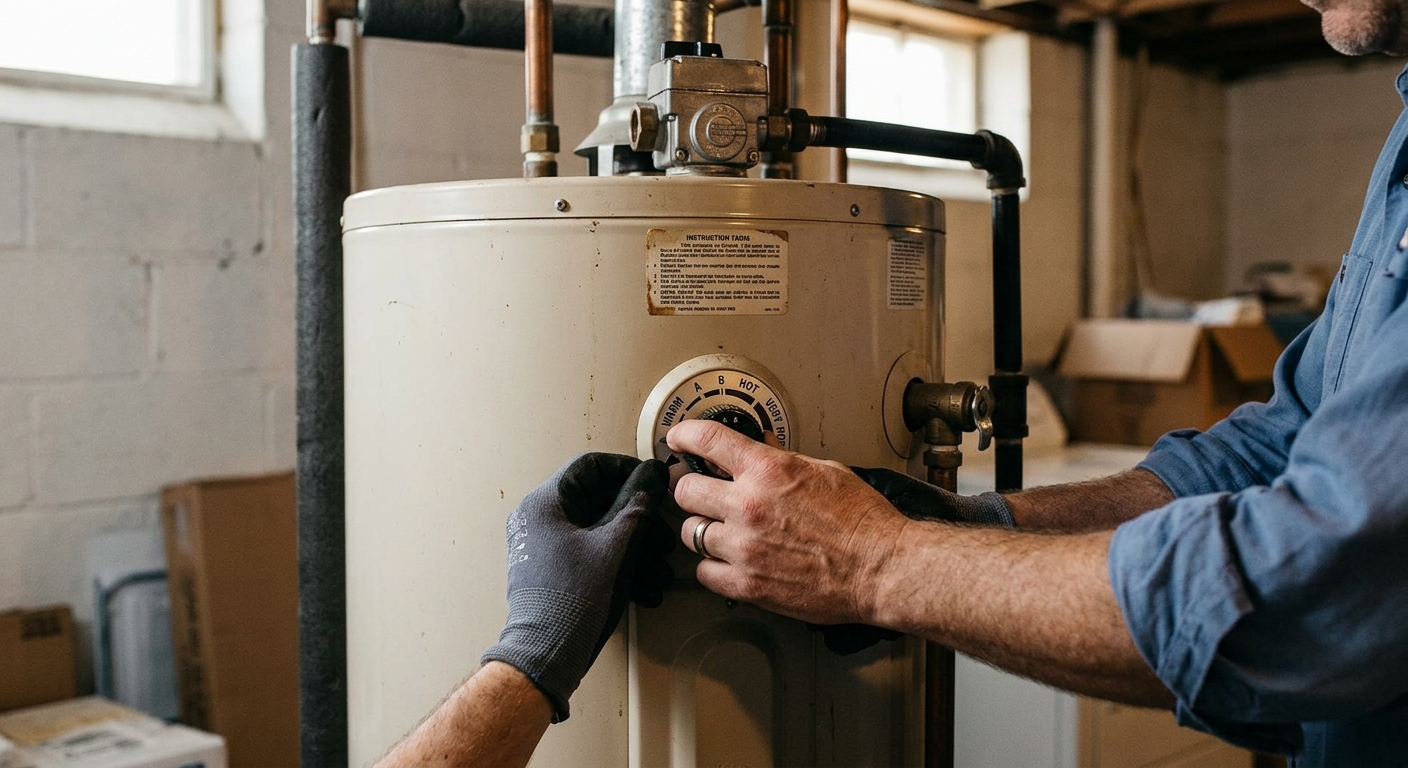
- Locate your water heater thermostat dial. On gas units it is on the gas valve near the bottom. On electric units, turn off the breaker and remove the access panel to find the dial. Turn it to 120 degrees F or the marked ‘Warm’ setting if no numbers are shown.
- Run the hot water at the faucet farthest from the heater for 2 minutes, then use a candy or cooking thermometer held under the stream to confirm the output temperature is at or below 120 degrees F.
- Check the area around your water heater for clutter or stored items pressing against the tank. Tanks need 2 inches of clearance on all sides for proper airflow and safety, especially gas units.
- Inspect the pressure relief valve test lever once per year by lifting it briefly and releasing it. If water flows and stops cleanly, it is working. If it drips continuously after the test, call a plumber, as a failed valve is a safety hazard.
- Turn your water heater to ‘Vacation’ or the lowest setting any time you leave home for more than three days. This one habit saves roughly $3 to $5 per week the tank would otherwise spend maintaining temperature for an empty house.
- Purchase a water heater insulation blanket rated R-8 or higher (around $20 to $30 at home improvement stores). Wrap it around the sides of the tank only, keeping the top, bottom, thermostat, and pressure relief valve fully exposed. Use the provided tape to secure it. Do NOT insulate the top of a gas water heater or cover the flue.
- Buy foam pipe insulation sleeves sized to match your pipe diameter, typically 3/4 inch (around $5 to $15 for a 6-foot section). Wrap the first 6 feet of both the hot water outlet pipe and the cold water inlet pipe coming from the tank. Slit the foam along its length, press it over the pipe, and seal the seam with foil tape.
- Flush sediment from the tank. Attach a garden hose to the drain valve at the bottom of the tank. Run the other end to a floor drain or outside. Turn the cold water supply to the tank off, then open the drain valve and let 2 to 3 gallons of water flow until it runs clear. Close the valve, remove the hose, and restore the cold water supply. Do this once per year.
- Check the anode rod if your tank is more than 4 years old. This sacrificial rod prevents tank corrosion and should be replaced when it has corroded to less than half its original thickness. Locate the hex head on top of the tank (often under a plastic cap), use a 1-1/16 inch socket wrench to remove it, and inspect it. Replacement rods cost $20 to $40 and extend tank life significantly.
- Install a simple timer on an electric water heater (around $25 to $50) to prevent the element from heating water during the 6 to 8 hours per night and the 8 to 10 hours per day when no one is home. This reduces standby cycling and can cut electric water heating costs by an additional 5 to 12%.
- Confirm your home qualifies for a heat pump water heater (HPWH). You need at least 700 to 1,000 cubic feet of ambient space around the unit (a typical utility room or basement works), temperatures that stay above 40 degrees F year-round, and a 240-volt electrical outlet. HPWHs pull heat from the surrounding air, so they work best in unconditioned or semi-conditioned spaces.
- Get quotes from two or three licensed plumbers or HVAC contractors. Ask specifically for a 50-gallon or 65-gallon ENERGY STAR certified heat pump water heater. Well-regarded brands include Rheem ProTerra, A.O. Smith Voltex, and Bradford White AeroTherm. Installed cost before incentives typically runs $1,200 to $2,500.
- Apply for available incentives before or shortly after installation. Visit energystar.gov for the federal 30% tax credit form (IRS Form 5695). Check your utility company’s website for rebates, which can reduce your net cost by an additional $200 to $500.
- Calculate your payback period. A household switching from a standard electric resistance tank to a HPWH saves roughly $300 to $500 per year depending on local electricity rates and usage. After a $500 combined rebate and tax credit, a net cost of $1,200 pays back in 2.5 to 4 years with 15 or more years of ongoing savings afterward.
- After installation, set the HPWH to ‘Heat Pump Only’ mode rather than ‘Hybrid’ for maximum efficiency during warm months. Switch to ‘Hybrid’ mode in winter if the unit is in an unconditioned space and ambient temperatures drop below 50 degrees F to maintain recovery speed.
Why It Works: The Benefits
Combining a thermostat reduction to 120 degrees F, a tank insulation wrap, and pipe insulation can reduce water heating costs by 25 to 35%, saving a typical household $100 to $200 per year with zero or minimal upfront cost.
Lowering the thermostat from 140 to 120 degrees F eliminates the risk of scalding at the tap, which is especially important in homes with young children or elderly residents, while also cutting energy use by 6 to 10%.
Flushing sediment annually and reducing temperature cycling through better insulation reduces stress on the tank, anode rod, and heating elements. Regular maintenance can add 2 to 5 years to the life of a water heater that typically lasts 8 to 12 years.
Insulating hot water pipes reduces heat loss in the pipes between the tank and faucets, meaning you wait less time for hot water to arrive. This can save 10 to 20 gallons of wasted water per household per day.
Replacing an aging electric resistance tank with a heat pump water heater (HPWH) reduces water heating electricity use by 60 to 70%, saving $300 to $500 per year for a typical family of four. Federal tax credits currently cover 30% of the installation cost.
💰 Savings Impact by Action
Lowering the tank setpoint from 140 to 120 degrees F reduces water heating energy use by 6 to 10% by cutting both heating demand and standby heat loss rate.
Adding an R-8 insulation blanket to an older uninsulated tank reduces standby heat loss by 25 to 45%, translating to 7 to 16% savings on total water heating costs.
Annual flushing removes the insulating sediment layer at the tank bottom, recovering 5 to 8% efficiency that is lost over 3 to 5 years of mineral buildup.
Replacing standard 2.5 GPM showerheads with 1.5 GPM models reduces hot water consumption by up to 30%, cutting water heating costs proportionally.
Replacing a standard electric resistance tank with an ENERGY STAR heat pump water heater reduces electricity used for water heating by 60 to 70% based on DOE field data.
🏠 Key Concepts Explained
The Science Behind It
A conventional storage water heater works by maintaining a full tank of water at a set temperature around the clock, regardless of whether anyone is using it. This constant readiness comes at a cost called standby heat loss. No tank is perfectly insulated, so heat slowly conducts through the tank walls into the surrounding air. When the water temperature drops even slightly below the setpoint, the burner or heating element fires again. In a 24-hour period, this cycling can happen dozens of times and accounts for 15 to 20% of all the energy a standard tank consumes.
The relationship between temperature and energy consumption is straightforward: the greater the difference between the water in your tank and the air outside it, the faster heat escapes. This is why lowering your thermostat from 140 to 120 degrees F does more than just reduce the energy needed to heat the water. It also slows the rate of standby heat loss throughout the day, compounding the savings. Adding an insulation blanket to the outside of the tank applies the same principle by increasing thermal resistance and slowing that heat transfer even further.
Heat pump water heaters work on an entirely different physical principle that makes them two to four times more efficient than resistance heating. Instead of converting electricity directly into heat, they use a small compressor to extract ambient heat energy from the surrounding air and transfer it into the water, much like how a refrigerator moves heat out of its interior. Because they are moving existing heat rather than generating it, they can deliver 3 to 4 units of heat energy for every 1 unit of electrical energy consumed. This is expressed as a Coefficient of Performance (COP) of 3 to 4, compared to a COP of 1.0 for a standard resistance element. That efficiency gap is why upgrading from a standard electric tank to a heat pump model can cut your water heating electricity use by 60 to 70%.
Frequently Asked Questions
▼ I turned my thermostat down to 120 degrees F but my water still feels scalding hot. What is wrong?
The dial markings on many water heater thermostats are notoriously inaccurate. Use a cooking thermometer at the tap farthest from the heater after running hot water for 2 full minutes to get an accurate reading. If the output is still above 125 degrees F after adjusting the dial, turn the dial another quarter turn lower, wait 2 hours, and test again. On electric water heaters with two elements, both the upper and lower thermostats must be adjusted separately.
▼ My water heater is only 6 years old. Is it worth doing any of this or should I just wait until it needs replacing?
Absolutely worth it. A 6-year-old tank still has 4 to 8 years of life remaining, and the free thermostat adjustment plus a $30 insulation blanket will likely save $150 to $250 before you ever need to replace it. Flushing the tank now also removes sediment that has been building since installation and can meaningfully improve efficiency going forward. Save the heat pump water heater upgrade conversation for when the tank is 10 to 12 years old.
▼ Can renters do any of this if they do not own the water heater?
Renters can safely lower the thermostat on most tank water heaters, as this is a normal user adjustment and does not modify the appliance. Installing low-flow showerheads and faucet aerators is also renter-friendly in most leases and is easily reversible. Avoid the insulation blanket or pipe insulation without landlord approval, as it involves modifying the appliance setup. Your biggest lever as a renter is reducing hot water consumption through low-flow fixtures and shorter showers.
▼ My gas bills went up this winter but my usage seems the same. Could my water heater be the cause?
Yes, this is a common and overlooked issue. Cold winters lower the temperature of the incoming cold water supply, sometimes by 20 to 30 degrees F compared to summer, which means your heater has to work harder to reach the same setpoint. It takes more gas to heat 45-degree water to 120 degrees than 65-degree water to 120 degrees. Additionally, if your water heater is in an unheated garage or basement that gets cold in winter, standby heat loss increases significantly. Insulating the tank and pipes is especially valuable in cold climates.
▼ How do I know if my water heater is actually inefficient or if I just use a lot of hot water?
Check the yellow EnergyGuide sticker on your tank for the estimated annual operating cost and compare it to newer models of the same type. If your unit is more than 8 years old, it is likely performing below its original rated efficiency due to sediment and element wear. You can also track your gas or electric bill month-over-month: if water heating costs are creeping up despite stable usage habits, deteriorating efficiency is the most likely culprit. An energy audit from your utility company can isolate water heating costs specifically.
Quick Tips
- Install low-flow showerheads rated at 1.5 to 2.0 gallons per minute. Reducing hot water consumption is the fastest way to lower water heating costs, and modern low-flow heads deliver equivalent pressure with 30 to 50% less hot water.
- If you have a dishwasher with an internal booster heater, you can safely lower your tank thermostat to 120 degrees F without affecting wash performance. The dishwasher heats water internally to 140 degrees F for sanitizing cycles.
- In areas with very hard water (above 7 grains per gallon), consider a whole-house water softener or at minimum flush your tank every 6 months rather than annually to prevent excessive sediment accumulation.
- When shopping for a new water heater, compare the yellow EnergyGuide label estimated annual operating cost, not just the purchase price. A unit that costs $100 more upfront but saves $80 per year pays back that premium in 15 months.
Variations for Your Situation
- Apartment/Rental: Renters typically cannot access or modify a centrally-managed water heater. Focus on the demand side instead. Install a 1.5 GPM low-flow showerhead ($15 to $30, fully removable) and 0.5 GPM faucet aerators ($5 each) to reduce hot water use by 30 to 50%. A thermostatic mixing valve on your shower ($25 to $40) prevents you from running excess cold water to compensate for an overheated supply. If you have your own in-unit electric tank heater, the thermostat adjustment and vacation mode steps are safe and require no landlord permission.
- Tight Budget (under $50): Start with the free thermostat reduction to 120 degrees F, which saves $36 to $61 per year at zero cost. Add foam pipe insulation sleeves for the first 6 feet of hot and cold pipes at the tank ($8 to $15 total). If you have an electric water heater, an outlet timer ($25 to $35) set to shut off heating during sleeping hours adds another 5 to 12% in savings. Total spend under $50, total annual savings potential of $80 to $130.
- Older Home (pre-1980): Homes built before 1980 often have original or once-replaced tank water heaters with lower insulation ratings and less efficient burners or elements. If your tank is more than 10 years old, replacement is almost certainly more cost-effective than continued maintenance. An older electric resistance tank running at 0.86 EF versus a modern ENERGY STAR unit at 0.92 EF does not sound like much, but the difference compounds to $50 to $80 per year before even considering a heat pump upgrade. Also check for galvanized steel pipes common in pre-1980 homes, which accumulate mineral deposits faster and may require more frequent flushing every 6 months.