If your air conditioner runs all afternoon without ever cooling your home below 78 degrees, or your furnace seems to cycle endlessly on a cold January night, you may be living with an undersized HVAC system. This is more common than most homeowners realize. Builders sometimes cut costs with undersized equipment, systems get installed without a proper load calculation, or a home gets an addition that the original HVAC was never designed to handle. The result is a system that is perpetually overwhelmed.
The consequences go beyond discomfort. An undersized system that runs continuously cannot properly dehumidify your home, which makes 78 degrees feel like 84. It wears out compressors and heat exchangers faster, leading to expensive repairs or early replacement. And because it never fully satisfies the thermostat demand, it consumes more energy than a properly sized system would while delivering less comfort. The Department of Energy estimates that improper equipment sizing contributes to 30 to 40 percent of residential HVAC inefficiency.
This post walks you through exactly how to diagnose an undersized system using observable symptoms and simple measurements, what a proper Manual J load calculation involves, and what your real options are, from low-cost adjustments to full equipment replacement. You will come away knowing whether your system is genuinely too small or whether a simpler fix can close the gap.
What You’ll Need
Click on an item below to shop for the recommended items for this recipe on Amazon.
As an Amazon Associate, we earn from qualifying purchases.
How to Do It
- Track your system runtime on the hottest or coldest day of the week. If the system runs more than 55 minutes out of every hour and never reaches your setpoint, that strongly suggests undersizing rather than a maintenance issue.
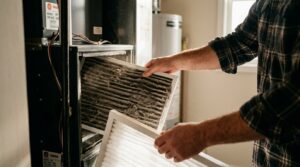
- Check and replace your air filter if it is dirty. A clogged filter restricts airflow and can reduce system capacity by 10 to 15 percent, mimicking undersizing symptoms. Replace with a MERV 8 to 11 filter.
- Walk every supply and return vent in the house. Make sure none are blocked by furniture, rugs, or closed dampers. Blocking even two or three vents can reduce effective system capacity by 15 percent or more.
- On a hot day, close blinds and curtains on south and west-facing windows between 10 a.m. and 6 p.m. Solar gain through untreated windows can add 1,000 to 2,000 BTUs per hour to your cooling load, which may be exactly what your system is missing.
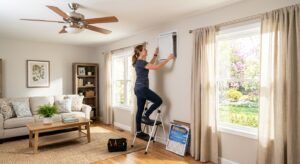
- Check accessible attic hatch covers and pull-down stairs for insulation. An uninsulated attic hatch can leak as much heat as removing a square foot of insulation from your ceiling. Add a cover or insulated hatch kit for $30 to $75.
- Note outdoor temperature when symptoms occur. If your system only struggles above 95 degrees, it may be sized adequately for your climate’s design temperature and the issue is extreme weather, not a fundamentally undersized unit.
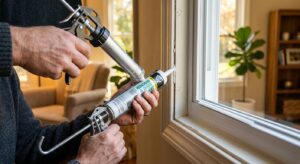
- Perform a DIY air leakage check: on a windy day, hold a stick of incense near window frames, electrical outlets on exterior walls, and where pipes enter the home. Wavering smoke indicates air infiltration. Seal gaps with caulk or foam sealant.
- Apply weatherstripping to all exterior doors. A door with a visible light gap around its frame can leak as much conditioned air as leaving a window open two inches. Compression weatherstripping kits cost $10 to $25 per door.
- Install solar control window film on south and west-facing windows. Good films block 40 to 70 percent of solar heat gain, directly reducing cooling load. Expect to pay $50 to $100 in film for a typical room and apply it yourself with a spray bottle and squeegee.
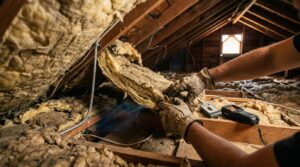
- Add or top off attic insulation to reach R-38 to R-60 depending on your climate zone. Blown-in fiberglass or cellulose insulation is DIY-friendly with a rented blower from a home center. This is often the single highest-impact step, reducing attic-related cooling load by 15 to 25 percent.
- Seal attic bypasses before adding insulation: use canned foam to close gaps around top plates, recessed lights, and duct penetrations in the attic floor. These bypasses allow conditioned air to escape directly into the attic.
- After completing improvements, run the system for two weeks and compare runtime behavior to your baseline notes. If the system now cycles on and off and reaches setpoint, you have successfully closed the sizing gap without equipment replacement.
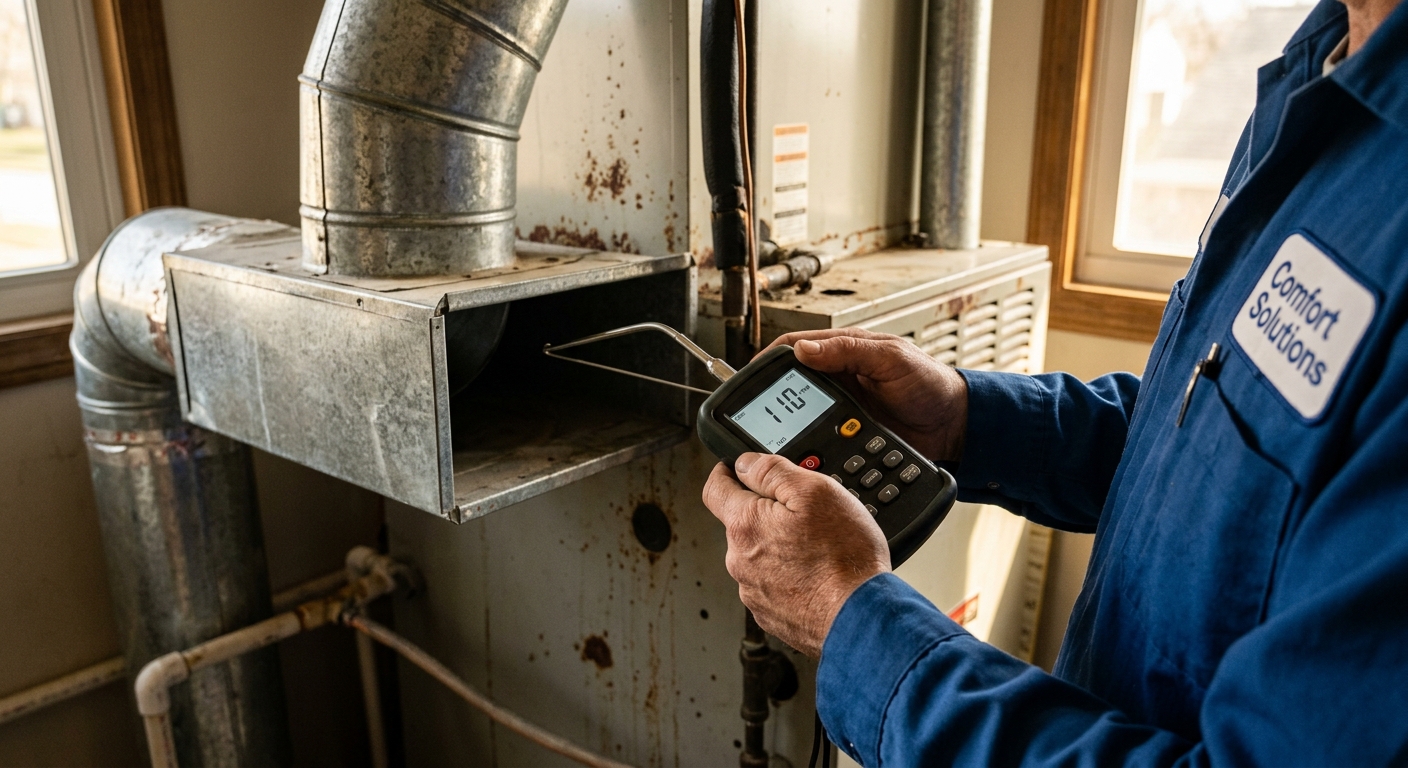
- Hire an HVAC contractor or energy auditor who will perform a Manual J load calculation. This is a formal calculation using your home’s measurements, insulation values, window specs, and local climate data. It typically costs $150 to $500 and should take 1 to 3 hours on-site. Be wary of any contractor who sizes a replacement system by simply matching the old equipment’s tonnage.
- Ask the contractor to also perform a Manual D duct design review. Undersized or leaky ducts reduce delivered capacity significantly. A duct leakage test (blower door with duct pressurization) costs $200 to $400 and can reveal whether the ducts are a major contributor to your symptoms.
- Request quotes for at least two equipment options: a standard single-stage unit sized to Manual J results, and a variable-speed (inverter-driven) system. Variable-speed systems can modulate capacity from 30 to 100 percent and handle marginal sizing situations far better than single-stage equipment.
- If the Manual J result is 10 to 20 percent above your current equipment capacity, consider replacing with properly sized equipment. If the gap is under 10 percent, envelope improvements alone may be sufficient.
- When replacing, ensure the contractor pulls permits, sizes refrigerant line sets correctly for the new equipment, and performs a startup commissioning check including refrigerant charge verification. An improperly charged system loses up to 20 percent of rated capacity.
- After installation, schedule a one-year follow-up or ask about an ENERGY STAR Verified Comfort visit if available in your area. This confirms the system is delivering its rated capacity and efficiency in real conditions.
Why It Works: The Benefits
A right-sized system that cycles on and off normally uses 15 to 35 percent less energy than an undersized unit running continuously at peak load. The savings are most dramatic during peak summer and winter months.
Proper sizing means the system can actually reach setpoint, eliminating the hot or cold rooms, humidity complaints, and temperature swings that characterize an overwhelmed unit.
An air conditioner removes moisture most effectively during the cooling portion of its cycle, not during continuous runtime. A right-sized system cycling normally can reduce indoor relative humidity to the comfortable 40 to 50 percent range instead of the 60 to 70 percent common with undersized equipment.
Continuous operation at 100 percent capacity accelerates compressor wear. A system running in normal on-off cycles can last 15 to 20 years, while a chronically overworked unit may need major repairs or replacement in 8 to 10 years.
Compressor failures, refrigerant leaks, and blower motor burnout are all more common in systems that never get a rest. Reducing runtime through right-sizing or load reduction can cut annual repair costs significantly.
💰 Savings Impact by Action
Sealing envelope leaks reduces conditioned air loss and peak thermal load by up to 20 percent, directly reducing system demand.
Upgrading attic insulation to R-38 or higher reduces ceiling heat gain by 15 to 25 percent, lowering the effective peak cooling load.
Quality window films block 40 to 70 percent of solar heat gain through glazing, reducing cooling load by up to 15 percent in window-heavy homes.
Sealing leaky ducts can recover 20 to 30 percent of conditioned air previously lost to unconditioned spaces, effectively increasing delivered capacity by that amount.
Replacing an undersized single-stage unit with properly sized variable-speed equipment can reduce total HVAC energy use by 25 to 35 percent annually.
🏠 Key Concepts Explained
The Science Behind It
Every home has a peak heating and cooling load, measured in BTUs per hour, that is determined by the rate at which heat flows through the building envelope plus internal gains from people, appliances, and sunlight. This load is not fixed; it varies with outdoor temperature. HVAC equipment is sized to handle the load at the local design temperature, which is the outdoor temperature exceeded only 1 to 2.5 percent of the hours in an average year depending on the standard used. At that peak condition, the system should just barely keep up, running nearly continuously at full output.
When a system is undersized, its maximum output in BTUs per hour is less than the home’s peak load. This creates a deficit that no amount of runtime can close because the system is already running at 100 percent of its capacity. The math is straightforward: if your home gains heat at 48,000 BTUs per hour on a 95-degree day and your AC can only remove 36,000 BTUs per hour, the indoor temperature will rise by the equivalent of 12,000 BTUs per hour no matter how long the system runs. That deficit is why undersized systems never satisfy the thermostat during extreme weather.
Reducing the thermal envelope load changes the equation directly. If air sealing and added insulation reduce peak heat gain from 48,000 to 40,000 BTUs per hour, the system is now only 4,000 BTUs short rather than 12,000. In many cases, this margin is small enough that the system can manage, especially since true design temperature conditions only occur for a few dozen hours per year. This is why building envelope improvements are always worth evaluating before committing to equipment replacement.
Frequently Asked Questions
▼ My AC runs all day but the house eventually cools down by evening. Does that mean my system is sized correctly?
Not necessarily. If your system catches up only after outdoor temperatures drop in the evening rather than through its own output, the system may be marginally undersized for peak conditions. Track whether your home reaches setpoint before 6 p.m. on your hottest days. If it cannot, that is a meaningful sign. Consider whether solar load reduction through window treatments could close the gap before concluding the equipment is too small.
▼ My contractor says I just need more refrigerant. Will that fix the problem?
Refrigerant loss indicates a leak, which must be found and repaired before recharging. Adding refrigerant without fixing the leak is a temporary patch that will fail again and can damage the compressor if the system becomes overcharged. More refrigerant will not make an undersized system larger. If your contractor is not performing a leak search, get a second opinion.
▼ How do I find a contractor who will actually do a Manual J calculation?
Ask specifically for a Manual J load calculation by name when requesting quotes. Contractors who use it will know the term immediately. You can also search for ACCA-member contractors through ACCA’s website or look for ENERGY STAR HVAC partners in your area. Expect to pay $150 to $300 for a standalone calculation, and be skeptical of any contractor who provides a sizing quote in under 30 minutes without measuring your home.
▼ Could my ductwork be the problem rather than the equipment itself?
Absolutely, and this is a common misdiagnosis. Ducts that leak 20 to 30 percent of conditioned air into unconditioned attic or crawl space space can make a properly sized system appear drastically undersized. A duct leakage test by a qualified HVAC contractor or energy auditor will quantify the loss. Sealing ducts with mastic sealant can restore 15 to 25 percent of delivered capacity at a fraction of equipment replacement cost.
▼ My home is older and we added a sunroom. Do I need a whole new HVAC system?
A new Manual J calculation is the right first step. The existing system may handle the original home adequately, in which case adding a ductless mini-split to serve only the new addition is often the most cost-effective solution at $1,500 to $3,500 installed. This avoids replacing the entire central system and lets each zone run independently.
Quick Tips
- Take photos of your system’s data plate (on the side of the air handler and condenser) before calling any contractor. The model number reveals the rated tonnage and lets you verify the contractor’s sizing claim.
- A one-ton air conditioner removes roughly 12,000 BTUs of heat per hour. A properly sized system for most homes lands between 0.5 and 1 ton per 500 to 600 square feet, though insulation, climate, and window area change this significantly.
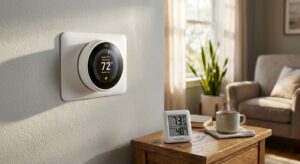
- High indoor humidity even when the AC is running is one of the clearest signs of undersizing. A system that never cycles off cannot remove moisture the way a properly cycling system does. A cheap hygrometer from a hardware store will confirm if humidity is above 55 percent indoors.
- If you have added square footage, converted a garage, or finished a basement since the HVAC was originally installed, your system was almost certainly not resized for the added load. Always confirm with the HVAC installer or building permit records.
Variations for Your Situation
- Apartment or Condo: Renters cannot replace central HVAC, but they can reduce the load on an undersized system significantly. Start with blackout curtains on south and west windows ($30 to $80 per window), a plug-in dehumidifier to manage latent load ($150 to $250), and a portable tower fan to improve air circulation. Document persistent comfort failures in writing to your landlord, as HVAC adequacy is often a habitability standard in residential leases.
- Tight Budget (under $200): Focus on the three highest-impact free or low-cost steps: replace the air filter, unblock all vents, and close window coverings during peak sun hours. Then add foam weatherstripping to exterior doors ($10 to $25 each) and use a $15 indoor thermometer and hygrometer to document conditions over two weeks. This documentation is essential if you later need to make a case for equipment replacement to a landlord, home warranty company, or HVAC contractor.
- Older Home (pre-1980): Pre-1980 homes typically have little or no wall insulation, single-pane windows, and significant air leakage, all of which drive up peak load dramatically. An energy audit (often $200 to $500, sometimes subsidized by utilities) should precede any HVAC decision. Addressing attic insulation and air sealing first frequently reveals that the existing equipment is adequate once the envelope is tightened, saving the cost of equipment replacement entirely.