Most homeowners think of their HVAC filter as a dust collector. Swap it out every few months, toss the old one, done. But a dirty or incorrectly rated filter is one of the most common and most overlooked reasons heating and cooling bills spike. When airflow is restricted, your system runs longer cycles, strains its motor, and can even freeze up in summer or overheat in winter. The Department of Energy estimates that a clogged filter alone can increase HVAC energy consumption by 15% or more.
Here’s what makes it sneaky: the damage happens gradually. You don’t flip a switch and suddenly pay $100 more. Instead, bills creep up $10, then $20, then $40 over a few months, and most homeowners never connect the dots back to a $5 filter. By the time the system starts short-cycling or the utility bill looks truly alarming, the filter may be so restricted it’s pulling the blower motor toward early failure.
This post walks you through exactly how to diagnose whether your filter is the culprit, what MERV ratings actually mean for airflow and efficiency, and how to set up a maintenance routine that keeps your system running at peak performance year-round. Whether you’re renting or own a 3,000 square foot house, the fix is almost always cheap, fast, and completely DIY-friendly.
What You’ll Need
Click on an item below to shop for the recommended items for this recipe on Amazon.
As an Amazon Associate, we earn from qualifying purchases.
How to Do It
- Locate your filter slot: it is usually in the return air vent (a large grille on a wall or ceiling) or inside the air handler cabinet near the blower. Check both locations if you are unsure.
- Turn off the thermostat fan or set it to OFF before pulling the filter to avoid pulling unfiltered air into the system during the swap.
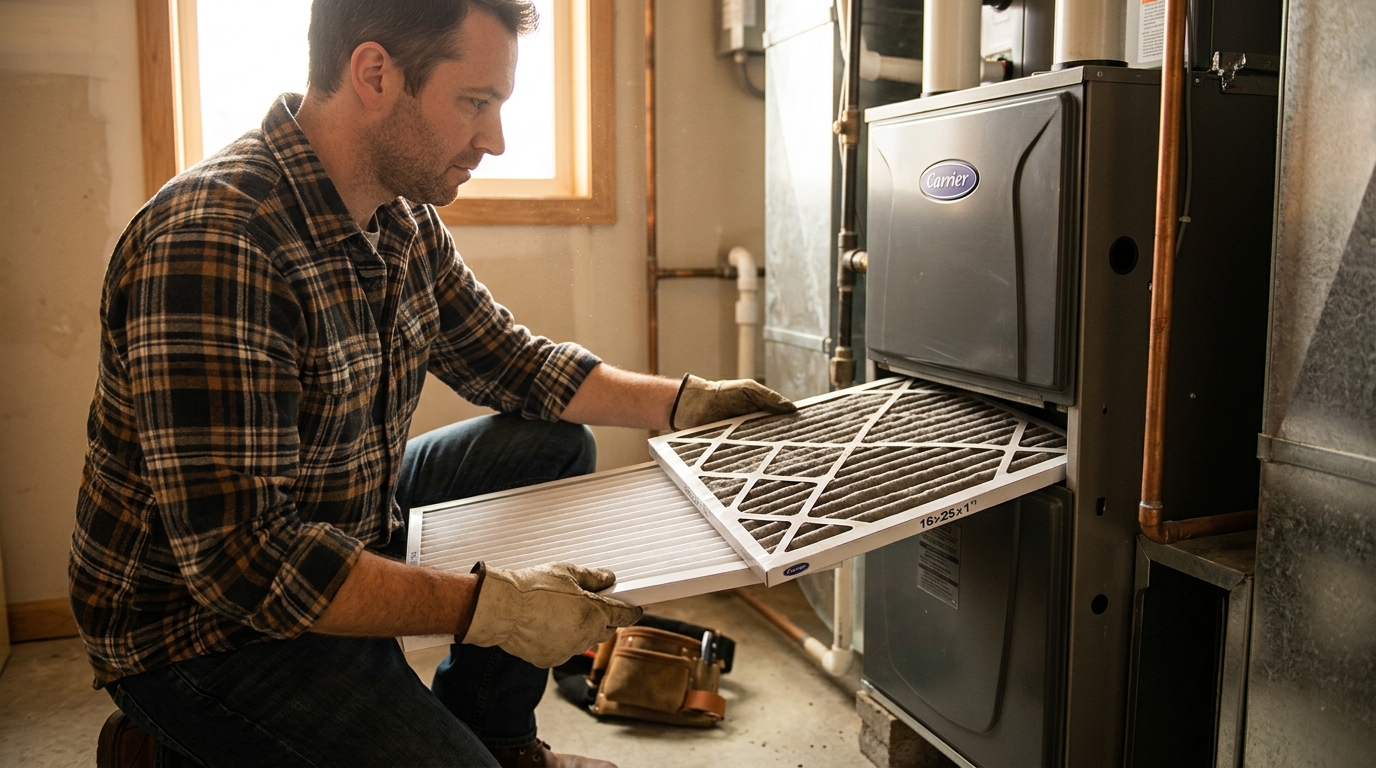
- Slide out the old filter and hold it up to a light source. If you cannot see light through it or it appears gray, brown, or visibly caked, it is restricting airflow and driving up your bills.
- Note the size printed on the filter’s cardboard frame (e.g., 16x25x1 or 20x25x4) and replace it with a filter in the MERV 8 to 11 range. MERV 8 is ideal for most homes without allergies; MERV 11 works well for pet owners.
- Insert the new filter with the airflow arrow pointing toward the blower (away from the return duct). A backward filter reduces efficiency immediately.
- Set a phone reminder to check the filter every 30 days and replace it every 60 to 90 days, or every 30 days if you have pets or live in a dusty environment.
- Change the filter first using the Quick Check steps above, then run the system for 30 minutes before continuing the audit.
- Stand near each supply vent in the home with a piece of tissue or a lit incense stick. Weak or uneven airflow from some registers while others feel strong indicates either duct leakage or a partially blocked return, not just a filter issue.
- Inspect the return air grille itself. Vacuum the grille louvers and the area around the filter slot. Gaps between the filter frame and the slot allow bypass air, coating the coil in dust. Seal any gaps larger than 1/8 inch with HVAC foil tape.
- Check the evaporator coil if accessible (usually behind a panel on the air handler). A dusty or fuzzy coil surface means bypass air has been getting through. Use a soft brush or coil cleaning spray rated for no-rinse use to carefully clean the face of the coil.
- Consider upgrading to a 4-inch thick media filter if your air handler has a slot for one or if you can add a media cabinet. A 4-inch MERV 11 filter lasts 6 to 12 months and flows better than a 1-inch MERV 11 at the same rating due to its much larger surface area.
- Document your filter brand, MERV rating, and install date on a piece of tape stuck to the inside of the air handler cabinet. This removes all guesswork at the next change and lets you track whether dirtier-than-normal cycles correlate with higher bills.
- Schedule an HVAC tune-up with a certified technician (NATE-certified preferred). Ask specifically for a static pressure test, not just a standard seasonal maintenance check.
- The technician will measure static pressure at multiple points in the duct system using a manometer. Total external static pressure above 0.5 inches of water column on a residential system is a red flag and often the root cause of high bills and premature equipment failure.
- Ask for a written report showing static pressure readings, refrigerant charge status, blower motor amperage draw, and coil condition. These numbers give you a baseline for future visits.
- If static pressure is high, have the technician evaluate whether undersized return ducts, a too-restrictive filter, or duct blockages are the cause. Each has a different fix, ranging from a filter change to duct modifications.
- Request a coil cleaning if the evaporator shows visible fouling. A professionally cleaned coil can restore cooling capacity and reduce runtime by 10 to 15% on its own.
Why It Works: The Benefits
Replacing a severely clogged filter with a clean, correctly rated one can cut HVAC energy consumption by 10 to 15%, which translates to $15 to $100 or more per month depending on your system size and local utility rates.
High static pressure from a dirty filter is a leading cause of premature blower motor and compressor failure. A new central AC system costs $5,000 to $12,000 installed, making a $5 filter a very cost-effective insurance policy.
A fresh filter at the correct MERV rating (8 to 11 for most homes) captures dust, pollen, and pet dander effectively without strangling airflow, reducing airborne allergens throughout the home.
Restored airflow means conditioned air reaches every room as designed. Rooms that felt stuffy or hard to cool often return to normal temperature within one full system cycle after a filter change.
Dirty filters are a primary cause of no-cool service calls in summer. A typical HVAC service visit costs $100 to $300, and a frozen coil diagnostic can run even higher, all preventable with a $5 to $20 filter.
💰 Savings Impact by Action
Replacing a clogged filter with a clean MERV 8 to 11 restores design airflow and reduces HVAC energy consumption by up to 15% according to DOE estimates.
Removing dust buildup from a fouled evaporator coil restores heat transfer efficiency and can cut cooling runtime by 10 to 15%.
Switching from an overly restrictive MERV 13 filter to a properly matched MERV 8 or 11 reduces static pressure and blower motor energy draw by up to 8%.
Sealing gaps around the filter slot with HVAC foil tape eliminates unfiltered bypass air and prevents coil fouling that degrades system efficiency by 5 to 21%.
🏠 Key Concepts Explained
The Science Behind It
Your HVAC system is designed around a specific airflow rate, measured in cubic feet per minute (CFM). For most residential systems, that target is roughly 350 to 400 CFM per ton of cooling capacity. When a filter clogs, it acts like a partially closed valve in the return air path. The blower motor has to work against increased resistance, a condition called high static pressure, and while it still moves some air, it moves far less than the system needs. The result is a longer run time to reach the thermostat setpoint, higher electricity consumption, and reduced heat transfer efficiency at the coil.
On the cooling side, the physics get even more consequential. The evaporator coil works by absorbing heat from warm indoor air passing over it. If airflow drops significantly, the refrigerant inside the coil gets colder than normal because it is not absorbing enough heat to warm up. Coil surface temperatures drop below 32°F, moisture in the air freezes on contact, and you get ice buildup. Ice is an excellent insulator, so it further blocks airflow, making the problem self-reinforcing. In a worst case, the ice travels back to the outdoor compressor through the refrigerant lines and causes liquid slugging, one of the most expensive compressor failures possible.
The MERV rating system adds another layer of physics to consider. A higher MERV filter uses denser fiber layers with smaller openings to trap finer particles. This is great for air quality but creates more resistance for the blower to overcome. Most residential air handlers are designed around a pressure drop of 0.10 to 0.20 inches of water column across the filter. A clean MERV 8 filter sits comfortably in that range. A clean MERV 13 may already push the upper limit, and a dirty MERV 13 can exceed it significantly, causing the same airflow restriction problems as a clogged basic filter. Matching the filter to both your air quality needs and your system’s airflow capacity is the real optimization most homeowners miss.
Frequently Asked Questions
▼ I changed the filter but my energy bill is still high. What else could it be?
A fresh filter is the first fix but not always the complete one. If bills remain elevated, check whether the evaporator coil is coated in dust (visible when you shine a flashlight into the air handler with the filter removed). A dirty coil reduces heat transfer efficiency just like a dirty filter restricts airflow. If the coil looks clean, the next step is having a technician check refrigerant charge and duct leakage, both of which are common culprits for high bills that survive a filter change.
▼ How do I know what MERV rating to buy?
For most homes without allergy concerns, MERV 8 is the sweet spot: it catches dust, pollen, and mold spores without meaningfully restricting airflow. If someone in the home has allergies or asthma, step up to MERV 11. Avoid MERV 13 or higher in standard residential systems unless your equipment manual specifically approves it, as these filters can restrict airflow enough to raise energy use and stress the motor.
▼ My AC is blowing warm air. Could the filter be the reason?
Yes, a severely restricted filter is one of the most common causes of a no-cool call in summer. First, turn off the system and check the filter. If it is heavily clogged, replace it and also check the evaporator coil for ice. If you see ice, set the thermostat to fan-only mode to thaw the coil for 1 to 2 hours before restarting cooling. If the system still blows warm after the coil thaws and the filter is clean, call an HVAC technician to check refrigerant charge.
▼ Can renters change the HVAC filter themselves?
In almost every case, yes. Filter replacement is considered routine tenant maintenance in most lease agreements and requires no tools and no modification to the unit. You simply pull out the old filter and slide in a new one. If your lease is ambiguous, a quick text to your landlord documenting that you are replacing the filter protects you from any dispute. Keeping receipts for the filters you buy is also a good habit.
▼ What if I cannot find the filter or my system does not seem to have one?
Every forced-air HVAC system has at least one filter, but the location varies widely. Check the large return air grille (usually 14×24 inches or larger, mounted on a wall or ceiling), the air handler cabinet itself near the blower compartment, and if you have a media cabinet installed in-line on the return duct. If you genuinely cannot locate it, look up your air handler model number online or call an HVAC technician for a quick walk-through, since running without a filter will foul the coil within days.
Quick Tips
- Check your filter monthly by pulling it out and holding it up to a light. If you cannot see light passing through, replace it regardless of how long it has been installed.
- Homes with dogs or cats typically need filter changes every 30 days, not 90. Pet dander and hair load filters two to three times faster than homes without pets.
- If your return vent is hard to reach, consider adding a secondary return air grille with a filter slot in an accessible location. An HVAC contractor can add one for $150 to $300 and it makes maintenance far more consistent.
- Never stack two 1-inch filters to increase filtration. This doubles the pressure drop and can damage your blower motor. Use a single 4-inch media filter instead if you want finer filtration with manageable airflow resistance.
Variations for Your Situation
- Apartment/Rental: Renters can and should change filters without landlord permission in virtually all cases. Buy a 6-pack of MERV 8 filters matched to the size printed on the existing filter (check the return vent grille). Change it every 30 to 60 days. If you have a window AC unit instead of central air, the washable foam filter behind the front panel should be rinsed with warm water monthly and allowed to dry fully before reinstalling. Total cost is under $30 per year and can noticeably reduce cooling bills.
- Tight Budget (under $50): Start with the free diagnostic: pull the filter and hold it up to a light. If it is visibly clogged, a $5 to $8 MERV 8 fiberglass or pleated filter is your entire investment. Buy a 3-pack to have spares on hand. Set a recurring phone alarm for the first of each month to check it. This single habit costs roughly $20 to $30 per year and can save 10 to 15% on monthly HVAC costs, paying back in the first month.
- Older Home (pre-1980): Homes built before 1980 often have non-standard return duct sizes, oversized or undersized grilles, and sometimes no dedicated return duct at all. Measure your existing filter carefully before buying a replacement, as standard sizes may not fit. These systems also tend to have older PSC blower motors that are more sensitive to high static pressure than modern ECM motors. Stick to MERV 8 or lower, change filters every 30 days, and have a technician assess duct sizing if bills remain stubbornly high after consistent filter maintenance.