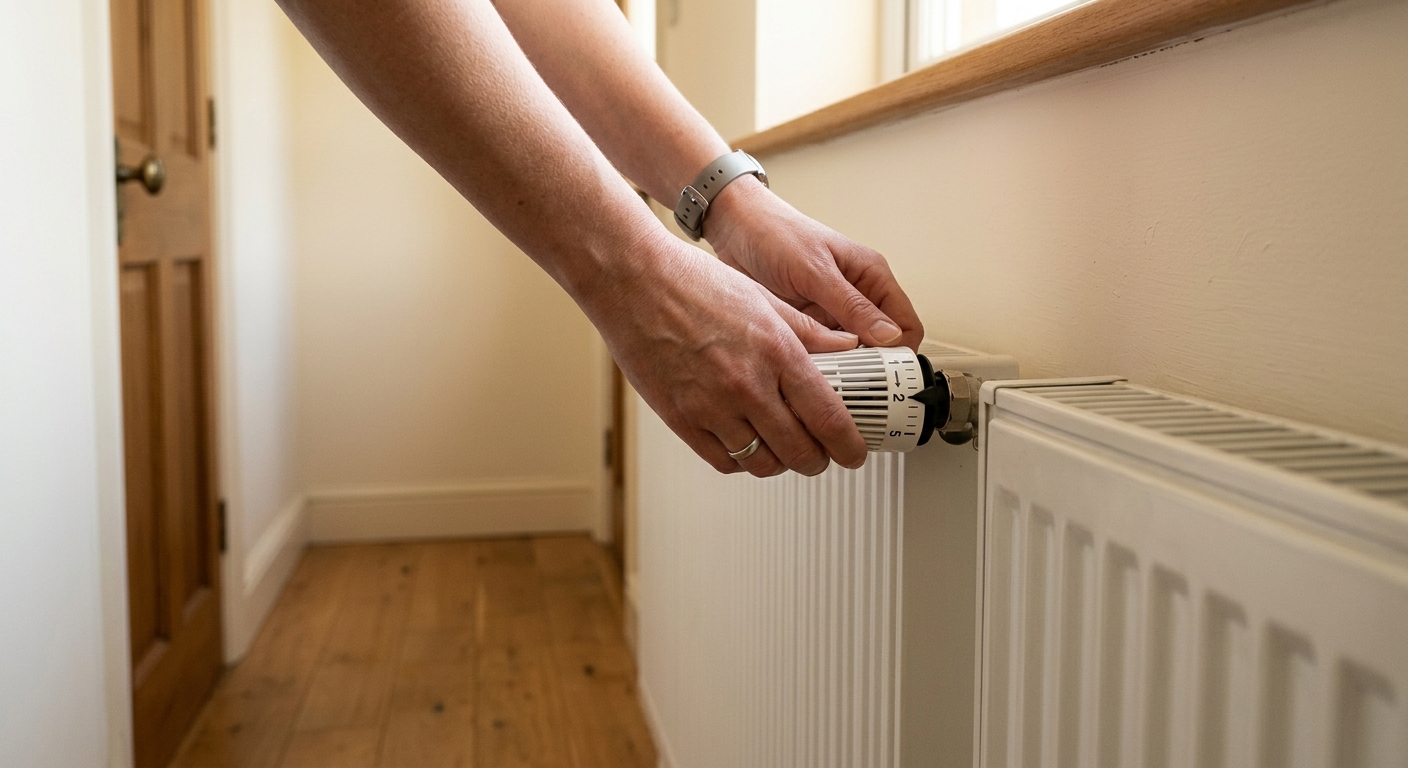
Most homes have a heating problem hiding in plain sight: the thermostat heats every room to the same temperature, whether anyone is in it or not. That guest bedroom nobody sleeps in, the formal dining room used twice a year, the basement storage area – your furnace is working hard to keep all of them warm, and you are paying for every BTU. For a home with 4 or more rooms, that wasted heat can represent 15 to 30% of your monthly heating bill.
The good news is that you do not need a full smart-home overhaul or an expensive HVAC retrofit to fix this. Simple, low-cost strategies like closing and sealing vents, using door draft stoppers, and adding supplemental space heaters in your main living areas can shift your heating budget dramatically toward the spaces you actually occupy. More advanced approaches, like installing smart vent systems or programmable zone thermostats, deliver even bigger savings with payback periods as short as one to two heating seasons.
This guide walks you through every level of room-by-room heating control, from zero-cost adjustments you can make today to DIY upgrades worth a weekend project. You will find real numbers, specific product types, and honest guidance about what works and what does not so you can stop heating air nobody is breathing.
What You’ll Need
Click on an item below to shop for the recommended items for this recipe on Amazon.
As an Amazon Associate, we earn from qualifying purchases.
How to Do It
- Walk through your home and identify every room that is unoccupied for more than 8 hours per day, such as guest bedrooms, formal dining rooms, or storage rooms.
- Partially close the supply vents in those rooms by turning the louver to about 50% closed, not fully shut, to maintain safe duct pressure. Do not close more than 2 vents in a standard 1,200 to 2,000 square foot home.
- Roll up a towel or use an old blanket to block the gap under the door of each unused room. This single step stops warm air from drifting in and cold air from radiating out.
- Close the doors to all unused rooms and keep them closed consistently. This simple action alone reduces your effective heated floor plan and forces warm air toward occupied spaces.
- Nudge your main thermostat down by 2 to 3 degrees Fahrenheit and see if your primary living areas still feel comfortable. With a smaller effective zone, they likely will, saving roughly 6% per degree of setback.
- Install adhesive door sweeps on the bottom of every door separating unused rooms from your main living area. This seals the single largest gap driving cross-room heat transfer and takes about 10 minutes per door.
- Apply foam weatherstripping tape around the door frame of each unused room to close gaps on the sides and top. A $6 roll covers 2 to 3 door frames.
- Place a programmable or smart space heater in your primary bedroom and set it to 68 degrees Fahrenheit only during sleeping hours, typically 10 PM to 6 AM. Lower your central thermostat to 60 to 62 degrees overnight. This shift alone saves 8 to 12% on your heating bill.
- Use a single 1,500-watt oil-filled radiant space heater in your main living room during peak evening hours, typically 5 PM to 10 PM. Drop the central thermostat to 62 to 64 degrees during that window. Supplemental zone heating in one room costs roughly $0.18 per hour versus cycling a furnace at $0.40 to $0.80 per hour.
- Add outlet gasket insulators to electrical outlets and switch plates on exterior walls inside unused rooms. These $5 packs of 10 stop cold air infiltration at a commonly overlooked source.
- After two weeks, compare your utility usage to the same period last year or the prior billing cycle. Most homeowners see a 12 to 20% reduction within the first full month.
- Map your home’s duct layout and identify which vents serve which rooms. Most homes have 1 to 3 supply vents per room and at least one central return air vent per floor.
- Purchase a smart vent system starter kit that includes a bridge or hub, 4 to 6 smart vents, and at least one room sensor. Budget $150 to $300 for a starter kit covering a 3 to 4 bedroom home.
- Replace supply vents in unused rooms with smart motorized vents following the manufacturer’s instructions. Most snap directly into existing vent openings with no tools required beyond a screwdriver.
- Place wireless room temperature sensors in your primary living areas, bedroom, and main bathroom. These sensors tell the system where people are and what temperature those rooms actually are.
- Program occupancy schedules in the app: full heat to living areas from 6 AM to 10 PM, reduced heat to all rooms from 10 PM to 6 AM except the primary bedroom, and minimal heat to unused rooms at all times.
- Set your main thermostat 2 to 4 degrees lower than you normally would and let the smart vent system compensate in occupied rooms. Homeowners using smart vent zoning report 20 to 30% heating savings versus unzoned systems.
Why It Works: The Benefits
Closing off and properly sealing 2 to 3 unused rooms can reduce your effective heated square footage by 20 to 35%, translating directly to 15 to 25% savings on monthly heating costs for the average home.
When your furnace heats a smaller effective zone, it reaches the thermostat set point faster, running fewer cycles and delivering noticeable warmth to your main living areas in less time.
Fewer heating cycles mean less mechanical wear on your furnace heat exchanger, blower motor, and burners, potentially extending system life by 2 to 5 years and reducing maintenance costs.
Focusing heat on occupied rooms eliminates the frustrating cold spots and uneven temperatures that occur when a single thermostat tries to balance an entire house at once.
Cutting heating energy use by 15 to 25% in a typical gas-heated home reduces CO2 emissions by roughly 400 to 700 pounds per heating season, equivalent to planting 5 to 9 trees annually.
💰 Savings Impact by Action
Installing door sweeps and weatherstripping on 2 to 3 unused rooms reduces cross-room heat transfer and can cut whole-home heating energy by up to 15%.
Dropping the whole-house thermostat by 3 degrees during away and sleep hours saves approximately 10% on annual heating costs per DOE estimates.
Automated smart vent systems that direct heat only to occupied rooms reduce total heating energy use by 20 to 30% compared to single-zone systems.
Using a targeted space heater in one room while lowering central heat by 5 degrees saves 8 to 12% on monthly heating costs in typical single-family homes.
Partially closing supply vents in 2 to 3 unused rooms reduces conditioned volume and directs system airflow to occupied areas, yielding roughly 8 to 12% heating savings.
🏠 Key Concepts Explained
The Science Behind It
Heat always moves from warm areas to cold ones, and it does so through three mechanisms simultaneously: conduction through solid materials, convection through air movement, and radiation across open space. When you leave an unused room at the same temperature as your living areas, you are eliminating the temperature differential that would otherwise drive heat into that room, but you are also forcing your furnace to maintain that equilibrium across a much larger volume of air. Every cubic foot of air your furnace heats represents energy spent, whether a human body is benefiting from it or not.
The physics of setback temperatures are significant. For every 1-degree Fahrenheit reduction in your thermostat setting, you save roughly 1 to 3% on heating energy, depending on your climate and home tightness. Allowing an unused room to drop from 68 to 58 degrees Fahrenheit represents a 10-degree setback, which can reduce heat loss through that room’s walls and ceiling by 15 to 20% compared to a fully conditioned room. That reduction in heat loss means less work for your furnace overall, even if the room is connected to your main duct system.
Space heaters are often misunderstood as inherently wasteful, but in the context of zone heating, they can be highly efficient tools. A 1,500-watt electric space heater delivers 100% of its electrical energy as heat into a single room. A gas furnace, by contrast, heats your entire duct network, all your ceilings, all your walls, and all the air in every room before any of that warmth reaches the person sitting on your couch. When your goal is to heat one room where two people are watching television, a space heater concentrating 1,500 watts in 200 square feet often outperforms running a 60,000 to 80,000 BTU furnace at partial load to maintain a whole-house temperature.
Frequently Asked Questions
▼ Will closing vents damage my HVAC system?
Closing a few vents partially is generally safe, but closing too many creates excess static pressure in your ducts, which forces the blower motor to work harder and can shorten its life. As a rule, never close more than 20 to 25% of your total supply vents. If you have 12 vents in your home, keep at least 9 of them at least partially open at all times.
▼ My unused rooms are still getting warm even with the door closed. What am I missing?
The most common culprit is the gap under the door, which can be half an inch wide and several feet long, creating a large open passage for warm air. Install an adhesive door sweep for $8 to $15 and the problem usually resolves within an hour. Also check for shared ductwork where a single vent serves a hallway and the adjacent room.
▼ Can I do this in an apartment or rental without permission?
Yes, with some limits. You can close supply vents manually (most have built-in louvers), use draft stoppers at door bottoms without any permanent installation, and add a personal space heater to your main room while turning the thermostat lower. Avoid any modifications to vents, ducts, or door frames that require tools or leave marks, as those typically require landlord approval.
▼ How long before I see a difference on my utility bill?
Most homeowners notice the change within their first full monthly billing cycle after making changes, assuming outdoor temperatures are consistent with the prior period. Quick-fix changes like closing doors and adding draft stoppers often show a 10 to 15% reduction within 30 days. Smart vent systems may take 60 to 90 days to fully optimize their schedules.
▼ What if my pipes are in the rooms I want to stop heating?
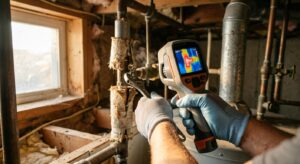
Never let a room with plumbing drop below 55 degrees Fahrenheit, as that approaches the freezing risk threshold for supply pipes. If a bathroom, laundry room, or utility room has exposed pipes, keep the vent at least partially open and the door slightly ajar on very cold nights, or use a small frost-protection thermostat plug set to 50 to 55 degrees as a safety backup.
Quick Tips
- Use a laser thermometer to check the actual temperature in unused rooms versus your living areas. You may discover they are already 5 to 8 degrees cooler, meaning you have natural zoning happening that you can amplify cheaply.
- If you have a programmable thermostat, create a weekday schedule that drops the whole-house temperature to 62 degrees during work hours when nobody is home. The DOE estimates this saves about 10% annually.
- Insulating the attic hatch or pull-down stair in homes over unfinished attics is one of the highest-return improvements you can make alongside vent zoning, with payback in under one heating season.
- Thick curtains on windows in unused rooms act as a secondary insulation layer and reduce radiant heat loss through the glass by 10 to 25% on cold nights. Close them when the sun sets.
Variations for Your Situation
- Apartment or Rental: You cannot modify central HVAC, but you can close the supply vent louvers in rooms you do not use (these are designed to close), block door gaps with removable door draft stoppers costing $10 to $20 each, and use a personal space heater in your main living area while lowering the main thermostat. Look for draft stoppers with weighted bases that require no adhesive or tools.
- Tight Budget (under $50): Start with zero-cost steps: close doors, roll towels under unused room doors, and drop the thermostat 3 degrees. Then spend $15 on door sweeps for 2 rooms and $6 on foam weatherstripping tape. These steps alone can yield 10 to 18% savings with under two hours of effort and no tools beyond scissors.
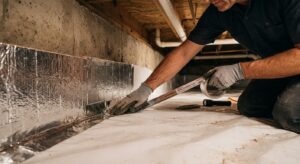
- Older Home (pre-1980): Older homes typically have larger gaps around door frames, less insulation in walls, and sometimes uninsulated supply ducts running through unconditioned spaces like crawlspaces or attics. Prioritize sealing the door frames with rope caulk or compressible weatherstripping first, as air leakage is higher in older construction. Also check whether any ducts in unconditioned spaces are insulated. Wrapping exposed ducts with R-6 duct wrap insulation costs $30 to $60 and can recover 10 to 20% of heat lost in transit before it even reaches your rooms.