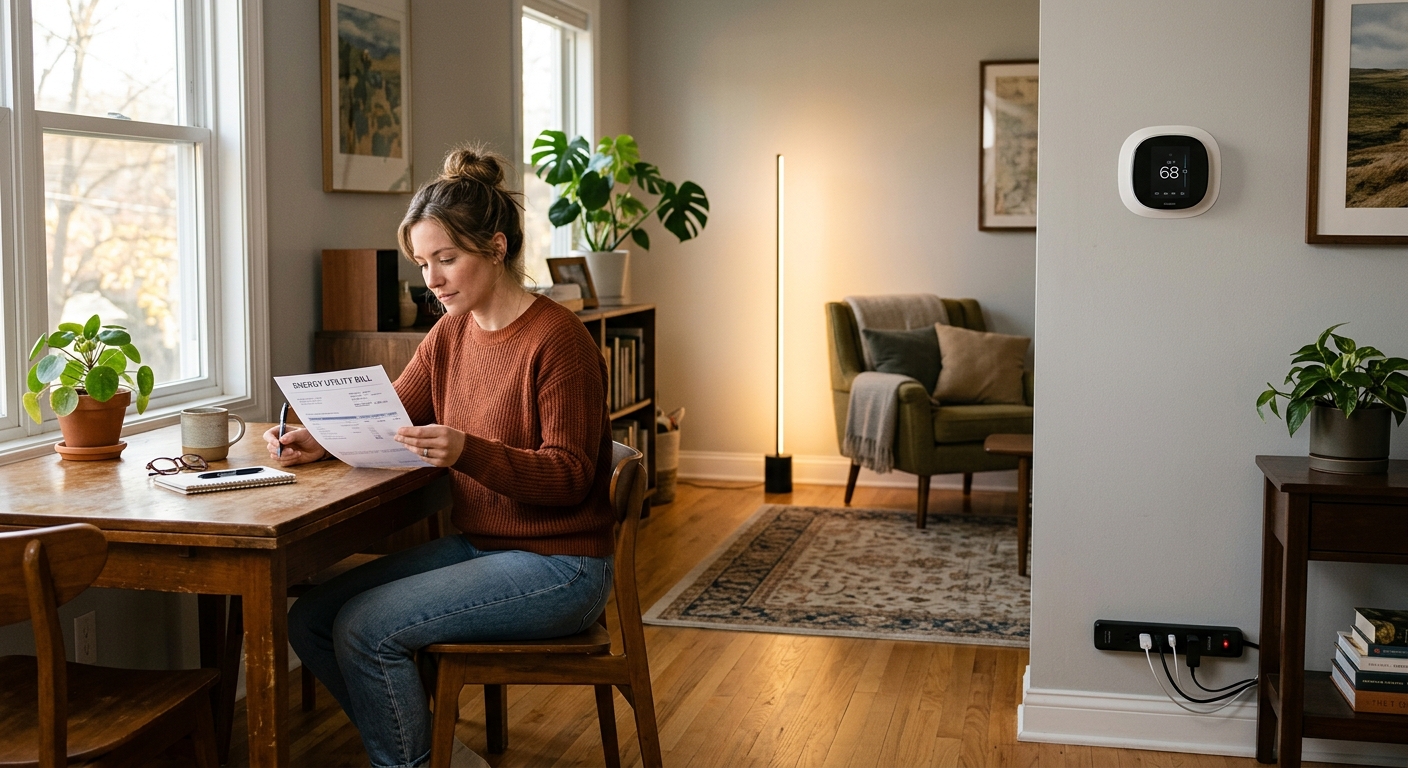
Your home could be costing you $300 to $600 more per year than it should, and the culprits are not a failing HVAC system or outdated appliances. They are six small, everyday habits and oversights that silently drain energy around the clock. The frustrating part is that most homeowners never connect these habits to the number they see on their monthly utility bill.
Building science research and data from the U.S. Department of Energy consistently point to the same repeat offenders: thermostat misuse, phantom loads, air leaks, improper water heater settings, poor lighting habits, and ventilation mistakes. Each one alone might cost you $40 to $120 per year. Together, they can represent a significant chunk of your total energy spend, money you are essentially handing over for nothing in return.
This post breaks down each of the six mistakes, explains exactly why they cost you money using real building science, and gives you a clear plan to fix them. Whether you have 15 minutes or a free weekend, there is an approach here that fits your schedule and budget.
What You’ll Need
Click on an item below to shop for the recommended items for this recipe on Amazon.
As an Amazon Associate, we earn from qualifying purchases.
How to Do It
- Adjust your thermostat to 78 degrees Fahrenheit when home and cooling, and set it to 85 degrees (or off) when the house is empty for more than 2 hours. In winter, use 68 degrees when home and 60 degrees when away or sleeping.
- Unplug device chargers, TVs, gaming consoles, and small kitchen appliances when not in use, or flip the power strip to the off position. Focus on your entertainment center first since it is typically the largest phantom load cluster in the home.
- Check your water heater thermostat dial (usually behind an access panel). If it is set above 120 degrees Fahrenheit, turn it down to exactly 120. This one change saves most households $30 to $60 per year and reduces scalding risk.
- Set a mental rule to turn bathroom exhaust fans off within 20 minutes of finishing a shower. The fan removes all the moisture it needs to in that window without wasting conditioned air.
- Turn off lights in every unoccupied room as you walk through the house. If you have incandescent or halogen bulbs still in place, note which fixtures they are in so you can prioritize those for LED replacement next.
- Close fireplace dampers completely if you have a wood-burning fireplace not currently in use. An open damper is essentially a large hole in your ceiling pulling heated or cooled air directly outside.
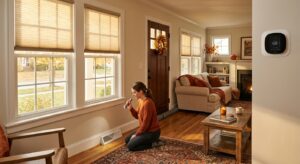
- Install a programmable or smart thermostat ($25 to $120) and program a schedule: 78 degrees cooling from 8 AM to 6 PM on weekdays, 75 degrees from 6 PM to 10 PM, and 77 degrees overnight. This alone saves 10 to 15% on HVAC costs annually.
- Place smart power strips ($25 to $40 each) at your entertainment center and home office. These automatically cut power to peripheral devices when the main device (TV or computer) is turned off, eliminating phantom loads without any daily action required.
- Walk every exterior wall outlet, window frame, and door frame with a lit incense stick or candle. Anywhere the smoke wavers, you have an air leak. Seal outlets with foam outlet gaskets ($5 for a pack of 10) and apply paintable caulk around window and door trim.
- Replace all remaining incandescent and halogen bulbs with LED equivalents. A 60-watt incandescent replaced by a 9-watt LED saves about $6 to $8 per bulb per year at average electricity rates. A typical home has 20 to 40 bulbs, making total savings $80 to $200 annually.
- Install a timer switch for each bathroom exhaust fan ($15 to $25 each). Set them for 20 minutes. The fan runs exactly as long as needed and shuts off automatically, no habits required.
- Check the insulation on your water heater tank. If it feels warm to the touch, wrap it with a water heater insulation blanket ($25 to $40) to reduce standby losses by up to 16%. Also insulate the first 6 feet of hot water pipes leaving the heater with foam pipe insulation ($5 to $10).
- Complete all steps in the DIY Upgrade approach first to capture the easy wins before spending on professional services.
- Schedule a professional energy audit ($100 to $400, often subsidized by utilities). The auditor uses a blower door test to find every air leak in your building envelope and gives you a prioritized list of fixes with projected savings for each.
- Have a professional air seal your attic bypasses, which are the gaps where walls, plumbing, and wiring penetrate the ceiling into the attic. These are the highest-impact leak points in most homes and are impractical to find and seal without proper equipment and knowledge.
- If your attic insulation is below R-38, add blown-in insulation to bring it up to DOE recommendations for your climate zone. Attic insulation upgrades typically deliver 15 to 25% reductions in heating and cooling costs with a payback period of 3 to 7 years.
- Replace any remaining incandescent fixtures with LED recessed cans or LED-compatible fixtures to eliminate light-to-heat waste entirely and remove another source of air leaks where recessed cans penetrate the ceiling.
- If your water heater is more than 10 years old, budget for a heat pump water heater ($700 to $1,200 installed) as the next appliance replacement. These units are 2 to 3 times more efficient than standard electric tank heaters and qualify for a 30% federal tax credit under current law.
Why It Works: The Benefits
Correcting all six mistakes typically delivers 20 to 35% in total energy savings, which translates to $200 to $600 per year for the average U.S. household paying around $1,500 annually on energy.
Fixing air leaks and optimizing your thermostat schedule eliminates the cold drafts and hot spots that make rooms feel uncomfortable regardless of what temperature the thermostat reads.
When your HVAC system is not overworked compensating for leaks, phantom loads, and poor scheduling, it runs fewer cycles per day. Fewer cycles mean less wear, potentially adding 2 to 5 years to its service life.
Cutting 20 to 35% of home energy use removes roughly 1 to 3 metric tons of CO2 equivalent per year from the average household, comparable to planting 50 to 150 trees annually.
Sealing uncontrolled air leaks reduces infiltration of outdoor allergens, radon, and moisture through random gaps, giving you cleaner, drier indoor air without sacrificing intentional ventilation.
💰 Savings Impact by Action
Programming proper setbacks when away or sleeping saves 10 to 15% on heating and cooling costs annually according to DOE data.
Cutting standby power draws through smart strips and unplugging eliminates 5 to 10% of total household electricity consumption.
Sealing gaps in the building envelope reduces conditioned air loss and cuts heating and cooling costs by 10 to 20% in a typical home.
Replacing all incandescent and halogen bulbs with LEDs reduces lighting energy use by up to 75% per bulb, saving 5 to 10% of total household electricity.
Setting the water heater to 120 degrees and adding tank insulation reduces water heating energy use by 7 to 16% compared to factory default settings.
🏠 Key Concepts Explained
The Science Behind It
Energy waste in homes almost always comes down to three physical principles: heat moves from hot to cold (thermodynamics), air moves from high pressure to low pressure (fluid dynamics), and electricity flows wherever there is a complete circuit, whether you want it to or not (electrical physics). The six daily mistakes in this post each violate at least one of these principles in a way your utility meter silently records every hour.
Phantom loads persist because modern electronics use small transformers and microprocessors that must remain partially active to respond to remote controls, maintain clocks, and resume quickly from standby. Even a device drawing only 2 to 5 watts continuously consumes 17 to 44 kilowatt-hours per year. Multiply that across 20 to 40 standby devices in a typical home and you are looking at 400 to 1,200 kWh per year of pure waste. Thermostat misuse is costly for a different reason: your HVAC system’s energy consumption does not scale linearly with time. It works hardest during the first few minutes of a cycle when the temperature differential is largest. Keeping the house at a comfortable temperature while nobody is home means running many unnecessary full-power cycles every day.
Air leaks are particularly insidious because they undermine every other efficiency measure you take. You can have perfect insulation and a brand-new HVAC system, but if your home leaks at a rate above 7 to 10 air changes per hour (measured by a blower door test), conditioned air is constantly escaping and being replaced by outdoor air at the wrong temperature and humidity. The DOE estimates that air sealing alone can reduce heating and cooling costs by 10 to 20% in a typical home. Combined with optimizing thermostat schedules and eliminating phantom loads, fixing all six mistakes creates compounding savings that exceed what any single upgrade could deliver on its own.
Frequently Asked Questions
▼ I set my thermostat back but my energy bill barely changed. What am I missing?
The most common reason is air leakage overwhelming the thermostat savings. If your home leaks significantly, the HVAC system ramps back up quickly after a setback because outdoor air floods in and destabilizes indoor temperature. Do the incense stick air leak test around outlets, window frames, and your attic hatch, and seal what you find before expecting large thermostat savings. Also confirm your thermostat schedule is actually activating by checking the display at different times of day.
▼ Can renters make these fixes without landlord permission?
Yes, most of these fixes are completely renter-safe. Thermostat scheduling, unplugging devices, adjusting the water heater temperature, turning off exhaust fans, and switching to LED bulbs require no permission and leave no permanent changes. Smart power strips and outlet gaskets can be removed when you move out. Air sealing with caulk around trim is the only item that technically modifies the unit, so check your lease or ask your landlord first, though most will agree since it protects their property too.
▼ How long before I actually see the savings on my bill?
Behavioral changes like thermostat setbacks and unplugging devices show up on the very next billing cycle, typically within 30 days. Hardware upgrades like LEDs and smart strips show savings immediately but the dollar amount grows month over month as you accumulate usage hours. Keep in mind utility bills vary with weather, so compare the same month year over year rather than month to month to get a clean read on your actual savings.
▼ My house is older than 30 years. Are these fixes enough or do I need major renovations?
These fixes are even more impactful in older homes because the baseline leakage and inefficiency is higher, meaning there is more low-hanging fruit to capture. Start with all the quick fix and DIY steps since they cost little and deliver disproportionate returns in leaky older construction. However, homes built before 1980 often have wall insulation below R-11 and attic insulation below R-19, well under modern standards. Once you have captured the easy savings, a professional energy audit will tell you whether an insulation upgrade pencils out as your next investment.
▼ Is it really worth replacing bulbs that still work fine?
Yes, and the math is straightforward. A working 60-watt incandescent costs you roughly $7 per year in electricity if used 3 hours per day at the U.S. average rate. A 9-watt LED replacement costs $1 per year to run and lasts 15,000 to 25,000 hours. The LED pays for itself in electricity savings within 6 to 18 months depending on bulb cost and usage, then saves money every month for the next decade. High-use fixtures like kitchen overheads, living room lamps, and outdoor lights are the highest priority.
Quick Tips
- Check your utility company’s website for free or subsidized energy audits before paying out of pocket. Many utilities offer them at no charge to qualifying customers.
- Use a $15 to $25 plug-in energy meter (Kill A Watt style) to measure the actual standby draw of your biggest electronics before buying smart strips, so you know exactly which devices are worth targeting.
- Set your refrigerator to 37 degrees Fahrenheit and your freezer to 0 degrees. Settings colder than these waste 5 to 10% in refrigeration energy with no food safety benefit.
- Ceiling fans should spin counterclockwise in summer (push cool air down) and clockwise on low in winter (redistribute warm air that pools at the ceiling). Reversing direction for the season saves 5 to 10% on HVAC costs in rooms where fans run regularly.
Variations for Your Situation
- Apartment or Rental: Renters cannot adjust central HVAC schedules or seal building envelope gaps in most cases, but can still capture 40 to 50% of the available savings through other steps. Focus on a smart plug-in thermostat for window AC units ($25 to $60), smart power strips for all entertainment and office equipment, LED bulb replacements in any lamp you own, and a timer for any portable exhaust fan. These changes require no landlord permission, cost under $100 total, and move with you when you leave.
- Tight Budget (under $50): Start with pure zero-cost behavioral changes: thermostat setback, unplugging chargers and standby devices, shortening exhaust fan run times, closing the fireplace damper, and turning off lights. Then spend strategically. Foam outlet gaskets ($5) and a tube of paintable caulk ($6) for air sealing deliver some of the highest return on investment of any home efficiency product. If you have $15 to $20 left, replace the two or three highest-use bulbs in your home with LEDs. This sub-$30 spend can still net $100 to $180 in annual savings.
- Older Home (pre-1980): Homes of this era typically have 2 to 3 times the air leakage of modern construction and significantly under-insulated walls and attics. All six fixes apply and will likely deliver savings at the higher end of the 20 to 35% range because your starting baseline is so much worse. However, add two extra steps before sealing: test for asbestos in any disturbed insulation or flooring material (test kits run $30 to $50), and check your attic for knob-and-tube wiring before adding insulation. If either is present, bring in a licensed professional before proceeding with those specific tasks.