Walk into your attic on a summer afternoon and you might feel like you have opened an oven door. That brutal heat pouring into your living space is not just uncomfortable – it is costing you real money every month. Insulation is the single most impactful upgrade most homeowners can make, yet the majority of American homes fall short of current Department of Energy recommendations by a significant margin. The problem is not just that homes lack insulation – it is that many homeowners install the wrong R-value for their climate, leaving money on the table regardless of how much material they put in.
R-value measures thermal resistance, or how well a material slows heat movement through walls, ceilings, and floors. A home in Minneapolis needs dramatically more insulation than one in Phoenix, and even within a single state, the difference can span two full DOE climate zones. Getting this number right means your HVAC system works less, your home stays more comfortable in every room, and your energy bills drop in a way you can actually see on your monthly statement.
This post walks you through all eight DOE climate zones, gives you the exact R-value targets for each part of your home, and lays out clear steps to assess where you stand and what to do about it – from a free DIY inspection you can do this weekend to professional upgrades with documented payback periods.
What You’ll Need
Click on an item below to shop for the recommended items for this recipe on Amazon.
As an Amazon Associate, we earn from qualifying purchases.
How to Do It
- Look up your DOE climate zone at energystar.gov/saveathome using your zip code. Write down the recommended R-values for your attic, walls, floors, and crawlspace – these are your targets.
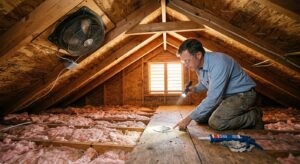
- Go into your attic on a calm day and measure your existing insulation depth with a ruler. Multiply inches by the R-value per inch for your material: fiberglass batts are about R-3.2 per inch, blown cellulose is R-3.7 per inch, and open-cell spray foam is R-3.7 per inch.
- Compare your measured R-value to your zone target. If your attic has 4 inches of fiberglass (R-13) and your zone calls for R-49, you have a significant gap – that difference is where your heat loss is concentrated.
- Check your attic floor for air sealing: look for open top plates, gaps around recessed lights, unsealed plumbing and wiring penetrations, and pull-down attic stairs with no insulated cover. These gaps matter more than raw R-value.
- Note your findings in a simple list: current R-value, target R-value, and gap locations. This document will guide your upgrade plan and help you get accurate quotes from contractors if you go the professional route.
- Before adding insulation, seal all air bypasses on the attic floor. Use canned spray foam for gaps smaller than 3 inches and rigid foam board plus canned foam for larger openings like open wall cavities and dropped soffits. Do not skip this step – insulation without air sealing delivers only half the expected savings.
- Install an insulation dam or baffles at each eave vent to maintain a clear airflow channel from the soffit to the attic ridge. This prevents moisture buildup and protects your roof sheathing.
- Calculate how many bags of blown cellulose or fiberglass you need. Divide your attic square footage by the coverage per bag at your target depth, as listed on the bag’s coverage chart. Buy 10% extra as a buffer.
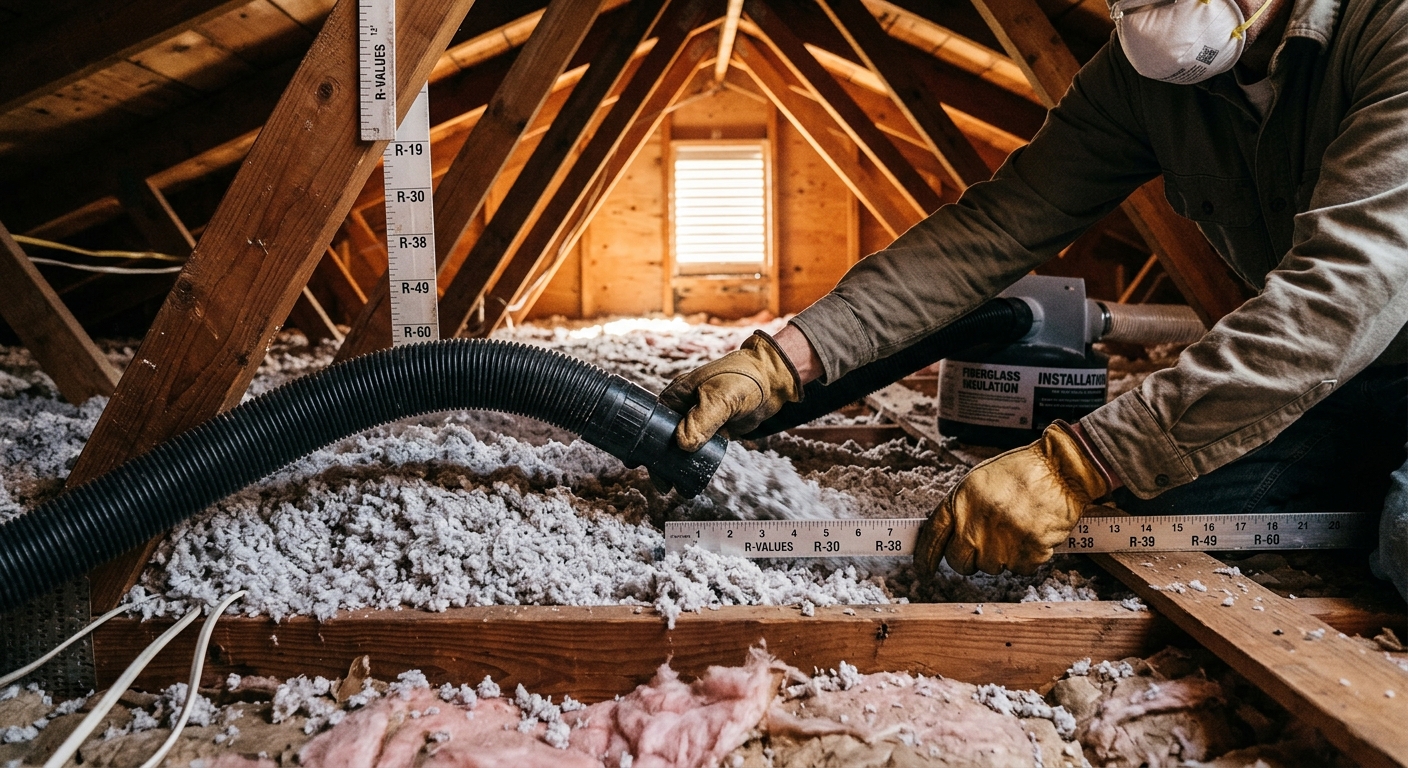
- Rent a blower machine and load it with insulation. Start at the far end of the attic and work backward toward the access hatch, keeping the hose low and sweeping in smooth overlapping passes. Use depth markers (simple rulers taped to joists) to confirm you are hitting your target depth.
- Install an insulated attic hatch cover or pull-down stair insulator kit before finishing. Attic hatches are a major thermal bypass and are often completely overlooked even after attic insulation work.
- After completing the work, check your energy bills for the next two billing cycles and compare to the same months in the prior year to verify your savings.
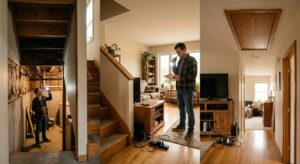
- Hire a certified energy auditor (look for BPI or RESNET certification) to perform a blower door test. This pressurizes your home and reveals exactly where air is escaping, giving you a precise map of where insulation and air sealing dollars will have the biggest impact.
- Get at least three quotes from insulation contractors. Ask each to specify material type, installed R-value, coverage area, and estimated payback period. Reputable contractors will provide a pre- and post-installation report.
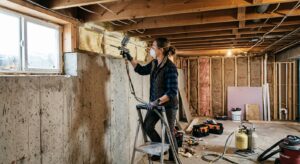
- For existing walls with no insulation, ask about dense-pack cellulose blown through small holes drilled from the exterior or interior. This achieves R-13 to R-15 in a 2×4 wall cavity with minimal disruption and pays back in 4 to 7 years in Zones 5 through 7.
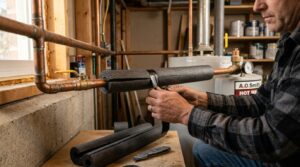
- For crawlspaces and rim joists, request closed-cell spray foam at 2 inches minimum (R-12) on the interior. This also acts as a vapor barrier and dramatically reduces moisture infiltration in addition to heat loss.
- Ask your contractor to check for and qualify you for available rebates. Federal tax credits cover 30% of insulation upgrade costs under the Inflation Reduction Act through 2032, capped at $1,200 per year – this alone can cut your out-of-pocket cost by a third.
- After installation, request a post-install blower door test to verify that air leakage has been reduced and that the work meets your contracted specifications before making final payment.
Why It Works: The Benefits
Properly insulating an under-insulated attic to DOE recommended levels typically reduces heating and cooling costs by 15 to 40%, with the highest savings in Zones 4 through 7 where temperature swings are most extreme.
Rooms that feel stubbornly hot in summer or cold in winter are almost always connected to insulation gaps above or below them. Correcting R-values to zone targets eliminates most of these comfort hot-spots without changing your HVAC system.
Every degree of temperature your insulation maintains means fewer compressor and furnace cycles. Homeowners who upgrade attic insulation often report their system runs 20 to 30% less often, directly extending equipment lifespan.
Correctly specified insulation keeps interior surfaces above the dew point, reducing condensation inside wall cavities and attic sheathing – a leading cause of mold and wood rot in under-insulated homes.
ENERGY STAR certified insulation upgrades return roughly 116% of their cost at resale according to the Remodeling Cost vs. Value report, making it one of the few home improvements that pays back more than it costs in added value.
💰 Savings Impact by Action
Upgrading attic insulation from R-11 to the DOE zone target reduces heating and cooling costs by up to 30% because the attic is the largest single surface area through which heat escapes.
Sealing attic floor air bypasses before insulating captures an additional 15 to 20% in savings that insulation alone cannot deliver, because heat moves through gaps in minutes rather than hours.
Dense-pack cellulose in previously empty 2×4 wall cavities reduces wall heat loss by up to 60%, contributing roughly 10 to 15% savings on total heating and cooling bills.
Insulating and air-sealing rim joists with 2-inch closed-cell spray foam reduces infiltration at one of the leakiest points in most homes, saving 8 to 10% on heating costs in Zones 4 through 7.
Installing an insulated cover over an uninsulated pull-down attic stair or hatch eliminates a direct thermal bypass and can save 3 to 5% on annual heating bills for a cost of under $60.
🏠 Key Concepts Explained
The Science Behind It
Heat always moves from warm to cold through three mechanisms: conduction (direct transfer through solid materials), convection (transfer through moving air), and radiation (transfer through electromagnetic waves). Insulation primarily slows conduction by trapping millions of tiny air pockets inside its fibers, foam cells, or loose fill. The R in R-value stands for resistance to conductive heat flow – specifically, the temperature difference in degrees Fahrenheit required to drive one BTU of heat through one square foot of material per hour. A material with R-30 resists heat flow three times as effectively as one rated R-10.
What makes climate zone so critical is the concept of the temperature differential, or delta-T. Heat flow rate through your building envelope is directly proportional to the difference between inside and outside temperatures. In DOE Climate Zone 7 (northern Minnesota, for example), outdoor winter temperatures regularly drop to minus 20°F, creating a 90-degree delta-T against a 70°F interior. That enormous differential drives heat out through every gap aggressively and continuously. Compare that to Zone 2 (south Florida), where the delta-T in both directions rarely exceeds 35 degrees, meaning the insulation works less hard and lower R-values are appropriate. Installing Zone 5 levels of insulation in Zone 7 leaves you systematically under-protected during the months when it matters most.
The diminishing-returns curve of insulation is equally important to understand. This curve follows a hyperbolic shape rather than a straight line. The first few inches of insulation produce dramatic resistance increases because you are moving from near-zero resistance (none) to meaningful resistance. But as thickness grows, each additional inch adds proportionally less benefit. Going from R-0 to R-19 might cut heat loss through your ceiling by 75%, while going from R-38 to R-60 might add only another 5%. This is why the DOE recommendations are tuned to the knee of each zone’s curve – the point where added material still produces a strong economic return. Spending money beyond those targets is rarely cost-effective unless you are pursuing near-zero-energy construction.
Frequently Asked Questions
▼ My attic already has insulation. Do I need to remove it before adding more?
Almost never. As long as existing insulation is dry, free of mold, and not vermiculite, you can blow new insulation directly on top of it. The exception is wet or compressed fiberglass batts, which have lost much of their R-value and should be removed and replaced rather than covered. Run a moisture meter across the existing material before proceeding.
▼ My energy bills are still high after adding attic insulation. What did I miss?
The most common culprit is air sealing – adding insulation without sealing attic floor bypasses (top plates, recessed lights, plumbing chases) leaves the biggest heat pathways open. The second most common issue is wall insulation: if your walls are uninsulated 2×4 cavities, they can account for 25 to 35% of your total heat loss regardless of attic R-value. A blower door test from a certified energy auditor will pinpoint exactly where your remaining losses are.
▼ How do I know if my walls have any insulation at all?
Remove an outlet cover plate on an exterior wall, turn off the circuit breaker for that outlet, and probe gently into the gap around the electrical box with a screwdriver or stiff wire. If you feel soft material, some insulation is present. An even faster method is an infrared thermometer pointed at multiple spots on an exterior wall on a cold day – a hollow uninsulated cavity will show up several degrees cooler than surrounding areas. A professional IR scan during a blower door test gives a whole-house picture at once.
▼ What R-value do I need for my specific climate zone?
The DOE recommends the following attic targets: Zone 1 and 2 (Hawaii, south Florida, south Texas): R-30 to R-49; Zone 3 (most of the Southeast, mild West Coast): R-38 to R-60; Zone 4 (mid-Atlantic, Pacific Northwest): R-49 to R-60; Zones 5 through 8 (Midwest, mountain states, northern New England, Alaska): R-49 to R-60, with Zone 7 and 8 requiring R-60 for new construction. For floors over unheated crawlspaces, targets range from R-13 in Zone 1 to R-30 in Zones 5 through 8. Use energystar.gov with your zip code for the most precise guidance.
▼ Can I get a tax credit for adding insulation?
Yes. Under the Inflation Reduction Act, the Energy Efficient Home Improvement Credit covers 30% of insulation material costs (not labor) up to $1,200 per tax year through 2032. The insulation must meet the 2021 International Energy Conservation Code requirements for your climate zone, which most standard products do. Keep your receipts and file IRS Form 5695 with your return – there is no application process beyond that.
Quick Tips
- Use your zip code at energystar.gov to find your exact climate zone before buying any materials – neighboring counties can be in different zones with different R-value targets.
- Blown cellulose is made from 85% recycled content, settles about 20% over time (factor this into your target depth), and outperforms fiberglass batts on air resistance in retrofits because it fills irregular cavities more completely.
- The DOE recommended R-values for attics by zone: Zone 1 and 2: R-30 to R-49, Zone 3: R-38 to R-60, Zones 4 through 8: R-49 to R-60. Check the full table at energy.gov for walls, floors, and crawlspaces.
- Insulated attic hatch covers (rigid foam box style) typically cost $30 to $60 and pay back in under one heating season – they are one of the most cost-effective single purchases in home efficiency.
Variations for Your Situation
- Apartment or Rental: Renters cannot modify wall or attic insulation, but can address the biggest controllable gaps. Use door draft stoppers ($10 to $20), window insulator film kits for single-pane windows ($25 to $40 per window), and outlet and switch plate foam gaskets on exterior walls ($5 for a pack of 10). These combined measures can reduce drafts by 10 to 15% with no landlord permission required and no permanent modifications.
- Tight Budget (under $100): Focus entirely on air sealing, which delivers the highest return per dollar spent. A single $8 can of spray foam applied to attic floor penetrations, rim joists, and around the water heater flue can seal dozens of bypasses in one afternoon. Add attic hatch weatherstripping ($15) and foam gaskets behind outlet plates on exterior walls ($5). Together these steps can cut 10 to 20% of heat loss for under $50 in materials.
- Older Home (pre-1980): Homes built before modern energy codes typically have no wall insulation, compressed or degraded attic batts, and significant knob-and-tube or aluminum wiring concerns. Start with a professional energy audit ($150 to $400, often rebated by utilities) before spending anything on materials. The audit will reveal whether your attic insulation has degraded to near-zero performance, flag wiring hazards that must be resolved before insulating, and identify whether your foundation sill plates are the dominant heat loss pathway – a common finding in homes of this era.