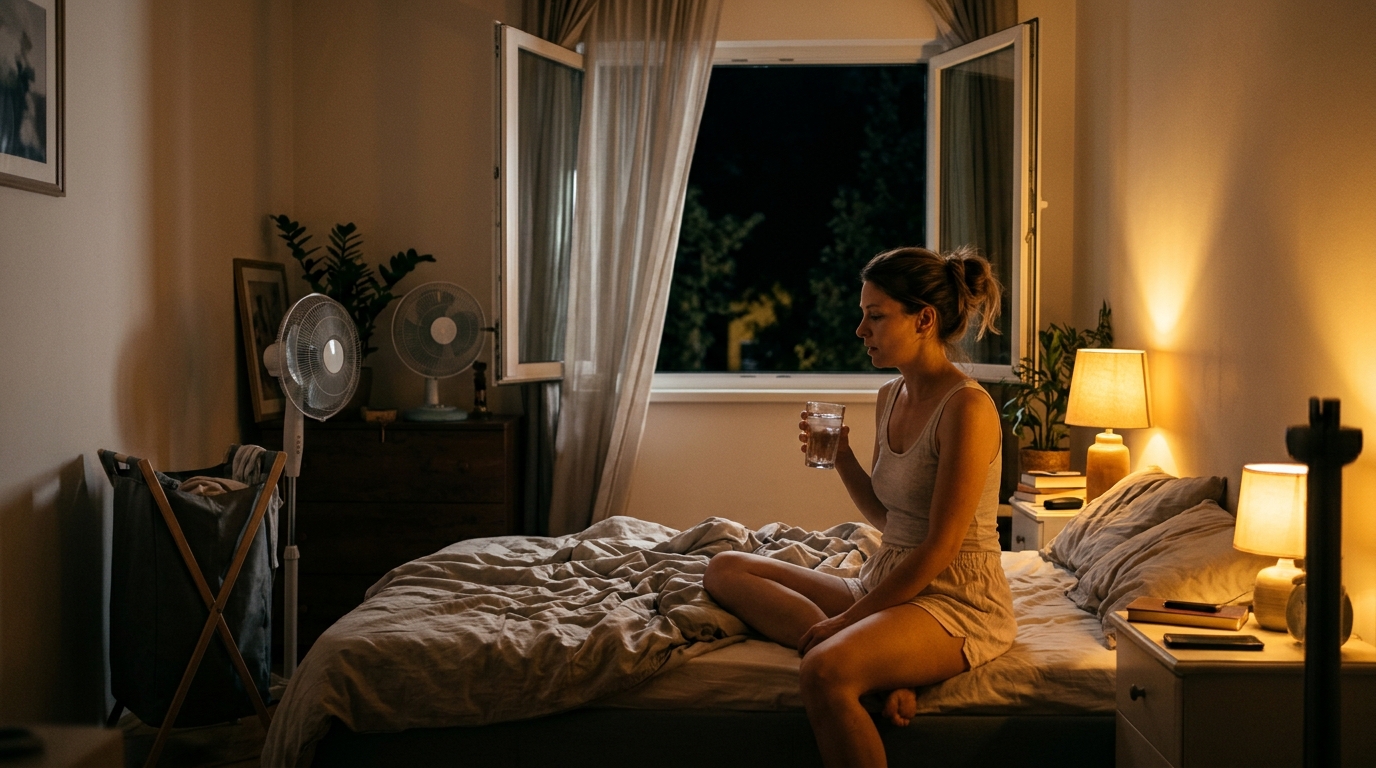
If your bedroom faces south, you have probably noticed the pattern: the room feels fine at breakfast, turns into a sauna by late afternoon, and refuses to cool off at bedtime even after the sun is long gone. That is not your imagination. South-facing rooms in the Northern Hemisphere receive the longest and most intense stretch of direct sunlight, and the walls, ceiling, furniture, and mattress all absorb that heat and slowly release it through the evening.
This matters for more than comfort. Sleep research consistently points to bedroom temperatures between 60 and 67 degrees F as ideal for deep, restorative sleep. When a room stays at 76 or 78 degrees at 10 p.m., you either sleep poorly or run the AC harder (and longer) to compensate, which drives up your electric bill during the most expensive hours on many time-of-use rate plans.
In this post, we will break down why south-facing bedrooms hold heat so stubbornly, then walk through two practical approaches: a no-cost quick fix you can start tonight, and a DIY upgrade that attacks the problem at its source by blocking heat before it ever enters the room. We will also cover troubleshooting, renter-friendly options, and what to do if your home is older.
What You’ll Need
Click on an item below to shop for the recommended items for this recipe on Amazon.
As an Amazon Associate, we earn from qualifying purchases.
How to Do It
- By mid-morning, close blinds, curtains, or shades on all south-facing windows before the sun reaches the glass. Closing them after the room is already hot is far less effective.
- Keep the bedroom door closed during the day so the room does not pull heat from or push heat into the rest of the house, and keep the AC supply vent open if you have one.
- As soon as outdoor temperatures drop below indoor temperatures (usually 7 to 9 p.m.), open the bedroom window and a window on the opposite or shaded side of the house to create cross-ventilation.
- Place a box fan in the bedroom window facing outward to exhaust hot air, while a second window elsewhere in the house is cracked open to supply cooler air. Run it for 60 to 90 minutes before bed.
- Before bed, close the windows again if outdoor humidity is high, and run a ceiling fan on the counterclockwise (downward airflow) setting to create a comfortable breeze across your skin.
- Swap heavy bedding for breathable cotton or linen and keep the AC thermostat for sleeping hours at 72 to 76 degrees F rather than dropping it dramatically.
- Measure each south-facing window, then install exterior shading such as a solar screen, a retractable awning, or an adjustable roller shade. Solar screens can block 65 to 90% of solar heat before it hits the glass and typically cost $25 to $60 per window for DIY kits.
- If exterior options are not feasible, apply a low-e or solar control window film to the interior of the glass. Quality films reduce solar heat gain by 50 to 70% and cost about $2 to $6 per square foot.
- Hang cellular (honeycomb) shades with a reflective backing inside the window. Their air pockets add insulating value and can cut heat gain by another 15 to 30% beyond film alone.
- Seal air leaks around the window frame with caulk and add weatherstripping to the sash so hot afternoon air does not infiltrate. This takes about 20 minutes per window and costs under $15 total.
- Install a thermostatically controlled window or whole-house fan if you have a safe attic or exhaust path, so the night flush runs automatically when outdoor air is cooler than indoor air.
- Plant a deciduous tree or install a trellis with vines on the south side if you own the property. It takes a few seasons, but a mature tree can cut summer cooling needs for that wall by 20 to 25% while still letting winter sun through.
Why It Works: The Benefits
Dropping the bedroom from 78 to 68 degrees can reduce nighttime wake-ups and help you reach deeper sleep stages faster, since your body temperature naturally needs to fall to initiate sleep.
Blocking solar gain at the window can cut cooling load in that room by 20 to 30%, and shifting cooling to cheaper off-peak hours can trim the nighttime portion of your bill further.
When the room starts the evening cooler, your AC cycles less often overnight, which extends equipment life and reduces strain during peak summer weeks.
Fixing the hottest room reduces the temperature gap between floors and rooms, so the thermostat is not overcooling the rest of the house to compensate for one problem bedroom.
A cooler room often means you can skip the loud window unit or box fan on high speed, which also reduces nighttime noise.
💰 Savings Impact by Action
Solar screens or exterior shades block 65 to 90% of solar heat at the glass, cutting room cooling load by up to 30%.
Low-e or solar control film reduces solar heat gain by 50 to 70%, trimming bedroom cooling energy by roughly 15 to 25%.
Exhausting stored heat with cooler evening air can reduce overnight AC runtime by around 15% on mild nights.
Caulking and weatherstripping around windows reduces afternoon hot-air infiltration and saves about 10% of room cooling energy.
Running a ceiling fan lets you raise the thermostat 3 to 4 degrees, which saves roughly 12% on cooling for that period.
🏠 Key Concepts Explained
The Science Behind It
The core issue is that heat does not disappear when the sun goes down. During the day, sunlight passes through your south-facing window as shortwave radiation and strikes the floor, walls, furniture, and bedding. Those surfaces absorb the energy and warm up. In the evening, once the sun is gone, those same surfaces become heat sources, re-radiating that stored energy back into the room as longwave infrared. Because dense materials like drywall, wood, and mattresses have high thermal mass, they release that heat slowly over several hours, which is exactly why 9 p.m. can feel warmer than 2 p.m.
This is also why interior blinds disappoint. Once sunlight enters through the glass, it has already crossed the thermal boundary of your home. A blind absorbs that energy and releases it into the room as heat. Exterior shading, solar screens, and reflective films intercept the radiation before or as it crosses the glass, preventing the conversion to indoor heat. The difference can be 30 to 50 percentage points in blocked heat gain.
Night flushing works on a simple temperature-difference principle. Heat naturally moves from warmer to cooler objects, and moving air accelerates that transfer through convection. When you exhaust warm indoor air and replace it with cooler outdoor air, you strip heat from the air and, over time, from the thermal mass itself. The larger the indoor-outdoor temperature difference, the faster the structure sheds stored heat, which is why this strategy shines in climates with cool evenings and underperforms in muggy, tropical nights.
Frequently Asked Questions
▼ Why is my AC still running all night even after I added blinds and a fan?
Interior blinds only block 20 to 40% of solar heat, so the room may still be loading up with stored heat during the day. Switch to exterior shading or a reflective window film, and check for air leaks around the window frame and under the door. Also confirm that your supply vent is open and not blocked by furniture or curtains.
▼ Can renters do this without landlord permission?
Yes, most of the quick fix is renter-friendly. Use blackout or reflective curtains, a tension-rod mounted shade, static-cling window film (no adhesive), and a window fan. Avoid permanent film, drilling for awnings, or caulking unless your lease allows it.
▼ How long before I actually notice savings on my bill?
Comfort improvements show up the first night. Bill savings usually become visible within one billing cycle, especially if you were running the AC hard overnight. Exterior shading and window film typically deliver the biggest measurable drop, often 10 to 20% on the cooling portion of your bill.
▼ What if my home is older than 30 years?
Older homes typically have single-pane or early double-pane windows with higher solar heat gain and more air leakage. Prioritize exterior shading and weatherstripping first, since they deliver the most improvement per dollar. If attic insulation is below R-30, upgrading it often pays back faster than replacing windows.
▼ Is night flushing safe if I live in a humid climate?
It depends. If nighttime outdoor humidity stays above 65 to 70%, flushing can introduce moisture and make the room feel clammy, and may encourage mold on cooler surfaces. In humid regions, rely more on shading and AC with a ceiling fan, and only flush on drier nights.
Quick Tips
- Close shades or blinds before the sun hits the window, not after the room has already heated up.
- Use a box fan in the window facing outward, with a second window open elsewhere, to pull cooler air through the house after sunset.
- Keep the bedroom door closed during the day so heat stays confined and the AC can focus on common areas.
- Move bedding and heavy fabrics out of direct sun in the afternoon so they do not store heat you will sleep against later.
- If you run AC at night, pair it with a ceiling fan so you can raise the thermostat 3 to 4 degrees and feel just as comfortable.
Variations for Your Situation
- Apartment/Rental: Use a combination of reflective blackout curtains ($20 to $40), static-cling solar film ($15 to $30 per window, removable and no adhesive), and a quiet window fan ($30 to $50). Close the curtains by mid-morning and run the fan at night. This setup can drop room temperature by 3 to 5 degrees without touching the lease.
- Tight Budget (under $50): Close all south-facing blinds by 10 a.m., hang a light-colored sheet or reflective emergency blanket behind the curtains for a cheap radiant barrier, and run a box fan ($25 to $35) in the window from 8 p.m. until bedtime. Together this can trim the room’s bedtime temperature by 3 to 6 degrees for essentially the price of a fan.
- Older Home (pre-1980): Start with weatherstripping and caulk around windows ($15 to $30), since older frames leak more air. Add solar screens or exterior awnings ($100 to $250 per window) and check attic insulation depth. Many pre-1980 homes have only R-11 to R-19 in the attic, and adding blown-in insulation to R-38 can cut ceiling heat transfer by 15 to 25%.
- Two-Story Home: If your south-facing bedroom is upstairs, the stack effect makes the problem worse because warm air rises from the first floor. Use night flushing with windows open on both floors, and consider a whole-house fan or ceiling fans to move air upward and out.