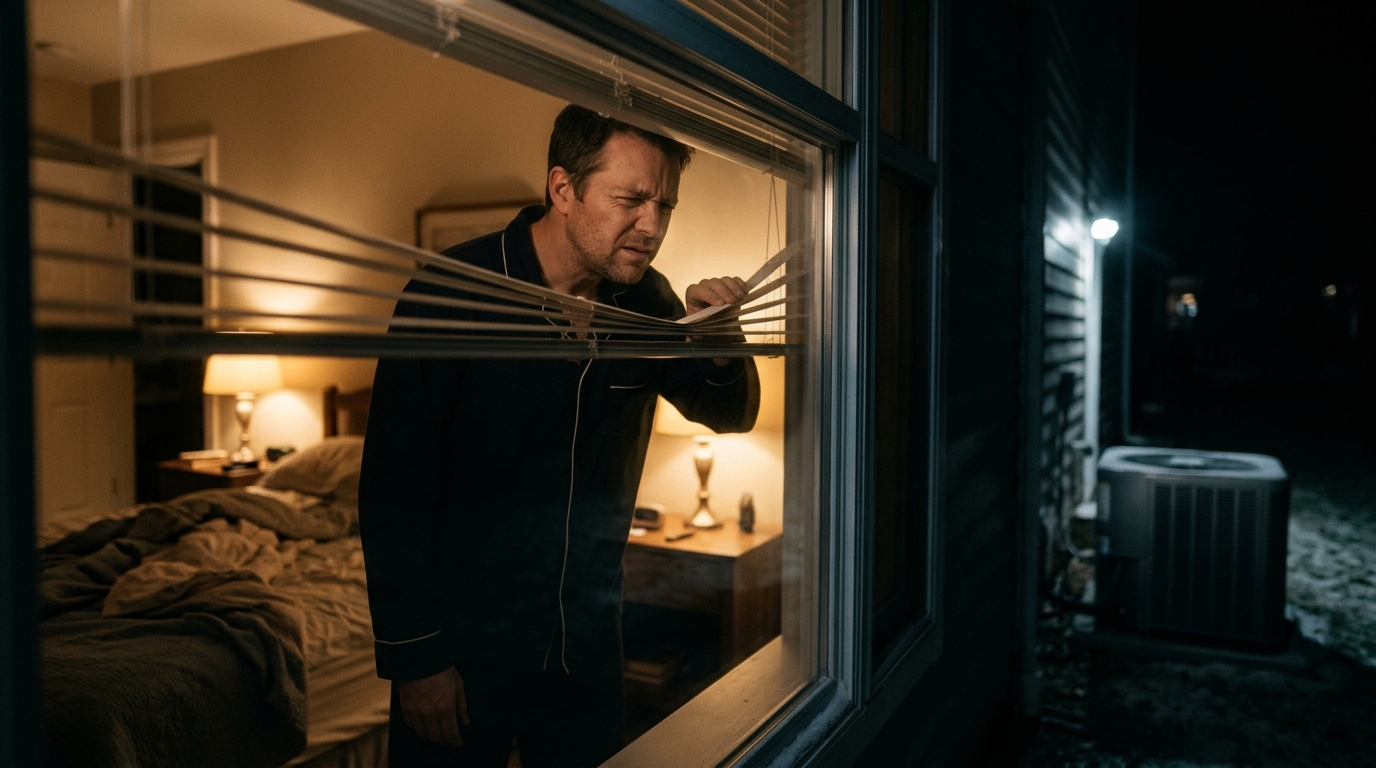
You wake up at 2 AM to a loud whoosh, a clunk, and the sight of white steam billowing off your outdoor unit. Your first thought might be that something is on fire or broken. In most cases, it is neither. Your air source heat pump is simply doing what it was designed to do: melting the frost that builds up on its outdoor coil so it can keep heating your home.
Defrost cycles are a normal part of how heat pumps operate in cold, humid weather, and they tend to cluster overnight because that is when outdoor temperatures dip into the 25 to 38 degree Fahrenheit range with high relative humidity, the worst combination for frost formation. A healthy system might defrost every 30 to 90 minutes during these conditions, with each cycle lasting 3 to 10 minutes. That is expected. What is not expected is a system that defrosts constantly, fails to clear the ice, or leaves your home noticeably colder.
This post explains why defrost happens, why nighttime is peak season for it, and how to reduce unnecessary cycles that waste energy. We will cover a quick fix you can do in 15 minutes, a DIY upgrade for chronic frosting problems, and a professional-level approach for stubborn cases, so you can tell the difference between normal operation and a system that needs attention.
What You’ll Need
Click on an item below to shop for the recommended items for this recipe on Amazon.
As an Amazon Associate, we earn from qualifying purchases.
How to Do It
- Turn the system off at the thermostat and, for extra safety, at the outdoor disconnect box before touching anything.
- Clear leaves, snow, and debris from around the outdoor unit, keeping at least 24 inches of open space on all sides and 5 feet above.
- Make sure the unit sits at least 6 to 8 inches above ground or on a stand so melting ice can drain freely and not refreeze at the base.
- Gently rinse any heavy frost with a garden hose of lukewarm water if the unit is stuck in ice, never hot water and never sharp tools, which can puncture coil tubing.
- Observe one full defrost cycle at night or early morning. Normal means steam for 3 to 10 minutes, then the fan restarts and heating resumes. Note the timing so you can compare later.
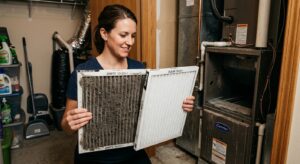
- Replace your indoor air filter with a clean one (MERV 8 to 11) and check the indoor coil and return vents for blockages, since low indoor airflow lowers coil temperature and increases frost.
- Clean the outdoor coil: with power off, use a soft brush and a garden hose on low pressure to flush dirt from the outside of the fins, spraying from the inside out if accessible.
- Install a simple raised pad or cinder blocks if the unit sits flat on the ground and ice is pooling underneath, and add a gravel bed so meltwater drains away.
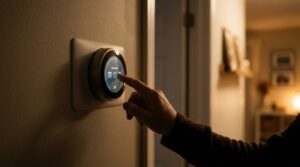
- Set your thermostat to hold steady temperatures overnight. Big setbacks of 5 or more degrees force the system to recover with aux heat, so limit nighttime setbacks to 2 to 3 degrees.
- Add a wind barrier on the prevailing-wind side, such as a lattice panel placed 3 feet away, to reduce cold wind chilling the coil while keeping airflow clear.
- If your thermostat allows, check the aux heat lockout setting and set it to about 35 degrees F so strips only run when truly needed.
- Book a service call if your unit defrosts more often than every 30 minutes, fails to clear ice within 15 minutes, or ices over completely.
- Ask the technician to test the defrost sensor and control board; a failed sensor ($40 to $150 part) is one of the most common causes of runaway frosting or no defrost at all.
- Have refrigerant charge checked. Low charge makes the coil run colder and frost faster, and fixing leaks properly costs $200 to $1,000 depending on location.
- Request verification of the reversing valve and defrost relay, and ask for a measured temperature split across the indoor coil to confirm proper operation.
- If your unit uses timed defrost and is over 10 years old, ask about upgrading the control to demand defrost, which can reduce defrost energy use by 10 to 20%.
Why It Works: The Benefits
Reducing unnecessary defrost cycles and avoiding heat strip activation can cut winter heating costs by 5 to 15%, which is $40 to $120 per season for a typical $800 heating bill.
Each defrost cycle stresses the compressor and reversing valve. Cutting excess cycles reduces wear and helps a heat pump reach its expected 12 to 15 year lifespan.
Fewer defrost interruptions mean fewer brief temperature dips of 2 to 4 degrees F, so your home feels more consistent overnight.
Knowing what normal looks like helps you catch real issues, like a stuck defrost board or low refrigerant, before they become $1,000 or higher repairs.
Clearing the coil and ensuring proper airflow reduces extended, strained defrost cycles that produce the loudest sounds.
💰 Savings Impact by Action
Replacing timed defrost with demand-defrost control cuts unnecessary defrost cycles and can reduce defrost-related energy use by 10 to 20%.
Limiting electric strip heat during defrost and recovery avoids using energy at 3 to 4 times the cost per unit of heat.
A clean outdoor coil with proper airflow improves heating efficiency by 5 to 10% and reduces frost buildup rate.
Keeping overnight setbacks to 2 or 3 degrees prevents costly aux heat recovery while still saving about 1% per degree.
Raising the unit and adding gravel prevents ice dams, avoiding extended defrost cycles and strain on the fan and compressor.
🏠 Key Concepts Explained
The Science Behind It
A heat pump heating your home is essentially an air conditioner running backward. The outdoor coil acts as the evaporator, absorbing heat from outside air by keeping refrigerant colder than the surrounding air. That means the coil surface frequently runs 10 to 20 degrees F below the outdoor temperature. When outdoor air is around 35 degrees F, the coil may be at 20 degrees F, well below the freezing point of water. Any moisture in the air that touches those fins deposits as frost through a process called deposition, skipping the liquid phase entirely.
Frost is a poor conductor of heat and blocks airflow through the narrow fin spacing, typically 12 to 20 fins per inch. A thin 1/8 inch layer of frost can reduce heat transfer by 20 to 30% and cut airflow enough to pull the coil even colder, accelerating the problem. This is why defrost is not optional. Without it, capacity and efficiency fall steadily until the system locks up in solid ice.
To fix this, the system reverses the refrigerant flow using the reversing valve, sending hot compressed gas to the outdoor coil, usually at 100 to 120 degrees F, to melt the ice in a few minutes. The outdoor fan shuts off so the heat concentrates on the coil, which is why you see steam rather than hearing normal fan noise. Nighttime tends to be the peak because temperatures commonly fall into the 28 to 38 degree F range with relative humidity climbing as air cools toward its dew point. Add the lack of solar warming on the coil and you have the ideal frosting environment. Heat pump efficiency (COP) also drops during these conditions, from around 3.0 at 47 degrees F to roughly 2.0 at 17 degrees F, so a well-tuned defrost strategy matters for your bill.
Frequently Asked Questions
▼ Why is my outdoor unit steaming and making a loud whoosh at night? Is it broken?
This is almost always the normal defrost cycle. The reversing valve shifts, the fan stops, and warm refrigerant melts the frost, creating steam. If it lasts under 10 minutes and the unit returns to normal heating, nothing is wrong.
▼ My heat pump ices over completely and never seems to defrost. What should I do?
Turn the system off at the thermostat and let the ice melt naturally or rinse with lukewarm water, never tools. Then call a technician, since a failed defrost sensor, bad control board, or low refrigerant are the usual culprits and can damage the compressor if ignored.
▼ Why does my house get cold or blow cooler air during defrost?
During defrost, the system briefly runs in cooling mode and pulls heat from your indoor air, so you may feel a 2 to 4 degree dip for a few minutes. Auxiliary heat strips usually cover this, so check that your aux heat is working and not locked out at too high a temperature.
▼ Can renters do any of this without landlord permission?
Yes, observing and documenting defrost cycles, keeping the area clear of snow and debris, and adjusting your thermostat setbacks are all within your control. Anything involving the outdoor unit’s pad, refrigerant, or controls should go through your landlord or property manager.
▼ How long before I notice savings on my bill after fixing excess defrosting?
Most homeowners see the difference on the next monthly bill, especially if aux heat was running frequently. A reduction of 5 to 15% on winter heating costs is realistic, though results depend on your climate and how severe the original problem was.
Quick Tips
- Use your phone to record a defrost cycle with a timestamp. Cycles under 10 minutes and spaced at least 30 minutes apart are normal, and this record helps a technician if there is a problem.
- Keep shrubs and plants at least 2 feet away from the outdoor unit year round so airflow stays unrestricted.
- Avoid large overnight thermostat setbacks. A 2 to 3 degree setback saves energy, but 5 or more degrees triggers aux heat that costs 2 to 3 times more to run.
- Schedule a professional tune-up each fall, typically $80 to $150, to check refrigerant charge, sensors, and controls before frost season.
Variations for Your Situation
- Apartment/Rental: You usually cannot modify the outdoor unit, so focus on documenting defrost timing with video, keeping your thermostat setbacks to 2 or 3 degrees, replacing the indoor filter every 1 to 3 months ($5 to $20), and reporting frequent icing to your landlord in writing so repairs are logged.
- Tight Budget (under $50): Clear debris and snow from the unit (free), raise it on cinder blocks ($10 to $20), swap in a fresh filter ($8 to $15), limit nighttime setbacks (free), and rinse the coil with a garden hose on a mild day. These steps alone resolve many chronic frosting complaints.
- Older Home (pre-1980): Leaky ducts and poor insulation force your heat pump to run longer and harder in cold, damp conditions, which increases frost exposure. Prioritize duct sealing with mastic ($100 to $300 DIY) and attic insulation to R-38, and ask whether your older unit uses timed defrost that could be upgraded to demand defrost.
- Cold Climate (zones 5 and above): Consider a cold-climate rated heat pump with variable-speed compressor and advanced defrost logic, which can maintain 75% or more of rated capacity at 5 degrees F and reduces the number of full defrost cycles compared with standard models.