Your toilet is the single biggest water user in your home, accounting for roughly 30% of all indoor water consumption according to the EPA. Yet most homeowners never think about it until something goes visibly wrong. The problem is that the most expensive toilet issues are the ones you cannot see: a slow flapper leak, a running fill valve, or an outdated 3.5-gallon-per-flush model installed before 1994 can drain your wallet steadily without ever making a sound loud enough to notice.
A worn flapper valve, which costs less than $5 to replace, can leak 200 or more gallons per day. That adds up to over 6,000 gallons a month and can cost $50 to $100 in extra water charges depending on your utility rate. Multiply that by two or three bathrooms and an aging toilet, and you may be flushing several hundred dollars a year down the drain without realizing it.
This post covers how to detect hidden toilet leaks using a simple dye test, how to replace the most common failing parts yourself in under an hour, and when it makes financial sense to replace the entire unit with a WaterSense-certified model. Whether you are renting or own your home, there are steps you can take today to stop the waste.
What You’ll Need
Click on an item below to shop for the recommended items for this recipe on Amazon.
As an Amazon Associate, we earn from qualifying purchases.
How to Do It
- Perform the dye test: drop 5 to 10 drops of food coloring or a dye tablet into the toilet tank, then wait 15 minutes without flushing. If color appears in the bowl, your flapper is leaking.
- Turn off the water supply valve at the wall behind or beside the toilet base, then flush to empty the tank.
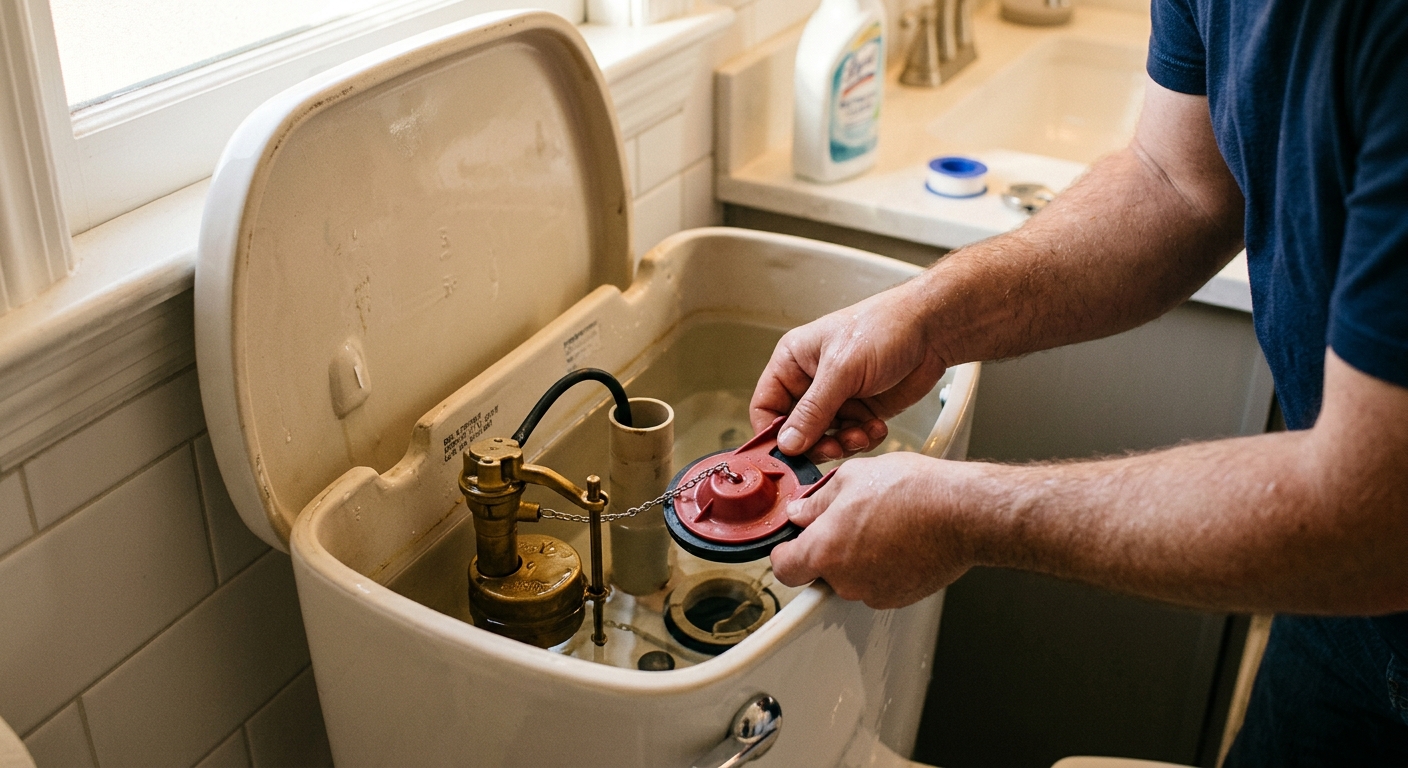
- Unhook the old flapper from the overflow tube ears and disconnect the chain from the flush handle arm. Note the brand name stamped on the old flapper if visible.
- Bring the old flapper to a hardware store to match it, or buy a universal flapper for $3 to $8. Korky and Fluidmaster are reliable brands available at any home improvement store.
- Snap the new flapper onto the overflow tube ears and attach the chain to the handle arm, leaving about half an inch of slack so it closes fully but lifts completely when you flush.
- Turn the water supply back on, let the tank fill, and repeat the dye test after 15 minutes to confirm the leak is resolved.
- Purchase a complete toilet repair kit that includes a fill valve, flapper, and flush valve seat. Fluidmaster 400AK and Korky 528MP are two well-reviewed complete kits in the $20 to $40 range.
- Shut off the supply valve, flush the toilet, and use a sponge or shop towel to remove the remaining water from the tank so you can work cleanly.
- Disconnect the supply line from the bottom of the tank. Have a small bucket ready because residual water will drain from the line.
- Remove the old fill valve by unscrewing the locknut under the tank, then lift the old valve out. Insert the new fill valve, following the package instructions to set the height for your tank depth, and tighten the locknut hand-tight plus a quarter turn.
- Replace the flapper as described in the Quick Fix approach, then adjust the fill valve float so the water level sits 1 inch below the top of the overflow tube.
- Reconnect the supply line, turn the water back on slowly, and check all connections for drips. Flush three to five times and verify the tank fills quietly and stops reliably at the correct level.
- Choose a WaterSense-certified toilet rated at 1.28 gpf or less. American Standard Cadet 3, TOTO Drake II, and Glacier Bay dual-flush models are popular options ranging from $150 to $350.
- Check your local utility website for toilet rebate programs before purchasing. Many utilities offer $50 to $200 back on WaterSense models, bringing your net cost down significantly.
- Shut off the supply valve, flush to empty, and use a sponge to dry the tank and bowl. Disconnect the supply line and remove the tank bolts to separate the tank from the bowl.
- Remove the two floor bolt caps, unscrew the nuts, and rock the bowl gently to break the wax seal. Lift the bowl straight up and set it aside. Scrape the old wax from the floor flange using a putty knife.
- Set the new wax ring onto the floor flange or onto the new bowl horn per the manufacturer instructions, lower the bowl carefully over the flange bolts, and press down firmly to compress the wax seal.
- Reassemble the tank onto the new bowl, reconnect the supply line, and turn the water on slowly. Flush five to six times to verify the seal, check for any floor-level moisture, and confirm the bowl sits level and stable.
Why It Works: The Benefits
Fixing a leaking flapper alone can save 200 or more gallons per day. At a national average water rate of $0.01 per gallon, that is $60 to $100 per month back in your pocket per leaking toilet.
Most utilities charge sewer fees based on water consumption. Cutting toilet water use by 20 to 30% often reduces your sewer bill by a proportional amount, effectively doubling the financial savings on your monthly statement.
A failing fill valve or flapper left unaddressed puts stress on other tank components. Replacing worn parts proactively for $10 to $30 prevents a potential $150 to $400 emergency plumber call for a failed inlet valve or cracked tank fitting.
Upgrading one toilet from 3.5 gpf to a 1.28 gpf WaterSense model saves up to 13,000 gallons per person annually, meaningfully reducing strain on local water treatment infrastructure.
Many water utilities offer rebates of $50 to $200 for replacing old toilets with WaterSense-certified models, significantly shortening the payback period on a new fixture investment.
💰 Savings Impact by Action
Fixing a leaking flapper stops 200 or more gallons per day of waste, reducing total household water use by up to 15% per leaking toilet.
Correcting a misadjusted or failing fill valve eliminates phantom cycling that can waste 50 to 100 gallons per day per toilet.
Replacing a 3.5 gpf pre-1994 toilet with a 1.28 gpf WaterSense model reduces toilet water consumption by over 60%, which is roughly 30% of total indoor use.
Adding a dual-flush adapter to an existing 1.6 gpf toilet reduces average flush volume by up to 30% when half-flush is used for liquid waste.
🏠 Key Concepts Explained
The Science Behind It
Every toilet tank operates on a simple hydraulic principle: water stored at height creates potential energy, and a flush releases that stored energy to clear the bowl. The flapper acts as a rubber check valve, and the fill valve acts as a float-controlled shutoff. Both rely on a watertight seal to hold water in place between flushes. When either seal degrades, water pressure forces a continuous trickle from the tank to the bowl, and the fill valve must compensate by running periodically to replace the lost water.
The rate of a flapper leak correlates directly with the pressure differential across the seal. At a standard water pressure of 40 to 60 psi, even a gap of 1 to 2 millimeters in a worn flapper can allow 1 to 3 gallons per hour to bypass into the bowl. That is why the silent leak is so insidious: the flow rate is too low to hear reliably, but high enough to consume 700 to 2,000 gallons per month per toilet. The fill valve activates every 20 to 40 minutes to compensate, which is the phantom cycling pattern you can train yourself to notice.
Older high-flush toilets waste water through a different mechanism: sheer volume per flush cycle. A 3.5 gpf toilet uses 175% more water per flush than a modern 1.28 gpf WaterSense model. For an average household that flushes a toilet five times per person per day, a family of four generates roughly 70 flushes daily. At 3.5 gpf, that is 245 gallons per day. At 1.28 gpf, it drops to 90 gallons per day, a reduction of over 55,000 gallons per year from a single fixture replacement.
Frequently Asked Questions
▼ My toilet passes the dye test but the water bill is still high. What else could it be?
A passing dye test rules out flapper leaks but not fill valve overflow leaks. Remove the tank lid and look at the overflow tube while the tank is filling. If water is trickling into the tube before the fill valve shuts off, your float is set too high or the fill valve is failing. Adjust the float down so the water level stops 1 inch below the tube opening, or replace the fill valve for $10 to $15.
▼ Can renters do any of this without landlord permission?
Renters can safely perform the dye test and report the results to the landlord, which in most states obligates the landlord to make repairs. Replacing a flapper is a minor repair that most landlords and leases permit tenants to handle, but always confirm before touching supply valves or tank components. Document the leak with photos and a written notice to protect yourself if the landlord is slow to respond.
▼ I replaced the flapper but the toilet is still running. What did I miss?
If a new flapper does not stop the running, the issue is almost certainly the fill valve, the overflow tube height, or the flush valve seat. Run your finger around the bottom edge of the flush valve seat inside the tank. If it feels rough, pitted, or corroded, the flapper cannot seal against it properly and you need either a flush valve repair kit ($8 to $12) or a complete toilet rebuild kit.
▼ How long until I see savings on my water bill after fixing a leak?
Most water utilities bill monthly or bi-monthly, so you should see a measurable drop on your very next bill after the fix. If you repaired a flapper leaking 200 gallons per day, expect a reduction of 5,000 to 6,000 gallons on a monthly bill, which translates to $15 to $60 in savings depending on your rate and whether sewer charges are also metered.
▼ What if my toilet is rocking slightly at the base?
A rocking toilet means the wax ring seal is compromised or the floor flange is damaged, and this is urgent. A broken wax seal allows sewer gases into the home and can allow drain water to seep under the floor, causing structural rot. Tightening the floor bolts is a temporary step, but if the toilet still rocks, the wax ring needs replacement immediately and the flange should be inspected by a plumber before reinstalling.
Quick Tips
- Check all toilets in your home with the dye test on the same day. It takes 5 minutes per toilet and you may find more than one leaking.
- If your toilet runs briefly after every flush and then stops, that is normal. If it runs for more than 30 seconds or cycles back on unprompted, that is a fill valve or float issue worth addressing immediately.
- Write the installation date on a piece of tape and stick it inside the tank lid when you replace parts. This makes it easy to track the 5 to 7 year maintenance window.
- A dual-flush adapter kit ($20 to $30) can convert a standard 1.6 gpf toilet to a 0.8 gpf half-flush for liquid waste, reducing flush volume by up to 50% on half the flushes in a household.
Variations for Your Situation
- Apartment or Rental: Renters cannot replace fixtures without permission, but the dye test is completely non-invasive and gives you documented proof of a leak to present to your landlord. Take photos, write a dated maintenance request, and follow up in writing. In the meantime, a $3 toilet tank bank (a reservoir that displaces water volume in the tank) reduces water per flush on older high-volume toilets without any modification to the plumbing.
- Tight Budget (Under $30): Start with the dye test using food coloring (free if you have it in the kitchen). A replacement flapper costs $3 to $8 and is the single highest-return repair in residential plumbing. If only one toilet is running, fixing that one flapper can save $50 or more per month with a same-day payback. Skip the full flush mechanism rebuild until you have budget, since a new flapper alone resolves the majority of toilet leaks.
- Older Home (Pre-1980): Homes this age often have early low-flow or pre-conservation toilets with 3.5 to 5 gpf ratings, corroded floor flanges, and shutoff valves that have not been turned in decades. Before attempting any toilet work, slowly test the shutoff valve to confirm it fully closes. If the valve is stuck or drips when closed, call a plumber to replace it before doing any tank repairs. Consider the full toilet replacement approach since the long-term savings on a 3.5 gpf fixture are substantial and utility rebates often make new WaterSense toilets net less than $100 after rebate.