You turn the thermostat up, the living room gets toasty, and the bedroom still feels like a refrigerator. So you crank the heat higher, pay for it on your bill, and the bedroom is still the coldest room in the house. Sound familiar? The culprit is rarely a weak furnace. It is almost always how warm air is being delivered, or not delivered, to that specific room.
Forced-air systems push a fixed volume of air through your ductwork, and that air takes the path of least resistance. Rooms close to the furnace, with short and straight duct runs, hog most of the flow. Rooms at the end of a long duct, over a garage, or on an exterior corner get whatever is left. The good news is that you can rebalance this yourself in about five minutes, with no tools and no cost.
This post walks through a quick vent adjustment you can do tonight, a more thorough DIY rebalance for lasting results, and the building science behind why it works. We will also cover a few common mistakes, like closing too many vents, that can actually raise your energy bill and strain your equipment.
What You’ll Need
Click on an item below to shop for the recommended items for this recipe on Amazon.
As an Amazon Associate, we earn from qualifying purchases.
How to Do It
- Walk through your home with the heat running and note which rooms feel warm and which feel cold. Pay attention to how much air you feel coming out of each vent.
- Fully open every vent in the cold bedroom, including any in an attached closet or bathroom. Check that no furniture, rug, or curtain is covering a floor vent.
- Partially close, about one quarter of the way, the vents in the one or two rooms that are overheating, usually those closest to the furnace. Never close more than 25 percent of the total vents in your home.
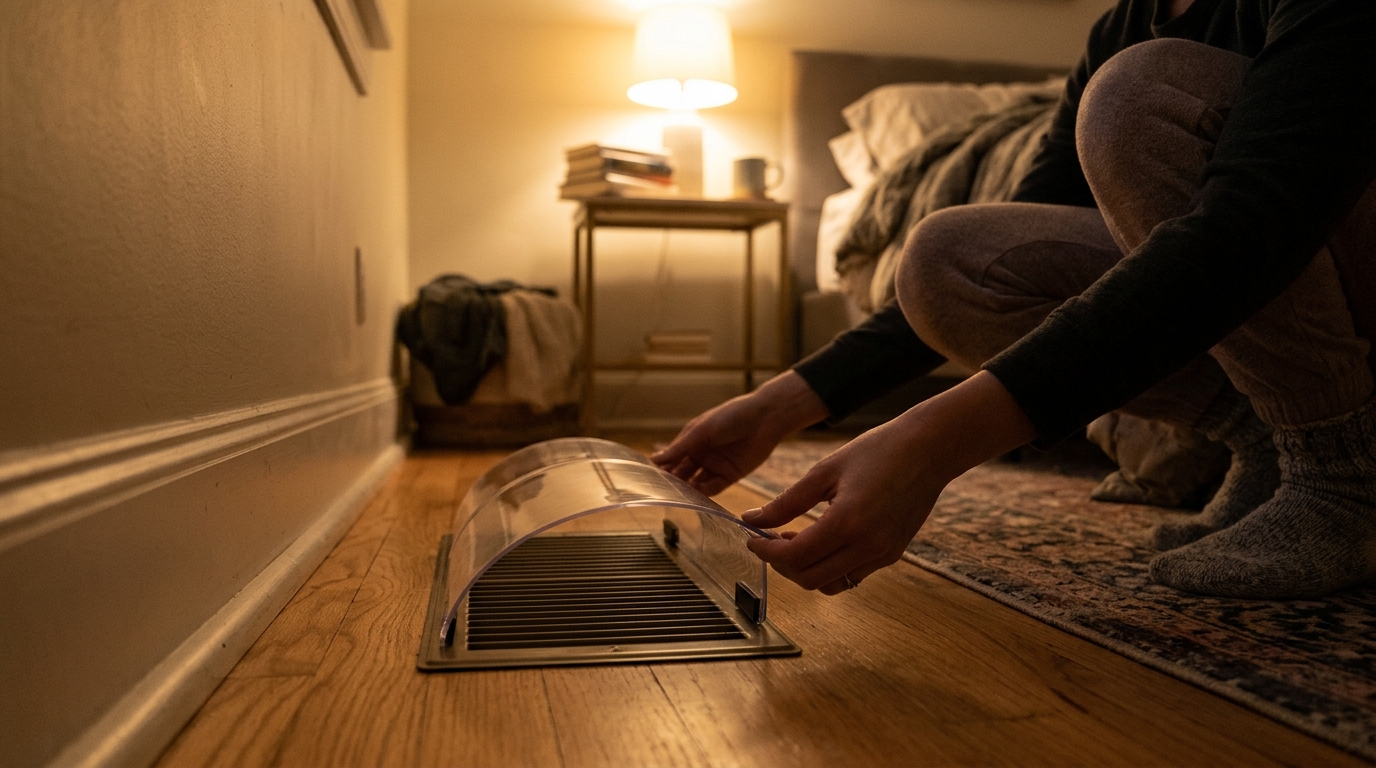
- Adjust the louvers on the bedroom vent to aim airflow toward the middle of the room or along the floor instead of straight at a wall or bed.
- Crack the bedroom door about an inch, or place a rolled towel under it, so air can circulate back to the return. Recheck the temperature in 1 to 2 hours.
- Check and replace your furnace filter if it is dirty. A clogged filter can cut airflow by 15 percent or more across the whole system. A MERV 8 to 11 filter is a good balance of filtering and airflow.
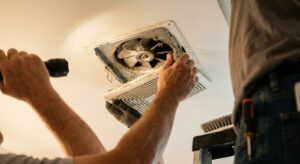
- Remove the bedroom vent cover with a screwdriver and look inside. Vacuum out dust and debris, and confirm the duct is actually connected to the vent boot.
- Seal any gaps around the vent boot, where the duct meets the floor or wall, with mastic sealant or foil tape. Do not use ordinary cloth duct tape, which dries out and fails.
- Install a magnetic vent booster fan or a low-profile register booster on the bedroom vent, which can increase airflow to that room by 20 to 40 percent for $20 to $50.
- If the bedroom has a long or accessible duct run in a basement or crawlspace, inspect it for loose connections and wrap exposed sections with R-6 duct insulation.
- Add a door undercut or a transfer grille between the bedroom and hallway if you keep the door closed at night, so return air has a path back to the system.
Why It Works: The Benefits
Redirecting even 20 to 30 percent more airflow to a cold room can raise its temperature by 3 to 5 degrees within an hour or two.
When every room is comfortable, you stop overheating the whole house to compensate for one cold room. Lowering the thermostat just 2 degrees saves about 4 to 6 percent on heating.
Most sleep research points to a bedroom temperature of 60 to 67 degrees for best rest. An evenly heated room is easier to hold in that range without drafts or cold spots.
Balanced airflow prevents the furnace from short cycling or overheating its heat exchanger, which can extend equipment life and reduce repair calls.
The quick fix needs no purchases, so you can test it tonight and only spend money on upgrades if you need more improvement.
💰 Savings Impact by Action
Redirecting airflow so no room is overheated lets you lower the thermostat 1 to 2 degrees, saving roughly 4 to 8 percent on heating.
ENERGY STAR reports sealing and insulating ducts can improve heating and cooling efficiency by up to 20 percent in leaky systems.
Replacing a clogged filter restores airflow and can cut system energy use by 5 to 15 percent.
Insulating curtains or cellular shades can reduce winter heat loss through windows by up to 25 percent.
🏠 Key Concepts Explained
The Science Behind It
Your heating system is a pressurized network. The blower pushes a set volume of air into the supply ducts, and that air divides itself among all the open vents based on resistance. Short, straight duct runs have low resistance and deliver more air, while long runs with bends and leaks deliver less. This is why simply turning up the thermostat rarely fixes a cold room: you are heating more air, but the extra still flows mostly to the rooms that were already warm.
Partially closing vents in over-served rooms raises resistance there, which pushes more of the available air toward the starved room. This only works within limits, because closing too many vents raises static pressure in the duct system. Residential blowers are designed for a specific pressure range, and exceeding it reduces total airflow, increases leakage at duct joints, and can overheat the heat exchanger.
Return air is the other half of the equation. Air cannot flow into a room unless it has somewhere to leave. A closed bedroom door with no return vent creates a pressurized pocket that resists incoming warm air. Leaving the door slightly open or adding a transfer grille equalizes pressure so supply air can actually enter. Combined with sealing leaks, which ENERGY STAR notes can improve efficiency by up to 20 percent, these small changes address the real reasons a room runs cold.
Frequently Asked Questions
▼ Why is my bedroom still cold after I opened the vent all the way?
Check for a disconnected or crushed duct behind the vent, which is a common cause. Hold a piece of tissue paper near the vent while the heat runs; if it barely moves, airflow is weak. Look inside with a flashlight, vacuum out debris, and call an HVAC pro if you suspect a duct problem in a wall, attic, or crawlspace.
▼ Can renters do this without landlord permission?
Yes, the quick fix is completely renter safe. Opening and adjusting existing vents, moving furniture, and cracking a door require no modifications. A plug-in or magnetic register booster is also removable, but ask before sealing ducts or cutting anything.
▼ How long before I actually notice a difference?
You should feel a change in the room within 1 to 2 hours of the heat running, and a temperature gap closing by 2 to 4 degrees by the next morning. Savings on your bill show up over the following billing cycle as you can turn the thermostat down a degree or two.
▼ Will closing vents in other rooms hurt my furnace?
A small adjustment, about one quarter closed on one or two vents, is generally fine. Closing many vents or fully shutting them raises duct pressure and can reduce efficiency or overheat the furnace. Keep at least 75 to 80 percent of your vents fully open.
▼ What if my home is older than 30 years?
Older homes usually have leakier ducts, less insulation, and undersized runs to far bedrooms, so expect to do more sealing. Start with accessible duct joints in the basement or attic, and consider a professional duct leakage test for around $100 to $300.
Quick Tips
- Close the bedroom door only after the room has warmed up, and keep a small gap or transfer path so the vent can keep delivering air.
- Hang heavy curtains or add cellular shades to bedroom windows. They can reduce nighttime heat loss through glass by up to 25 percent.
- Check that the bedroom vent is not blocked by a bed, dresser, or rug. A blocked floor vent can cut delivery to the room by half or more.
- Use a draft stopper or door sweep at the bottom of exterior doors and windows in the bedroom to stop cold air from sneaking back in.
Variations for Your Situation
- Apartment/Rental: Stick with the quick fix and add a $20 to $35 plug-in register booster or a small ceramic space heater with tip-over protection for the bedroom, since you cannot modify the central system. Use removable draft stoppers and thermal curtain liners for window gaps.
- Tight Budget (under $50): Do the five-minute vent redirect, replace a dirty furnace filter for about $5 to $15, add a rolled towel at the door base, and seal small gaps around the bedroom window with removable rope caulk for under $10. These steps are free to cheap and still shift the temperature meaningfully.
- Older Home (pre-1980): Expect leaky metal ducts and possibly no return in the bedroom. Seal joints with mastic, insulate any exposed duct in the basement or attic to R-6 or higher, and consider adding a transfer grille or jump duct, which typically runs $50 to $150 as a DIY project.