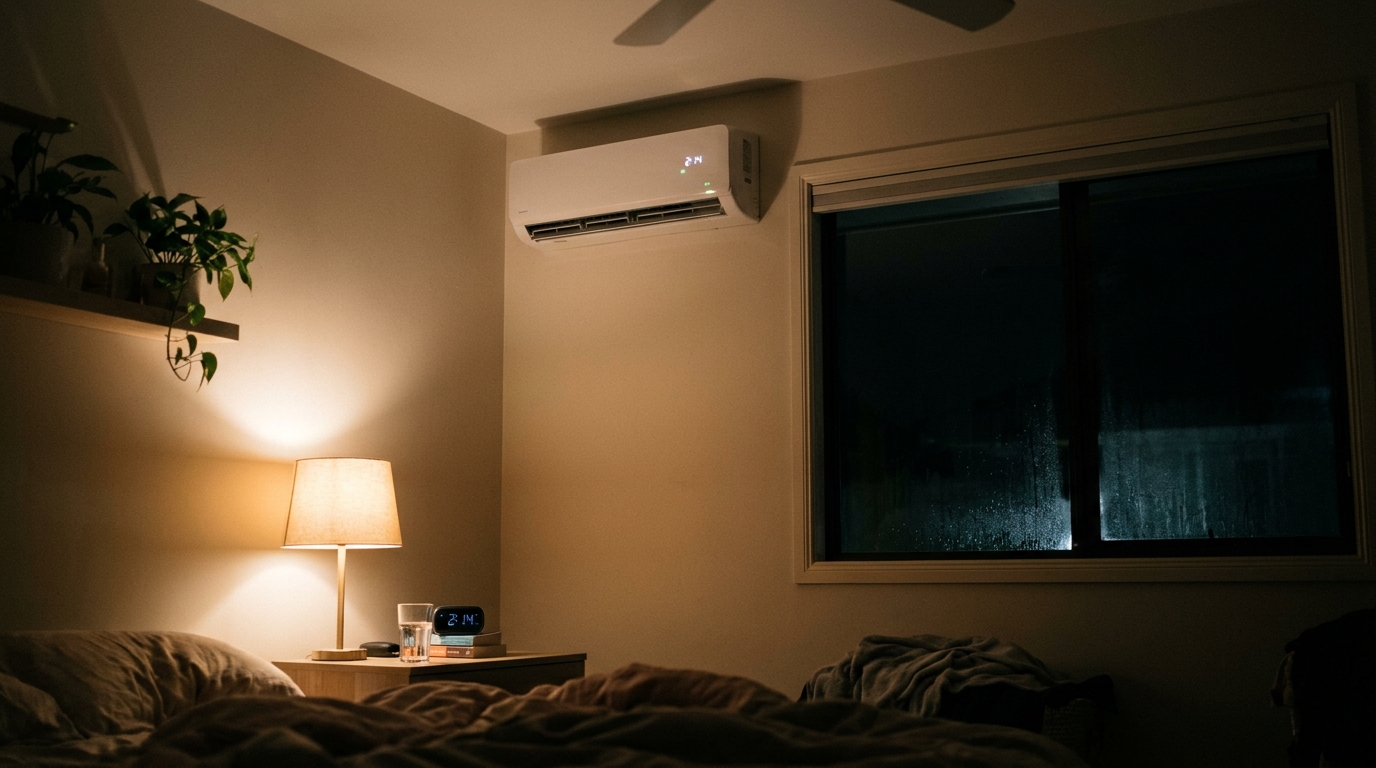
You would think nighttime would be the easy shift for your air conditioner. The sun is down, outdoor temperatures drop, and the house should cool itself with little help. Yet many homeowners notice their AC cycling steadily through the night, especially in humid climates, and wonder why the energy bill does not reflect those cooler evenings.
The culprit is often humidity, not heat. As outdoor temperatures fall, relative humidity rises, because cooler air holds less water vapor. A 90 degree afternoon at 40% relative humidity can become a 75 degree night at 80% or higher. Your AC has to remove that moisture (called latent load) in addition to cooling the air (called sensible load), and removing moisture takes a surprising amount of energy.
In this post, we will explain why nighttime humidity makes your system work harder, how to spot the signs, and what you can do about it. You will get a no-cost quick fix you can try tonight and a more thorough DIY upgrade that tackles moisture at the source, plus troubleshooting advice and options for renters, tight budgets, and older homes.
What You’ll Need
Click on an item below to shop for the recommended items for this recipe on Amazon.
As an Amazon Associate, we earn from qualifying purchases.
How to Do It
- Set your thermostat fan to Auto, not On. Running the fan continuously blows moisture that has condensed on the coil back into the house, raising humidity.
- Lower your thermostat 1 to 2 degrees in the evening before bed instead of making big changes overnight. This gives the AC a longer, steadier run that removes more moisture.
- Run bathroom and kitchen exhaust fans during and for 20 to 30 minutes after showers and cooking. Vent them to the outdoors, not into the attic.
- Shift moisture-heavy chores like laundry, dishwashing, and long showers to the morning or early afternoon when you can ventilate and the AC can handle the load.
- Close windows and doors at dusk. Opening them to let in cooler night air also lets in humid air, which your AC must then remove.
- If you have a hygrometer, aim for 45 to 55% indoor relative humidity and adjust your habits to stay in that range.
- Walk through your home with a lit incense stick or smoke pencil on a breezy day to find air leaks around windows, doors, attic hatches, and recessed lights. Seal gaps with caulk or weatherstripping.
- Place a 35 to 50 pint ENERGY STAR dehumidifier in the main living area or bedroom, set to 50% relative humidity. Use the continuous drain hose option if possible to avoid emptying the bucket.
- Check your AC condensate drain line for clogs by pouring a cup of 50/50 white vinegar and water into the access port. A clogged drain reduces moisture removal and can cause water damage.
- Replace your air filter with a clean MERV 8 to 11 filter. A clogged filter restricts airflow across the coil, which reduces both cooling and dehumidifying performance.
- Check that your crawlspace or basement is not a moisture source. Cover bare soil with a 6-mil polyethylene vapor barrier and make sure gutters and downspouts direct water at least 5 feet from the foundation.
- Re-measure indoor humidity after a week. If you are still above 55% overnight, consider having a pro check your AC sizing and airflow.
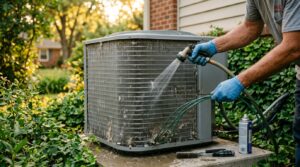
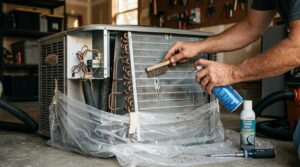
- Schedule an HVAC tune-up and ask the technician to check refrigerant charge, coil cleanliness, blower speed, and condensate drainage. Low refrigerant or a dirty coil can cut moisture removal significantly.
- Ask for a Manual J load calculation if your system short cycles or your home always feels clammy. Systems oversized by 25% or more are a common cause of poor humidity control.
- Discuss a variable-speed or two-stage system with your contractor. These run longer at lower speeds and remove more moisture than single-stage units.
- Consider a whole-home dehumidifier tied into your ductwork if humidity remains a problem. These typically remove 70 to 130 pints per day and run more efficiently than portable units.
- Have ducts tested for leakage. Leaky ducts in an attic or crawlspace can pull in humid air and waste 20 to 30% of cooling output.
Why It Works: The Benefits
Reducing indoor humidity lets your AC cycle less often and shut off sooner, cutting overnight cooling energy by 10 to 20% in humid regions.
Sleeping in 45 to 55% relative humidity feels noticeably cooler than 70%, which can let you raise your thermostat 2 to 4 degrees and still sleep comfortably.
Keeping indoor humidity below 60% discourages mold growth and dust mites, which thrive above that threshold and can worsen allergies and asthma.
Fewer start-stop cycles and shorter run times reduce strain on your compressor and blower motor, helping extend system life.
Controlling humidity protects wood floors, furniture, books, and drywall from warping, musty odors, and moisture damage.
💰 Savings Impact by Action
Switching the thermostat fan from On to Auto stops re-evaporating coil moisture and trims overnight cooling energy by roughly 5%.
Holding indoor humidity near 50% lets you raise the thermostat 2 to 4 degrees, saving about 10 to 15% on overnight cooling.
Sealing leaks reduces humid air infiltration and can cut total cooling loads by 10 to 20%, according to ENERGY STAR estimates.
Sealing leaky ducts can recover up to 20% of lost cooling output, especially in attics and crawlspaces.
A clean coil and correct refrigerant charge can improve efficiency by 5 to 15% and boost moisture removal.
🏠 Key Concepts Explained
The Science Behind It
Air conditioners do two jobs at once: they lower air temperature (sensible cooling) and remove water vapor (latent cooling). Warm indoor air passes over a cold evaporator coil, typically around 40 to 45 degrees F. When the coil surface is below the air’s dew point, moisture condenses on it and drains away. The system must pull heat out of the air to turn that vapor into liquid, which is why latent cooling takes real energy.
At night, outdoor air temperature drops, but the amount of water vapor in the air often stays about the same, so relative humidity rises. Your home’s sensible load shrinks while its latent load stays high or even grows from cooking, showering, and sleeping occupants. This shifts the load balance toward moisture removal. A system sized for a hot afternoon may satisfy the thermostat quickly at night and shut off before it has wrung much water out of the air, leaving the house cool but sticky.
Humidity also affects how warm you feel. Your body cools by evaporating sweat, and high humidity slows that process. At 78 degrees F, air at 50% humidity feels pleasant, but at 80% it can feel like 84 degrees or more. That means lowering humidity lets you raise the thermostat setpoint, and every degree of setback during cooling season saves roughly 3 to 5% on cooling energy, according to DOE guidance.
Frequently Asked Questions
▼ Why is my AC still running all night even though the house feels cool?
Your AC may be running to remove moisture, not just lower temperature. Check indoor humidity with a hygrometer. If it is above 60%, try the quick fixes, seal air leaks, and consider a dehumidifier. If it still runs constantly with high humidity, have a pro check refrigerant charge, coil cleanliness, and system sizing.
▼ Can renters do this without landlord permission?
Yes, most of it. Adjusting thermostat settings, running exhaust fans, shifting moisture-producing chores, and using a portable dehumidifier all require no permanent changes. Removable weatherstripping and draft stoppers for door bottoms are also renter-friendly, and a $10 hygrometer will show you where you stand.
▼ How long before I actually notice savings on my bill?
Behavior changes like fan settings and shifting chores can show up on your next bill. A dehumidifier typically takes one full billing cycle to show impact, since you will also see its electricity use of roughly 30 to 60 kWh per month. Most homeowners in humid climates see a net savings once they raise the thermostat 2 to 3 degrees thanks to improved comfort.
▼ What if my home is older than 30 years?
Older homes usually leak more air and have weaker insulation and ductwork, which means more humid air gets in. Start with air sealing and a duct leakage check, since these often provide the biggest return. Also check for moisture sources like bare crawlspace soil, missing vapor barriers, and old bathroom fans that are undersized or vent into the attic.
▼ Should I run my AC fan on ‘On’ to circulate air at night?
Generally no. With the fan set to On, moisture that condenses on the coil can be blown back into your home once the compressor stops, raising humidity. Auto mode lets the condensate drain away. If you want air movement for comfort, use a ceiling fan or bedside fan instead.
Quick Tips
- Aim for indoor relative humidity between 45 and 55%. Below 30% can feel dry and above 60% invites mold.
- Avoid drying laundry indoors on humid nights. A single load of wet clothes can release a half gallon or more of water into the air.
- Keep ceiling fans on while you sleep but turn them off when you leave the room. They help evaporation on your skin but do not remove humidity.
- Clean or replace your AC filter every 1 to 3 months during cooling season to maintain proper airflow across the coil.
- Check that your dryer vent, bathroom fans, and range hood all exhaust to the outdoors and not into the attic or crawlspace.
Variations for Your Situation
- Apartment/Rental: You cannot modify central HVAC, so focus on a 35 to 50 pint portable dehumidifier ($150 to $250), a $12 hygrometer, removable door and window weatherstripping, and shifting moisture-producing tasks to daytime. Ask your landlord to service the AC and clear the condensate drain.
- Tight Budget (under $50): Set the fan to Auto, run exhaust fans during and after showers and cooking, close windows at dusk, shift laundry and dishwashing to daytime, and buy a $10 hygrometer. Add a $15 tube of caulk and a roll of weatherstripping to seal the most obvious leaks.
- Older Home (pre-1980): Expect more air leakage and possible moisture sources. Prioritize sealing the attic hatch, recessed lights, and plumbing penetrations, adding a vapor barrier to crawlspace soil, and checking for leaky or uninsulated ducts. A whole-home dehumidifier may be more cost-effective than oversizing the AC.