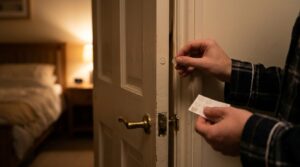
Lie down on the floor and look at the bottom of your front door with the lights off in the room and the sun shining outside. If you can see a line of daylight, you have a leak. A gap of just 1/4 inch under a standard 36-inch door adds up to roughly 9 square inches of open hole, which is about the same as leaving a small window cracked open all year long. The U.S. Department of Energy estimates that air leakage through gaps like this is a major contributor to the 15 to 30 percent of heating and cooling energy that homes lose to infiltration.
The fix is one of the cheapest and fastest in the home efficiency world. A door sweep is a strip of vinyl, rubber, or brush material that attaches to the bottom of the door and seals the gap against the threshold. It blocks drafts, cuts street noise, keeps out insects and dust, and stops that cold-floor feeling near entryways in winter.
In this post we cover two ways to do it: a no-tools stick-on or slide-on sweep you can install in about five minutes, and a more durable screw-mounted sweep that lasts for years. You will learn how to measure the gap, choose the right type for your door and threshold, and troubleshoot the most common problems like a sticking door or a sweep that drags on carpet.
What You’ll Need
Click on an item below to shop for the recommended items for this recipe on Amazon.
As an Amazon Associate, we earn from qualifying purchases.
How to Do It
- Close the door and measure the gap under it at both ends and the middle, since floors and thresholds are rarely perfectly level. Note the largest gap.
- Measure the width of the door and buy a sweep that is slightly longer, since you will trim it to fit. Pick a sweep thick enough to cover your largest gap.
- Clean the bottom inside edge of the door with rubbing alcohol so the adhesive grips, then let it dry for a minute.
- Cut the sweep to the exact door width with a utility knife or hacksaw, depending on the material.
- Peel the backing and press the sweep along the bottom of the door, holding it firmly for 30 seconds. For a slide-on style, slip it over the bottom edge and tap it into place.
- Open and close the door a few times to confirm it swings freely and the sweep brushes the threshold without dragging.
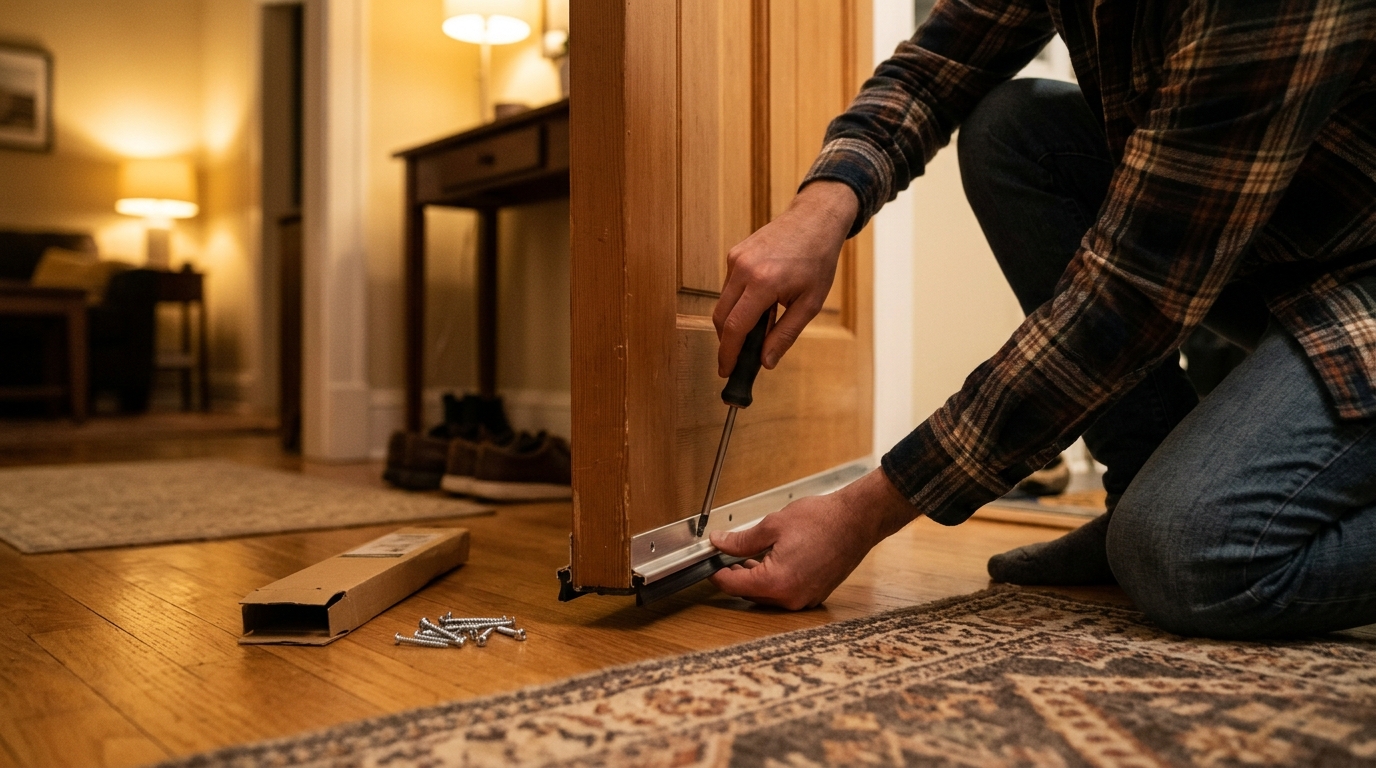
- Remove the door from its hinges if the sweep mounts on the bottom edge, or work with the door closed if you are installing on the interior face. Check the product instructions.
- Hold the sweep against the bottom of the door so it just touches the threshold, then mark the screw holes with a pencil while the door is closed.
- Trim the sweep to the door width with a hacksaw or tin snips, and file any rough metal edges.
- Drill small pilot holes at each mark so the wood or metal does not split, then attach the sweep with the supplied screws.
- Adjust the sweep using the slotted holes so it presses lightly against the threshold, snug enough to seal but not so tight that the door drags.
- Test by closing the door and looking for daylight along the bottom, then swing the door several times to confirm smooth operation.
Why It Works: The Benefits
Sealing a leaky door bottom can trim total heating and cooling costs by roughly 5 to 10 percent in homes where the door is a major leak, which is $50 to $150 per year on a typical $1,500 annual energy bill.
Cold air pooling near entry doors is a top comfort complaint in winter. A sweep removes the draft that chills your feet and the surrounding room.
A closed gap blocks ants, spiders, and other crawling insects, plus pollen and outdoor dust that otherwise drift in along the floor.
Sealing the opening under a door can cut noise transmission noticeably, which helps if your entry faces a busy street or a noisy hallway.
At $10 to $25 for materials and under ten minutes of work, most homeowners recover the cost in one season, making this one of the highest-return upgrades available.
💰 Savings Impact by Action
Closing a 1/4 inch gap under an exterior door can reduce air leakage through that opening by most of its volume, trimming whole-home infiltration by roughly 5 to 10 percent.
Eliminating floor-level drafts can let you lower winter thermostat settings by 1 to 2 degrees, which saves about 3 percent per degree on heating.
Less infiltration means your furnace or air conditioner cycles less often, reducing run time by around 5 to 10 percent in leaky entryways.
A tight bottom seal blocks most crawling insects that use the gap under the door as an entry point.
🏠 Key Concepts Explained
The Science Behind It
Air moves through any opening when there is a pressure difference across it. In winter, the warm indoor air is lighter and rises, creating slightly lower pressure near the floor. Cold outdoor air is pulled in through low openings to replace it, which is exactly why the gap under an exterior door feels so drafty. This chimney-like process, called the stack effect, gets stronger as the temperature difference between inside and outside grows, so the same gap leaks more air on a 10 degree day than on a 40 degree day.
The amount of air that sneaks through scales with the area of the opening. Because the gap under a door runs the entire width, even a small clearance creates a large open area. A 1/4 inch gap on a 36 inch door is about 9 square inches, comparable to a hole roughly 3 inches across. Sealing it removes that continuous pathway for air, moisture, dust, and insects.
A door sweep works by creating a flexible barrier that bridges the gap while still letting the door move. Vinyl, rubber, and silicone fins deflect slightly against the threshold to form a tight seal, while brush sweeps use dense bristles to fill irregular gaps. The result is less conditioned air escaping, less outside air entering, and an HVAC system that cycles less often to hold your set temperature.
Frequently Asked Questions
▼ My door sticks or drags after installing the sweep. What should I do?
The sweep is likely set too low or pressing too hard. Loosen the screws, raise the sweep slightly so it just brushes the threshold, and retighten. If it still drags on carpet or a raised threshold, switch to a thinner sweep or a brush style that bends more easily.
▼ Can renters install a door sweep without landlord permission?
Usually yes, if you use a stick-on or slide-on sweep that does not require drilling. These remove cleanly in most cases and can be taken with you when you move. Check your lease, and if you are unsure, keep the original hardware and offer to restore it before move-out.
▼ How long before I notice savings on my energy bill?
You will feel the difference in drafts and floor comfort right away. On your bill, the savings show up over the next billing cycle or two, with a full payback typically within one heating or cooling season of 3 to 12 months depending on how leaky the door was.
▼ What if my home is older than 30 years and the door gap is uneven?
Older doors often settle, leaving a gap that is larger on one side. Choose an adjustable or brush-style sweep that can follow the uneven threshold, and consider a threshold with a replaceable vinyl insert. If the gap is more than 3/4 inch, the door may need to be rehung or replaced.
▼ Will a door sweep fix a draft that comes from the sides of the door?
No, a sweep only seals the bottom. If you still feel air at the sides or top, add self-adhesive foam or V-strip weatherstripping around the door frame. Combining both gives the biggest improvement.
Quick Tips
- Check the gap at the lowest point of your threshold, not just at the center, and size the sweep to the biggest opening.
- Replace worn sweeps every 3 to 5 years, since flattened or cracked fins stop sealing even if they still look fine.
- Pair the sweep with weatherstripping on the sides and top of the door to catch leaks you cannot see from the bottom.
- Choose a vinyl or rubber sweep for smooth thresholds and a brush sweep for rough, uneven, or outdoor-facing surfaces.
Variations for Your Situation
- Apartment or Rental: Use a stick-on or slide-on sweep in the $8 to $15 range that requires no drilling. Clean the door bottom first for a strong bond, and for a no-adhesive option try a draft stopper or door snake placed along the floor, which costs $10 to $20 and takes seconds to set up.
- Tight Budget (under $50): Skip the premium products. A basic $6 to $10 vinyl sweep or even a rolled-up towel as a temporary draft stopper cuts air movement right away. Spend the savings on foam weatherstripping for the door sides, which is about $5 to $10 and doubles the effect.
- Older Home (pre-1980): Doors in older homes often have larger and uneven gaps, so measure at several points and pick a heavy-duty brush or adjustable sweep. Check for a worn or rotted threshold, and be prepared to replace it if the sweep cannot close the gap evenly.