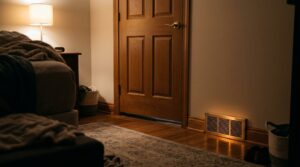
You are drifting off to sleep when a bedroom door across the house slams shut with a crack that jolts everyone awake. It is one of the most common home annoyances, and it tends to happen at night when the house cools down, the furnace or AC cycles, and air starts moving between rooms.
Here is what most people miss: a door that slams is a door reacting to air. When your HVAC runs with bedroom doors closed, or when a window is cracked open and a breeze finds a path through the house, the pressure difference between rooms pushes or pulls the door hard. Loose hinges, a worn latch, and a door that no longer sits true in its frame make it worse. Fixing those details quiets the noise and often tightens the seal around the door, which cuts wasted conditioned air.
This post walks through two proven approaches: a fast no-cost tune-up that solves most slamming problems in about 15 minutes, and a low-cost hardware upgrade that gives you soft-close performance. We will also cover the airflow science behind why doors slam, so you can fix the cause instead of just the symptom.
What You’ll Need
Click on an item below to shop for the recommended items for this recipe on Amazon.
As an Amazon Associate, we earn from qualifying purchases.
How to Do It
- Open the door and wiggle it by the top corner opposite the hinges. If it shifts, the hinge screws are loose.
- Tighten every hinge screw with a screwdriver. If a screw spins without gripping, remove it and move to the next step.
- Fix stripped holes by dipping two or three wooden toothpicks or a golf tee in wood glue, pushing them into the hole, trimming flush, and reinserting the screw after the glue sets for 10 minutes.
- Check the latch by closing the door slowly. If it does not click smoothly, rub a pencil or a dab of petroleum jelly on the latch bolt to lubricate it.
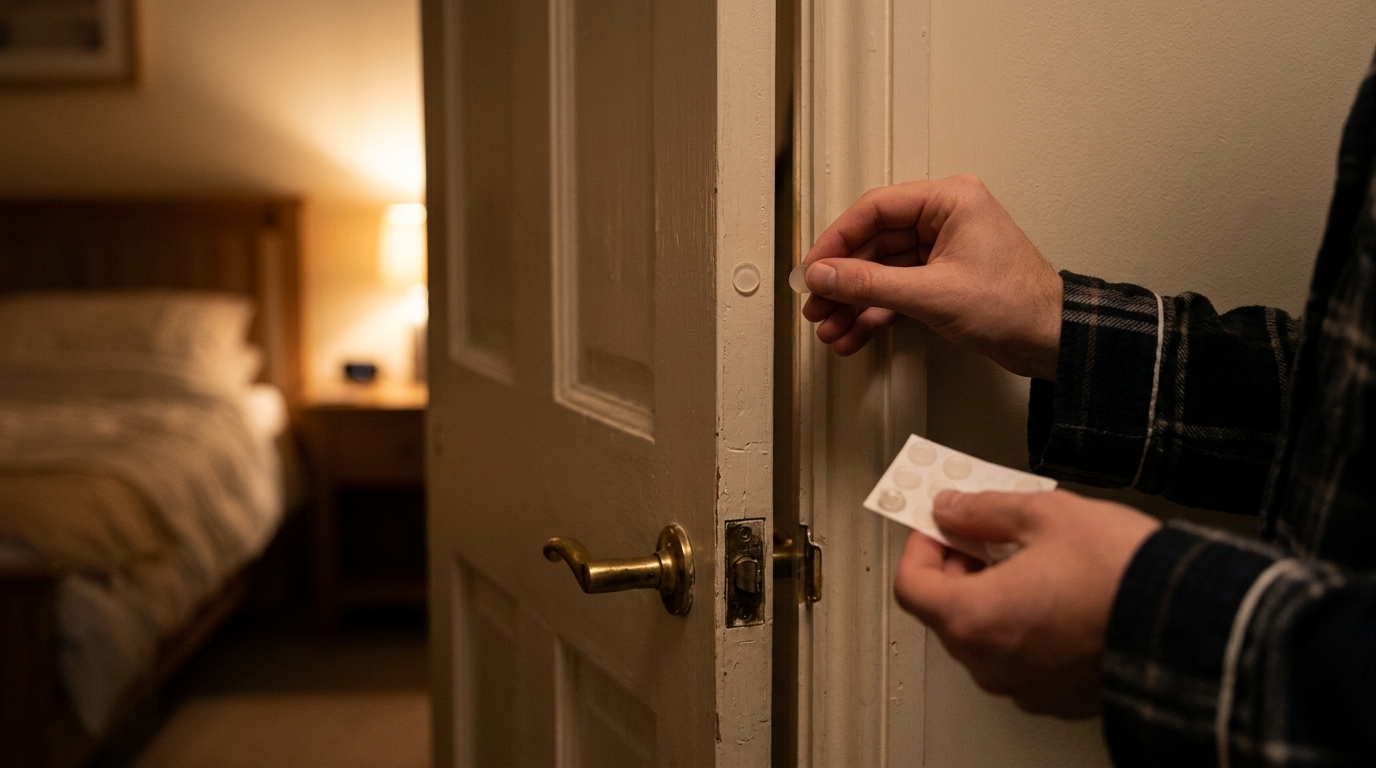
- Stick small adhesive felt or rubber bumpers on the door frame stop or on the edge of the door at the latch side. These cost about $3 and cut slam noise dramatically.
- Reduce the airflow cause by cracking the door slightly or opening a return grille so air has somewhere to go, which can stop the door from being pushed or pulled.
- Choose your hardware: a hydraulic door closer for heavier doors, a spring hinge for light interior doors, or a door damper that slows the last few inches of travel.
- For a spring hinge, remove one existing hinge by taking out its screws while the door is supported, then swap in the spring hinge of the same size and finish.
- Adjust the spring tension using the small set screw or pin on the hinge until the door closes gently and latches without a bounce.
- For a damper or closer, mark the mounting location following the template that comes in the package, drill small pilot holes, and screw the unit into place.
- Fit a full-length door seal or sweep to the bottom edge if you can see light under the door, which also cuts drafts.
- Test the door from several angles, opening it wide and letting it close on its own, and fine-tune the closing speed until it settles quietly.
Why It Works: The Benefits
Eliminating sudden door slams removes a common nighttime sleep disruptor, and sleep experts note that sudden noises can wake you even if you fall back asleep quickly.
Tightening hinges and adding a door seal can close gaps of 1/8 to 1/4 inch, which reduces drafts and helps your HVAC hold temperature in occupied rooms.
A door bumper or soft-close damper stops knobs from punching holes in drywall, a repair that typically costs $50 to $150 to patch and repaint.
Slow-closing hardware prevents finger pinches at the hinge side and the latch side, a leading cause of household door injuries.
Reducing impact force prolongs the life of hinges, latches, and the door frame itself, saving replacement costs over time.
💰 Savings Impact by Action
Felt bumpers and a damper can cut slam noise by roughly 80% by absorbing impact energy.
Tightening hinges and adding a door sweep can reduce air leakage at the door by around 15%.
A bumper or stop prevents most knob-to-wall damage, avoiding $50 to $150 drywall repairs.
Balancing pressure and sealing gaps can trim room-level heating and cooling waste by about 5%.
🏠 Key Concepts Explained
The Science Behind It
A slamming door is a pressure story. Air always moves from higher pressure to lower pressure, and a closed bedroom with a supply vent but no return path becomes a slightly pressurized pocket. Studies of residential duct systems show that closed rooms without return air can see pressure differences of 3 to 10 Pascals, enough to push a door against its latch or hold it open until the air shifts.
When pressure suddenly equalizes, say when someone opens a window or the HVAC cycles off, the door can swing fast. A hollow-core door has a large surface area and low mass, so it catches moving air like a sail and accelerates quickly. Even a gentle breeze of 5 mph can exert several pounds of force on a standard interior door.
Mechanical wear compounds the problem. Loose hinges let the door sag by a few millimeters, shifting its balance point so gravity and airflow tug it closed. Adding a damper or spring hinge works by absorbing kinetic energy gradually instead of letting it release all at once, which is the same principle used in cabinet soft-close drawers. Sealing the gaps around the door also keeps conditioned air in the room, so your system works less to hold temperature.
Frequently Asked Questions
▼ Why does my door still slam even after tightening the hinges?
The cause is probably airflow rather than hardware. Try opening the door a few inches during HVAC cycles to see if the slamming stops, and consider adding a return grille or trimming the bottom of the door by 1/2 inch to let pressure equalize. If the door still bangs, install a damper or spring hinge.
▼ Can renters do this without landlord permission?
Yes, most of it. Adhesive felt bumpers, a removable door sweep, and a stick-on damper require no drilling and peel off cleanly. Avoid swapping hinges or mounting closers with screws unless your lease allows it, since those leave holes.
▼ How long before I notice savings on my energy bill?
The noise fix is immediate. Any energy savings from sealing gaps show up over the next billing cycle or two, typically as a small 2 to 5% improvement in room comfort and heating or cooling runtime, depending on how leaky the door was.
▼ What if my home is older than 30 years?
Older homes often have settled frames, thick paint buildup, and worn hinges that make doors hang crooked. Start by tightening screws and checking whether the door is plumb with a level. If the frame is out of square, a carpenter can shim or plane the door for a more lasting fix.
▼ Will a door closer damage my interior door?
Not if you match it to the door weight and mount it with proper pilot holes. Lightweight hollow-core doors need a light-duty closer or damper, since a heavy-duty one can strain the thin surface.
Quick Tips
- Tighten hinge screws twice a year, since seasonal humidity swings can loosen them.
- Use 1/2 inch felt pads rather than hard plastic bumpers for the quietest result.
- If a door slams only when the furnace or AC kicks on, add a return grille or leave the door open about an inch to balance pressure.
- Check that all hinges are the same height and depth, as mismatched hinges can twist a door out of true.
Variations for Your Situation
- Apartment/Rental: Use stick-on felt bumpers, a removable door damper, and a draft stopper at the bottom of the door, all under $15 and fully reversible. Skip drilling and hinge swaps unless your lease allows it.
- Tight Budget (under $10): Tighten hinge screws, fill stripped holes with toothpicks and glue, and add felt pads from a dollar store. Lubricate the latch with a pencil and keep the door slightly ajar during HVAC cycles to balance pressure.
- Older Home (pre-1980): Expect settled frames and paint-clogged latches. Clean and lubricate the hardware, check for plumb with a level, and consider replacing old brass hinges with new ball-bearing ones for about $15 a pair.
- Kids Room or Nursery: Prioritize safety and silence with a finger-pinch guard on the hinge side plus a soft-close damper, about $20 total, so the door can never slam on small hands.