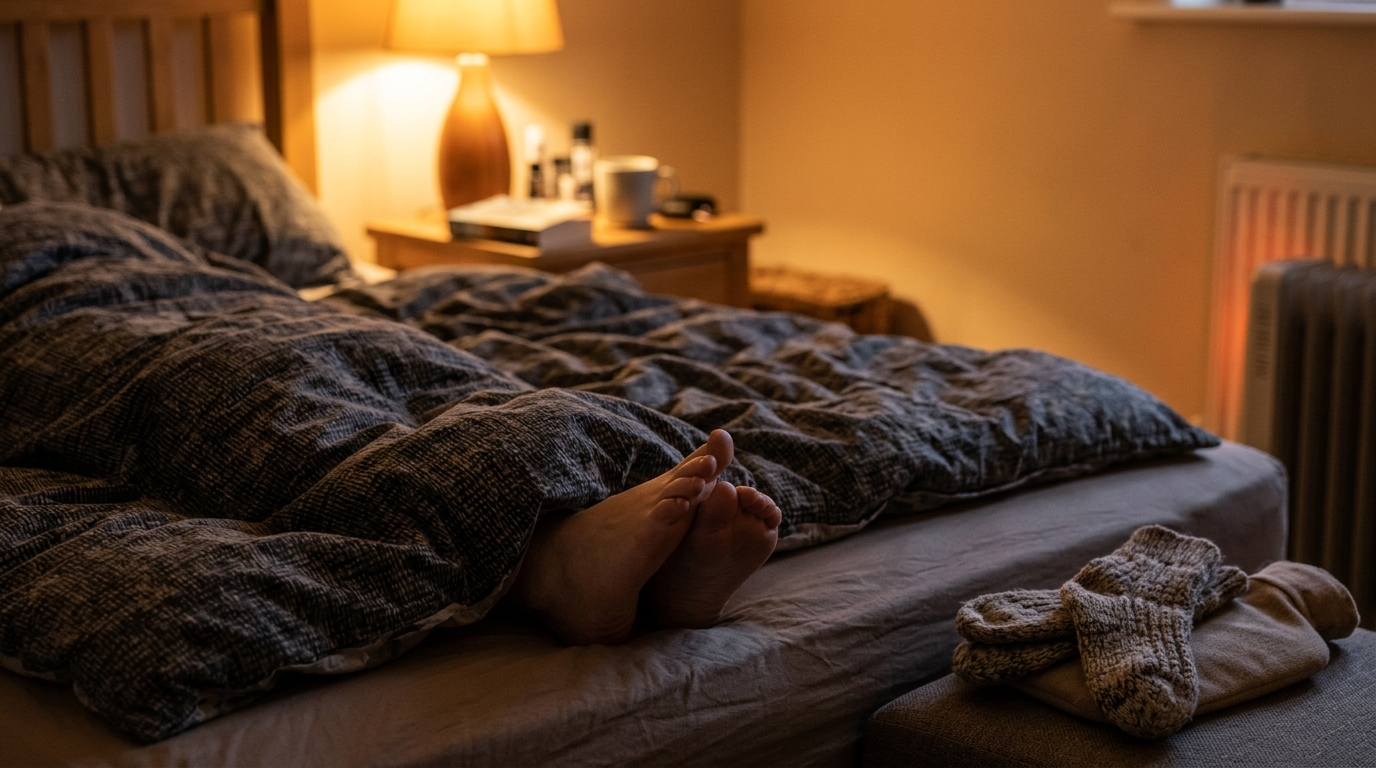
You set the thermostat to a comfortable 70 degrees, climb into bed, and within minutes your feet are freezing. You pile on socks, tuck your toes under the blanket, and still wake up at 2 a.m. with feet that feel like blocks of ice. It is one of the most common comfort complaints homeowners have, and most people assume it is just a circulation quirk.
In many homes, your house is working against your feet. Cold air is denser than warm air and pools near the floor. Uninsulated floors over crawlspaces, garages, or basements can sit 8 to 15 degrees colder than the air at chest height. Add small drafts sneaking under doors and along baseboards, and your feet are sitting in the coldest zone of the entire room. At night your body also pulls blood flow away from your extremities to protect your core, which makes the problem feel worse.
This post breaks down why cold feet happen even when the room reads as warm, then walks through two approaches: a quick fix you can do tonight for almost no money, and a DIY upgrade that tackles the floor and air leaks directly. You will get real numbers on cost, savings, and payback so you can decide what is worth your time.
What You’ll Need
Click on an item below to shop for the recommended items for this recipe on Amazon.
As an Amazon Associate, we earn from qualifying purchases.
How to Do It
- Place a thick area rug or foam interlocking mats under your bed and in the spots where you step out of bed. A rug with a pad can raise surface contact temperature by several degrees compared to bare wood, tile, or laminate.
- Block the gap under your bedroom door with a door sweep, a rolled towel, or a draft stopper. This stops cold air from the hallway from flowing across your floor.
- Run your ceiling fan on low in the clockwise direction (reverse mode) to gently push warm air down from the ceiling and reduce stratification. Use the lowest speed so it does not create a wind chill effect.
- Pull the bed a few inches away from exterior walls and any cold window. This cuts radiant heat loss from your body to those cold surfaces.
- Warm your feet before bed with a 10-minute warm foot soak or a microwavable heat pack at the foot of the bed. Warm feet at bedtime help your body regulate temperature for sleep.
- Find the leaks. On a cold day, hold a lit incense stick or a strip of tissue near baseboards, door bottoms, floor registers, and where walls meet the floor. Movement of smoke or paper shows where air is moving.
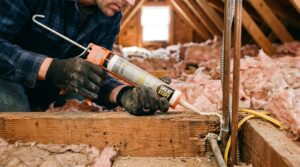
- Caulk gaps between baseboards and the floor with paintable acrylic latex caulk, and seal any gaps around floor registers or plumbing penetrations with caulk or foam sealant.
- Install a door sweep or automatic door bottom on the bedroom door and any exterior door in the area. Choose one that makes full contact with the threshold.
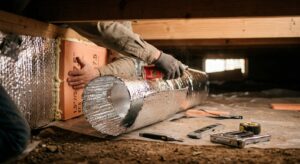
- If the room sits above a crawlspace, garage, or unheated basement, add insulation from below. Fit R-19 to R-30 unfaced fiberglass batts or rigid foam between joists, and support them with insulation hangers or netting so they stay tight against the subfloor.
- Seal and insulate the rim joist area (where the foundation meets the floor framing) with spray foam or cut-and-cobble rigid foam. This is a major source of cold air that chills the floor above.
- Check that heating vents or registers in the room are open and not blocked by furniture, and consider a small vent booster or extender to direct warm air toward floor level.
Why It Works: The Benefits
Fixing the floor and draft issues lets you feel comfortable at 66 to 68 degrees instead of 72, and each degree of setback saves roughly 1 to 3% on heating costs.
Air sealing and insulating floors above unconditioned spaces can cut whole-house heating costs by 5 to 12%, according to ENERGY STAR and DOE estimates for typical homes.
Sleep research shows that warm feet help your body drop core temperature faster, which can shorten the time it takes to fall asleep by several minutes and reduce wake-ups.
Sealing floor-level gaps reduces the cold air sliding across the room, which makes the whole space feel more even and comfortable.
The same gaps that leak air also let in dust, pollen, and noise, so sealing them tends to improve indoor air quality and reduce outside sound.
💰 Savings Impact by Action
Sealing gaps at baseboards, doors, and rim joists can cut heating costs by roughly 5 to 15% by reducing cold air infiltration.
Adding R-19 to R-30 insulation under floors over unheated spaces can reduce heat loss through the floor by 10 to 15% and raise floor surface temperature several degrees.
Lowering the thermostat 7 to 10 degrees for 8 hours can save about 5 to 10% annually, and warmer floors make that setback more comfortable.
Closing a 1/4-inch gap under a door can reduce drafts and trim overall heating loss by 2 to 4%.
Rugs mainly improve comfort by raising contact temperature, but they allow a slightly lower thermostat setting that can add 1 to 3% in savings.
🏠 Key Concepts Explained
The Science Behind It
Heat moves three ways: conduction, convection, and radiation. Your feet are hit by all three at once. When you stand or lie with feet on a cold surface, heat conducts out of your skin into the floor. Cold air that has sunk to floor level flows past your ankles and carries heat away by convection. And your body radiates heat toward colder surfaces, which is why a chilly window or exterior wall can make you feel cold even when the air is warm.
Because cold air is denser than warm air, it settles at the lowest point in the room, and a typical heated room can show a 3 to 8 degree difference between floor and ceiling. Over an uninsulated crawlspace or garage, the floor itself can be much colder because it is tied to the unheated space below. Insulation raises the floor’s R-value, which slows the rate at which heat escapes from the room and keeps the floor surface closer to room temperature.
At night your body deliberately lowers its core temperature to initiate sleep and pulls blood away from your extremities. Feet and hands cool first. Sleep studies show that warming the feet slightly before bed helps blood vessels dilate, which actually helps your core cool down faster and speeds sleep onset. So a warmer floor and fewer drafts help both comfort and rest.
Frequently Asked Questions
▼ My feet are still cold after I sealed drafts and added a rug. What else could be going on?
Check the floor temperature with an infrared thermometer. If it is still more than 5 to 6 degrees below room temperature, the floor cavity is likely uninsulated or has air leaks below. Look at crawlspace or basement insulation, rim joists, and any ductwork running under that room, since leaky or uninsulated ducts can also cool the floor.
▼ Can renters do this without landlord permission?
Yes, most of the quick fix is renter-safe. Use area rugs, foam floor mats, removable door draft stoppers, and temporary weatherstripping or removable caulk rope on gaps. Avoid permanent changes like cutting insulation or caulking baseboards without approval, and ask your landlord about floor insulation if a unit sits above a garage or unheated space.
▼ How long before I actually notice savings on my bill?
Comfort improvements are immediate, often the same night. Energy savings show up in your next one to two billing cycles, especially if you also lower your nighttime thermostat by 2 to 3 degrees. Expect roughly 5 to 12% off heating costs from air sealing and floor insulation, with the best returns in cold climates.
▼ What if my home is older than 30 years?
Older homes usually have more air leakage, less floor and rim-joist insulation, and sometimes single-pane windows that act as cold radiating surfaces. Start with air sealing and rim joist insulation, which typically give the biggest returns, and consider a professional blower-door test ($300 to $600) to find leaks you cannot see.
▼ Could my cold feet be a medical issue instead?
Possibly. If your feet are cold even in warm rooms, look pale or bluish, feel numb or painful, or you have symptoms like tingling or color changes, talk to a doctor. Conditions like Raynaud’s, poor circulation, anemia, or thyroid issues can cause persistently cold extremities and are separate from home comfort problems.
Quick Tips
- Wear lightweight wool or merino socks to bed. Wool stays warm even if slightly damp, while tight cotton or compression socks can restrict circulation and make feet colder.
- Use a layered bedding setup with a warm blanket or duvet that extends over the foot of the bed, and tuck it in so cold air cannot sneak in at the bottom.
- Set your thermostat to start warming the house 30 to 45 minutes before bedtime rather than letting the room cool and then reheating. A steady 66 to 68 degrees feels warmer at floor level than a room that has just been heated rapidly.
- Keep furniture, long curtains, and bedding from blocking floor registers or baseboard heaters so warm air can circulate near the floor.
Variations for Your Situation
- Apartment/Rental: Focus on removable fixes such as a thick rug with a non-slip pad ($30 to $80), a door draft stopper ($10 to $20), peel-and-stick foam weatherstripping ($10 to $15), and a plug-in heated mattress pad or foot warmer ($30 to $60). These improve comfort without altering the unit and take under an hour.
- Tight Budget (under $50): Roll a towel or fabric tube at the base of the door (free), move the bed away from exterior walls (free), run the ceiling fan on low in reverse, and put a foam yoga mat or cardboard-backed rug where your feet land in the morning. Add a $12 tube of caulk to seal visible baseboard gaps and a $10 door sweep if you have a bit more to spend.
- Older Home (pre-1980): Expect more leakage and thinner insulation, so prioritize rim joist sealing, crawlspace or basement ceiling insulation (R-19 to R-30), and weatherstripping on all exterior doors. Budget $150 to $500 for DIY materials, and consider a professional energy audit to find hidden leaks and confirm whether ductwork under the floor needs sealing.