If you live in Arizona, Nevada, Utah, eastern Washington, or anywhere with low summer humidity, an evaporative (swamp) cooler is probably one of the smartest cooling choices you can own. It uses roughly 75% less electricity than central air conditioning. But many homeowners treat it like an AC unit: flip it on high with the pump running and leave it there until morning.
That habit costs money and creates problems. Once the sun goes down in a dry climate, outdoor temperatures often drop 25 to 40 degrees from the daytime high. Running the water pump overnight pushes more moisture into your home than it needs, drives indoor humidity above the comfortable 50 to 60% range, burns through water, and speeds up pad and pump wear. Meanwhile, the cool dry night air is free cooling you are not fully using.
This post covers the overnight setting that fixes all of that: running the blower in vent-only or low-speed mode, adjusting your windows, and pre-cooling your home so it holds its temperature into the next afternoon. We will walk through a no-cost quick fix, a DIY upgrade with a timer or smart controller, and what to expect for savings.
What You’ll Need
Click on an item below to shop for the recommended items for this recipe on Amazon.
As an Amazon Associate, we earn from qualifying purchases.
How to Do It
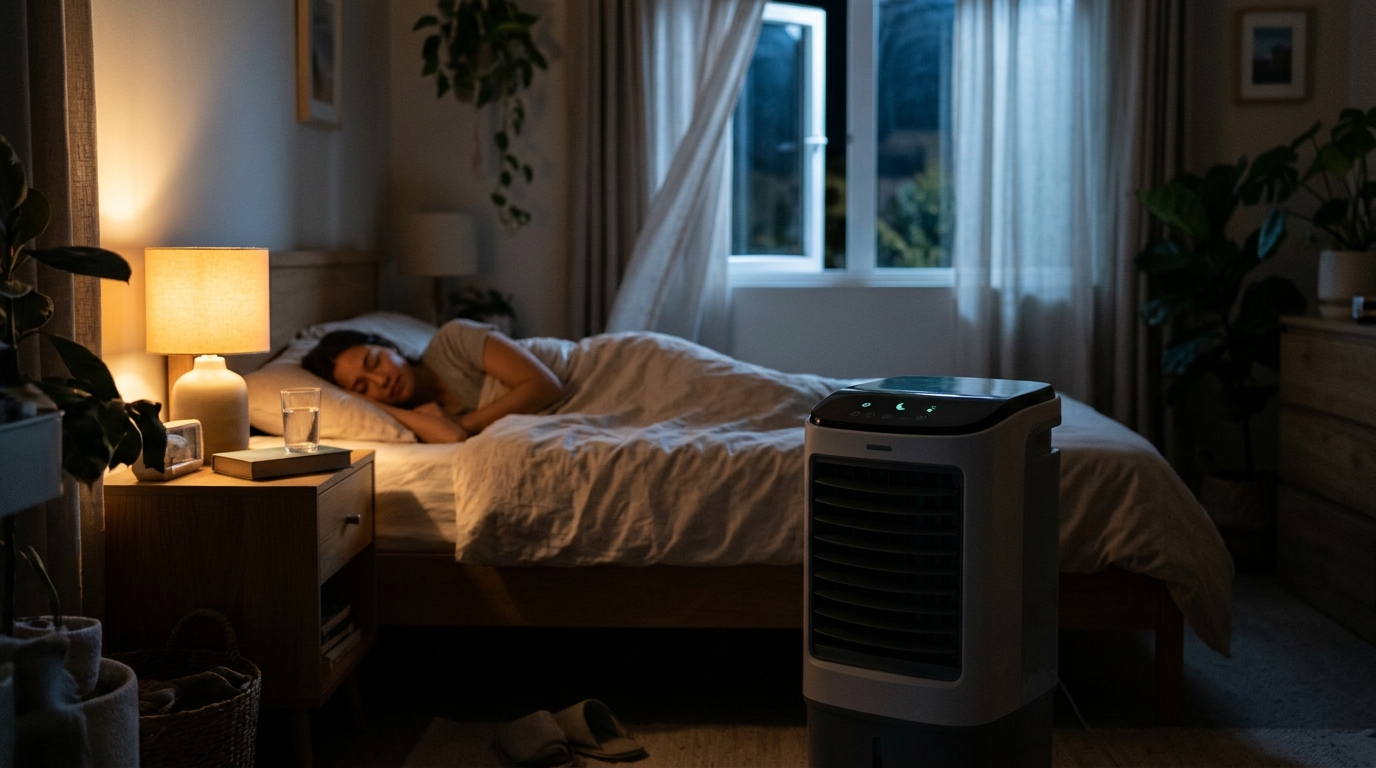
- Around sunset, or once the outdoor temperature falls below about 78 degrees F, switch the cooler from COOL (pump on) to VENT or FAN ONLY mode.
- Set the blower to low or medium speed. High speed wastes electricity and can make bedrooms noisy and drafty.
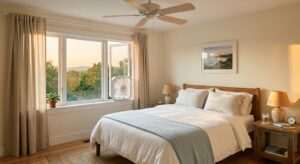
- Open one or two windows or doors on the far side of the house or in rooms you are not using, about 2 to 4 inches each, so air can exhaust.
- Before bed, close windows in rooms where you want to avoid drafts and keep the others cracked.
- In the morning, switch back to COOL mode only when the indoor temperature climbs about 2 to 3 degrees above your comfort setting.
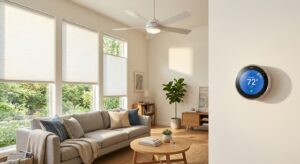
- Choose a controller: a simple mechanical or digital outlet timer ($15 to $30) works for plug-in units, while a hard-wired thermostat or smart evaporative cooler controller ($60 to $150) gives automatic temperature and mode switching.
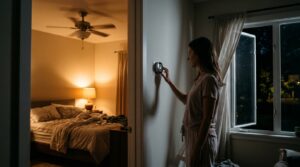
- Program the pump circuit, or the whole cooler if your unit does not allow separate control, to cut the pump off between roughly 9 PM and 6 AM while leaving the fan running in vent mode.
- If your cooler has only one switch for fan and pump, add a separate pump timer or controller so the blower can stay on while the pump rests.
- Install a thermostat-based lockout that keeps the pump off whenever the outdoor temperature is below about 75 degrees F and turns it on automatically as the day heats up.
- Add a small indoor humidity monitor ($10 to $20) near the bedrooms and adjust your schedule until indoor humidity stays between 45 and 60%.
- Review your first two weeks of electric and water bills and fine-tune the on and off times.
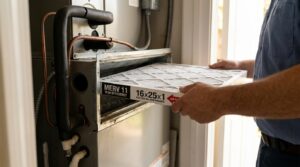
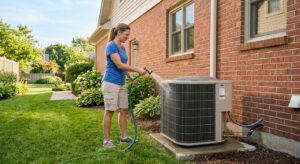
- Schedule an evaporative cooler technician in spring to inspect the motor, belt, pump, float valve, and pads.
- Ask them to install or verify a bleed-off or water-saver kit so mineral buildup does not shorten pad life.
- Have them wire in a dedicated pump and fan control or a smart controller so overnight vent-only mode runs automatically.
- Confirm the roof or wall duct damper and your home’s exhaust path are working correctly so the cooler is not fighting back-pressure.
Why It Works: The Benefits
Running the blower on low or vent-only instead of high with the pump on cuts motor and pump power draw by roughly 40 to 60% during overnight hours.
A typical residential swamp cooler uses 3 to 15 gallons per hour. Turning the pump off for 6 to 8 overnight hours can save 20 to 100 gallons per night.
Keeping indoor humidity near 50 to 55% instead of 65% or more feels cooler and drier, which helps you sleep more comfortably at the same temperature.
Fewer pump hours and drier pads reduce scale, algae, and motor wear. Many owners get an extra season or more out of each set of pads.
Pre-cooling the home’s thermal mass overnight can lower indoor temperatures by 3 to 5 degrees at the start of the day, which delays when the cooler needs to work hard.
💰 Savings Impact by Action
Turning the pump off for 6 to 8 overnight hours cuts pump and water use by roughly 25 to 35%.
Running the fan on low instead of high overnight can reduce motor electricity use by up to 20 to 40%.
Letting pads dry nightly can extend their life by around 25% or more and reduce replacement costs.
Flushing thermal mass overnight lowers afternoon cooling demand by about 10 to 15%.
🏠 Key Concepts Explained
The Science Behind It
An evaporative cooler works by drawing hot, dry air across water-soaked pads. As the water evaporates, it absorbs heat from the air, which can drop supply air temperature by 15 to 30 degrees F. The key limit is the wet-bulb temperature: a cooler can only approach it, never go below it. At 100 degrees F and 15% humidity, the wet-bulb temperature is around 64 degrees F, so cooling is dramatic. At 75 degrees F and 55% humidity, the wet-bulb is around 65 degrees F and there is very little room to cool the air further.
This is why the overnight pump is often wasted effort. When outdoor air has already dropped into the 60s or low 70s, simply moving that air through the house cools it effectively. Adding water raises humidity without delivering much additional temperature drop. Your home can become cooler in dry bulb terms yet feel stickier, because the human body cools by evaporating sweat, and high humidity slows that process.
Overnight ventilation also takes advantage of thermal mass. Interior surfaces and furnishings can store a significant amount of heat during the day. Flushing them with cool air at night lowers their temperature and lets them absorb heat from the air the next day, which acts like a passive buffer. Combined with a proper exhaust path, this strategy delivers the most comfort per kilowatt-hour and per gallon.
Frequently Asked Questions
▼ Why is my house still hot or sticky even after switching to vent-only mode?
Vent-only mode relies on cooler outdoor air, so if nighttime temperatures stay above about 78 degrees F or humidity is high, it will not cool well. In that case, run the pump at a low setting for a shorter window, make sure windows are open for exhaust, and consider a fan to move air in bedrooms.
▼ Can renters do this without landlord permission?
Yes. Switching modes at the existing control panel costs nothing, and a plug-in outlet timer or portable humidity monitor requires no wiring changes. Just avoid modifying hard-wired controls, and ask your landlord before replacing pads or doing any roof or duct work.
▼ How long before I actually notice savings on my bill?
Electric savings typically show up in your first full billing cycle, often 10 to 20% less on cooler-related usage. Water savings are visible even faster if you track your meter. Expect the full 20 to 30% effect once you have dialed in your schedule over a few weeks.
▼ What if my home is older than 30 years?
Older homes often leak more air and have less insulation, so they can benefit even more from overnight flushing since the thermal mass needs to be recharged. Pay extra attention to your exhaust path, seal obvious gaps around doors and the attic hatch, and check that your cooler’s duct and damper are in good condition.
▼ Will turning the pump off hurt my cooler?
No, it is actually beneficial. Letting pads dry out overnight reduces algae, mineral scale, and pump wear. Just make sure the sump drains or is treated per the manufacturer’s guidance if you will not be running it for several days.
Quick Tips
- Run the pump only when the outdoor temperature is above about 78 degrees F and humidity is below 50%.
- Replace or clean pads every 1 to 2 seasons, and check them in spring for mineral buildup.
- Open windows 2 to 4 inches in rooms you want cooled and in at least one exhaust room to keep airflow moving.
- Install a $10 to $20 hygrometer in the main living area and aim for 45 to 60% indoor humidity.
Variations for Your Situation
- Apartment/Rental: If you have a window or portable evaporative cooler, simply switch it to fan-only after dark, crack a window across the unit, and use a $15 plug-in timer to control the pump. Total cost is $15 to $30 with no permanent changes.
- Tight Budget (under $50): Use the free vent-only quick fix, open windows strategically, and add a $10 to $20 hygrometer. This alone can deliver most of the 20 to 30% savings with no wiring or hardware.
- Older Home (pre-1980): Expect more air leakage and possibly weaker duct and damper systems. Prioritize sealing the attic hatch and door gaps, verify the roof or wall damper closes fully when not in use, and consider a professional tune-up to confirm the pump, float, and motor are in good shape.
- Humid Monsoon Season: When outdoor humidity climbs above 50 to 60%, skip the pump altogether at night, run fan-only with windows cracked, and consider pairing with a small AC or dehumidifier in bedrooms if comfort drops.