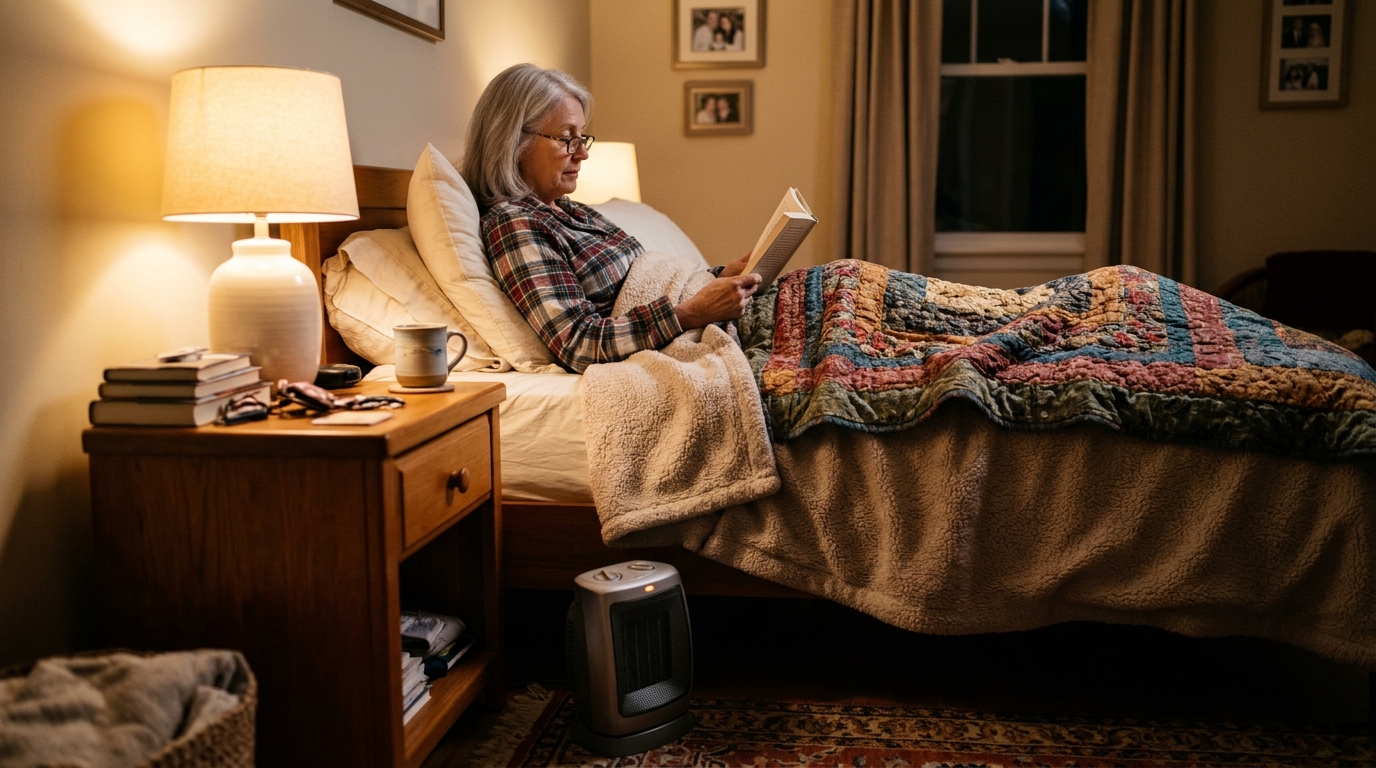
If your parents or grandparents keep the thermostat at 74 degrees while you are shivering in a sweater, they are not being difficult. Aging changes how the body generates, holds, and senses heat. Metabolic rate slows, muscle mass declines, circulation to the hands and feet weakens, and the skin thins, which means less natural insulation. The result is that many adults over 65 feel cold at room temperatures that younger people find perfectly comfortable.
The problem is most noticeable at night. Core body temperature naturally drops during sleep, and an older body has a harder time buffering that drop. A bedroom that is too cool can cause fragmented sleep, early waking, stiff joints, and in more serious cases, an increased risk of hypothermia and cardiovascular strain. Health agencies such as the CDC and the National Institute on Aging generally recommend keeping indoor temperatures at or above 68 degrees for older adults, and many do better in the 68 to 72 degree range while sleeping.
The good news is that you do not need to heat the entire house to a tropical 75 degrees to get there. This post explains why older bodies run cold, then walks through a quick-fix approach, a DIY upgrade, and a professional-level option so you can warm the bedroom efficiently while keeping energy bills under control.
What You’ll Need
Click on an item below to shop for the recommended items for this recipe on Amazon.
As an Amazon Associate, we earn from qualifying purchases.
How to Do It
- Add a heated mattress pad or electric blanket with dual controls and auto shutoff. Pre-heat the bed 20 to 30 minutes before bedtime, then drop the setting to low once in bed.
- Layer bedding with a flannel or wool-blend top sheet, a fleece or down comforter, and a throw at the foot of the bed to trap heat around the feet.
- Close the bedroom door and shut the curtains at dusk so the room holds warmth and window radiant loss drops.
- Place a draft stopper (a rolled towel works in a pinch) along the bottom of the bedroom door and any exterior door in the room.
- Use a small, safety-certified oil-filled radiator or ceramic heater with tip-over protection to pre-warm the room for 30 minutes, and never leave it unattended or run it while sleeping unless it is rated for that.
- Weatherstrip and caulk around windows and exterior doors. Use removable rope caulk or adhesive foam tape on operable windows and silicone or acrylic latex caulk on fixed gaps.
- Install insulating cellular (honeycomb) shades or thermal-lined curtains over windows. Cellular shades can cut heat loss through a window by 20 to 40 percent.
- Apply clear window insulation film kit over single-pane or older double-pane windows to cut radiant cold and drafts for the heating season.
- Add a thick area rug or runner beside the bed. Cold floors, especially over crawl spaces or garages, are a major source of cold feet.
- Install outlet and switch gaskets on exterior bedroom walls, which are a surprisingly leaky path for cold air.
- Reposition the bed away from exterior walls and windows if possible, ideally toward an interior wall.
- Schedule a home energy audit with a blower door test and infrared scan to find air leaks and missing insulation around the bedroom.
- Have a contractor seal and insulate ductwork serving the bedroom, especially runs through attics, crawl spaces, or garages. Leaky ducts can waste 20 to 30 percent of heated air.
- Add attic insulation to reach at least R-38 to R-49 if the bedroom sits under the roof, and consider blown-in wall insulation for exterior walls with none.
- Install a ductless mini-split heat pump head in the bedroom for independent zone control, or add a dedicated thermostat or zone damper for the bedroom.
- Upgrade failing windows to ENERGY STAR certified models if they are single-pane or visibly leaky, which improves both radiant comfort and heating efficiency.
Why It Works: The Benefits
Sleep studies suggest the ideal bedroom range for older adults sits higher than the commonly cited 60 to 67 degrees for younger sleepers, and staying comfortable reduces nighttime waking and restlessness.
Every degree you raise a whole-house thermostat adds roughly 1 to 3 percent to heating costs. Warming just the bedroom or the bed itself can deliver comfort for pennies per night.
Consistently cold indoor temperatures are linked to higher blood pressure and greater cardiovascular strain in older adults, so a warmer sleeping space is a safety measure as well as a comfort upgrade.
Cold can aggravate arthritis and muscle stiffness, and a consistently warm sleeping environment often means easier, less painful mornings.
Addressing drafts and cold surfaces improves comfort for every person in the home, not just older residents, and tends to lower overall heating loads by 5 to 15 percent.
💰 Savings Impact by Action
Warming the bed or bedroom instead of raising the whole-house setpoint can cut heating costs by roughly 10 to 20 percent.
Sealing gaps around windows, doors, and outlets can reduce heating loss by about 10 to 20 percent.
Insulating cellular shades or thermal curtains can reduce heat loss through windows by 20 to 40 percent.
Programming setbacks in unused rooms while keeping the bedroom warm can trim annual heating costs by about 5 to 10 percent.
Sealing and insulating leaky ducts can recover up to 20 to 30 percent of wasted heated air in affected homes.
🏠 Key Concepts Explained
The Science Behind It
The human body maintains a core temperature near 98.6 degrees through a balance of heat production and heat loss. In younger adults, shivering, vasoconstriction (narrowing of blood vessels near the skin), and a robust metabolism keep this balance tight. With age, each of these defenses weakens. Metabolic heat production falls, blood vessels respond more slowly to cold, and the sensation of cold itself can become less reliable, which paradoxically means some older adults feel comfortable in rooms that are actually unsafe, while others feel cold in rooms that are technically within a normal range.
From a building science standpoint, the air temperature on the thermostat is only part of what determines comfort. Your body also exchanges heat by radiation with every surface in the room. A cold exterior wall or single-pane window acts like a heat sink, pulling warmth from your body even when the air feels fine. This is why sealing and insulating the bedroom, and covering windows with insulating shades, often feels like raising the temperature by several degrees without touching the thermostat. The room’s mean radiant temperature rises, and your body loses less heat.
Finally, heating the person rather than the space is thermodynamically efficient. A heated mattress pad delivers warmth directly to the skin by conduction, where it is needed, using roughly 100 to 200 watts. Heating a whole house from 66 to 72 degrees can require tens of thousands of BTUs per hour. Targeting heat at the body and reducing the room’s heat loss together gives the best comfort per dollar, which is why the combination of a warmed bed and a sealed bedroom works so well.
Frequently Asked Questions
▼ The thermostat says 70 but the bedroom still feels freezing. What is wrong?
The air temperature may be fine while the room’s surfaces are cold, which makes you lose heat by radiation. Hold your hand near the exterior wall and window to feel for cold or drafts, then seal gaps and add insulating window coverings. If one bedroom is consistently colder than the rest of the house, a duct problem or missing insulation is likely, so consider an energy audit.
▼ Is it safe to leave a heated blanket or mattress pad on all night?
Modern models with auto shutoff and a recognized safety listing are generally designed for extended use, but follow the manufacturer’s instructions. Pre-heat the bed and then turn it to low or off once under the covers, avoid folding or bunching the cord, and replace any unit that is old, frayed, or has hot spots. People with reduced skin sensitivity or diabetes should be especially cautious about burns.
▼ How much does it cost to keep a bedroom warmer than the rest of the house?
A heated mattress pad typically costs about 1 to 3 cents per night, while a 1,500-watt space heater can cost roughly 15 to 25 cents per hour at average electricity rates. Zoning with a smart thermostat or mini-split usually costs less than raising the whole house by several degrees, which can add 10 to 20 percent to your heating bill.
▼ Should I just raise the thermostat for the whole house instead?
That works but is the most expensive option, since every degree increases heating costs by about 1 to 3 percent and you end up heating rooms nobody is using. Targeted bedroom warming plus air sealing usually delivers the same comfort for far less. If the whole house runs cold, then raising the thermostat modestly and improving insulation together is the better long-term fix.
Quick Tips
- Aim for a bedroom temperature of about 68 to 72 degrees at night for most older adults, and talk with a doctor if a higher temperature feels necessary.
- Use a programmable or smart thermostat to hold the bedroom a few degrees warmer overnight while letting unused rooms drift cooler, which can trim heating costs 5 to 10 percent.
- Wear warm sleepwear in layers, including socks and a lightweight cap if needed, because the head and feet lose heat quickly.
- Keep a safe, well-lit path to the bathroom and consider a plug-in night light, since cold-induced stiffness raises fall risk when getting up at night.
Variations for Your Situation
- Apartment/Rental: Stick to non-permanent fixes such as a heated mattress pad ($40 to $100), removable weatherstripping and rope caulk ($10 to $20), a window insulation film kit ($15 to $25), thermal curtains ($30 to $80), and a rug. All of these come out when you move, and none require landlord approval.
- Tight Budget (under $50): Layer bedding with a flannel sheet and extra blanket, add a rolled-towel draft stopper, hang the heaviest curtains you already own, close the door and vents to unused rooms, and use a hot water bottle at the foot of the bed. Window film kits run about $15 to $20 and make a noticeable difference on cold glass.
- Older Home (pre-1980): Expect more air leakage, thinner or missing wall insulation, and single-pane windows, so start with air sealing around windows, doors, and outlets, then prioritize attic insulation to R-38 or higher. Consider storm windows or interior storm panels ($100 to $300 per window) as a cost-effective alternative to full window replacement.