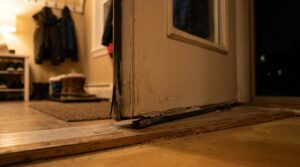
You know the feeling. You settle onto the couch or climb into bed, and a thin stream of cold air slides across your ankles. Nighttime makes it worse because outdoor temperatures drop, your heating system runs more often, and your house is quiet enough that you finally notice what was there all day. That draft is coming from the gap under your door, and it is costing you money every hour it goes unfixed.
The numbers add up faster than most people expect. The U.S. Department of Energy estimates that air leaks account for 5 to 30 percent of annual heating and cooling costs in a typical home. A 1/4 inch gap across the bottom of a standard 36 inch door is roughly equivalent to a 9 square inch hole in your wall. Doors are rarely the only leak, but they are one of the cheapest and fastest to fix.
This post walks through two ways to stop the draft: a 15 minute quick fix that works on almost any door, and a more permanent DIY upgrade that replaces the worn-out sweep or threshold seal. You will also learn why drafts get worse at night, how to find the real source of the leak, and what to do when the usual fixes are not enough.
What You’ll Need
Click on an item below to shop for the recommended items for this recipe on Amazon.
As an Amazon Associate, we earn from qualifying purchases.
How to Do It
- Close the door and slide a ruler or dollar bill under it in several spots. Note how big the gap is (measure at the widest point) and whether it is even across the whole width.
- Measure the door width from edge to edge and buy a self-adhesive door sweep or a tube-style draft stopper that is at least that long. Choose a sweep with a silicone or rubber flap rather than thin foam for better durability.
- Clean the bottom of the door with rubbing alcohol and let it dry completely. Adhesive will not hold on dusty, oily, or damp surfaces.
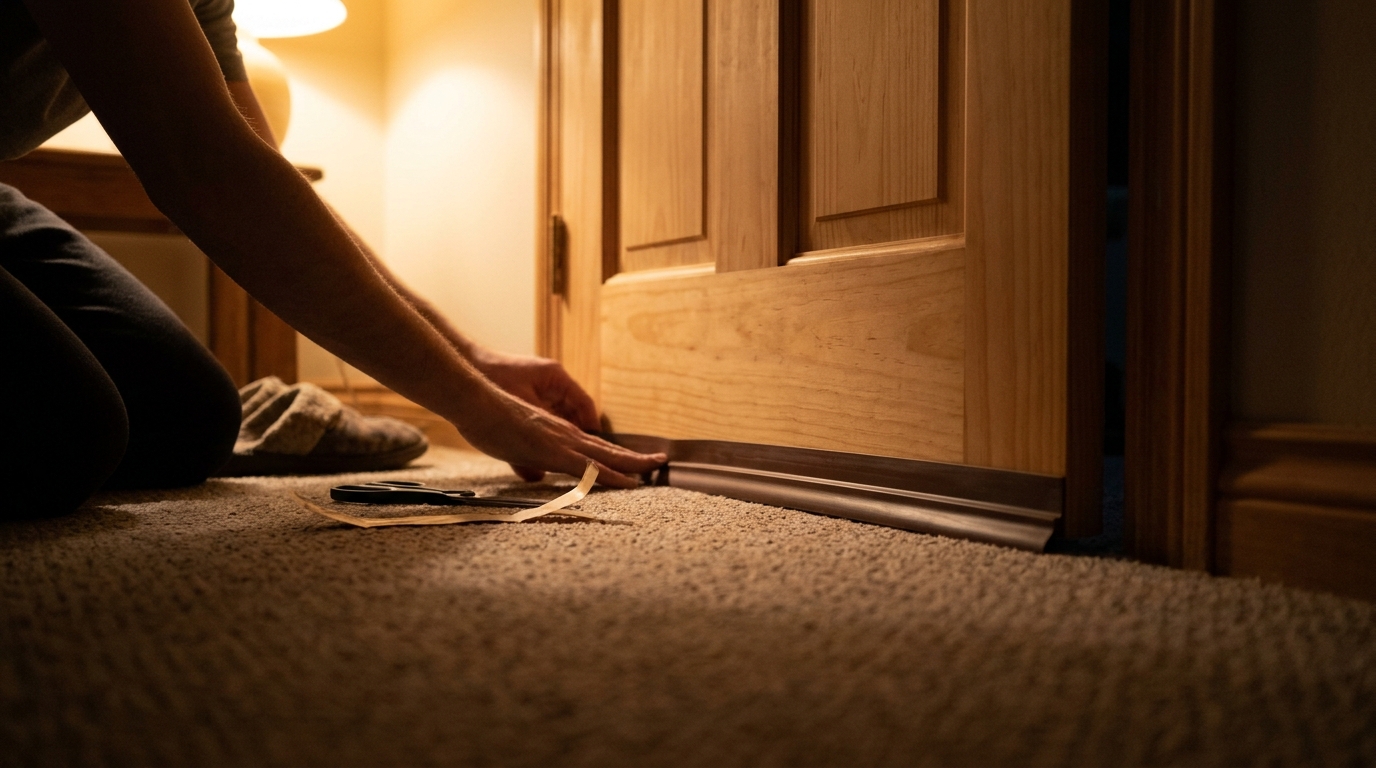
- Cut the sweep to length with scissors or a utility knife, peel the backing, and press it along the bottom interior face of the door so the flexible flap just touches the floor or threshold.
- Open and close the door a few times. If it drags or sticks, raise the sweep by about 1/16 inch. If you can still see light or feel air, lower it slightly until the flap brushes the floor without strain.
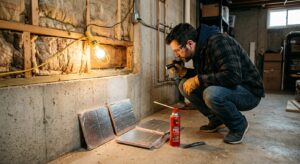
- Remove the old sweep or weatherstripping if there is one. Take off any screws, scrape away leftover adhesive, and check the bottom edge of the door for rot or damage.
- Measure the door width and cut a new aluminum or vinyl-backed door sweep to fit using a hacksaw or snips. Leave about 1/8 inch of clearance on each side so it does not rub the jamb.
- Hold the sweep against the bottom of the door on the interior side with the flap resting lightly on the threshold. Mark the screw holes with a pencil, keeping the flap angled so it compresses slightly when closed.
- Drill small pilot holes at each mark to prevent splitting, then drive in the screws provided. Start with the center screw and work outward so the sweep stays straight.
- If your threshold has an adjustable insert, raise or lower it with a screwdriver until the sweep makes light, even contact along its entire length. Turn the adjusting screws a quarter turn at a time.
- Check the sides and top of the door while you are there. Replace cracked or flattened weatherstripping along the jambs so you are not fixing only one-third of the problem.
- Have a carpenter or door contractor inspect the door for warping, sagging hinges, or a worn threshold that is letting daylight through.
- Ask them to re-hang or shim the door if it has dropped, which restores proper alignment before any sealing is attempted.
- If the threshold itself is damaged, have it replaced with an adjustable, weather-rated unit that includes a compression gasket.
- Request new perimeter weatherstripping and a high-quality sweep installed together so the whole door seals as a system.
Why It Works: The Benefits
Sealing a leaky exterior door can cut energy loss from that opening by 50 percent or more, and whole-house air sealing typically saves about 15 percent on heating and cooling according to ENERGY STAR.
Stopping the cold air pool near the door can raise the perceived temperature in nearby rooms by 2 to 4 degrees without touching the thermostat.
The same gap that lets in air also lets in street noise. A good door sweep can reduce outside sound transmission noticeably, which helps with sleep.
Insects, spiders, and small rodents use door gaps as entry points. Sealing the bottom edge keeps them out and reduces dust and pollen infiltration.
At $10 to $40 in materials, most homeowners recover the cost within 3 to 12 months of reduced energy use, making this one of the best returns in home efficiency.
💰 Savings Impact by Action
Closing a 1/4 inch gap under an exterior door can reduce whole-house heating and cooling costs by roughly 5 to 10 percent in a leaky home.
Stopping cold air pooling near the door can make nearby rooms feel 2 to 4 degrees warmer, which can let you lower the thermostat and cut heating use by up to 25 percent in that zone.
ENERGY STAR estimates that sealing air leaks throughout a home saves an average of 15 percent on heating and cooling costs.
Sealing door gaps can cut insect and dust entry by up to 40 percent by removing a major pathway into the home.
🏠 Key Concepts Explained
The Science Behind It
Drafts are driven by pressure differences. When it is cold outside, the warm air inside your home is lighter and rises, escaping through leaks in the upper part of the house like attic bypasses and recessed lights. This creates slightly lower pressure at the bottom of the house, and outdoor air is pulled in through the lowest openings. That is why the gap under your door acts like an intake vent during winter nights, and why sealing it makes a bigger difference than the size of the gap alone would suggest.
Heat also moves by convection and conduction, not just by air leakage. Cold air entering under a door is denser than warm room air, so it spreads across the floor in a layer that your feet and lower legs sit in. Your body loses heat to that cold air faster than to still air at the same temperature, which is why a draft can make a 70 degree room feel like 65. Stopping the air movement removes both the heat loss and the chilling effect.
A good door sweep works because it combines a flexible seal with a tight fit. The flap deflects slightly when the door closes, keeping contact even if the floor is not perfectly level. Materials like silicone and EPDM rubber keep their shape through temperature swings, while cheap foam can compress permanently and stop sealing within a year or two. That is why spending a few extra dollars on a quality sweep is usually the better value.
Frequently Asked Questions
▼ I installed a door sweep but I still feel a draft. What am I missing?
The leak is probably along the door’s side or top edges, or at the corners of the threshold. Do the flashlight test at night to find the remaining gaps, then replace the perimeter weatherstripping with a compression or V-strip seal. If light shows through the center of the sweep, the door may be bowed and need adjustment.
▼ Can renters do this without landlord permission?
Yes. A removable door snake or an adhesive sweep that peels off cleanly is generally safe and leaves no permanent damage. Avoid drilling or screwing into the door unless your lease allows it, and keep the original sweep if there was one so you can reinstall it when you move out.
▼ How long before I actually notice savings on my bill?
You will feel the comfort improvement immediately, but bill savings show up over the next billing cycle or two. A single door typically saves $15 to $50 per year depending on gap size, climate, and energy prices, so the effect is real but modest unless you seal several leaks.
▼ My door sticks or drags after installing the sweep. What now?
The sweep is likely set too low or is too stiff. Loosen the screws and raise it by 1/16 inch at a time until the door swings freely but the flap still touches the floor. If it still drags, switch to a thinner brush or fin-style sweep, or trim the door bottom slightly.
▼ What if my home is older than 30 years?
Older doors often have uneven gaps from settling, so a flexible sweep with a deeper flap works better than a rigid one. Check for a worn or missing threshold and consider replacing it if the floor beneath has sagged, since a sweep alone cannot bridge a gap larger than about 1/2 inch.
Quick Tips
- Replace sweeps every 3 to 5 years, or sooner if you can see daylight, feel air, or notice the flap is cracked or flattened.
- Seal the sides and top of the door at the same time. A sealed bottom with a leaky jamb just moves the draft.
- Use a removable draft stopper (a fabric tube filled with rice or foam) on interior doors for a zero-installation, renter-friendly option.
- Check the seal each fall before heating season starts, since doors can shift with summer humidity and swell or shrink.
- Pair door sealing with caulking around window trim and outlet gaskets on exterior walls for the biggest comfort improvement.
Variations for Your Situation
- Apartment/Rental: Use a self-adhesive silicone door sweep or a fabric draft stopper that slides on the bottom of the door, costing $8 to $20. Both remove without damage and take about 10 minutes to install.
- Tight Budget (under $15): Roll up a towel or make a draft snake from a long sock filled with rice or dried beans and place it against the door each night. For a sturdier fix, a single roll of adhesive foam or rubber weatherstripping runs $5 to $10 and seals the sides as well.
- Older Home (pre-1980): Expect uneven gaps and possibly a worn wood threshold. Choose a heavy-duty sweep with a deep fin or brush, and check the jambs for gaps larger than 1/4 inch. Adding a new adjustable threshold ($30 to $60) often delivers the biggest improvement.