You crank up the thermostat, but your bedroom still feels like a walk-in freezer while the living room is perfectly warm. Sound familiar? Cold spots are one of the most common winter comfort complaints from homeowners, and they are almost never random. Every cold spot has a cause, and most of those causes are fixable without calling a contractor.
Cold spots cost you money in two ways. First, your heating system works overtime trying to compensate for areas that never warm up properly. Second, the same gaps and insulation failures that create cold spots are actively leaking expensive heated air to the outside. The U.S. Department of Energy estimates that air leaks alone account for 25 to 40 percent of heating energy loss in a typical home.
This guide walks you through every major room in your house, from the basement to the attic, identifying the most likely culprits for each type of cold spot and giving you concrete steps to fix them. Whether you have 15 minutes or an entire weekend, there is a level of action you can take today that will make a real difference by tonight.
What You’ll Need
Click on an item below to shop for the recommended items for this recipe on Amazon.
As an Amazon Associate, we earn from qualifying purchases.
How to Do It
- Walk each room and hold your hand near outlets, window frames, baseboards, and door frames to feel for cold drafts. Mark problem areas with a sticky note so you can address them systematically.
- Open all supply vents fully in cold rooms and confirm none are blocked by furniture, rugs, or drapes. A vent blocked by even a couch cushion can drop room temperature by 5 degrees or more.
- Close doors to rooms you are not actively heating, like guest bedrooms, but leave interior doors open in the rooms you are using so return air can circulate back to the furnace.
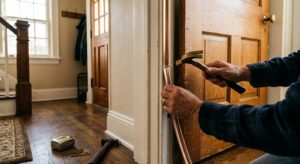
- Place rolled towels or draft snakes at the base of exterior doors where you feel cold air entering. This costs nothing and can noticeably reduce the chill near entryways within minutes.
- Add a thermal curtain or heavy drape over any window that feels especially cold. Closing it at dusk traps a layer of still air against the glass, reducing radiant heat loss by 25 to 40 percent at that surface.
- Check your furnace filter. A clogged filter restricts airflow across the entire system, making far rooms starve for heat first. Replace it if it has been more than 60 days since the last change.
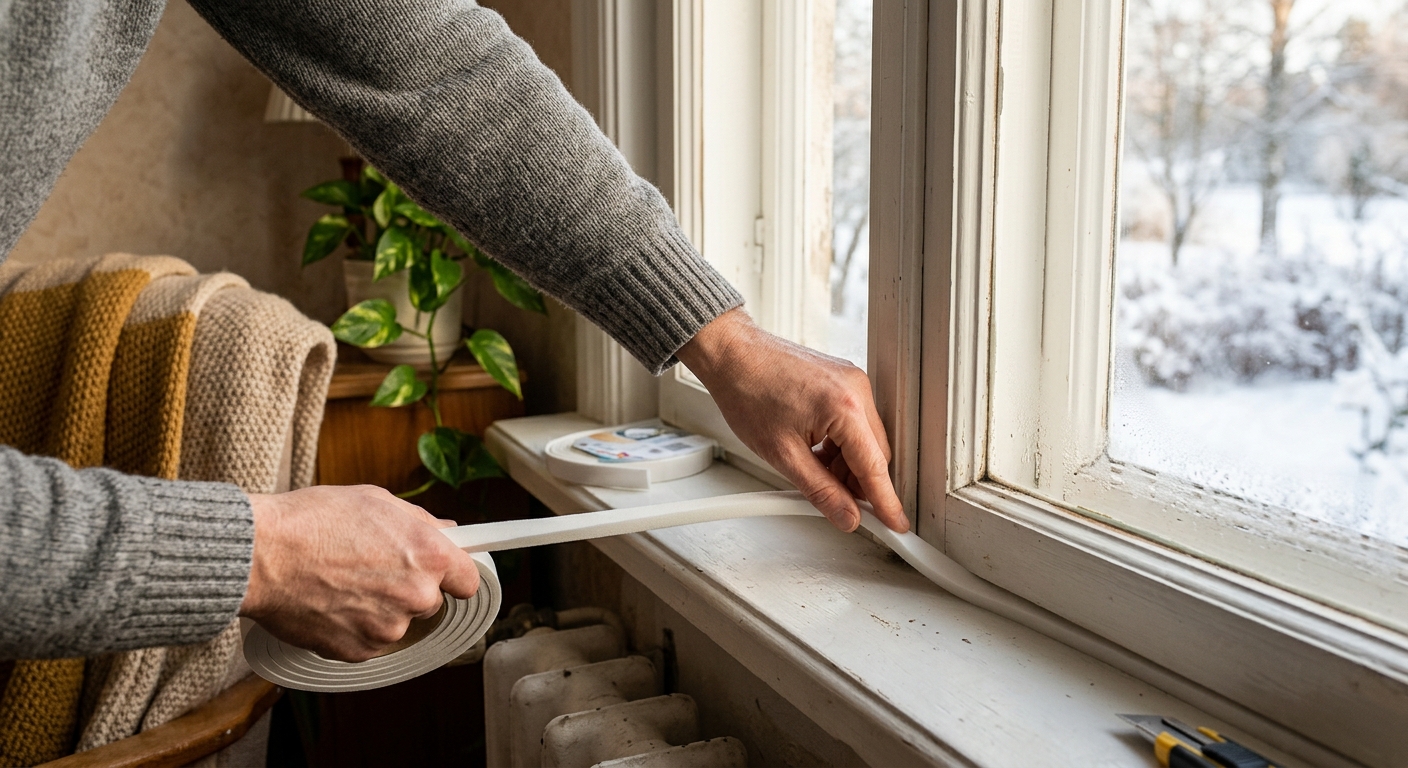
- Purchase a tube of paintable latex caulk and weatherstripping foam tape. Start with every window in the cold room: remove the interior trim carefully, fill any gap between the window frame and rough framing with minimal-expanding spray foam, then replace the trim and caulk the seam.
- Remove outlet and switch covers on exterior walls in cold rooms. You will often see daylight or feel cold air. Install foam gaskets behind each cover plate (sold in packs for under $5) and replace the covers. This alone can reduce infiltration at walls by 15 to 20 percent in older homes.
- In the attic above cold rooms, look for open top plates, gaps around light fixtures, and spaces where interior walls meet the attic floor. Seal all visible gaps with caulk or spray foam before adding insulation.
- If the floor above a cold basement or crawl space feels cold, staple unfaced fiberglass batt insulation between the floor joists with the batt facing up against the subfloor. This adds R-19 to R-21 and can raise floor surface temperatures by 8 to 15 degrees.
- For rooms with consistently cold exterior walls, attach 1-inch rigid foam board (R-5 to R-6) to the interior face of the exterior wall using construction adhesive, then cover with drywall. This eliminates thermal bridging through studs and is especially effective in homes with minimal wall insulation.
- After completing all air sealing work, run your furnace fan on the continuous setting for a few hours to help re-balance pressure across rooms and confirm that airflow feels even at all supply vents.
- Schedule a home energy audit with a BPI-certified auditor. They will perform a blower door test that depressurizes your home and uses a thermal camera to pinpoint every significant air leak and insulation gap, including hidden ones inside walls.
- Ask the auditor for a prioritized list of remediation work. In most homes, attic air sealing and insulation upgrades deliver the largest cold spot improvements for the lowest cost per dollar spent.
- Hire an HVAC technician to perform a duct leakage test (duct blaster). In homes with forced-air systems, duct leakage rates of 20 to 30 percent are common and are a leading cause of rooms that never reach setpoint temperature.
- If duct leakage is confirmed, have the technician seal leaks with mastic sealant at all accessible joints. This is more durable than tape and can improve heating delivery to distant rooms by 15 to 25 percent.
- Consider having dense-pack cellulose blown into hollow wall cavities through small drilled holes. This is the most effective retrofit insulation for eliminating cold walls without full gut renovation, adding R-13 to R-15 to previously uninsulated stud bays.
Why It Works: The Benefits
Addressing duct balance, air sealing, and insulation gaps can reduce room-to-room temperature variation from 8 to 12 degrees down to 2 to 3 degrees, making every space in your home genuinely comfortable.
Eliminating the air leaks and insulation failures behind cold spots typically reduces heating energy use by 15 to 30 percent, which can translate to $200 to $600 in annual savings depending on your home size and fuel type.
When heat is no longer escaping through gaps and bypasses, your furnace reaches the thermostat setpoint faster and cycles off sooner, extending equipment life and reducing wear on your heating system.
Sealing infiltration pathways also blocks the entry of outdoor pollutants, allergens, and moisture-laden air that can worsen indoor air quality and contribute to mold growth in wall cavities.
Addressing radiant heat loss through window upgrades or interior insulation raises the surface temperature of walls and glazing, reducing the radiant chill that makes sitting near exterior surfaces uncomfortable even at 70 degrees air temperature.
💰 Savings Impact by Action
Insulating and air sealing rim joists reduces basement and first-floor heat loss by up to 15 percent in homes with unfinished basements.
Sealing top plate gaps and penetrations in the attic floor reduces stack effect infiltration by up to 20 percent of total heating energy use.
Sealing leaky ducts with mastic can recover 15 to 25 percent of conditioned air that was previously lost to unconditioned attic or crawl space.
Thermal curtains or interior window film reduce heat loss through glazing by 25 to 40 percent at the window surface, contributing roughly 10 percent to whole-home heating savings.
Foam gaskets behind exterior wall outlets and switches reduce infiltration at those penetrations by up to 80 percent, contributing roughly 5 percent to whole-home air sealing improvement.
🏠 Key Concepts Explained
The Science Behind It
Cold spots are almost always the result of heat moving faster out of one part of your home than another. Heat moves in three ways: conduction through solid materials, convection through air movement, and radiation between surfaces. In a typical cold room, all three mechanisms are often working against you at once. A single-pane window conducts heat at roughly R-1, compared to R-13 or more for an insulated wall. Meanwhile, the same window is radiating infrared energy from your body toward its cold surface, making you feel 4 to 8 degrees colder than the air temperature alone would suggest.
Air infiltration compounds the problem significantly. When cold outdoor air leaks in through gaps in the building envelope, it displaces the warmed air your furnace just spent energy conditioning. Because cold air is denser, it sinks to floor level and spreads along the perimeter of the room, which is exactly where you feel it most when sitting or walking. The stack effect drives this process continuously in winter: as warm air escapes through high gaps near the ceiling, it creates a slight negative pressure at the base of the house that actively pulls cold air in through every low crack and penetration.
Duct systems add another layer of complexity. Forced-air ducts are designed to deliver a specific volume of air to each room, but duct leaks, crushed flex duct, and closed or blocked vents upset that balance. When a room receives less than its designed airflow, it takes longer to heat, loses ground faster when the furnace cycles off, and can end up 5 to 10 degrees colder than the thermostat location. Because thermostats measure only one spot in the house, they have no way to know a distant bedroom is still cold once the hallway reaches setpoint. Fixing the duct system is therefore often the single highest-impact step for multi-room cold spot problems.
Frequently Asked Questions
▼ I sealed all the drafts I could find but one room is still much colder than the rest. What am I missing?
The most likely culprit is either a duct problem or missing insulation inside the wall cavity. Close the room door and feel whether the supply vent is delivering noticeably less air than vents in warmer rooms. If airflow is weak, check for a kinked or disconnected duct in the attic or crawl space. If airflow seems fine, use an infrared thermometer to scan the exterior walls. A wall surface more than 5 degrees below air temperature almost always means missing or settled insulation in that stud bay.
▼ My basement is always freezing no matter what I do. Is there a real fix?
Basements are cold primarily because they are surrounded by soil that stays near 50 to 55 degrees in winter, and because rim joists (the wood framing at the top of the foundation wall) are almost always uninsulated and leaky. Cut rigid foam board to fit each rim joist bay and seal the edges with spray foam. This single step is often cited by energy auditors as the highest return-on-investment basement improvement. If the basement floor is cold, a floating subfloor system with rigid foam underneath can raise floor surface temperatures dramatically.
▼ Why does my bedroom feel colder than the hallway even though the vent is open?
Closed bedroom doors block return air from getting back to the furnace, which pressurizes the room slightly and reduces how much conditioned air the supply vent can push in. You can fix this by installing a 1-inch undercut at the bottom of the door (most interior doors have room for this) or by adding a small transfer grille between the bedroom wall and the hallway. Either solution allows return air to circulate without leaving the door open.
▼ Can a single-pane window really make an entire room feel that much colder?
Yes, because of radiant heat loss. A single-pane window in winter can have a surface temperature of 20 to 30 degrees Fahrenheit, and your body radiates infrared energy toward any surface that is colder than you, regardless of air temperature. Sitting within 6 feet of a large single-pane window can make you feel 5 to 8 degrees colder than the thermostat reading. Adding an interior window insulation film kit (around $15 per window) or heavy thermal curtains is the fastest remedy short of full window replacement.
▼ My home is brand new and I still have cold spots. How is that possible?
New construction is not automatically well-sealed or perfectly insulated. Common issues include compressed insulation at truss intersections, missing insulation at rim joists, and duct systems that were never balanced after installation. Ask your builder for the blower door test result from the certificate of occupancy. If it is above 3 ACH50 (air changes per hour at 50 pascals), there is meaningful air leakage to address. Request a duct balance report if rooms are uneven, as improper duct sizing is a frequent builder oversight even in new homes.
Quick Tips
- Test your windows on a cold night by holding a lit incense stick near the frame edges. Any smoke that bends toward the glass reveals a specific air leak you can seal with caulk or weatherstripping.
- Set your thermostat fan to the ON position (not AUTO) for a few hours on a cold day. Continuous circulation mixes air more evenly across floors and can reduce temperature stratification by 3 to 5 degrees between floor and ceiling.
- Check that bathroom and kitchen exhaust fans are actually closing when not in use. A stuck-open damper on an exhaust fan is equivalent to a 4-inch hole punched through your exterior wall.
- In rooms with hardwood or tile floors over uninsulated crawl spaces, an area rug with a thick pad underneath adds effective insulating value at floor level and can make the room feel 5 to 8 degrees warmer at foot level without any structural work.
Variations for Your Situation
- Apartment or Rental: Renters cannot modify ductwork or add insulation inside walls, but they can still make a significant impact. Focus on interior window insulation film kits ($10 to $20 per window, fully removable), draft snakes at exterior doors, foam gaskets behind outlet covers, and thermal curtains. Report persistent cold spots to your landlord in writing, as they may indicate building code deficiencies the owner is responsible for addressing.
- Tight Budget (Under $50): Start with foam gaskets for outlet covers on exterior walls (under $5 for a full pack), a replacement furnace filter ($10 to $15), and weatherstripping tape for the worst drafty door or window ($8 to $12). These three steps together address the most common causes of cold spots for under $30 and require no tools beyond a screwdriver.
- Older Home (Pre-1980): Homes of this era typically have little or no wall insulation, single-pane windows, and duct systems that were never designed for energy efficiency. Prioritize attic air sealing and insulation first, as this delivers the largest comfort improvement per dollar in older construction. Check whether your utility offers a free energy audit or rebates for insulation work, as many do. Dense-pack cellulose blown into wall cavities is the most practical retrofit for cold walls without a full renovation.