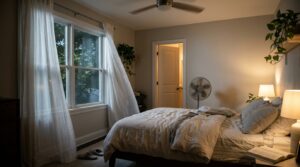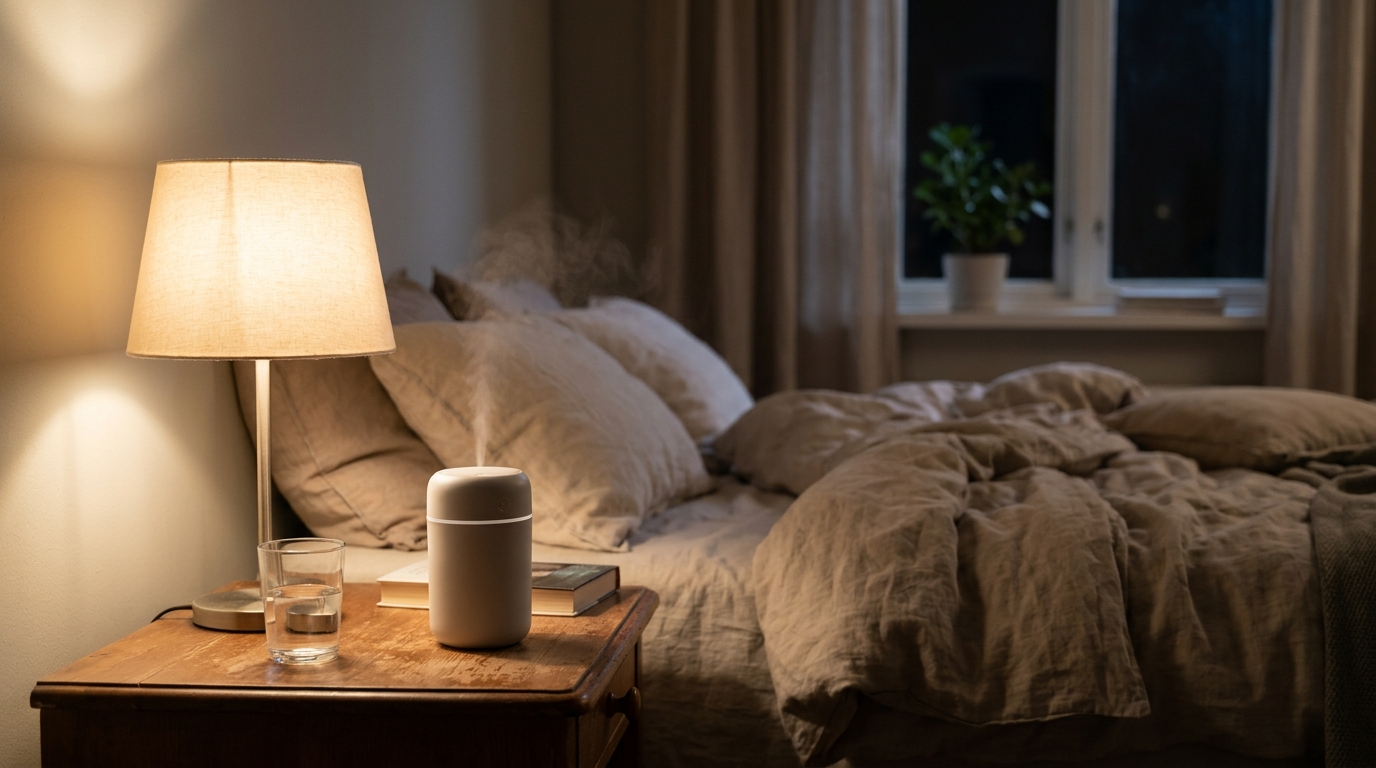
You can set the thermostat to a perfect 68 degrees and still toss and turn. The missing piece is often relative humidity. In winter, heated indoor air can drop below 20 percent RH, leaving you with a scratchy throat, dry skin, and nosebleeds. In summer, humidity above 60 percent makes sheets feel damp and your body struggles to cool itself, even in a cold room.
For most people, the sweet spot overnight is 40 to 50 percent relative humidity. The EPA recommends keeping indoor humidity between 30 and 50 percent to limit mold and dust mites, and sleep researchers generally find that comfort peaks in the 40 to 50 percent band when bedroom temperatures are 65 to 68 degrees. Outside that range, you pay for it in comfort, health, and often your energy bill.
This post shows you how to measure your bedroom humidity, what to do when it is too high or too low, and how to make small changes that help you sleep better while trimming heating and cooling costs. We cover a free quick fix, a budget DIY setup, and when it makes sense to bring in a pro.
What You’ll Need
Click on an item below to shop for the recommended items for this recipe on Amazon.
As an Amazon Associate, we earn from qualifying purchases.
How to Do It
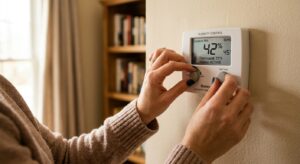
- Buy a digital hygrometer (a combined thermometer and humidity gauge) and place it on your nightstand, away from windows and vents.
- Record the reading at bedtime and again right after waking for 3 nights to see how much your room swings overnight.
- If readings are below 35 percent in winter, set a bowl of water near (not on) a warm vent, or hang damp towels on a drying rack in the bedroom in the evening.
- If readings are above 55 percent in summer, run the AC fan on auto, close the bathroom door during showers, and run the bathroom exhaust fan for 20 minutes after.
- Keep the bedroom door open slightly or closed consistently so air exchange stays predictable, and recheck the readings after a few days.
- For dry air, buy an evaporative or ultrasonic humidifier sized for your room (a 300 to 500 square foot rating covers most bedrooms). Evaporative models use less electricity, about 20 to 50 watts.
- For damp air, buy a 20 to 35 pint dehumidifier with a built-in humidistat and continuous drain option. ENERGY STAR models use about 15 percent less energy than standard units.
- Place the unit 3 to 6 feet from the bed, off the floor on a stand or table, and away from walls so air can circulate.
- Set the humidistat to 45 percent and let it cycle automatically. Avoid running at maximum all night, which wastes energy and can overshoot.
- Clean the tank and replace filters or wicks every 1 to 2 weeks (humidifier) or empty and rinse the bucket weekly (dehumidifier) to prevent mold and mineral dust.
- Recheck your hygrometer for a week and nudge the setting up or down by 2 to 3 percent until the overnight reading stays in the 40 to 50 percent range.
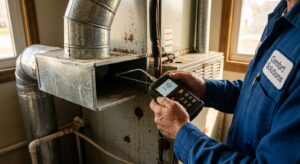
- Have an HVAC contractor measure whole-house humidity and check duct leakage, since leaky ducts pull in damp attic or crawlspace air.
- For winter dryness, ask about a bypass or steam humidifier tied into the furnace (typically $400 to $1,200 installed) with a wall humidistat.
- For summer dampness, ask about a whole-house dehumidifier ($1,200 to $2,500 installed) or a variable-speed AC with a dehumidify mode.
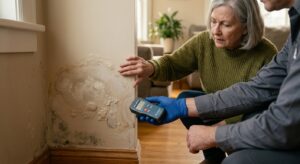
- Have crawlspaces and attics inspected for moisture sources, and add a vapor barrier or improved ventilation if needed.
- Set the whole-home humidistat to 40 to 45 percent in cold weather and 45 to 50 percent in warm weather.
Why It Works: The Benefits
Comfortable humidity reduces dry airways, snoring, and sticky-sheet wake-ups. Many people report falling asleep faster when RH sits in the 40 to 50 percent range at 65 to 68 degrees.
Properly humidified air feels warmer, so you can often lower the thermostat 1 to 2 degrees. That can trim heating bills by about 2 to 6 percent.
Drier air feels cooler. Moving from 65 percent to 50 percent RH can let you raise the AC setpoint 2 to 3 degrees, saving roughly 6 to 9 percent on cooling.
Static electricity and cracked skin become common below 30 percent RH. Holding 40 percent or higher largely eliminates both.
Swinging between very dry and very damp air makes hardwood floors gap and cup, and causes door and trim movement. Stable humidity extends the life of floors, furniture, and instruments.
💰 Savings Impact by Action
Properly humidified air feels warmer, allowing 1 to 2 degrees lower winter settings and about 2 to 6 percent less heating use
Dropping RH from 65 to 50 percent lets you raise the AC setpoint 2 to 3 degrees, saving roughly 6 to 9 percent on cooling
A dehumidifier removes moisture more efficiently than overcooling, reducing wasted AC runtime by up to 15 percent in humid climates
Sealing leaky ducts stops humid attic air from entering the system and can cut humidity-related AC load by about 10 percent
🏠 Key Concepts Explained
The Science Behind It
Relative humidity changes whenever air temperature changes, even if no water is added or removed. Air at 70 degrees can hold roughly twice as much water vapor as air at 50 degrees. That is why heating cold winter air makes it extremely dry (the same moisture content now reads as a much lower RH), and why a room that cools overnight can drift toward higher humidity.
Your body feels humidity through two main channels. First, evaporation of moisture from skin and breathing passages is how you shed heat and keep tissues healthy. At very low RH, evaporation is too fast and the mucous membranes in your nose and throat dry out, which reduces their ability to trap viruses and irritants. At very high RH, evaporation slows and you feel clammy because your body cannot cool efficiently.
The 40 to 50 percent band balances both effects while staying below the thresholds where dust mites and mold thrive. It also reduces the work your HVAC system does. In summer, removing excess moisture lets you feel comfortable at a higher thermostat setting, and in winter, adequate moisture makes the same air temperature feel warmer, so the furnace runs less.
Frequently Asked Questions
▼ Why is my bedroom humidity still high even though my AC runs all day?
Oversized air conditioners cool the air quickly and shut off before removing much moisture, a problem called short cycling. Try lowering the fan speed, make sure the condensate drain is clear, and add a portable dehumidifier set to 45 percent. If it persists, ask an HVAC pro to check system sizing and airflow.
▼ Can renters do this without landlord permission?
Yes. A hygrometer, portable humidifier, and portable dehumidifier all require no installation or modification. Skip whole-home equipment and focus on bedroom-sized units, plus habits like using bathroom fans and keeping the door closed.
▼ How long before I actually notice savings on my bill?
Comfort improvements usually show up within the first few nights. Bill savings appear over one to two billing cycles as you nudge the thermostat 1 to 3 degrees. Expect roughly 5 to 10 percent lower heating or cooling use if you adjust the thermostat once your humidity is stable.
▼ What if my home is older than 30 years?
Older homes leak more air, so winter humidity drops faster and summer humidity enters more easily. A portable unit may need to run more often, and you should lower your winter humidity target to 30 to 35 percent to avoid condensation inside single-pane windows. Air sealing around windows, doors, and attic penetrations will help any humidity strategy work better.
▼ My windows are fogging up at night. Is my humidity too high?
Yes, fogging means moist indoor air is hitting cold glass. Drop your humidistat setting by 5 to 10 percentage points, run bathroom and kitchen fans longer, and open blinds in the morning to let glass warm up. Persistent condensation on window frames can lead to mold, so address it quickly.
Quick Tips
- Check your hygrometer at bedtime and again in the morning for a week to learn how much your bedroom swings overnight.
- Use distilled or demineralized water in ultrasonic humidifiers to avoid white mineral dust on furniture.
- Shut bedroom doors when running a portable humidifier or dehumidifier so the unit only treats the space you are sleeping in.
- Lower your winter humidity target as outdoor temperatures drop to prevent window condensation.
Variations for Your Situation
- Apartment/Rental: Start with a $12 hygrometer and a portable ultrasonic humidifier ($40 to $70) or a 20-pint dehumidifier ($150 to $220). Both need no installation and move with you. Keep the bedroom door closed and use your bathroom fan after showers.
- Tight Budget (under $50): Buy a hygrometer ($10 to $15), air-dry laundry in the bedroom on dry winter evenings, take shorter showers with the exhaust fan on in summer, and keep houseplants out of the bedroom. These zero-cost habits can shift RH by 5 to 10 points.
- Older Home (pre-1980): Expect larger overnight swings from air leaks and weaker insulation. Seal gaps around windows with rope caulk ($5 to $10), keep winter humidity at 30 to 35 percent to avoid condensation, and in summer pair a dehumidifier with a ceiling fan to improve comfort without lowering the AC setpoint much.