You set the thermostat to 72 degrees, climb into bed, and an hour later you are kicking off the covers in a room that feels like 78. It is one of the most common comfort complaints homeowners have, and the cause is rarely a weak air conditioner. It is almost always an airflow problem. A sleeping adult gives off roughly 70 to 100 watts of heat, about the same as an incandescent bulb, and that heat has nowhere to go when the bedroom door is closed.
Here is the catch: when you close the door, the supply vent keeps pushing conditioned air into the room, but there is no easy path for that air to return to the system. Pressure builds up in the bedroom, forcing air out through wall cracks and pulling hot attic or outdoor air in. The rest of the house, meanwhile, goes slightly negative and draws in even more unconditioned air. Studies from Lawrence Berkeley National Laboratory have found that closed bedrooms without return paths can run several degrees warmer than the main living area.
This post walks through a bedroom airflow setup that fixes stuffy, overheated nights. You will get a quick fix you can do tonight for free, a DIY upgrade that creates a proper return pathway for under $150, and the building science that explains why it works. Along the way, we will cover how to get cooler sleeping temperatures while using less energy, not more.
What You’ll Need
Click on an item below to shop for the recommended items for this recipe on Amazon.
As an Amazon Associate, we earn from qualifying purchases.
How to Do It
- Leave the bedroom door open an inch or two, or prop it open with a doorstop, for the first hour or two of the night so the room can equalize with the hallway. If privacy or noise is a concern, a gap of just 1 inch under the door still helps.
- Open the supply vent fully and make sure no furniture, bedding, or curtains are blocking it. Keep at least 6 to 12 inches of clearance around the vent.
- Close blinds and curtains on sun-facing windows by early afternoon, before the room heats up. Blackout or reflective-backed curtains block up to 30 to 40% of solar heat gain.
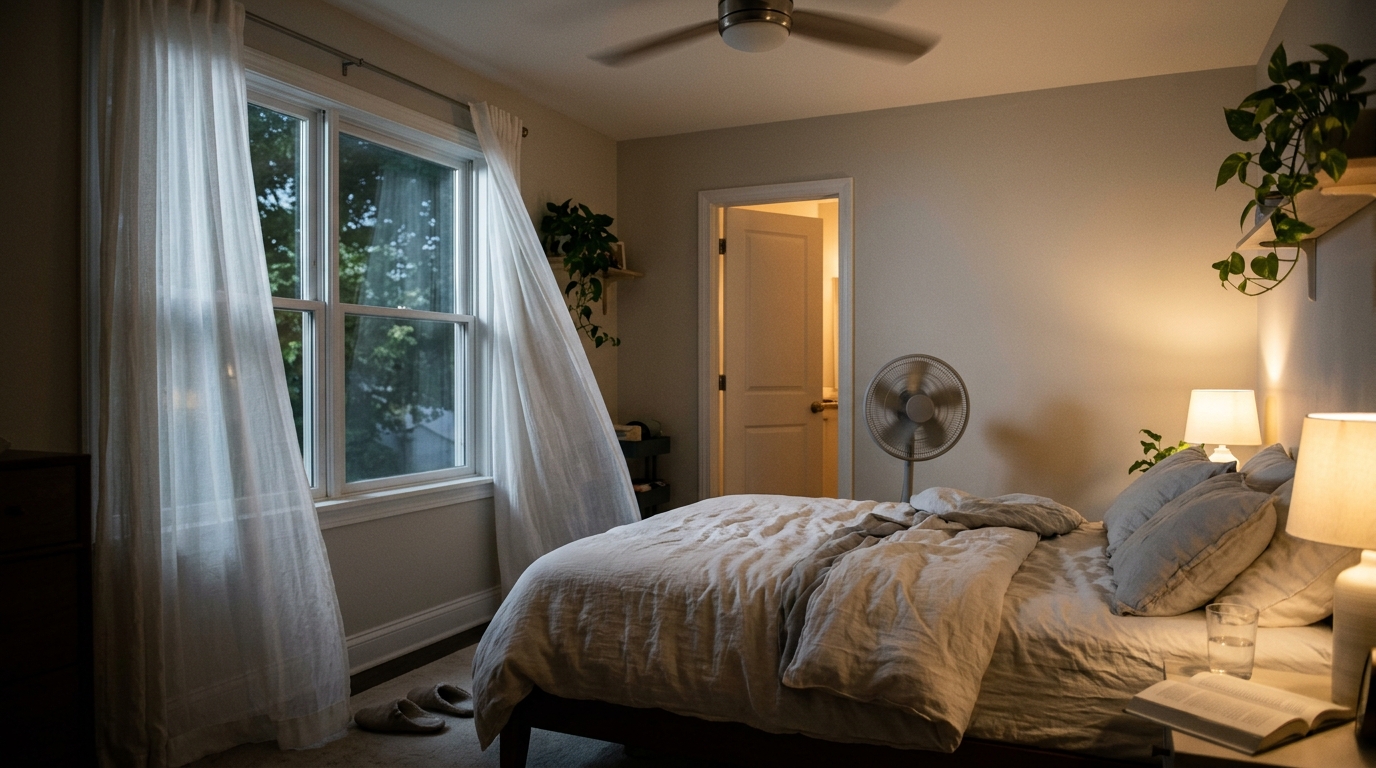
- Set a ceiling fan to run counterclockwise (looking up) at a medium speed to create a gentle breeze. This cools you by evaporation without lowering the room temperature, so turn it off when you leave.
- Remove heat sources from the room overnight, including electronics on standby, bulky chargers, and incandescent lamps. Small loads add up in a closed space.
- Identify where your system’s return air is located, usually a large grille in a hallway or central area. This tells you where the air needs to flow toward from the bedroom.
- Install a jump duct: a short length of flexible duct with grilles on both ends that runs from the bedroom ceiling through the attic space to the hallway. Size it to match the supply airflow, typically a 6 to 8 inch duct for a standard bedroom.
- Alternatively, install a transfer grille or an inline door-mounted return grille. These cost $15 to $60 each and move air through the wall or door without a duct run.
- Undercut the bedroom door by 3 /4 to 1 inch if you do not have a jump duct. This is the cheapest method, though it leaks more sound and light than a grille.
- Seal the supply boot where it meets the drywall using mastic or foil tape, and seal any visible duct leaks in the attic or crawlspace. Leaky supply ducts can waste 20 to 30% of conditioned air before it reaches the bedroom.
- Test the result: close the door at night with a thermometer in the room, and compare the bedroom temperature to the hallway after one hour. The difference should drop to 1 to 2 degrees.
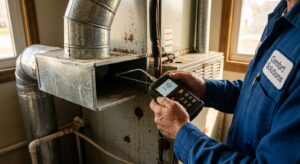
- Hire an HVAC technician or a home performance contractor to run a duct leakage test and airflow balance, often called a room-by-room Manual J and duct review.
- Have them adjust dampers and, if needed, resize or add supply and return ducts to deliver the correct airflow, usually about 1 CFM per square foot for a standard bedroom.
- Ask about adding a dedicated return in each bedroom or a zoning system with motorized dampers if your home has persistent temperature splits between floors.
- Consider a ductless mini-split for a stubborn bedroom. A single-zone unit costs roughly $2,000 to $4,500 installed but can cool one room efficiently at a fraction of the cost of running the whole system.
Why It Works: The Benefits
Research on sleep and temperature points to roughly 65 to 68 degrees as the sweet spot for most adults. Fixing airflow lets you hit that range in the bedroom without overcooling the whole house.
Balancing airflow and cutting pressure-driven leakage can trim cooling energy by 5 to 15%, because the system stops fighting itself and runs fewer, shorter cycles.
Circulating air through the bedroom reduces CO2 buildup overnight. Closed bedrooms can climb past 1,000 ppm of CO2, a level linked to poorer sleep quality and morning grogginess.
A proper return path evens out temperatures between rooms, often shrinking the gap between the bedroom and the thermostat location from 5 or more degrees down to 1 or 2.
Reducing pressure imbalances lowers static pressure in the ductwork, which helps the blower motor run efficiently and can extend equipment life.
💰 Savings Impact by Action
Adding a return path or transfer grille balances room pressure and can cut cooling energy by about 10 to 15 percent in closed bedrooms.
Blocking solar gain with blackout curtains or reflective film can reduce cooling load by 10 percent or more in sun-exposed bedrooms.
Sealing duct leaks recovers 20 to 30 percent of conditioned air that would otherwise be lost in the attic or walls.
Raising the thermostat 2 to 3 degrees with a ceiling fan running saves roughly 6 to 9 percent on cooling bills.
🏠 Key Concepts Explained
The Science Behind It
The core issue is pressure. Your HVAC system moves air in a loop: supply registers push conditioned air into rooms, and return grilles pull it back to the equipment. When a bedroom door closes, the supply keeps pushing but the return path is cut off. The room becomes slightly pressurized, and the extra air leaks out through wall cracks, recessed lights, and gaps around windows. Because the same system is pulling air from the rest of the house, that area goes negative and draws in hot attic or outdoor air through leaks. The net effect is a bedroom that struggles to cool and a house that wastes energy.
Heat also behaves in predictable ways. Warm air is less dense and rises, so without mixing, the air near the ceiling can be several degrees hotter than at bed height. Meanwhile, a person radiates roughly 70 to 100 watts while asleep, and walls and furniture that soaked up afternoon sun release stored heat for hours. A properly balanced room moves enough air to carry that heat away and replace it with cool supply air, typically requiring about 1 CFM per square foot of floor area.
Fans help in a different way. A ceiling fan does not lower the air temperature, but moving air across your skin speeds up evaporation and can make you feel 3 to 4 degrees cooler. That is why fans save energy when you let the thermostat drift up a couple of degrees, but only when someone is in the room to feel the breeze.
Frequently Asked Questions
▼ Why is my bedroom still hot even after I opened the vent and door?
The most likely causes are leaky or undersized ducts, a closed damper, or heavy solar gain through windows. Check that the damper in the duct is fully open, feel for airflow at the vent, and measure the temperature difference between the supply air and the room. If the airflow is weak, have a technician test duct leakage and balance.
▼ Can renters do this without landlord permission?
Yes, most of the quick fix steps are completely renter-safe. Use blackout curtains, a plug-in fan, a doorstop, and a clip-on or window-mounted fan, and rearrange furniture away from vents. Avoid cutting doors, walls, or ductwork, and if you want a permanent return path, ask your landlord about a simple transfer grille.
▼ How long before I actually notice savings on my bill?
Comfort improves the first night, but bill savings show up over a full billing cycle, typically 5 to 15 percent lower cooling costs. You will see the biggest change in the hottest months. Track your kWh usage in your utility app to compare month over month, adjusting for weather.
▼ What if my home is older than 30 years?
Older homes often have leakier ducts, less insulation, and fewer return paths, so the problem is usually bigger. Start with duct sealing and attic insulation upgrades, then add transfer grilles. If you have a single central return and no bedroom returns, a jump duct or door grille will make a noticeable difference.
▼ Is it better to leave the bedroom door open or closed at night?
For airflow, open or cracked is better, since it lets air circulate freely. If you need the door closed for privacy, noise, or safety, add a return path such as a transfer grille or jump duct. Closed doors without a return are the main reason bedrooms run 3 to 5 degrees warmer than the rest of the home.
Quick Tips
- Run the bedroom supply vent fully open and keep the door cracked or install a return path so air can circulate back to the system.
- Close curtains or use reflective window film on sun-facing windows before the afternoon heat builds, not after.
- Pair a ceiling fan with a thermostat set 2 to 3 degrees higher to cut cooling costs by about 6 to 9 percent while feeling just as comfortable.
- Check your attic and duct connections for leaks once a year, since sealing ducts alone can recover 20 to 30 percent of wasted conditioned air.
Variations for Your Situation
- Apartment/Rental: Focus on what you can change without modifying walls or ducts. Use blackout curtains ($20 to $50), a quiet tower or box fan ($30 to $70) set to pull cooler air in from a hallway, a door draft stopper flipped to leave a 1 inch gap, and a plug-in thermometer. Window-mounted or portable AC units ($150 to $400) are a fallback if the central system cannot keep up.
- Tight Budget (under $50): Keep the door cracked or undercut by hand, close curtains by early afternoon, run a ceiling or box fan on low, and move heat-producing electronics out of the room. Add reflective foil or cardboard behind window curtains for a few dollars. These steps alone often drop the bedroom temperature by 2 to 4 degrees.
- Older Home (pre-1980): Expect leakier ducts and fewer returns. Prioritize sealing visible duct joints with mastic ($15 to $30), adding attic insulation to R-38 or higher, and installing a transfer grille or jump duct ($40 to $150). If knob-and-tube wiring or old insulation is present, have a pro assess before cutting into walls or ceilings.