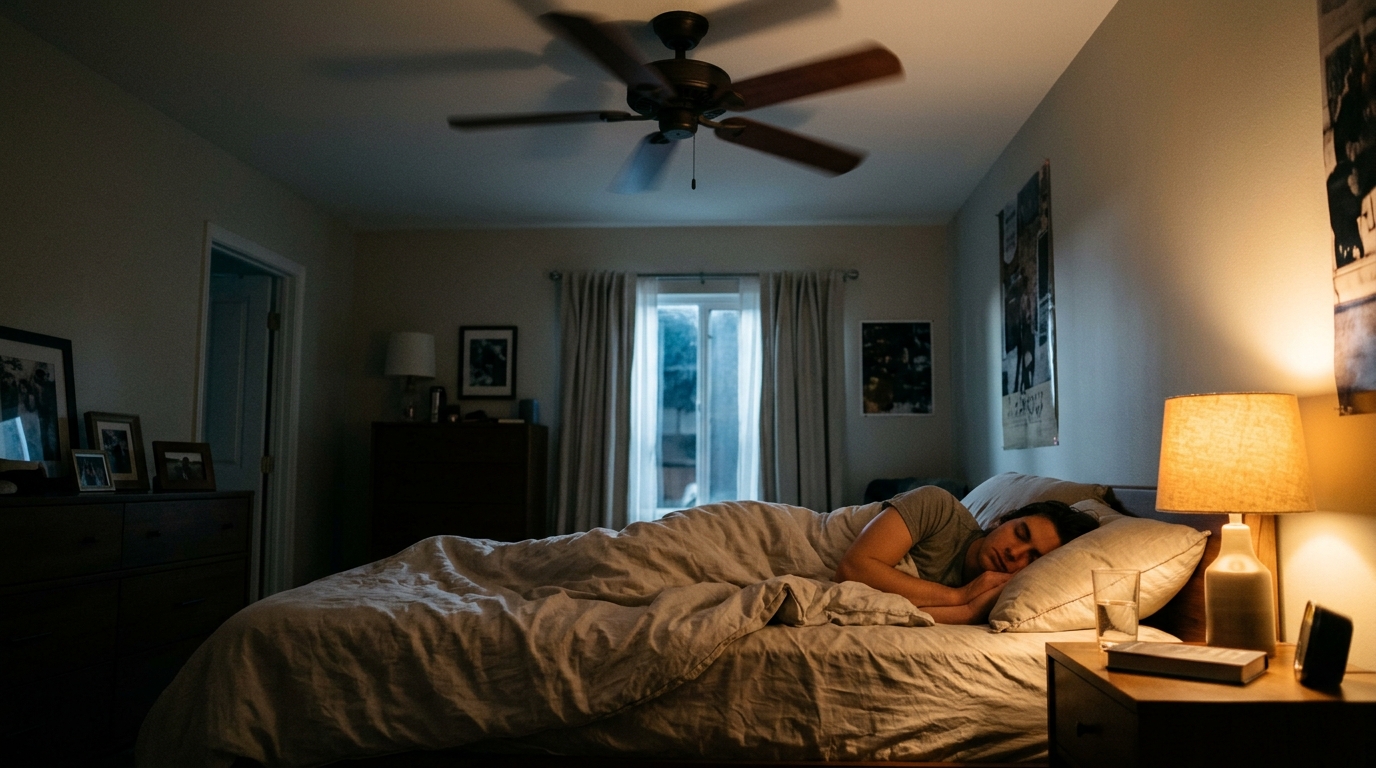
You are lying in bed, the bedroom is a stuffy 76 degrees, and the ceiling fan is spinning away above you. Yet somehow you still feel warm and a little sticky. The culprit is often something as simple as the little switch on the side of the fan motor. Run the blades in the wrong direction and the fan does far less for you than it should.
Here is the catch most homeowners miss: a ceiling fan does not lower the temperature of a room at all. It cools you, by moving air across your skin and speeding up evaporation. That means the direction, the speed, and even whether the fan is running when nobody is in the room all change how much energy you waste. A fan running in an empty room is just a small heater, since the motor adds a little warmth to the space.
In this post you will learn which direction to set your fan for summer nights, how to confirm it is correct in about 60 seconds, and how to pair the fan with your thermostat to cut cooling costs. We will also cover a DIY upgrade for fans that wobble, move too little air, or lack a remote, so you can get the most out of the equipment you already own.
What You’ll Need
Click on an item below to shop for the recommended items for this recipe on Amazon.
As an Amazon Associate, we earn from qualifying purchases.
How to Do It
- Turn the fan off and wait for the blades to stop completely. Never reverse a spinning fan.
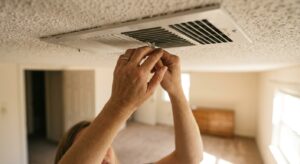
- Stand on a stable step stool and locate the small slide switch on the motor housing, just above or below the blades.
- Slide the switch so the fan spins counterclockwise when you look up at it. Turn the fan on low and confirm you feel air blowing straight down onto your face and shoulders.
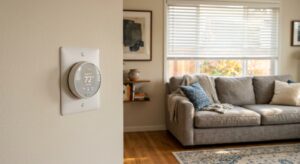
- Set the fan to medium speed for sleeping, then raise your thermostat setpoint about 4 degrees (for example from 72 to 76 degrees) at bedtime.
- Turn the fan off whenever you leave the room, since it only cools people and not the space.
- Check blade balance: wipe dust from every blade and tighten the blade screws and the downrod set screw. Use a balancing kit (about $5) if the fan wobbles.
- Measure your blade span. A bedroom up to 144 square feet works best with a 42 to 44 inch fan, and larger rooms need 52 inches or more for proper airflow.
- Replace a weak or noisy fan with an ENERGY STAR rated model with a DC motor, which uses up to 70% less energy than a standard AC motor fan and often includes a remote and reverse function.
- Install a wall-mounted or remote-controlled speed controller so you can adjust speed and direction without standing on a stool.
- Add a smart plug or smart switch with a schedule so the fan turns on 30 minutes before bed and shuts off automatically in the morning.
- Pair the fan with blackout curtains on east and west windows to keep the room from heating up before you even go to bed.
Why It Works: The Benefits
Raising your thermostat 4 degrees while running a fan can trim cooling costs by 10 to 15%, since each degree saves roughly 3 to 5% of AC energy.
The right blade direction can make you feel 3 to 4 degrees cooler within minutes, which helps you fall asleep faster on hot nights.
A ceiling fan on medium uses about 30 to 50 watts, which costs only a few cents per night compared with 3,000 watts or more for a central AC system.
When the fan carries part of the comfort load, your air conditioner cycles less, which can extend equipment life and reduce repair risk.
Cooler skin temperature and steady background airflow help your body reach the lower core temperature it needs for deep sleep.
💰 Savings Impact by Action
Raising the setpoint about 4 degrees while running a fan can cut cooling energy by roughly 10 to 15%.
Counterclockwise rotation delivers direct cooling airflow, letting you feel comfortable at a higher setpoint and avoid extra AC runtime.
A DC motor ceiling fan uses up to 70% less energy than a standard AC motor fan for the same airflow.
Turning the fan off in empty rooms avoids wasted electricity and reduces unnecessary heat from the motor.
🏠 Key Concepts Explained
The Science Behind It
A ceiling fan does not change the air temperature. It works because your body is constantly shedding heat to the air around it. When the air is still, a thin boundary layer of warm, humid air forms against your skin and slows heat loss. Moving air disrupts that layer and speeds up evaporation of sweat, which is the main way your body cools itself. This is the same wind chill effect you feel outdoors, only gentler.
Blade direction matters because of how the blades are pitched. Most fans have blades tilted at about 12 to 15 degrees. When they spin counterclockwise (viewed from below), that tilt works like a propeller and pushes air downward in a column. You feel that column as a direct breeze. Spin the blades clockwise and the same pitch pulls air upward, creating a gentle updraft that moves air along the walls and ceiling. That is useful in winter to redistribute warm air near the ceiling without a draft, but it gives you almost no cooling effect in summer.
The energy math also favors the fan. A typical ceiling fan uses 15 to 90 watts depending on speed, while a central air conditioner uses 2,000 to 4,000 watts while it runs. Because the fan makes you feel about 4 degrees cooler, you can raise the thermostat by that amount. The Department of Energy estimates that each degree of setback can save about 1 to 3% on cooling costs in many climates, and some sources cite 3 to 5% per degree, so a 4 degree bump adds up to meaningful savings over a season.
Frequently Asked Questions
▼ Why is my AC still running all day even after I tried these fixes?
A fan can only offset about 4 degrees of discomfort, so if your AC is still running constantly the underlying cause is often heat gain or duct and insulation problems. Check that your thermostat setpoint is actually higher at night, seal air leaks around windows and doors, and make sure your attic has at least R-38 insulation. If the system still never shuts off, have an HVAC technician check your refrigerant charge and airflow.
▼ Can renters do this without landlord permission?
Yes. Flipping the direction switch on an existing fan is not a modification, and it costs nothing. If the fan has no remote or reverse switch, you can use a freestanding or tower fan aimed at your bed instead, and ask your landlord before replacing any hardwired fixture.
▼ How long before I actually notice savings on my bill?
You will feel the comfort difference the very first night, and the savings show up on your next full billing cycle. A 4 degree thermostat increase combined with the fan typically trims summer cooling costs by 10 to 15%, which is about $10 to $25 per month for many households with a $100 to $170 cooling bill.
▼ What if my home is older than 30 years?
Older homes often have weaker insulation and more air leaks, so the fan will help but the AC may still work hard. Combine the fan with weatherstripping, attic insulation upgrades, and window shades to reduce heat gain. If your ceiling fan is original and wobbly or has a noisy AC motor, replacing it with an ENERGY STAR DC model can improve both comfort and efficiency.
▼ My fan has no reverse switch. What can I do?
Some older fans only spin one direction, and they are usually set to blow downward. You can test by holding a lightweight piece of paper under the blades and checking for a downward breeze. If you want a reversible fan, a replacement with a remote or reverse switch typically costs $60 to $150 and pays for itself in about two summers.
Quick Tips
- Remember the rule: counterclockwise in summer, clockwise in winter, and always check by feeling for a downward breeze on hot days.
- Use medium or low speed at night. Too much airflow on high can feel chilly or noisy and may wake you up.
- Raise your thermostat about 4 degrees when the fan is on to see real savings, otherwise the fan is just extra energy use.
- Turn the fan off when you leave the room, since it cools people and not spaces.
- Clean the blades every few months. Dust buildup throws off balance and reduces airflow.
Variations for Your Situation
- Apartment/Rental: Start with the existing fan’s direction switch since it costs nothing and needs no permission. If there is no ceiling fan, a quiet tower or pedestal fan ($30 to $60) aimed at the bed delivers the same cooling effect, and a small plug-in timer ($10) can shut it off after you fall asleep.
- Tight Budget (under $50): Flip the fan to counterclockwise, raise your thermostat 3 to 4 degrees at night, close blinds on sun-facing windows during the day, and turn the fan off when you leave. A fan balancing kit ($5) and a few minutes of cleaning round out the zero-cost approach and still deliver real savings.
- Older Home (pre-1980): Older houses often have fewer ceiling fans and weaker attic insulation, so add a fan in the bedroom first and prioritize sealing attic bypasses and adding insulation to R-38. A fan rated for the room size and installed on a fan-rated box makes the biggest comfort difference per dollar.