Here is a frustrating truth about summer energy bills: your air conditioner often runs hardest at the moment when the outdoor air is already doing you a favor. In much of the country, nighttime temperatures drop 15 to 25 degrees below the afternoon high. A home that baked all day can be flushed with that cool air for the cost of running a fan, which uses roughly 50 to 100 watts compared with 2,000 to 4,000 watts for a central air conditioner.
The catch is timing and consistency. Most people forget to turn the fans on at the right time, leave them running into the cold early morning hours, or shut everything off because they are worried about leaving windows open. A smart plug solves the discipline problem. You set it once, and your fans start when the outdoor air becomes useful and shut off before you wake up chilly or the morning heat returns.
This post walks through two ways to set this up: a five-minute quick fix using a basic smart plug and the fan you already own, and a more complete DIY setup that moves air through the whole house. You will get realistic savings numbers, a payback period measured in weeks, and answers to the questions people ask most, like whether this works in a humid climate or an older home.
What You’ll Need
Click on an item below to shop for the recommended items for this recipe on Amazon.
As an Amazon Associate, we earn from qualifying purchases.
How to Do It
- Buy a smart plug rated for at least 15 amps (1,800 watts) from a known brand and confirm it is compatible with your phone and any voice assistant you use.
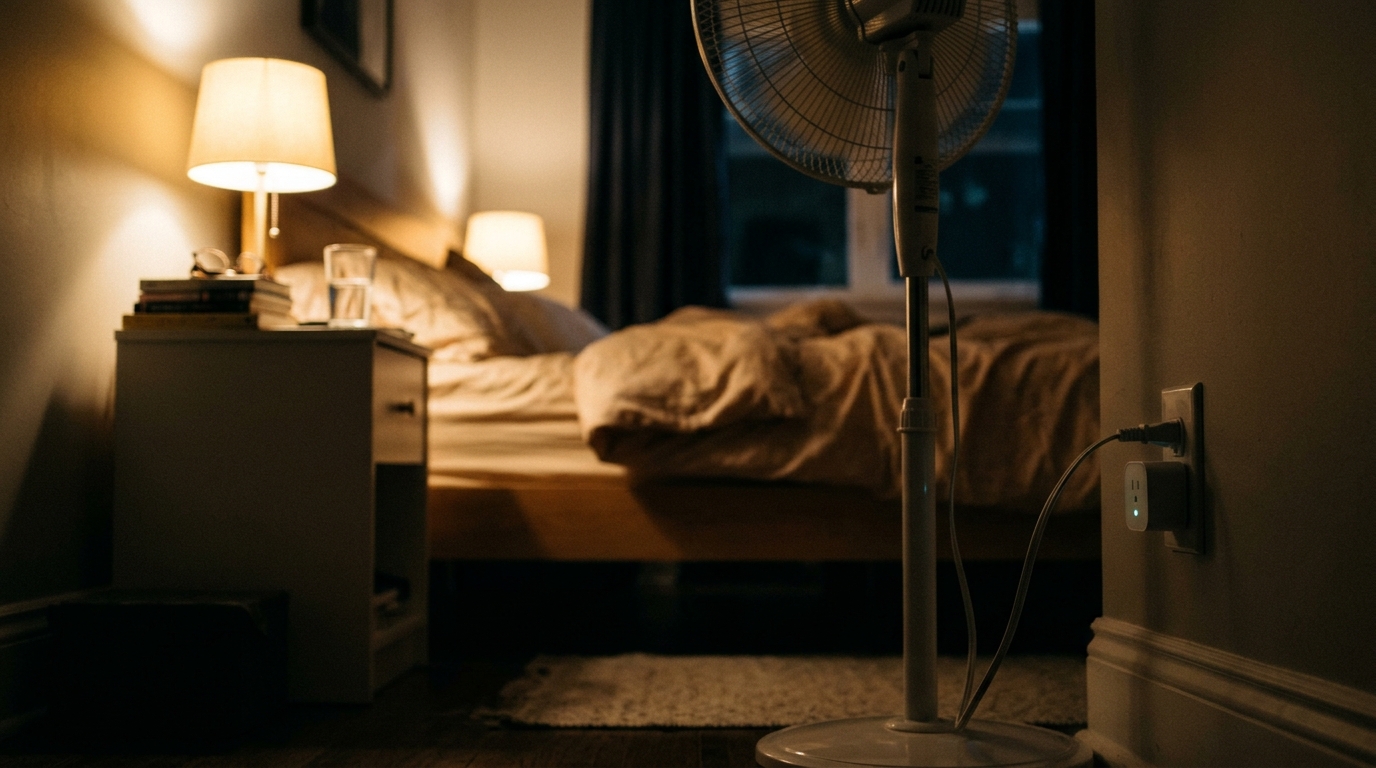
- Plug the smart plug into a wall outlet near your fan, then plug the fan into the smart plug. Make sure the fan’s own power switch is turned to ON so the plug controls power.
- Open the plug’s app, connect it to your 2.4 GHz Wi-Fi network, and name the device something clear like ‘Bedroom Fan’.
- Create a schedule that turns the fan on at about 9 or 10 PM and off at about 6 AM. Add a second schedule for weekends if your wake-up time changes.
- Open one window in the bedroom and crack a window or door elsewhere in the house, then check the bedroom temperature after two nights and adjust start and stop times to fit.
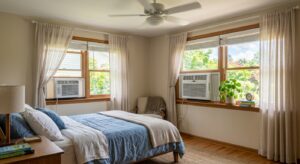
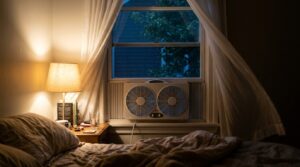
- Pick your exhaust window, ideally on the upper floor or the side of the house that heats up most during the day, and place a window fan facing OUT so it pushes hot indoor air outside.
- Open windows on the opposite, shadier side of the house on the lower floor so cool outdoor air enters, creating a cross-breeze path through the living space. Open interior doors along the path.
- Plug the exhaust fan into a smart plug and, if you have a second fan for the intake window, plug that into a second smart plug set to the same schedule.
- Set schedules based on your local overnight forecast: start the fans when the outdoor temperature drops below your indoor temperature (often 8 to 10 PM) and stop them around 5 to 6 AM, before the outdoor air starts warming again.
- Use a smart plug with temperature or sensor-based rules if available, or pair a separate indoor/outdoor thermometer, so fans only run when the outdoor air is at least 3 to 5 degrees cooler than inside.
- In the morning, close all windows and blinds by 8 or 9 AM to trap the cool air inside before the sun heats the exterior.
Why It Works: The Benefits
Starting the day with the house pre-cooled to 70 to 72 degrees can delay AC startup by 2 to 4 hours and cut daily compressor runtime by 15 to 25% on mild-to-warm days.
Two 75-watt fans running 7 hours use about 1 kWh, costing roughly 12 to 17 cents at the U.S. average of 12 to 17 cents per kWh.
Sleep research generally points to bedroom temperatures of about 60 to 67 degrees F as ideal. Moving cool outdoor air through the house helps you reach that range without a cold, noisy compressor cycling on and off.
A smart plug costs $8 to $15. If it saves even $10 to $20 per month during cooling season, it pays for itself in a few weeks.
Once scheduled, the setup runs every night without you remembering to flip a switch, and you can adjust it from your phone when the forecast changes.
💰 Savings Impact by Action
Pre-cooling the house overnight can cut daily air conditioner runtime by about 15 to 25% on mild-to-warm days.
Fans use roughly 50 to 100 watts versus 2,000 to 4,000 watts for central AC, which can lower overall summer cooling costs by 10 to 20%.
Delaying AC startup by a few hours can shift usage out of afternoon peak-rate periods, which matters if your utility uses time-of-use pricing.
Automated schedules eliminate fans running unnecessarily into cold mornings or humid periods, trimming wasted fan energy by around 30%.
🏠 Key Concepts Explained
The Science Behind It
Overnight fan cooling works because of two basic physics ideas: heat flows from warm to cool, and moving air speeds up that flow. During the day, your house’s walls, floors, and furnishings absorb heat from the sun and from the warm air around them. That stored heat is called thermal mass. At night, if the outdoor air is cooler than your indoor surfaces, bringing that air inside lets the thermal mass release its stored heat to the air, which the fans then carry out of the house.
The energy math strongly favors fans. A central air conditioner has to run a compressor to move heat from inside to outside, which takes 2 to 4 kilowatts. A fan just moves air, using 50 to 100 watts. When outdoor air is already cool enough to do the cooling job, you are effectively trading a power-hungry mechanical process for a nearly free natural one. That is why a cooling strategy built around the daily temperature swing can cut AC use meaningfully without sacrificing comfort.
Humidity is the limiting factor. Moving air across your skin feels cooling because it speeds evaporation, but it does not actually lower air temperature. If the overnight dew point is high, the air you pull inside carries moisture that your air conditioner must remove later, which can erase some of your savings. This is why overnight flushing works best in dry and moderate climates and in humid regions only on nights when the dew point stays below roughly 60 to 65 degrees F.
Frequently Asked Questions
▼ Why is my AC still running all day even after I set up the fan schedule?
Check that the overnight low is at least 8 to 10 degrees below your indoor temperature and that you closed windows and blinds by mid-morning. If the house is still warm by noon, the thermal mass may not be cooling enough, so try starting the fans earlier or adding a second exhaust fan. Also have your attic insulation and air sealing checked, since a leaky envelope will undo overnight gains quickly.
▼ Can renters do this without landlord permission?
Yes. A smart plug and a box or window fan require no installation or modifications, so renters can do this freely. Just use window fans that fit snugly without damaging the frame, and avoid anything that requires drilling or removing screens.
▼ How long before I actually notice savings on my bill?
You will usually feel the difference in indoor comfort within the first one or two nights. On your electric bill, expect to see the impact in the next billing cycle, typically a 5 to 15% drop in cooling-season usage depending on your climate and how consistently you close up the house in the morning.
▼ What if my home is older than 30 years?
Older homes often leak more air, which can actually help overnight flushing since cool air moves through more easily, but they also lose that cool air faster in the morning. Focus on closing windows, drawing blinds, and sealing obvious gaps around doors and windows. Also check that old outlets and wiring are in good condition before plugging in a smart plug and a fan.
▼ Is it safe to leave windows open overnight?
Open windows are a security and weather consideration. Use window locks or window stops that limit the opening to 4 to 6 inches, avoid ground-floor access points if you are concerned, and consider keeping fans on upper floors. If you are not comfortable, run a single fan in a closed room with a small cracked window.
Quick Tips
- Check the overnight low in your forecast before enabling the schedule. If the low stays above about 72 degrees F, the strategy will not help much and you can skip it.
- Place fans so the intake window is on the cooler, shadier side of the house, and the exhaust fan is on the hotter, sunnier side or an upper floor where heat collects.
- Use the smart plug’s ‘away’ or randomized schedule features sparingly if windows are open, so a lit-up house does not signal that nobody is home.
- Combine fan cooling with closing blinds and curtains on sun-facing windows by midday, which can reduce solar heat gain by up to 40 to 50%.
- Review your smart plug’s energy monitoring (if included) after a week so you can see actual kWh used and adjust runtimes.
Variations for Your Situation
- Apartment/Rental: Use one or two box fans on smart plugs and a window fan set to exhaust. A basic smart plug runs $8 to $15 and a box fan about $25 to $35, with no installation or permission needed. Place the fan in the window facing out in the hottest room and crack a window on the opposite side.
- Tight Budget (under $50): Buy a single smart plug for $10 and use a box fan you already own. Set a simple schedule from 9 PM to 6 AM and close windows and blinds each morning. This zero-install setup can still deliver 10% or more cooling savings.
- Older Home (pre-1980): Expect more natural air leakage and less insulation, so cool air escapes faster. Pair overnight fan cooling with weatherstripping ($10 to $30), closing blinds early, and running the exhaust fan on the upper floor to take advantage of the stack effect in multi-story homes.
- Hot-Humid Climate: Only run the schedule on nights when the dew point is below about 65 degrees F, which you can check in any weather app. On muggy nights, use a fan in the bedroom only, with windows closed, to improve comfort without pulling in moisture.