If you own a portable air conditioner, there is a good chance you have ignored a small button labeled Sleep, Night, or Eco on the remote. Most people set the unit to 68 degrees, crank the fan to high, and leave it that way until morning. That approach works, but it wastes electricity, makes the room colder than your body actually needs, and keeps the compressor and fan louder than necessary all night long.
Night mode, sometimes called Sleep mode, is designed around how your body temperature behaves during sleep. Your core temperature naturally drops in the first few hours of rest and then rises slightly toward morning. Sleep mode mimics this curve by nudging the setpoint up by roughly 1 degree F per hour for the first two to three hours, then holding steady. The result is a unit that works hard when you fall asleep and eases off once you are in deep sleep, using noticeably less energy.
In this post, we will walk through how night mode works, a no-cost quick fix to start using it tonight, and a DIY upgrade that pairs the setting with smart scheduling, better exhaust venting, and window sealing to get the most out of your portable unit. We will also cover what to do if your model does not have a sleep button at all.
What You’ll Need
Click on an item below to shop for the recommended items for this recipe on Amazon.
As an Amazon Associate, we earn from qualifying purchases.
How to Do It
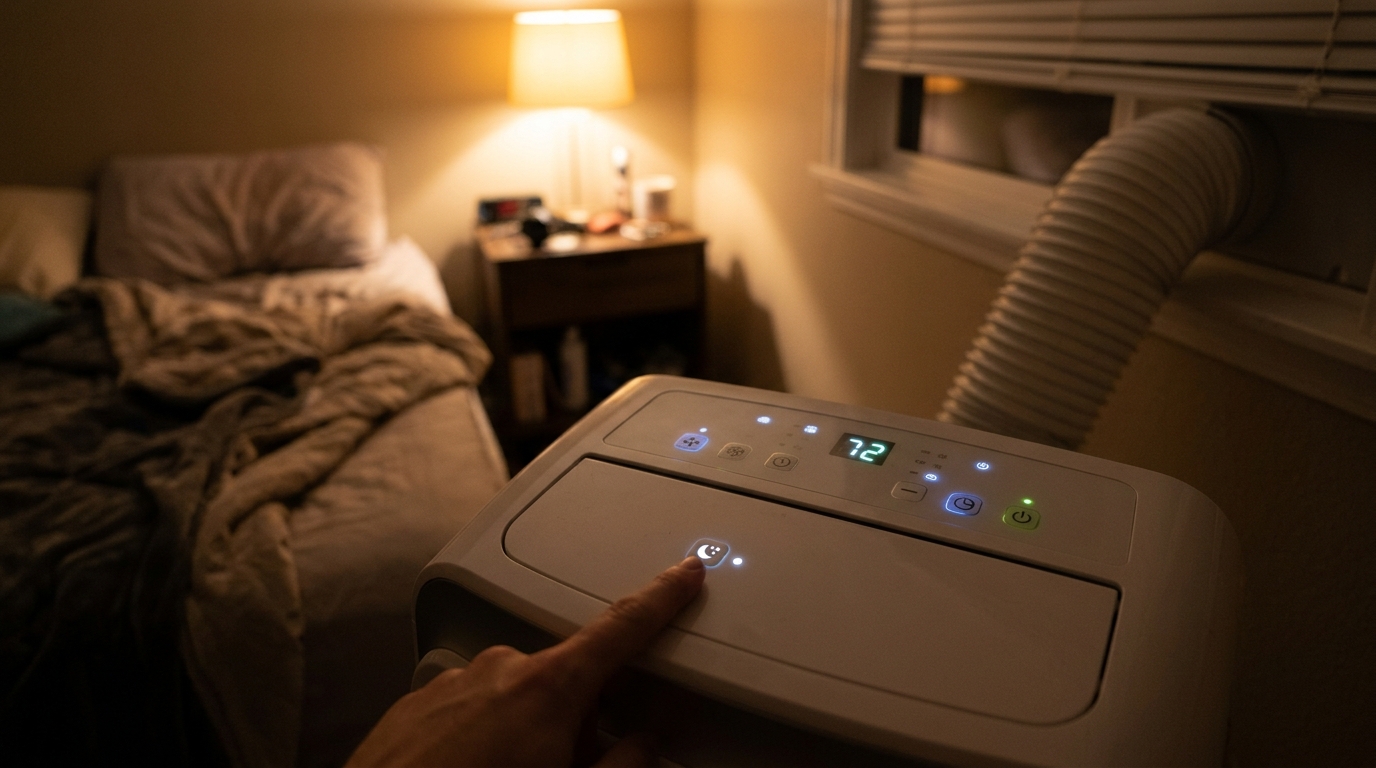
- Pick up the remote or open the control panel and locate the button labeled Sleep, Night, Eco Night, or a moon icon.
- Set your starting temperature to the number you would normally use at bedtime, typically 68 to 72 degrees F, before pressing the sleep button.
- Press the Sleep button once so the unit begins stepping the setpoint up by about 1 degree F per hour for the first 2 to 3 hours.
- Confirm the fan has dropped to low or auto speed. If it stays on high, switch it manually to low once the room reaches your target temperature.
- If your model has no Sleep button, manually raise the setpoint by 1 degree F when you get in bed and another degree before you fall asleep, then use the built-in timer to shut the unit off 1 to 2 hours before you wake.
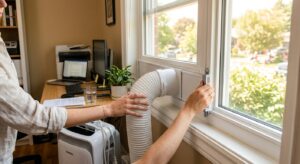
- Wrap the exhaust hose with an insulating sleeve or foam pipe insulation, which typically costs $15 to $30 and reduces heat radiating back into the room.
- Seal the window kit with weatherstripping foam tape and close any gaps around the panel with removable rope caulk, aiming for zero visible daylight around the adapter.
- Place the unit on a hard floor with at least 20 inches of clearance on all sides, and keep it out of direct sunlight so the intake air is as cool as possible.
- Clean or replace the washable air filter and brush off the rear condenser grille, since a dirty filter can cut cooling output by 5 to 15%.
- Add a smart plug rated for at least 15 amps (about $15 to $25) and schedule the unit to run from one hour before bed until 30 minutes before you wake up.
- Close the bedroom door and blinds, run a ceiling or box fan on low, and pair this with night mode so you can feel comfortable at a setpoint 2 to 3 degrees higher.
Why It Works: The Benefits
A typical 10,000 BTU portable AC draws 900 to 1,200 watts. Night mode can reduce runtime by 10 to 20% over a full night, saving roughly 0.7 to 1.5 kWh per night.
Once the setpoint is reached, sleep mode drops the fan to low and the compressor cycles less often, which can reduce perceived noise by several decibels during the hours you most want silence.
Sleep researchers generally recommend a bedroom temperature between 65 and 70 degrees F. A gradually rising setpoint avoids the overcooled, clammy feeling that wakes people in the early morning hours.
Fewer long run cycles and smoother temperature control reduce stress on the compressor, which can extend the life of a unit that typically lasts 5 to 8 years.
At 16 cents per kWh, saving 1 kWh per night over a 120-night cooling season is roughly $19 per year per unit, and more in high-rate regions or with older, less efficient models.
💰 Savings Impact by Action
A rising nighttime setpoint cuts compressor runtime by roughly 10 to 20% over a full night.
Wrapping the exhaust hose reduces heat radiated back into the room by up to 10% of cooling output.
Closing gaps around the window kit cuts warm air infiltration and saves around 5 to 10% on runtime.
Shutting the unit off 30 to 60 minutes before waking prevents overcooling and saves another 10 to 15%.
A clean filter restores airflow and can recover 5 to 10% of lost cooling efficiency.
🏠 Key Concepts Explained
The Science Behind It
Portable air conditioners work by moving heat from inside your room to the outdoors using a refrigerant cycle. The evaporator coil absorbs heat from the room air, the compressor pressurizes the refrigerant, and the condenser releases that heat, which is then carried outside through the exhaust hose. The harder the unit has to work against a temperature difference, the more electricity it uses. Night mode lowers that difference over time by letting the room drift slightly warmer, which directly reduces compressor workload.
The comfort side of the equation comes from human thermoregulation. During sleep, your metabolic rate drops about 10 to 15% and your core temperature falls by 1 to 2 degrees F. Because your body is producing less heat, a room that is a few degrees warmer in the second half of the night feels equally comfortable, and sleep studies show that excessive cold can fragment sleep as your body tries to stay warm.
Another factor is infiltration. Single-hose portable units exhaust conditioned air to the outside, creating negative pressure that pulls warmer air in through cracks, door gaps, and window seams. Sealing the window kit, insulating the hose, and keeping the door closed reduces this air exchange, so every kilowatt-hour you spend on cooling goes further. Combined with the nighttime outdoor temperature drop, these small changes compound into meaningful savings.
Frequently Asked Questions
▼ Why is my portable AC still running all night even in sleep mode?
Your unit is probably undersized for the room, or the window kit and door have significant air leaks. Check that the BTU rating matches the room, seal gaps with foam tape, and clean the filter. If the room is over 300 square feet, a single portable unit may never cycle off.
▼ Can renters use night mode and these upgrades without landlord permission?
Yes. Night mode is just a remote setting, and foam hose insulation, removable weatherstripping, and a smart plug leave no permanent marks. Use removable rope caulk or foam tape on the window kit so you can take everything down when you move out.
▼ How long before I notice savings on my electric bill?
You will see the difference in your next billing cycle if you use the unit nightly. A 10 to 20% reduction in nighttime runtime typically saves $5 to $15 per month for a single unit, depending on your electricity rate and how hot your climate is.
▼ What if my portable AC has no sleep or night mode button?
Many budget models skip this feature, but you can mimic it manually. Raise the setpoint by 1 degree F at bedtime and another degree about two hours later, or use a smart plug schedule to cycle the unit off for part of the night. A plug-in outlet thermostat is another low-cost workaround.
▼ Will night mode work in a very hot climate or during a heat wave?
It will still help, but you may need to start with a lower setpoint and a longer pre-cool period. During extreme heat, a unit working near its limit may not be able to maintain comfort as the setpoint rises, so consider shortening the setpoint drift or skipping night mode on the hottest nights.
Quick Tips
- Run night mode with the unit’s timer or a smart plug so it shuts off 30 to 60 minutes before you wake up and the room does not stay overcooled.
- Keep the exhaust hose as short and straight as possible, ideally under 5 feet, since each additional foot and bend reduces efficiency.
- Point a small fan at your body rather than lowering the AC setpoint, since air movement can make you feel 3 to 4 degrees cooler at almost no energy cost.
- Close the bedroom door and draw blackout curtains during the day so the room starts the evening with less stored heat.
Variations for Your Situation
- Apartment/Rental: Use night mode, a foam hose sleeve ($15 to $25), and removable window seal tape so you do not modify anything. A $15 smart plug adds scheduling, and everything can be removed at move-out.
- Tight Budget (under $50): Press the Sleep button, raise the setpoint manually if you lack one, run the unit on a timer, and use a $10 to $20 box fan to circulate air. Seal the window gaps with a $6 roll of foam tape for an extra boost.
- Older Home (pre-1980): Expect higher air leakage and weaker insulation, so seal the bedroom door and window gaps first, hang blackout curtains, and consider pre-cooling longer since walls and attic spaces hold more heat into the evening.
- Large or Open Bedroom: If the room is over 300 square feet, close it off from the rest of the house or consider a second unit, since a single portable AC will struggle to cycle off and night mode will have limited effect.