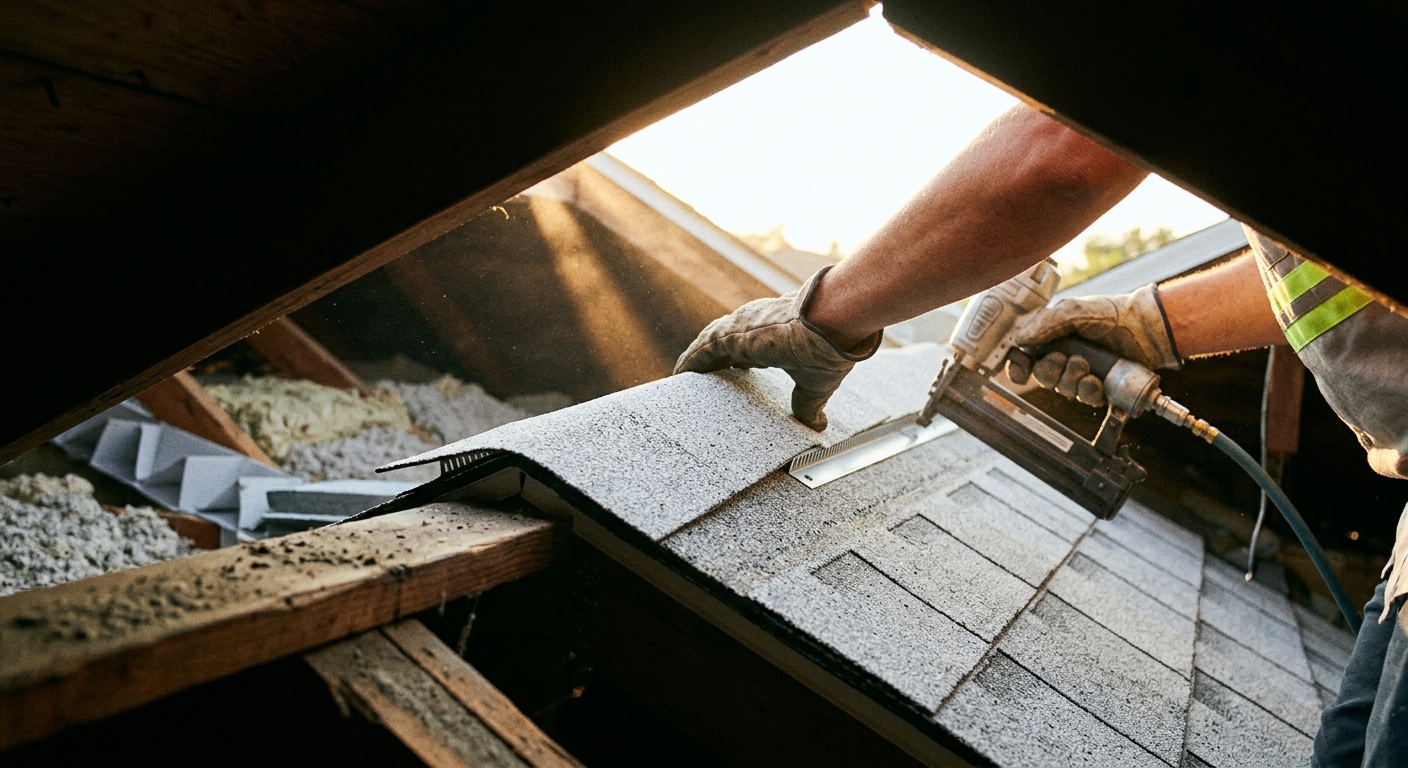
On a sunny summer afternoon, a standard dark asphalt shingle roof can reach surface temperatures of 150 to 190 degrees Fahrenheit. That intense heat radiates down into your attic, which can climb to 130 to 160 degrees, turning the space just above your ceiling into a furnace. Your air conditioner then fights that heat all evening, even after the sun goes down. For many homeowners, the roof is the single biggest source of unwanted heat gain in summer.
The good news is that roof science has advanced considerably. Cool roof coatings, reflective shingles, metal roofing, and even clay tile all have measurable impacts on how much heat enters your home. The EPA and Department of Energy have studied these options extensively, and the data is clear: the right roof choice can reduce attic temperatures by 20 to 40 degrees Fahrenheit and lower cooling energy use by 10 to 25% in hot climates. Even in moderate climates, the payback is real, especially for homes with limited attic insulation.
This post covers the building science behind roof heat gain, compares your best options by cost and impact, and gives you a clear path forward whether you are shopping for a new roof, have years left on your current one, or are renting and cannot change a thing. You will leave with specific numbers, actionable steps, and a clear sense of what is worth your money.
What You’ll Need
Click on an item below to shop for the recommended items for this recipe on Amazon.
As an Amazon Associate, we earn from qualifying purchases.
How to Do It
- Check your roof pitch first. If your roof is steeper than a 4:12 pitch, this is a job for a professional with fall protection equipment. For low-slope or flat roofs, proceed.
- Clean the roof surface thoroughly with a stiff brush and garden hose to remove dirt, moss, and algae. Allow it to dry completely, at least 24 hours. Coating over a dirty or wet surface will cause it to peel within one season.
- Inspect for any cracked, buckled, or missing shingles and repair them before coating. Reflective coating is not a patch for damaged roofing.
- Apply an ENERGY STAR qualified elastomeric or acrylic cool roof coating using a long-handled roller or airless sprayer. Products like Henry 287 or Gardner-Gibson White Top are commonly available at home improvement stores. Follow the manufacturer’s spread rate, typically 1 gallon per 75 to 100 square feet for the first coat.
- Apply a second coat after the first has dried, usually 4 to 8 hours. Two coats are essential for durability and maximum reflectance.
- Allow the coating to cure fully, typically 24 to 48 hours, before rain exposure. Check the product label for specific recoating intervals, usually every 5 to 10 years.
- Understand your material options and their real-world performance. Cool asphalt shingles (ENERGY STAR rated) reflect 25 to 40% of sunlight versus 5 to 15% for standard shingles. Metal roofing reflects 40 to 70% depending on color and finish. Concrete and clay tile reflect 30 to 50% and add beneficial thermal mass. Choose based on your climate, budget, and roof pitch.
- For the best cooling performance, prioritize light colors. A white or light gray metal roof can have a Solar Reflectance Index (SRI) above 70, compared to an SRI of around 20 to 30 for a light-colored asphalt shingle. In very hot climates, that difference is significant.
- Request products that are ENERGY STAR certified and ask contractors to provide the Solar Reflectance and Thermal Emittance values from the Cool Roof Rating Council (CRRC) product database before signing any contract.
- If you live in a mixed or cold climate, discuss the heating season tradeoff with your contractor. Cool roofs reduce winter solar heat gain, which can slightly increase heating costs. In climates above approximately 5,000 heating degree days (most of the northern US), weigh the full-year energy impact carefully.
- Ask about a radiant barrier deck sheathing upgrade at the same time. Products like LP TechShield add a reflective layer to the underside of the roof deck for around $0.10 to $0.20 per square foot in material costs, reducing attic radiant heat gain by an additional 20 to 40% beyond what the shingles alone achieve.
- After installation, verify the completed roof using a non-contact infrared thermometer on a sunny day. A properly installed cool roof should read at least 30 to 50 degrees Fahrenheit cooler than a standard dark roof under the same sun conditions.
- Purchase a perforated foil radiant barrier product, such as RadiantGUARD or Reflectix, from a home improvement store. Perforated versions allow moisture to escape and are recommended for most climates to prevent condensation issues.
- Wear a long-sleeved shirt, gloves, a dust mask rated N95, and safety glasses before entering the attic. Attic temperatures in summer can exceed 130 degrees, so work in the early morning and take breaks frequently.
- Staple the radiant barrier foil to the underside of the roof rafters with the shiny side facing down toward the attic floor. This position creates an air gap between the foil and the roof deck, which is essential for the radiant barrier to function. Do not lay it flat on top of your insulation since dust accumulation will quickly reduce its effectiveness.
- Overlap seams by at least 2 inches and staple every 12 to 18 inches along the length of each rafter bay. Avoid covering soffit vents or ridge vents since attic ventilation must remain unobstructed.
- The Florida Solar Energy Center and DOE both report that properly installed radiant barriers reduce attic temperatures by 10 to 20 degrees Fahrenheit and can cut cooling costs by 5 to 10% in hot sunny climates, with greater savings in homes with ducts in the attic.
Why It Works: The Benefits
The DOE estimates that cool roofs can reduce cooling energy use by 10 to 25% in hot sunny climates. For a home spending $200 per month on cooling in summer, that translates to $20 to $50 per month in savings during peak months.
Reflective roof surfaces and cool coatings can reduce peak attic temperatures by 20 to 40 degrees Fahrenheit, which directly reduces heat stress on HVAC ductwork, stored items, and attic-mounted equipment.
Roofing materials that run cooler experience less thermal expansion and contraction. Studies show cool roofs can last 20 to 40% longer than standard roofs in hot climates because repeated heat cycling is the primary cause of shingle cracking and seam failure.
Rooms directly below the attic, especially top-floor bedrooms, stay measurably cooler. Homeowners switching to cool roofs commonly report second-floor rooms dropping 3 to 7 degrees Fahrenheit on hot afternoons without changing thermostat settings.
Many utility companies offer rebates of $0.05 to $0.20 per square foot for ENERGY STAR qualified cool roof products, which can reduce upfront costs by $100 to $500 on a typical installation. Some states also offer income tax credits for qualifying reflective roofing.
💰 Savings Impact by Action
An ENERGY STAR qualified reflective coating reduces roof surface temperatures by 50 to 80 degrees Fahrenheit and cuts cooling energy use by 10 to 25% in hot climates.
A properly installed attic radiant barrier reduces radiant heat transfer to attic insulation and ductwork, saving 5 to 10% on cooling costs in sunny climates.
A light-colored metal roof with a high Solar Reflectance Index reflects 40 to 70% of sunlight and can reduce cooling loads by 15 to 25% compared to standard asphalt shingles.
Lowering attic temperature by 30 degrees reduces heat gain into attic ductwork, recovering up to 30% of cooling output that would otherwise be lost before reaching living spaces.
Clay or concrete tile delays peak heat transfer by 3 to 5 hours, reducing peak cooling load by 10 to 15% and allowing smaller or less frequently cycling AC equipment.
🏠 Key Concepts Explained
The Science Behind It
Your roof intercepts solar radiation that arrives with an intensity of roughly 250 to 350 BTUs per square foot per hour on a clear summer afternoon. A dark asphalt shingle with a solar reflectance of 0.08 absorbs about 92% of that energy, converting it directly into heat in the roof deck. A white cool roof coating with a reflectance of 0.75 reflects 75% of the same incoming radiation, meaning the roof deck absorbs about 4 times less energy. Since surface temperature is directly related to the energy absorbed, this physics explains why two roofs side by side can differ by 50 to 80 degrees Fahrenheit at peak sun.
Once the roof deck heats up, it transfers heat into the attic by two mechanisms: conduction through the wood and convection from the hot surface into attic air. But the dominant pathway in most attics is radiation. The hot roof deck emits infrared radiation downward toward the attic floor insulation and any ductwork below it. Because radiant heat transfer follows the Stefan-Boltzmann law and scales with temperature to the fourth power, a roof deck at 170 degrees Fahrenheit emits roughly twice as much radiant heat as one at 120 degrees. This is why reducing roof surface temperature has an outsized impact on attic conditions compared to what a simple linear relationship would suggest.
Thermal mass adds a time dimension to this equation. Heavy clay or concrete tiles can store large amounts of heat energy in their mass during the day, limiting peak surface temperature rise. This stored heat is then released slowly over the evening and night, when outdoor temperatures are cooler and ventilation is more effective at carrying heat away. In practical terms, a tile roof may transfer its peak heat load into the attic at 8 p.m. rather than 3 p.m., which is far easier for an air conditioner to manage since outdoor temperatures drop sharply after sunset and the AC no longer has to fight both solar gain and high outdoor air temperature simultaneously.
Frequently Asked Questions
▼ Will a cool roof or light-colored roof hurt my heating bills in winter?
Yes, slightly. Cool roofs reflect some beneficial solar heat gain in winter, which can increase heating costs by 2 to 8% in cold climates. However, in most US climates south of roughly the Mason-Dixon line, the summer cooling savings outweigh the winter heating penalty significantly. In northern states like Minnesota, Wisconsin, or Maine where heating dominates the annual energy budget, do the full-year math using your specific climate data from the DOE’s cool roof calculator before committing.
▼ My attic is already 130 degrees in summer. Does adding attic insulation work better than a cool roof?
Both help, but they address different problems. Attic insulation slows the rate at which heat crosses from the attic into your living space, which is valuable regardless of attic temperature. A cool roof reduces the attic temperature itself, which also reduces heat gain through insulation and protects any ductwork in the attic. The highest-impact combination is improved roof reflectance plus proper insulation levels (R-38 to R-60 depending on climate zone) since they work together and compound each other’s benefits.
▼ How do I know if my current roof is a cool roof or a standard roof?
Look up your roof product in the Cool Roof Rating Council database at coolroofs.org using the product name from your home inspection or permit records. If you do not have that information, use a non-contact infrared thermometer on a sunny afternoon and point it at your roof surface from a safe ground-level angle. A reading above 140 degrees Fahrenheit on a clear 90-degree day is a strong indicator of a standard low-reflectance roof.
▼ I rent my home and cannot change the roof. Is there anything I can do?
Yes. Start with interior window treatments since cellular shades, reflective blinds, or window film on south and west-facing windows can reduce solar heat gain through glass by 40 to 70%, which addresses a major portion of your cooling load that is unrelated to the roof. You can also ask your landlord to authorize a radiant barrier installation in the attic since it is inexpensive and non-destructive, framing it as protecting their property from heat damage.
▼ The cool roof coating I applied last summer is already looking dirty and discolored. Did I waste my money?
Dirt accumulation is the main long-term performance concern with white elastomeric coatings since a visibly dirty coating can lose 20 to 40% of its initial reflectance. Rinse the coating with a garden hose at low pressure once or twice a year to restore most of its reflectance. Some premium products include antimicrobial additives that resist algae and dirt bonding, and these are worth the small price premium for longevity.
Quick Tips
- Even if you cannot change your roof, painting your attic floor insulation with a radiant barrier paint or stapling foil under the rafters costs under $300 and delivers measurable results in hot sunny climates.
- Check the ENERGY STAR Roof Products list at energystar.gov before purchasing any shingles or coatings. Products are independently tested and must meet minimum reflectance thresholds to qualify.
- Combine a cool roof with proper attic ventilation (1 square foot of vent area per 150 square feet of attic floor) to flush out residual heat and compound your savings. Ventilation alone can drop attic temperatures by 10 to 20 degrees.
- If your HVAC ducts run through the attic, improving roof reflectance or adding a radiant barrier dramatically reduces duct heat gain, which can waste 20 to 30% of your cooling output before conditioned air ever reaches your living space.
Variations for Your Situation
- Apartment or Renter: You cannot change the roof, but you can significantly reduce heat entering your unit. Install cellular honeycomb shades on south and west-facing windows, which reduce solar heat gain through glass by 40 to 70% and cost $30 to $80 per window. Apply window film rated for solar heat rejection, available at home improvement stores for $25 to $50 per window. If you have access to a flat roof deck, ask your landlord about a white elastomeric coating since it is inexpensive and non-destructive and you can offer to cover the cost in exchange for a rent credit.
- Tight Budget (under $200): Focus on the attic radiant barrier approach using foil insulation stapled under your rafters. Materials for a 1,000 square foot attic cost $100 to $150 at any home improvement store and the installation requires only a staple gun and utility knife. In hot climates, the Florida Solar Energy Center found this single step reduces cooling costs by 5 to 10% with a payback period of 1 to 2 years.
- Older Home (pre-1980): Homes of this era typically have thinner roof decking, older ventilation designs, and less attic insulation, which means heat transfer into living spaces is more severe. Before investing in roofing changes, assess whether your attic has adequate ventilation since many older homes are severely under-vented. A qualified roofer can check your net free vent area inexpensively. Pair any roof upgrade with an attic insulation increase to R-38 minimum since the combination dramatically outperforms either measure alone in older construction.