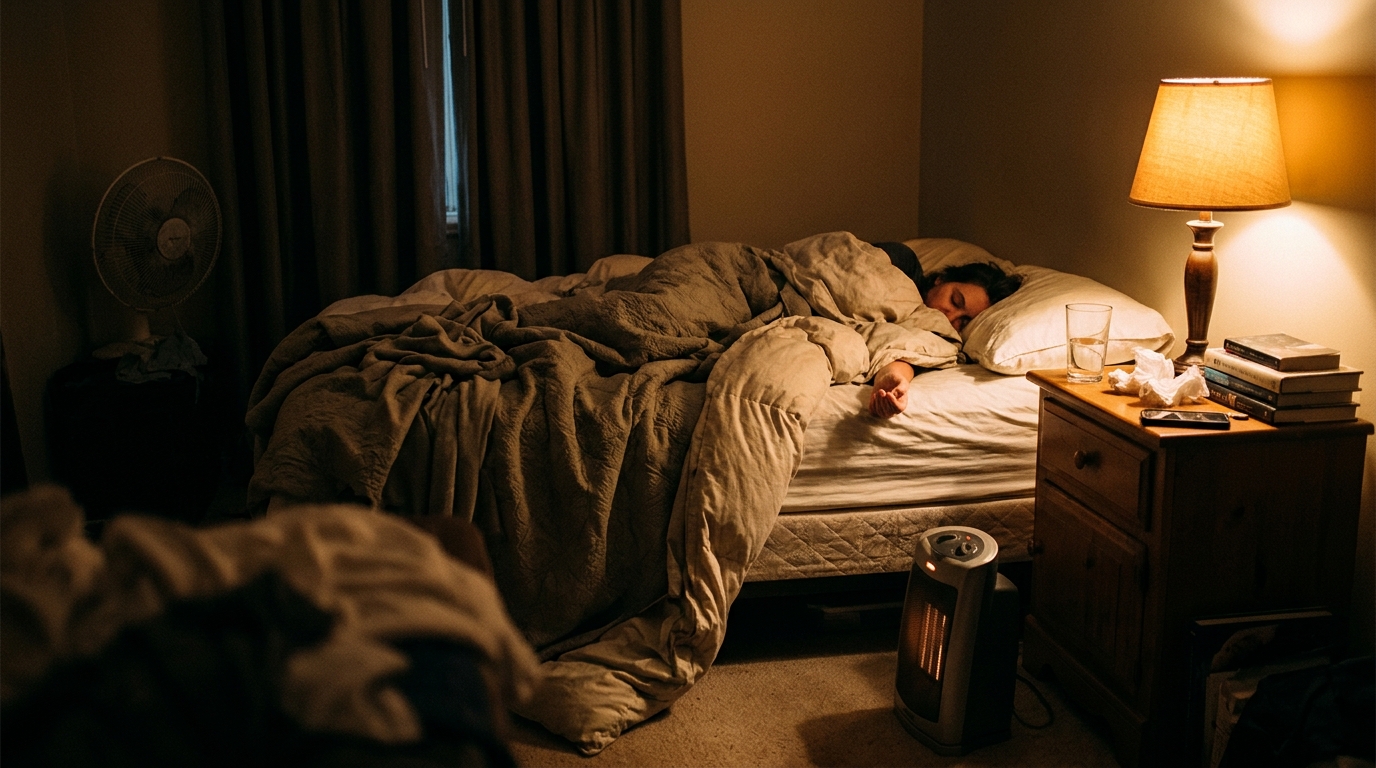
If you wake up damp, tangled in sheets, and kicking off the blanket at 3 a.m., your bedroom may be working against you. Night sweats have many causes, including hormones, medications, stress, and alcohol, but a bedroom that traps heat and humidity turns a mild warm spell into a soaked-sheet event. Research on sleep thermoregulation shows your core body temperature needs to drop about 1 to 2 degrees Fahrenheit to fall and stay asleep, and a warm, stuffy room fights that process all night.
The usual advice is to blast the whole-house AC overnight, which is expensive and often does not help. Cooling an entire 2,000 square foot home to 62 degrees can raise your cooling bill by 15 to 30 percent, while the real problem is only the few cubic feet around your body. A smarter bedroom setup targets the sleep zone instead of the whole house, so you stay cooler for less money.
This post walks through why night sweats change what an ideal bedroom looks like, covering temperature, humidity, bedding, airflow, and thermostat strategy. You will get a zero-cost quick fix you can start tonight, a more thorough DIY upgrade, and answers to the questions people actually search for. If your night sweats are frequent, severe, or come with fever, unexplained weight loss, or other symptoms, talk to a doctor, because a cooler room helps but is not a diagnosis.
What You’ll Need
Click on an item below to shop for the recommended items for this recipe on Amazon.
As an Amazon Associate, we earn from qualifying purchases.
How to Do It
- Set the bedroom to 65 to 68 degrees F at bedtime. If your thermostat is whole-house, lower it 2 to 3 degrees only during sleep hours rather than all day.
- Close blinds and curtains on sun-facing windows by mid-afternoon so the room does not store heat before you go to bed.
- Place a box or tower fan so it moves air across the bed, not directly at your face, and run it on low or medium.
- Strip the bed down to breathable layers, such as a cotton or linen sheet and a lightweight blanket you can kick off, instead of a thick synthetic comforter.
- Keep a dry towel or spare pillowcase on the nightstand so you can swap damp linens quickly without fully waking up.
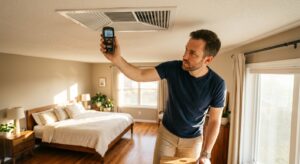
- Install a programmable or smart thermostat and schedule a pre-cool starting 30 to 60 minutes before bed, then hold 66 to 68 degrees until morning.
- Add blackout or insulated cellular shades to west and south windows. They can cut solar heat gain through glass by 20 to 40 percent.
- Swap bedding for moisture-wicking, breathable materials such as cotton percale, linen, or bamboo-viscose, and replace heat-trapping memory foam toppers with a latex or gel-infused option.
- Place a hygrometer in the bedroom. If humidity stays above 55 percent, add a 35 to 50 pint dehumidifier or run the AC in dry mode.
- Seal gaps around the bedroom door, window frames, and any outlets on exterior walls with weatherstripping and caulk to stop hot air infiltration.
- If the room is still warm, consider a portable AC or a 5,000 to 8,000 BTU window unit sized to just the bedroom instead of cooling the whole house.
Why It Works: The Benefits
Sleeping in a 65 to 68 degree room with good airflow and low humidity helps many people stay asleep longer and wake less often drenched.
Each degree you raise the whole-house setpoint saves about 3 percent on cooling, so cooling just the bedroom and using fans can trim 5 to 15 percent off summer bills.
Less sweat soaking into mattresses and pillows means fewer odors and less moisture for dust mites and mildew, extending mattress life.
Holding bedroom humidity at 40 to 50 percent reduces that clammy feeling and discourages mold growth on walls and window frames.
The same layered bedding and airflow strategies keep you comfortable in winter too, so you are not running the heat harder than needed.
💰 Savings Impact by Action
Cooling just the sleep zone instead of the whole house can trim cooling costs by roughly 5 to 15 percent.
Raising the daytime whole-house setpoint 3 degrees saves about 9 to 10 percent on cooling, per DOE estimates.
Insulated shades or blackout curtains can reduce solar heat gain through windows by 20 percent or more.
Sealing bedroom gaps and cracks cuts infiltration and can reduce heating and cooling loads by about 10 percent.
Using a fan lets you feel 3 to 5 degrees cooler, allowing a higher thermostat setting at about 8 percent less cooling energy.
🏠 Key Concepts Explained
The Science Behind It
Your body sheds heat in four ways: conduction into the mattress, convection into the surrounding air, radiation to cooler surfaces, and evaporation of sweat. During sleep, your core temperature naturally falls, and a bedroom that is too warm or too humid slows every one of those pathways. When the heat cannot leave fast enough, your body responds by sweating more, and if that sweat cannot evaporate, it simply soaks into your bedding and leaves you feeling worse.
Humidity is the quiet culprit. Evaporative cooling depends on the difference between the moisture on your skin and the moisture in the air. At 40 to 50 percent relative humidity, sweat evaporates efficiently and pulls heat off your body. At 60 percent or higher, evaporation stalls, which is why a 72 degree humid room can feel worse than a 76 degree dry one. This is also why simply lowering the thermostat sometimes disappoints: if the AC is short-cycling in a humid space, it cools the air without removing enough moisture.
From an energy standpoint, whole-house cooling is a blunt tool. The DOE estimates roughly 3 percent savings per degree of setpoint increase over an 8-hour period, so letting empty rooms run warmer while cooling only the bedroom captures real savings. Targeted measures, like shading west windows, using airflow to boost evaporative cooling, and choosing breathable bedding, reduce the heat load on the person rather than the entire building, which is the most efficient place to intervene.
Frequently Asked Questions
▼ Why am I still sweating even though my bedroom is set to 65 degrees?
Check humidity first, because a cold but damp room still prevents sweat from evaporating. Buy a $10 hygrometer, and if readings exceed 55 percent, add a dehumidifier or run the AC in dry mode. Also rule out heavy synthetic bedding and a memory foam mattress, which can trap heat regardless of room temperature.
▼ Can renters do this without landlord permission?
Yes, most of it. Fans, breathable bedding, tension-rod blackout curtains, a plug-in hygrometer, and a portable dehumidifier or window AC all require no permanent changes. Skip caulking and thermostat swaps unless your lease allows it, and use removable weatherstripping tape for door gaps.
▼ How long before I notice savings on my bill?
Comfort improvements often show up in one or two nights, while bill savings appear in your next cycle. If you raise the whole-house setpoint 2 to 3 degrees during the day and cool only the bedroom at night, expect roughly 5 to 15 percent lower cooling costs. A programmable thermostat typically pays for itself in 6 to 12 months.
▼ What if my home is older than 30 years?
Older homes usually have leakier windows, less attic insulation, and uneven room temperatures, so the bedroom may hold more heat. Prioritize shading windows and sealing gaps first, then check attic insulation depth, since adding to R-38 can cut upstairs heat gain significantly. A portable or window AC sized for just the bedroom is often more practical than overhauling old ductwork.
▼ When should I see a doctor about night sweats?
If you are soaking through sheets multiple nights a week, have fever, unexplained weight loss, or sweats that continue after you have cooled the room and changed bedding, get medical advice. Environmental fixes help comfort and energy use, but they will not treat an underlying health cause.
Quick Tips
- Run a fan on a timer or low speed all night, since constant gentle airflow beats an on-off blast that wakes you up.
- Wash bedding weekly in warm water, since sweat residue and body oils trap heat and odor in the fibers over time.
- Avoid alcohol and heavy meals within 2 to 3 hours of bed, since both raise body temperature and can trigger sweats independent of your room.
- Wear loose, lightweight sleepwear in natural fibers or go without, since tight synthetics trap moisture against your skin.
Variations for Your Situation
- Apartment/Rental: You cannot change central HVAC, so use a tower or box fan ($25 to $50), tension-rod blackout curtains ($20 to $40), cotton or linen sheets ($60 to $120), and a small 20 to 35 pint dehumidifier ($130 to $200) if humidity runs high.
- Tight Budget (under $50): Close blinds by mid-afternoon, lower the bedroom or whole-house thermostat 2 to 3 degrees at bedtime, run a fan on low, and switch to a single cotton sheet plus a light blanket. Add a $10 hygrometer to find out if humidity is the real issue.
- Older Home (pre-1980): Prioritize sealing window and door gaps, shading west-facing glass, and checking attic insulation. A bedroom-sized 5,000 to 8,000 BTU window AC ($150 to $300) often outperforms trying to push cool air through leaky, undersized ductwork.