If you live in the Gulf Coast, Southeast, Pacific Northwest, or anywhere that sees long stretches of muggy weather, insulation is not a simple upgrade. The wrong product installed the wrong way can quietly absorb moisture, lose its insulating power, and become a breeding ground for mold inside your walls or attic. Most insulation guides are written for dry or mixed climates, leaving humid-climate homeowners with advice that simply does not apply to their conditions.
Humidity changes the rules. In a hot-humid climate, moisture moves from outdoors to indoors for much of the year, driven by vapor pressure. In a mixed-humid climate, that direction reverses seasonally. Each scenario demands insulation materials and installation strategies that manage moisture rather than fight it or, worse, trap it. The good news is that several modern insulation options are specifically well-suited to these conditions, and some of them are DIY-friendly with payback periods under three years.
This guide breaks down the best insulation types for high-humidity environments, explains the building science behind each, and gives you clear approaches whether you want a quick weekend upgrade or a full professional installation. You will also find real cost and savings numbers so you can make a confident decision for your home.
What You’ll Need
Click on an item below to shop for the recommended items for this recipe on Amazon.
As an Amazon Associate, we earn from qualifying purchases.
How to Do It
- Identify your highest-priority areas: attic hatch, rim joists in crawl space or basement, and any exposed foundation walls. These are common weak points in humid climates where moisture and heat enter together.
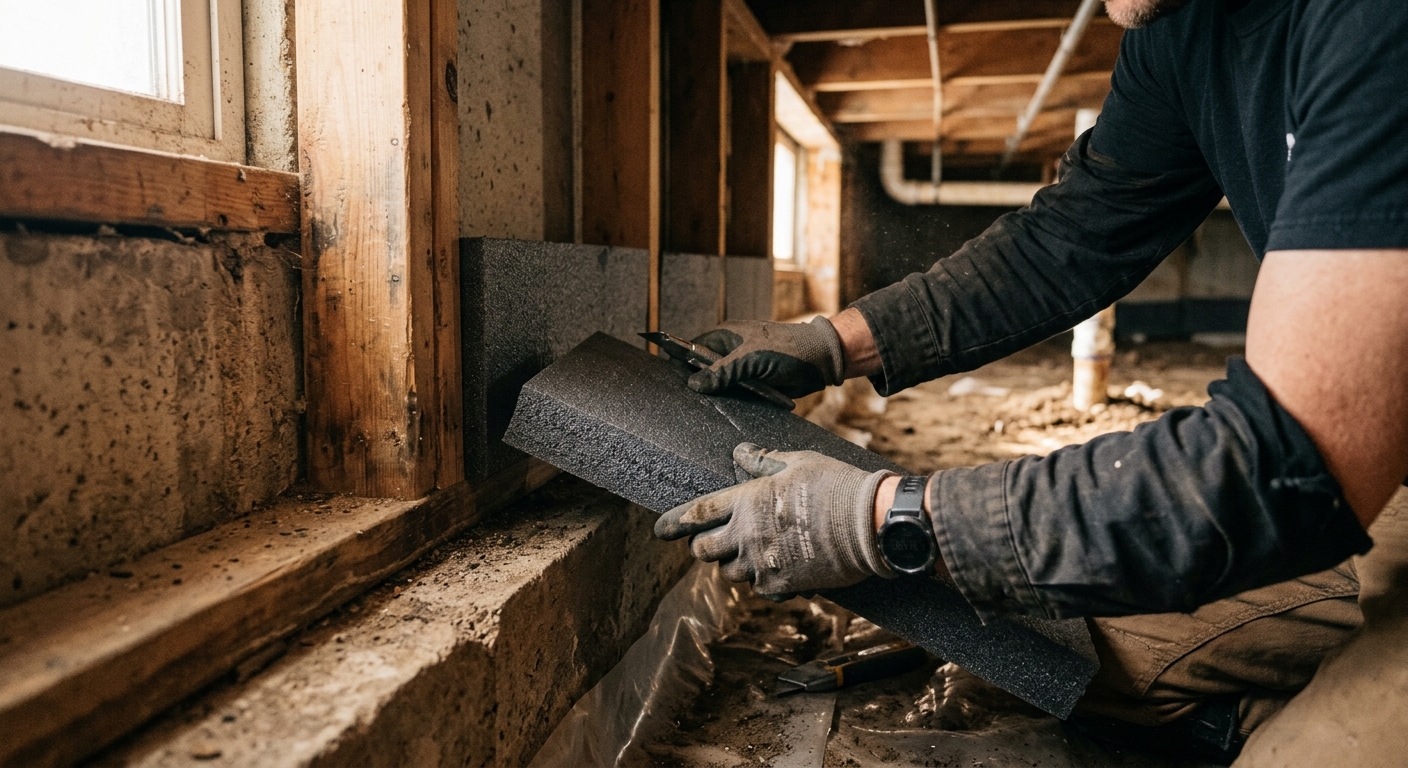
- Purchase polyisocyanurate (polyiso) rigid foam board, rated at R-6 to R-6.5 per inch. For crawl spaces subject to direct moisture contact, choose XPS (extruded polystyrene) rated at R-5 per inch, since polyiso can lose R-value when cold and damp.
- Measure and cut foam board panels to fit snugly using a utility knife and straightedge. Wear gloves and safety glasses. Cut on the score-and-snap method for clean edges.
- Press panels firmly into rim joist bays or against foundation walls. Use expanding spray foam in a can to seal all perimeter gaps and seams, creating both an air seal and a continuous thermal barrier.
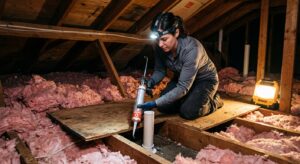
- For the attic hatch, cut a piece of rigid foam 2 inches thick and attach it to the back of the hatch door with construction adhesive rated for foam. Add self-adhesive foam weatherstripping around the hatch frame perimeter to eliminate air bypass.
- Verify your crawl space has a ground vapor barrier (6-mil poly sheeting minimum) covering all exposed soil. Seal seams with contractor tape. This is essential in humid climates before or alongside any insulation work.
- Before adding any insulation, air-seal the attic floor thoroughly. Use canned spray foam to seal around all penetrations including light fixtures, plumbing stacks, electrical wires, and HVAC boots. Use foam backer rod plus acoustical sealant for gaps wider than 1 inch.
- Install cardboard or foam ventilation baffles (rafter vents) at every eave to maintain airflow from soffit vents to ridge vent. In humid climates, attic ventilation is critical to removing moisture-laden air.
- Rent a blower machine from a home improvement store (typically free with purchase of 10 or more bags of insulation). Most stores provide a how-to guide and the machine at no charge.
- Install depth markers (ruler stakes) across the attic floor so you can verify you are reaching the correct depth. For Climate Zones 2 and 3 (most of the Southeast and Gulf Coast), DOE recommends R-38 to R-60 in the attic, which is 10 to 16 inches of blown fiberglass.
- Begin blowing insulation from the far end of the attic and work toward the hatch. Keep the fill tube close to the surface and move slowly for even coverage. Use a rake to level and fill thin spots.
- After completing the job, seal the attic hatch with rigid foam board and weatherstripping as described in the Quick Fix approach. Check soffit vents from below to confirm they are not blocked by insulation.
- Get at least two quotes from licensed spray foam contractors. Ask specifically whether they use HFO-blown closed-cell foam, which has a lower global warming potential and maintains R-value better than older HFC-blown products.
- Decide between a vented attic (foam on attic floor) and an unvented conditioned attic (foam on underside of roof deck). In hot-humid climates, conditioned unvented attics keep HVAC ducts inside conditioned space, improving system efficiency by 10 to 20%.
- Have the contractor apply a minimum of 2 inches of closed-cell spray foam to surfaces, which achieves approximately R-13 and meets the Class II vapor retarder threshold. For full thermal performance on roof decking, 3 to 4 inches (R-20 to R-26) is typical before adding additional insulation.
- Vacate the home during application and for 24 hours after. Closed-cell spray foam off-gases during curing and requires proper ventilation and respiratory protection for installers.
- After curing, have the contractor or a third-party inspector verify coverage depth using a probe tool, and confirm no gaps exist around penetrations, corners, or framing members.
- Schedule a blower door test after the work is complete to confirm the air sealing performance. A well-executed spray foam job should reduce air changes per hour (ACH) by 30 to 60%, which directly lowers humidity infiltration and cooling load.
Why It Works: The Benefits
Properly selected insulation in a humid climate reduces cooling load by 15 to 30% annually. A significant portion of that load in humid regions is latent (moisture-related), so insulation that also air-seals cuts both sensible and latent demand on your AC system.
Moisture-resistant insulation eliminates the damp conditions mold needs to grow. Remediation for mold in walls or attics averages $1,500 to $5,000, making the right insulation choice a strong preventive investment.
Humid-climate insulation that seals air leaks reduces the influx of muggy outdoor air, allowing your AC to maintain more stable temperature and humidity. Homes with spray foam insulation typically maintain indoor relative humidity 10 to 15 percentage points lower than comparable homes with fiberglass batts.
When insulation reduces latent load, your air conditioner runs shorter cycles and removes less moisture per hour. This reduces compressor wear and can extend HVAC system life by 2 to 4 years compared to an under-insulated, leaky home.
Moisture-resistant insulation holds its thermal performance for decades. Fiberglass batts in a humid attic can degrade to half their rated R-value within 10 years due to moisture and compression, while closed-cell spray foam retains over 95% of its initial R-value for 30 or more years.
💰 Savings Impact by Action
Comprehensive attic and crawl space air sealing reduces conditioned air loss and moisture infiltration by up to 20%, directly lowering both sensible and latent cooling loads.
Replacing a poorly insulated vented attic with a conditioned unvented attic using closed-cell spray foam on the roof deck reduces total HVAC energy use by 20 to 30% in hot-humid climates by keeping ducts inside conditioned space.
Installing rigid foam board at crawl space rim joists and attic hatch reduces heat gain and moisture entry at two of the highest-impact bypass locations, saving 10 to 15% on heating and cooling annually.
Upgrading attic insulation to DOE-recommended levels of R-38 to R-60 for humid Climate Zones 2 and 3 reduces cooling energy use by 15 to 20% compared to a home with degraded or below-code attic insulation.
Correct vapor retarder placement and moisture-resistant insulation selection prevents R-value degradation, preserving 10 to 15% of insulation thermal performance that would otherwise be lost to moisture absorption over time.
🏠 Key Concepts Explained
The Science Behind It
In humid climates, moisture is the dominant factor that separates effective insulation from problematic insulation. Vapor moves through building assemblies by two mechanisms: vapor diffusion (molecules passing through solid materials based on concentration gradient) and air transport (moisture-laden air moving through gaps and cracks). Air transport carries 50 to 100 times more moisture than diffusion, which is why air sealing is not optional in humid regions. Insulation that creates an air barrier, like closed-cell spray foam, addresses the primary moisture pathway at the same source as the thermal pathway.
The second critical concept is dew point management. Every cubic foot of indoor air holds a certain amount of water vapor. When that air contacts a surface cooler than its dew point, the water condenses as liquid. In a poorly insulated wall in a hot-humid climate, the interior face of exterior sheathing can drop below the dew point of the warm outdoor air that has infiltrated the cavity, causing chronic condensation. Proper insulation keeps the entire wall assembly above dew point by maintaining surface temperatures within a safe range. Closed-cell foam and rigid foam board accomplish this by moving the cold surface to the exterior face of the insulation rather than the interior face of the sheathing.
Material hygroscopicity is the third pillar of humid-climate insulation science. Hygroscopic materials absorb water into their structure. Cellulose and fiberglass are hygroscopic to varying degrees. When wet, fiberglass loses R-value because water conducts heat roughly 25 times better than still air, which is what fiberglass traps to insulate. Closed-cell spray foam is essentially impermeable to liquid water and vapor (less than 1 perm at 2 inches thickness), making it the most robust thermal performer in sustained humid conditions. Choosing materials matched to your climate’s moisture load is not a luxury upgrade, it is the difference between insulation that works for 30 years and insulation that fails in 10.
Frequently Asked Questions
▼ My home feels humid inside even though I have insulation. What is wrong?
Humidity inside your home is almost always caused by air leakage, not insulation failure by itself. Insulation slows heat transfer but does not stop airflow. Have a blower door test done to identify major leak sites, then prioritize sealing around attic penetrations, recessed lights, and the top plates of interior walls. Even modest air sealing typically reduces indoor humidity by 5 to 10 relative humidity points in humid climates.
▼ Can I add insulation over my existing fiberglass batts in a humid climate?
Yes, but inspect the existing batts first for signs of moisture damage, discoloration, or compression. Wet or moldy batts must be removed before adding anything on top. If the batts are dry and in good condition, you can add blown-in fiberglass over them to reach your target R-value. Do not add a second vapor barrier on top of existing faced batts, as this creates a moisture sandwich that traps condensation.
▼ Is open-cell spray foam safe to use in a humid climate?
Open-cell spray foam is not recommended for exterior walls or roof decking in hot-humid climates (Zones 1 through 3) without a separate vapor retarder on the exterior, because it is highly vapor-permeable (10 or more perms) and can absorb and hold moisture. Some builders use it successfully in mixed-humid zones with proper design, but closed-cell foam or rigid foam board is the lower-risk choice for most humid-climate homeowners. If a contractor is recommending open-cell for your exterior assembly in a humid zone, ask specifically how moisture management will be handled.
▼ How do I know if my current insulation has moisture damage?
In the attic, look for discolored or stained batts, visible mold (black, green, or white fuzzy growth), a musty smell, and any sagging or settled areas where fiberglass has compressed from repeated wetting and drying. In walls, moisture damage is harder to spot without a moisture meter or thermal imaging camera. If your energy bills have increased steadily over several years with no change in usage, degraded insulation from moisture is a plausible cause worth investigating.
▼ Will spray foam insulation increase my home’s value?
Yes, in humid climates specifically, spray foam insulation is increasingly valued by buyers and appraisers because it addresses mold risk and energy performance together. Homes with closed-cell spray foam typically show 15 to 25% lower energy use intensity than comparable fiberglass-insulated homes, which is quantifiable on utility bills and energy audits. While specific value increases vary by market, energy-efficient features including spray foam have been shown to add 3 to 7% to resale value in some regional studies.
Quick Tips
- Always air-seal before adding insulation. Every dollar spent on air sealing delivers more moisture control and energy savings than the same dollar spent on additional R-value alone.
- In a hot-humid climate, avoid vapor-impermeable materials on the interior side of exterior walls (like polyethylene shefilm) because they prevent the wall from drying inward, trapping any moisture that enters from outside.
- Use XPS or closed-cell spray foam in any below-grade or crawl space application where insulation may contact soil moisture. Open-cell foam and fiberglass are not appropriate for these locations.
- Check your attic ventilation before adding insulation. A minimum of 1 square foot of net free ventilation area per 150 square feet of attic floor is the standard for vented attics. Blocked soffits negate much of the benefit of new insulation.
- In mixed-humid climates (Climate Zones 4A and 5A), consider smart vapor retarders like MemBrain by CertainTeed, which tighten up in dry winter conditions and become more permeable in humid summer conditions, allowing the wall assembly to dry in both directions seasonally.
Variations for Your Situation
- Apartment or Rental: Renters cannot modify insulation in walls or attics, but they can address window and door air leaks with removable weatherstripping tape and draft snakes, costing under $30. A portable dehumidifier set to 50% relative humidity reduces the moisture load on window surfaces and prevents condensation-related mold on interior walls. Ask your landlord about window film insulation kits, which are removable and can reduce heat gain by 25 to 35% at a cost of $20 to $60 per window.
- Tight Budget Under $300: Focus entirely on the attic hatch and crawl space rim joists using rigid foam board and canned spray foam. These two areas alone can account for 15 to 20% of total home heat loss and moisture entry, and the materials cost under $100. Add a ground vapor barrier in the crawl space using 6-mil poly sheeting at roughly $30 to $80 depending on square footage. Prioritize air sealing over adding R-value until all obvious gaps are sealed.
- Older Home Pre-1980: Pre-1980 homes in humid climates often have little to no wall insulation and significant air leakage due to settled or missing attic insulation. Before investing in new insulation, have an energy audit with blower door and thermal imaging done (typically $150 to $400) to identify exactly where air and moisture are entering. Many states and utilities offer rebates covering 50 to 100% of audit costs. In very old homes, also check for asbestos in existing insulation materials before disturbing them, and hire a certified inspector if in doubt.