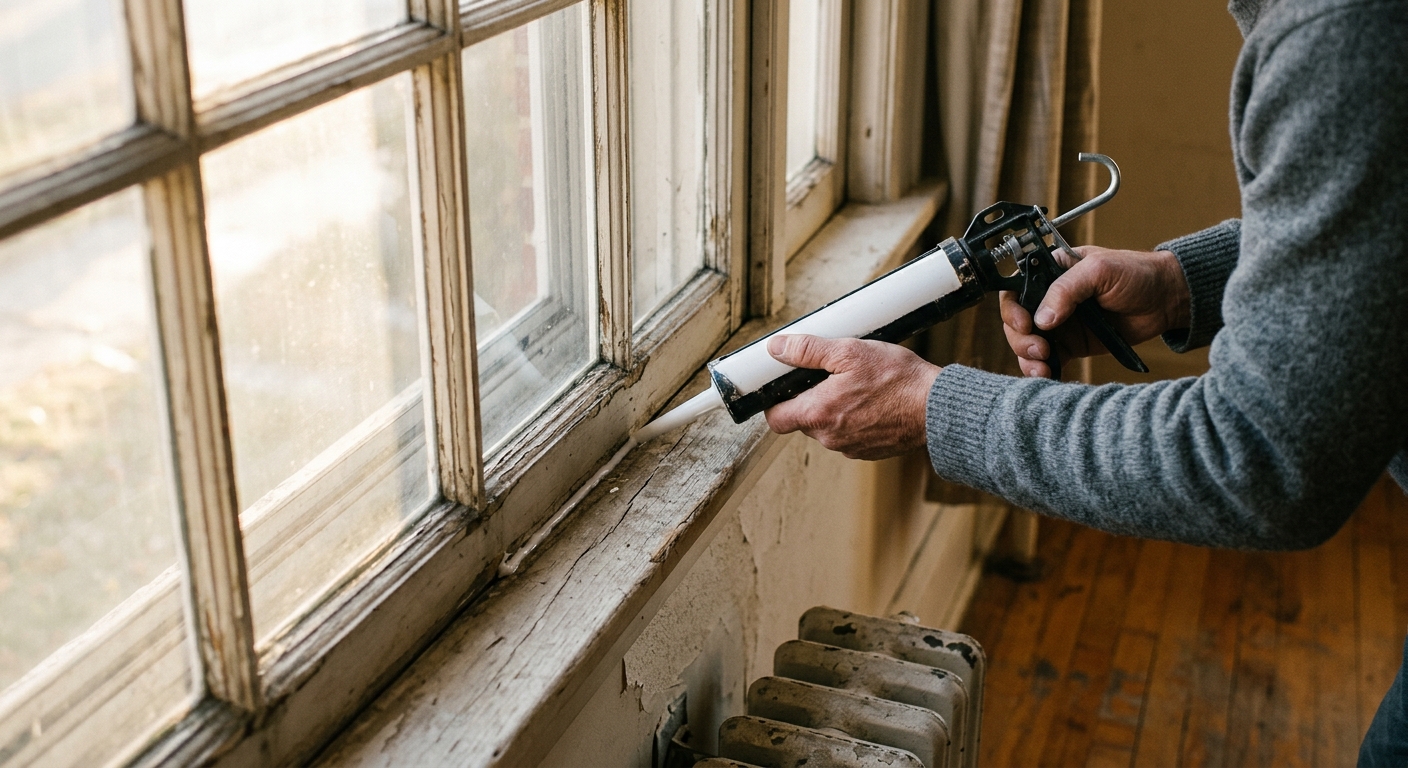
If your energy bills feel stubbornly high no matter what you try, your home’s construction era may be the silent culprit. A house built before 1980 was typically designed to code standards that allowed 3 to 5 times more air leakage than modern construction, and it may have little to no insulation in the walls. Even homes built in the 1990s often fall short of today’s efficiency benchmarks, with under-insulated attics, single-pane windows, and HVAC systems that have long since passed their peak performance.
The numbers are sobering. The U.S. Energy Information Administration estimates that American households spend an average of $2,000 per year on energy, and older homes routinely spend 25 to 50 percent more than similarly sized newer construction. That gap translates to $500 to $1,000 or more walking out your door every year, simply because of when your home was built. The good news is that most of those losses can be dramatically reduced without a full renovation.
This guide walks you through exactly how a home’s age translates into energy waste, which upgrades deliver the fastest payback, and how to build a realistic improvement plan whether you have $50 or $5,000 to work with. We’ll cover air sealing, insulation, HVAC age, window performance, and the one free diagnostic that changes everything.
What You’ll Need
Click on an item below to shop for the recommended items for this recipe on Amazon.
As an Amazon Associate, we earn from qualifying purchases.
How to Do It
- Request a free or low-cost home energy audit through your utility company. Most U.S. utilities offer blower-door testing and infrared scanning for $0 to $100, and many rebate the cost after the audit.
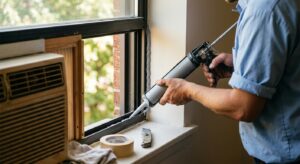
- On a windy day, hold a lit incense stick or a thin piece of tissue near common leak points: electrical outlets on exterior walls, plumbing penetrations under sinks, the attic hatch, fireplace damper, and around window and door frames. Flickering smoke or tissue movement reveals air infiltration.
- Seal outlet and switch covers on exterior walls with foam gaskets available in packs of 10 for under $5. This one step alone can reduce air infiltration through wall cavities by 10 to 15 percent.
- Apply fresh weatherstripping to exterior door bottoms and sides. A door with a 1/8-inch gap all the way around is equivalent to leaving a 5-by-7-inch hole in your wall. Self-adhesive foam or V-strip weatherstripping costs $8 to $15 per door.
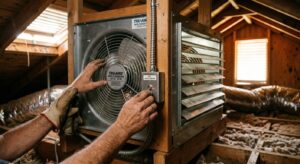
- Check your attic hatch or pull-down stairs. This is often the single largest uninsulated hole in the ceiling. A simple DIY insulated cover kit costs $30 to $50 and can pay for itself in one heating season.
- Review your last 12 months of utility bills and calculate your average monthly cost. After completing these steps, recheck in 60 days to quantify actual savings.
- Measure your existing attic insulation depth with a ruler. If you have less than 10 inches of fiberglass batts or 7 inches of cellulose, you are below R-30 and leaving significant savings on the table. The DOE recommends R-49 to R-60 for most U.S. climate zones.
- Before adding insulation, seal attic bypasses with expanding foam and fire-rated caulk. Focus on top plates where interior walls meet the ceiling, around plumbing and wiring penetrations, and around any recessed light fixtures. These bypasses allow warm air to bypass insulation entirely and are responsible for 30 to 40 percent of heat loss in older homes.
- Rent a blow-in insulation machine from a home improvement store (typically free with purchase of 10 or more bags of insulation). Blow cellulose or fiberglass to reach a minimum depth of 14 to 16 inches, targeting R-49 or higher. A 1,500 square foot attic typically requires 20 to 30 bags of cellulose at a material cost of $200 to $400.
- Seal gaps around basement rim joists with rigid foam board cut to fit and sealed with caulk or expanding foam. Rim joists in older homes are almost universally uninsulated and account for up to 15 percent of a home’s heat loss. A standard 8-foot basement perimeter requires roughly 4 to 6 sheets of 2-inch rigid foam at about $80 total.
- Install door sweeps on all exterior doors that show daylight at the bottom. Heavy-duty automatic door sweeps cost $15 to $30 each and seal completely when the door closes.
- Replace HVAC air filters and seal any visible duct joints in the basement or crawl space with UL 181-rated metal foil tape (not standard duct tape, which fails within a few years). Pay particular attention to joints near the air handler and at any flex duct connections.
- Hire a certified BPI (Building Performance Institute) or RESNET energy auditor for a comprehensive blower-door and duct blaster test. This $300 to $500 investment gives you a prioritized upgrade list with projected ROI for each measure, eliminating guesswork.
- Have a weatherization contractor perform dense-pack wall insulation by drilling small holes in exterior siding or interior drywall and injecting cellulose into wall cavities. This brings older walls with no insulation from R-0 to R-13 and typically costs $1.50 to $3.00 per square foot of wall area.
- Schedule professional duct sealing with Aeroseal or similar pressurized sealant injection. This process seals duct leaks from the inside without demolishing walls and typically reduces duct leakage by 70 to 90 percent. Average cost is $1,500 to $2,500 and annual savings of $200 to $400 are common, yielding a 5 to 8 year payback.
- Replace any central AC or heat pump more than 15 years old with a system rated at SEER 16 or higher. Federal tax credits under Section 25C now cover 30 percent of the cost up to $600 for central AC and $2,000 for heat pumps, significantly shortening payback periods.
- Consider a mini-split heat pump for difficult zones such as a converted garage, finished attic, or room addition where ductwork is absent or inadequate. A single-zone mini-split costs $1,500 to $3,500 installed and can reduce energy use in that zone by 25 to 50 percent compared to electric resistance heat.
Why It Works: The Benefits
A targeted air sealing and insulation upgrade in a pre-1980 home typically reduces total energy costs by 20 to 35 percent, translating to $400 to $700 per year in savings for an average household spending $2,000 annually.
Sealing air leaks and improving insulation eliminates the cold corners, drafty windows, and hot upstairs bedrooms that plague older homes, resulting in temperature differences of less than 2 to 3 degrees from room to room instead of the 8 to 15 degree swings common in leaky houses.
When the thermal envelope is tighter, your furnace and AC run fewer cycles, reducing wear and often adding 3 to 5 years of useful life to equipment that would otherwise be overworked by trying to heat or cool a leaky home.
Studies by the National Association of Realtors and Lawrence Berkeley National Laboratory show that homes with documented energy upgrades sell for 3 to 5 percent more than comparable non-upgraded homes, and they tend to spend fewer days on the market.
Controlled ventilation through a tighter envelope reduces the infiltration of outdoor pollutants, allergens, and humidity, which is especially significant in older homes where uncontrolled air movement can pull in radon, mold spores, and combustion gases from attached garages.
💰 Savings Impact by Action
Sealing major air bypasses in an older home reduces heating and cooling energy use by up to 20 percent, per DOE weatherization program data.
Upgrading attic insulation from R-11 to R-49 reduces ceiling heat transfer by 15 to 25 percent of total heating and cooling load.
Professional duct sealing in a home with 25 to 30 percent duct leakage recovers 20 percent of heating and cooling energy that was previously lost to unconditioned spaces.
Replacing a SEER 8 central AC unit with a SEER 16 system cuts cooling energy consumption by up to 30 to 40 percent for the same output.
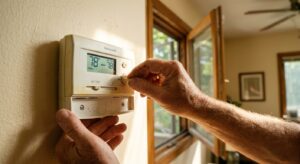
Programming 8-degree setbacks for 8 hours each during sleeping and away periods saves approximately 10 percent on annual heating and cooling costs.
🏠 Key Concepts Explained
The Science Behind It
Heat moves in three ways: conduction (through solid materials), convection (through moving air), and radiation (through electromagnetic waves). An older home’s energy penalty comes from all three simultaneously. Thin or missing insulation allows conduction through ceilings and walls. Unsealed gaps allow convection as warm air rises and escapes through the attic while cold outside air is pulled in below, a process called the stack effect. And single-pane windows allow radiative heat loss directly to the cold outdoor environment, which is why you feel cold sitting near them even when the room air temperature is comfortable.
The stack effect is particularly powerful in two-story and taller homes. As warm air rises to the upper floors and escapes through ceiling gaps, it creates negative pressure on the lower floor that actively pulls cold outside air through every crack at or below grade. This means sealing the top of the house (attic floor bypasses) and the bottom (rim joists, basement penetrations) simultaneously delivers far greater results than addressing either alone, because you are interrupting the pressure-driven cycle rather than just slowing it in one location.
Building scientists measure a home’s overall tightness in air changes per hour at 50 pascals of pressure (ACH50), tested with a blower-door fan. Homes built before 1980 average 15 to 25 ACH50. The 2021 International Energy Conservation Code requires new homes to test at or below 3 ACH50 in most climates. Every ACH50 reduction of 1 point in an average home saves roughly $30 to $60 per year in energy costs, which is why a leaky older home that moves from 20 ACH50 to 8 ACH50 through sealing can see annual savings exceeding $400 on energy alone, before accounting for any insulation improvements.
Frequently Asked Questions
▼ My energy bills are high but I already have attic insulation. What else could be causing it?
Attic insulation is only one piece of a three-part system: air sealing, insulation, and HVAC efficiency. If your ductwork leaks 25 percent of its air (the national average for older homes), you could have R-60 insulation in the attic and still pay 20 percent more than you should. Request a duct blaster test from an energy auditor, and also check whether your HVAC system is more than 15 years old, since aging equipment loses efficiency quickly regardless of envelope improvements.
▼ How do I know if my walls have any insulation without tearing them apart?
Remove a cover plate from an electrical outlet on an exterior wall and shine a flashlight into the gap around the electrical box. You should be able to see or feel whether insulation is present in the wall cavity. Alternatively, a licensed energy auditor can use an infrared camera during cold weather to scan your exterior walls from inside the house and identify insulated versus uninsulated areas within minutes.
▼ Can I just add more insulation on top of what I already have in the attic?
Yes, in most cases, but only after sealing air bypasses first. Walk your attic floor and use expanding foam to seal any gaps around wiring, plumbing, recessed lights, and top plates before adding insulation over them. If your existing insulation shows signs of moisture damage or pest contamination, have it professionally removed before adding new material, since wet or contaminated insulation can actually perform worse than no insulation at all.
▼ I live in a mild climate. Is it still worth upgrading an older home?
Absolutely, though the calculus shifts. In mild climates, air sealing and insulation still pay back strongly because your HVAC runs more months of the year in partial loads, meaning duct leakage and envelope losses accumulate over longer periods. Focus first on air sealing and duct efficiency rather than maximum insulation levels, since the temperature differential driving heat transfer is smaller, and the payback on air movement improvements remains strong regardless of climate.
▼ My house was built in the 1990s. Do these issues still apply to me?
Yes, though typically to a lesser degree. Homes built in the 1990s often have some insulation but may fall short of today’s recommendations, and duct systems of that era are notorious for poor sealing. Your HVAC equipment, if original, is now at or past its expected service life of 15 to 20 years and likely operates at SEER 8 to 10 versus today’s minimum of SEER 14. A utility-sponsored audit is still an excellent first step to find where your specific home is losing the most energy.
Quick Tips
- Check your utility company’s website for rebates before buying any materials. Many utilities rebate $0.10 to $0.25 per square foot of attic insulation added, which can cut your material cost by 20 to 30 percent.
- Tackle air sealing before insulation every time. Adding insulation over unsealed bypasses is like putting a thick blanket over a screen window: the insulation does little if air is moving freely through gaps beneath it.
- Program your thermostat to set back 7 to 10 degrees Fahrenheit for the 8 hours you are at work and 8 hours you are sleeping. The DOE estimates this saves 10 percent annually on heating and cooling with zero investment.
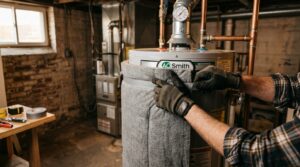
- If your water heater is more than 10 years old and located in an unconditioned space, wrap it in an insulating blanket ($20 to $30) and insulate the first 6 feet of hot and cold water pipes. This reduces standby heat loss by 25 to 45 percent on older tank heaters.
Variations for Your Situation
- Apartment or Rental: Renters cannot touch ductwork or add attic insulation, but can still capture meaningful savings. Apply draft snake door seals, add thermal curtains to windows (which reduce radiative heat loss by up to 40 percent according to the DOE), use outlet foam gaskets on exterior walls, and ask your landlord for a utility audit. Many utilities will audit rental properties at no cost to the tenant, and landlords in some states are required to act on major findings.
- Tight Budget (under $50): Focus entirely on the four highest-return free and nearly free steps: seal outlets with foam gaskets ($5), add door weatherstripping ($15 to $25 per door), cover the attic hatch with a reflective foam panel ($10 DIY), and set your thermostat back 8 degrees while sleeping and away. These four actions combined can reduce annual energy bills by 10 to 15 percent with no specialized tools or skills.
- Older Home Pre-1960: Homes built before 1960 present unique challenges including knob-and-tube wiring (which cannot be covered by insulation without an electrician upgrading it first), plaster walls that complicate dense-pack insulation, and chimneys and fireplaces with significant air leakage. Start with a professional BPI audit to identify safety constraints before any DIY work, and budget at least $500 to $1,000 for a professional assessment and sealing of combustion appliances before addressing insulation.