Insulation is one of those things that works silently in the background until it stops working. Settled attic batts, missing crawl space coverage, or a single uninsulated rim joist can quietly add 20 to 30 percent to your heating and cooling costs year after year. The frustrating part is that most homeowners never find out about these weak spots until they get an energy audit from a contractor, which often costs $300 to $500 before any fixes are made.
The good news is that a homeowner-led insulation audit covers most of the same ground for free. Armed with a flashlight, a tape measure, and a basic understanding of where heat moves, you can walk through every major zone of your home in a single afternoon and come away with a clear, prioritized list of where your insulation dollars will do the most work. This is not about replacing a professional blower-door test, but it will tell you what is obviously wrong and where to focus first.
This guide walks you through the attic, walls, basement and crawl space, rim joists, and windows zone by zone, explaining what to look for, what the numbers mean, and which fixes deliver the fastest payback. Whether you are a first-time homeowner trying to understand an older house or someone who just wants to stop overpaying for comfort, this audit is the right starting point.
What You’ll Need
Click on an item below to shop for the recommended items for this recipe on Amazon.
As an Amazon Associate, we earn from qualifying purchases.
How to Do It
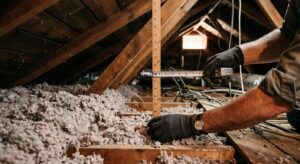
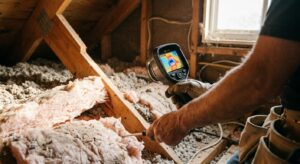
- Start in the attic: use a flashlight and tape measure to check insulation depth at multiple points across the attic floor. Fiberglass batts compress to about 3.5 inches per R-11; blown cellulose at R-38 should be roughly 10 to 12 inches deep. Note where it is thin, missing, or pushed aside.
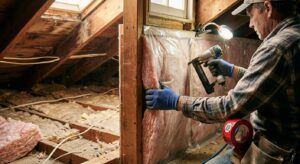
- Look for bypasses in the attic: check around recessed lights, plumbing stacks, HVAC ducts, and the tops of interior walls where insulation often gaps away from the framing. These are your highest-priority sealing targets.
- Walk your basement or crawl space perimeter and look at the rim joist, the short band of wood sitting right on top of your foundation wall. In most homes built before 2000, this area is either uninsulated or has loosely fitted fiberglass that has fallen out. Photograph every bay.
- Check your exterior walls using an outlet test: on a cold day, turn off the circuit, remove an exterior outlet cover, and feel inside the box cavity. If it is cold and hollow, that wall section likely has little or no insulation.
- Walk each room and note cold floors, drafty corners, or walls that feel cold to the touch in winter. These point to specific framing bays or floor cavities that your audit should flag.
- Compile your findings into three tiers: air sealing fixes that cost under $50 and should be done first, insulation additions that are DIY-feasible, and areas that need a contractor such as dense-pack wall insulation or spray foam in complex spaces.
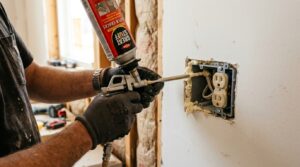
- Seal attic bypasses first using canned spray foam for gaps under 3 inches and fire-rated caulk or rigid foam board with foam sealant for larger openings around light fixtures and wall top plates. Do this before adding any insulation so you are not working around new material.
- Cut rigid foam board (2-inch polyiso gives R-13) to fit each rim joist bay, press it firmly against the rim joist, and seal all four edges with spray foam. This single step can reduce heating costs by 5 to 10% in homes with unfinished basements.
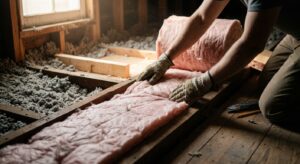
- Rent a blow-in insulation machine from a home improvement store (typically free with purchase of a set minimum of bags) and add blown cellulose or fiberglass to your attic floor to reach R-38 or higher depending on your climate zone. Work from the eaves toward the center hatch.
- Install insulation baffles at each rafter bay along the eaves before blowing to maintain a 1-inch air channel from soffit to ridge. Without baffles, you will block attic ventilation and potentially create moisture problems.
- After finishing the attic, go back to any exterior wall outlets or switch plates you flagged during the audit and install foam gaskets behind the cover plates. These cost under $1 each and take 2 minutes per outlet.
- Recheck your attic depth with a tape measure in three or four spots to confirm you reached your target R-value, then photograph the completed work for your records and any future rebate applications.
- Schedule a certified energy auditor through your utility company or the BPI (Building Performance Institute) contractor directory. Many utilities offer audits at reduced or no cost, and the auditor will perform a blower-door test that quantifies total air leakage in a way a visual audit cannot.
- Review the written audit report carefully before accepting any contractor bids. It should specify current and recommended R-values for each zone, estimated annual savings in dollars, and a prioritized list of improvements.
- Get three bids for the work identified, and ask each contractor to specify the insulation type, installed R-value, and whether air sealing is included in the scope. Cheap bids often omit the air sealing step, which is where much of the savings come from.
- Ask about available rebates before signing. ENERGY STAR and most state energy offices offer rebates of $0.10 to $0.25 per square foot for attic insulation upgrades, and the federal 25C tax credit covers 30% of insulation and air sealing costs up to $1,200 per year as of 2024.
- After installation, request a post-work blower-door test or at minimum a written certification of the installed R-values so you have documentation for rebates and resale.
Why It Works: The Benefits
Bringing attic insulation from R-11 to R-38 alone can reduce heating and cooling costs by 15 to 25% per year according to ENERGY STAR, translating to $200 to $600 in annual savings for a typical 2,000 square foot home.
DIY air sealing and adding blown-in attic insulation typically pays back in 1 to 3 years, making it one of the highest return-on-investment home improvements available, often outperforming solar panels and new windows on pure payback speed.
Fixing insulation gaps eliminates the cold corners, drafty walls, and rooms that never seem to reach the set temperature, because those symptoms are almost always caused by localized insulation failures rather than HVAC sizing.
When your home holds conditioned air longer, your heating and cooling system runs fewer cycles. Reducing runtime by even 20% meaningfully extends equipment life and lowers maintenance costs over time.
Sealing the gaps your audit identifies reduces infiltration of outdoor allergens, exhaust fumes, and moisture-laden air, especially relevant for homes near busy roads or in humid climates.
💰 Savings Impact by Action
Sealing attic bypasses before adding insulation reduces total heating and cooling loss by up to 20% by eliminating the convective short-circuit that makes insulation underperform.
Upgrading attic insulation from R-11 to R-38 reduces ceiling heat transfer by 65%, which translates to 15 to 25% lower annual energy bills according to ENERGY STAR data.
Insulating and air sealing rim joists with rigid foam reduces basement-level heat loss by up to 10% annually in homes with unfinished basements or crawl spaces.
Installing foam gaskets behind exterior outlet and switch covers reduces infiltration through those gaps, contributing roughly 3 to 5% to total air sealing savings for minimal cost.
Addressing attic, rim joist, and air sealing together in a whole-house approach can reduce total heating and cooling energy use by 30 to 40% compared to an unimproved baseline.
🏠 Key Concepts Explained
The Science Behind It
Heat moves in three ways: conduction through solid materials, convection through moving air, and radiation across open spaces. Insulation primarily addresses conduction by trapping air in tiny pockets that resist heat flow. But the R-value system only measures conductive resistance under laboratory conditions with no air movement. The moment air can move through or around insulation, the effective R-value drops dramatically, which is why a fiberglass batt rated at R-19 in a wall with no air barrier can perform like R-7 or less in practice.
This is the core reason why air sealing always comes before insulation in a properly sequenced energy upgrade. The DOE estimates that air infiltration accounts for 25 to 40% of heating and cooling energy loss in a typical home, independent of the insulation level. Sealing that pathway first means every R-value you add on top is working at its rated capacity rather than being short-circuited by airflow. It also explains why two homes with identical insulation levels can have very different energy bills depending on how well the air barrier was installed.
Stack effect physics also explain why the attic floor and basement rim joist are disproportionately important. In winter, warm indoor air rises and exits through gaps at the top of the building, creating a slight negative pressure at the bottom that draws cold outside air in through the rim joist and sill plate. This convective loop runs continuously whenever there is a temperature difference between inside and outside. Interrupting it at both ends simultaneously, by sealing the attic bypasses and the rim joist bays, is more effective than addressing just one end, because you are breaking the pressure loop rather than just reducing it.
Frequently Asked Questions
▼ My attic already has insulation but my heating bills are still high. What am I missing?
The most common culprit is air bypasses rather than insulation depth. Pull back the insulation near the top plates of interior walls and check for gaps around wiring, plumbing, and framing. A single unsealed top plate cavity can carry as much heat as a large window left open. Seal every penetration with spray foam and caulk before concluding that you need more insulation.
▼ How do I know what R-value I need for my climate?
The DOE publishes a free zone map at energystar.gov that divides the US into eight climate zones, each with specific R-value recommendations for attics, walls, floors, and crawl spaces. Most of the continental US falls into zones 3 through 6, where attic recommendations range from R-30 to R-60. Enter your zip code on the DOE map and you will get the exact recommended values for your location.
▼ Can I do this audit in an apartment or rental?
You can do the diagnostic portion fully on your own and share the findings with your landlord in writing. Many states require landlords to maintain weatherization standards, and a documented audit gives you a paper trail. You can also install outlet gaskets and door sweep seals independently in most rentals since they are non-damaging and removable.
▼ What if I find mold or moisture in my crawl space during the audit?
Stop the audit in that area and do not add insulation until the moisture source is fixed. Adding insulation over a moisture problem will trap humidity and accelerate rot and mold growth. Have a contractor identify whether the source is ground moisture, a plumbing leak, or condensation, then encapsulate the crawl space with a 6-mil polyethylene vapor barrier before insulating.
▼ How long will it take to see savings on my bill after I complete the fixes?
You should see a measurable difference within one full billing cycle, especially if the repairs happened before the peak heating or cooling season. Most homeowners report a 15 to 25% drop in the first full month after addressing attic bypasses and rim joists together. A full year of data will give you the most accurate savings picture since seasonal variation affects month-to-month comparisons.
Quick Tips
- Check your attic insulation depth in at least five different spots, not just near the hatch, because settling and disturbance from past work create highly uneven coverage.
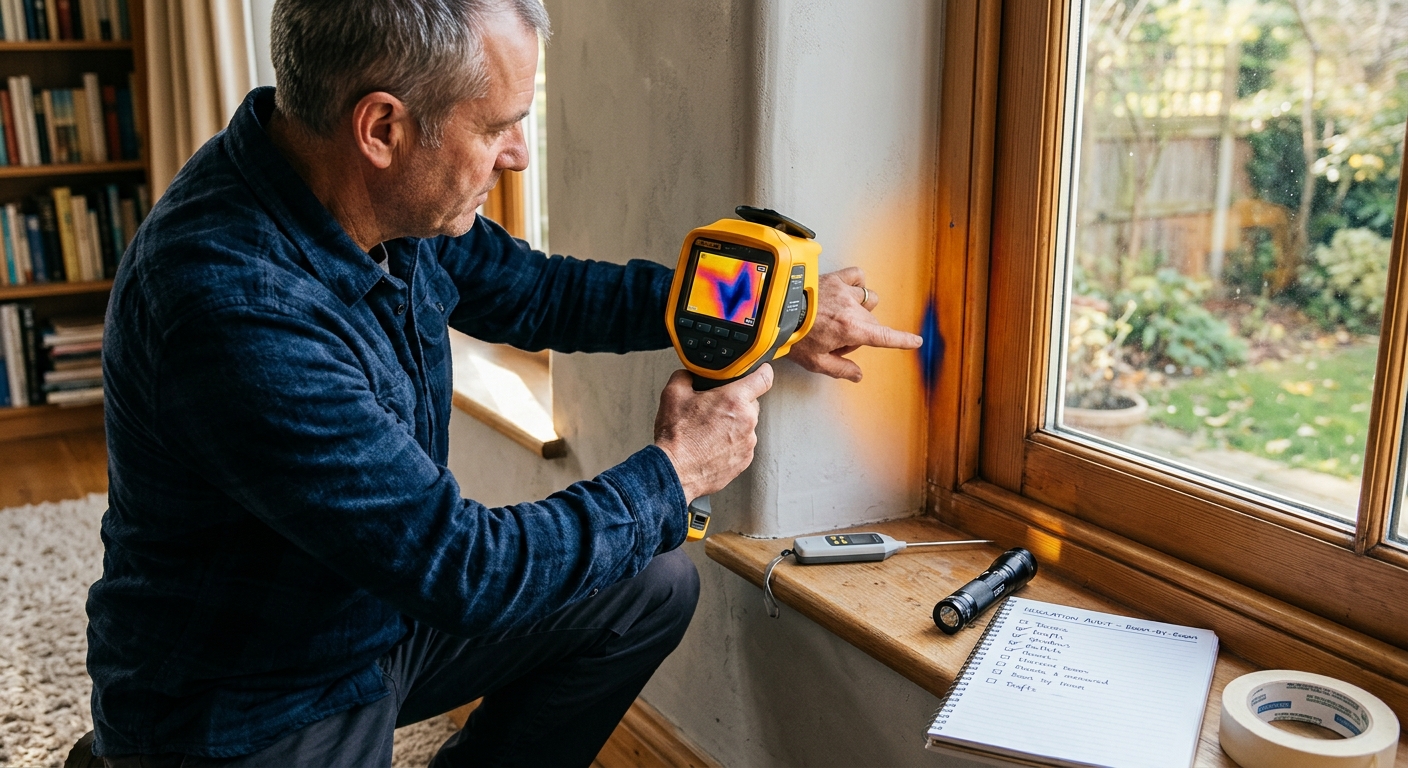
- A $30 infrared thermometer aimed at interior wall surfaces on a cold day is one of the fastest ways to identify cold spots that indicate missing or damaged insulation behind the drywall.
- Foam gaskets behind electrical outlet and switch covers on exterior walls cost about $10 for a pack of 10 and take under an hour to install for an entire house, making them one of the best dollar-per-hour efficiency upgrades available.
- Keep your utility bills from the past two winters before doing any improvements so you have a real before-and-after comparison once the fixes are complete.
Variations for Your Situation
- Apartment/Rental: Renters cannot modify wall or attic insulation, but they can still do meaningful work. Inspect windows for gaps and apply removable rope caulk along the sash, install door sweeps on exterior doors, and add foam gaskets to outlet covers. Budget for $30 to $60 worth of materials and you can cut drafts by 10 to 15% without touching the building structure. Document and photograph your findings and submit a written request to your landlord noting that inadequate insulation may violate local habitability codes.
- Tight Budget (under $50): Focus entirely on air sealing during your first pass. A $5 can of spray foam, a $4 tube of acrylic caulk, and a $10 pack of outlet gaskets address the three highest-yield gaps in most homes. Prioritize the attic hatch (add weatherstripping around the frame), rim joist gaps you can reach from the basement, and outlets on exterior walls. These steps alone can cut infiltration losses by 10 to 20% at minimal cost before you spend anything on insulation material.
- Older Home (pre-1980): Homes built before 1980 typically have little or no wall insulation, single-pane windows, and attic insulation well below R-19. Before doing anything, test a small sample of any existing loose attic insulation by taking a sealed bag to a certified asbestos testing lab (about $30) if it resembles gray or silver-streaked mineral wool. Once cleared, prioritize the attic floor and rim joists first since walls will require a contractor with dense-pack or injection foam equipment. Budget $2,000 to $5,000 for a comprehensive upgrade and check whether your state offers low-income weatherization assistance through the DOE Weatherization Assistance Program, which may cover costs entirely.