If your home has windows older than 20 years, you are likely paying a hidden tax every single month. Older single-pane glass, failed double-pane seals, and deteriorating weatherstripping allow conditioned air to escape and outdoor temperatures to bleed in year-round. The U.S. Department of Energy estimates that windows account for 25 to 30% of residential heating and cooling energy use. On a $200 monthly energy bill, that is $50 to $60 walking out the window, literally.
The frustrating part is that the loss is invisible. You feel a slight draft near the couch. You notice one room never quite warms up. Your HVAC runs longer than it seems like it should. These are all symptoms of window-related energy loss, and most homeowners chalk them up to bad luck rather than a fixable problem. The good news is that solutions exist at every budget level, from free fixes you can do in 15 minutes to full window replacements that pay back in 7 to 10 years.
This post walks you through how to calculate what your windows are actually costing you, the building science behind why older windows fail, and a tiered set of strategies from quick weatherstripping fixes to professional replacement so you can make a smart, informed decision for your home and your wallet.
What You’ll Need
Click on an item below to shop for the recommended items for this recipe on Amazon.
As an Amazon Associate, we earn from qualifying purchases.
How to Do It
- On a cold or windy day, hold a candle or incense stick near window edges, corners, and where the sash meets the frame. Flickering flame or smoke reveals air leaks you can prioritize.
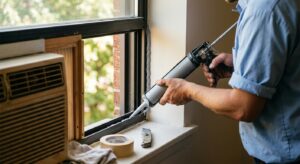
- Remove old dried caulk from around the exterior and interior window frame perimeter using a plastic scraper or putty knife. Clean the surface with a damp cloth and let it dry fully.
- Apply a continuous bead of silicone or paintable latex caulk along the joint between the window frame and the wall on both interior and exterior sides. Smooth with a wet fingertip and allow to cure 24 hours.
- Replace worn weatherstripping on operable windows. V-strip (tension seal) weatherstripping pressed into the channel between sash and frame lasts 5 to 10 years and costs about $10 per window.
- For windows in rooms you do not use in winter, apply a clear interior window insulation film kit (available at hardware stores for about $8 per window). The trapped air layer cuts heat loss by 25 to 40% at that window.
- Check and latch all window locks. A latched sash compresses the weatherstripping seal and reduces infiltration by 30 to 50% compared to an unlatched but closed window.
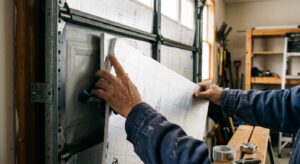
- Measure each window opening precisely: width at top, middle, and bottom, and height at left, right, and center. Use the smallest measurement for each dimension to ensure a snug fit.
- Choose your insert type. Acrylic panel inserts with magnetic or compression seals (such as Indow or similar brands) achieve U-factors of 0.20 to 0.35 when combined with an existing single-pane window. DIY framed polycarbonate panels are a lower-cost alternative at $50 to $75 per window.
- For a DIY framed panel, cut 1/4-inch polycarbonate sheet to your measured dimensions using a circular saw with a fine-tooth blade. Sand edges smooth with 220-grit sandpaper.
- Install a compression foam or magnetic seal along the interior window frame perimeter so the panel seats flush with no visible gaps. Press the panel firmly into place and verify no light or air passes around the edges.
- For compression-style inserts, no fasteners are needed. For panels you frame yourself, attach small turn buttons or clips around the perimeter to hold the panel in place while allowing seasonal removal.
- Remove panels in spring and store flat in a cool dry location to prevent warping. Reinstall in fall before heating season begins.
- Get quotes from at least 3 licensed window contractors. Ask each to specify the U-factor, SHGC, and frame material for the windows they are proposing. Reject any quote that does not include these specifications.
- Specify ENERGY STAR certified windows for your climate zone. In cold climates, prioritize low U-factor (below 0.25). In hot climates, prioritize low SHGC (below 0.25). In mixed climates, aim for both below 0.30.
- Ask your contractor about inserting new windows into existing frames (insert or pocket replacement) versus full-frame replacement. Insert replacement costs 20 to 30% less and is appropriate when frames are structurally sound.
- Check for federal tax credits before signing a contract. ENERGY STAR certified windows qualify for a 30% federal tax credit (up to $600 per year) under the Inflation Reduction Act, which significantly improves payback period.
- Schedule installation room by room or in phases if budget requires. Bedrooms and living areas with the most glass surface area or most southern and western exposure deliver the fastest payback.
- After installation, verify the contractor has properly flashed and caulked the exterior frame perimeter and that all operable windows latch and seal smoothly before signing off on the job.
Why It Works: The Benefits
Upgrading from single-pane to double-pane low-e windows reduces heating and cooling energy use by 10 to 25%, translating to $20 to $80 per month savings depending on your climate zone and home size.
Eliminating drafts and radiant cold spots from window glass makes thermostat-set temperatures actually feel like what the thermostat reads, reducing that frustrating experience of one cold or hot room that never behaves.
When windows stop bleeding conditioned air, your heating and cooling equipment runs fewer cycles per day. Shorter runtimes mean less mechanical wear, extending equipment life by 2 to 5 years and reducing repair frequency.
Modern double or triple-pane windows reduce outside noise transmission by 25 to 50% compared to single-pane glass, a comfort benefit that homeowners near traffic or neighbors notice immediately.
Better-insulated window glass stays closer to room temperature, preventing condensation that causes mold, rot in wood frames, and damage to window sills. This protects the structure of your home and indoor air quality.
💰 Savings Impact by Action
Caulking and weatherstripping window frames reduces infiltration-related heat loss by up to 15% of total window energy loss at a cost of under $20 per window.
Interior shrink film insulation kits reduce heat loss at a treated window by 25 to 40% by creating an insulating air buffer between the film and the glass.
Properly fitted interior storm window inserts improve the effective U-factor of a single-pane window by 35 to 50%, bringing it close to a true double-pane unit.
Replacing single-pane with ENERGY STAR certified double-pane low-e windows reduces whole-home heating and cooling energy use by 10 to 25% depending on climate zone and window area.
Professionally applied low-e solar control window film reduces solar heat gain through existing glass by 40 to 70%, cutting summer cooling loads on south and west facing windows.
🏠 Key Concepts Explained
The Science Behind It
Windows lose energy through four mechanisms simultaneously: conduction through the glass and frame, convection from air moving across the glass surface, radiation of infrared heat from warm objects toward cold glass, and infiltration of outside air through gaps and seals. Single-pane glass is nearly transparent to all four. At a U-factor of 1.0, a single-pane window loses roughly ten times more heat per square foot per hour than a well-insulated wall with an R-20 rating. A 15-square-foot window operating at this level on a 30-degree night is losing as much heat as running a small space heater continuously just to compensate.
Modern double-pane low-e windows address all four mechanisms at once. The sealed air or gas gap between panes (typically 1/2 to 3/4 inch of argon) reduces conductive and convective loss dramatically. The low-emissivity coating, a microscopically thin metallic layer on the inner surface of the exterior pane, reflects radiant infrared heat back into the room in winter and reflects solar radiant heat away in summer. This is why the same window technology that keeps your home warmer in winter also keeps it cooler in summer, because the coating works against radiant heat transfer in both directions.
Air infiltration through window gaps is thermodynamically expensive because it forces your HVAC to condition 100% fresh outdoor air, which may be 40 or 90 degrees and at a completely different humidity level than your indoor air. Unlike conduction losses which are proportional to the temperature difference, infiltration losses scale with wind speed too, meaning a drafty window on a gusty winter day loses heat at two to three times the rate of a calm day. This is why caulking and weatherstripping, despite being cheap and simple, deliver savings that are immediately noticeable on your next heating bill.
Frequently Asked Questions
▼ How do I know if my double-pane windows have failed seals?
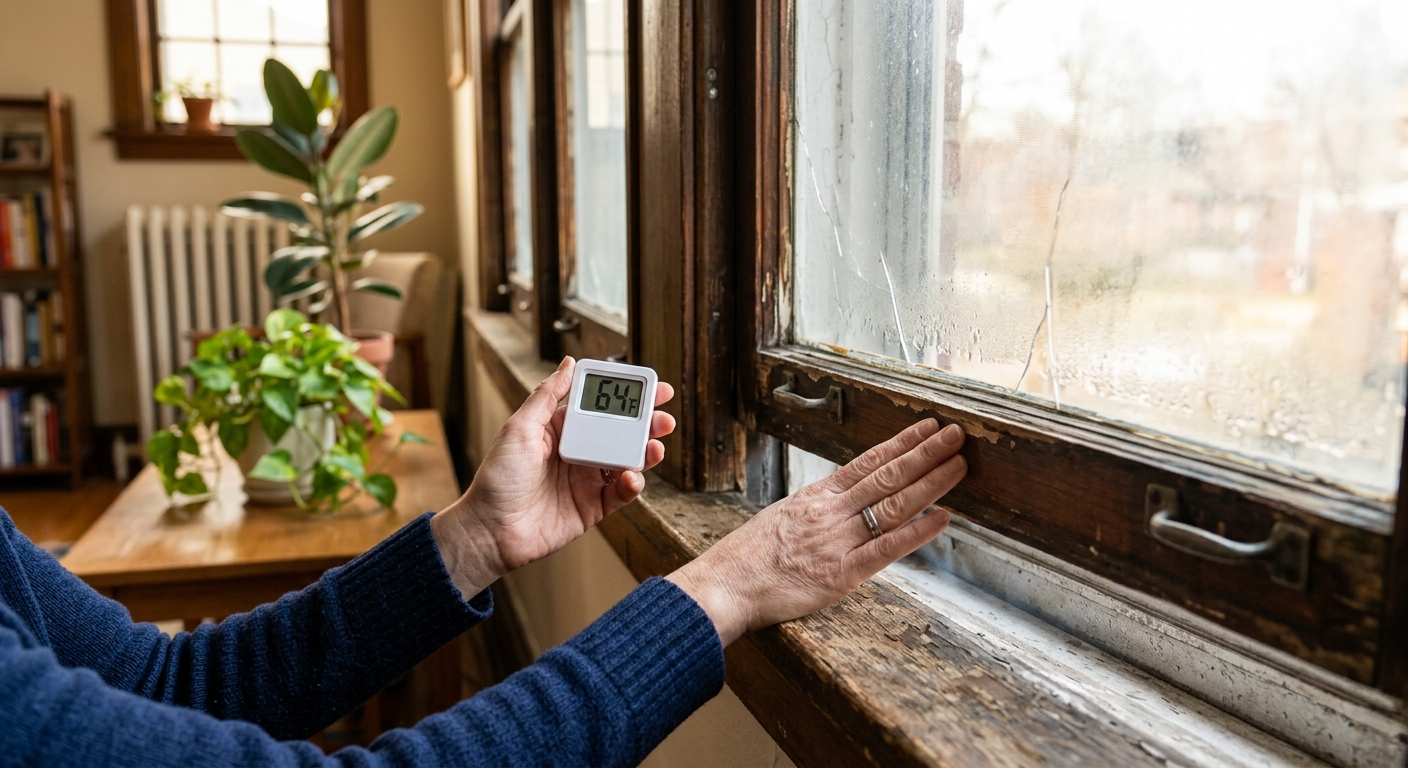
Look for fogging, haze, or visible moisture streaks between the two panes of glass, particularly in the morning when temperature differences are greatest. Another test is pressing your hand flat against the interior glass on a cold day: a failed-seal window will feel significantly colder than one with intact gas fill. Failed-seal windows look like double-pane but perform like single-pane, so this check is worth doing before assuming your existing windows are performing well.
▼ My energy bill is high but I already have double-pane windows. Could they still be the problem?
Yes, for two reasons. First, double-pane windows installed before 2000 often do not have low-e coatings and may have U-factors of 0.40 to 0.55, which is better than single-pane but still far below modern standards of 0.20 to 0.30. Second, the frame and seal condition matter as much as the glass. Check for drafts around the frame perimeter with a candle, inspect weatherstripping on operable sashes, and re-caulk any cracked joints before assuming the glass itself needs replacement.
▼ Is window replacement actually worth the cost? The payback period seems really long.
Full replacement at $400 to $1,000 per window does carry a 7 to 10 year payback period on energy savings alone, which is why it is rarely justified on savings alone for windows that are merely older rather than failing. The calculation changes when you factor in the 30% federal tax credit, available utility rebates, the increased resale value windows add (typically 70 to 80% of cost recovered at sale), and non-energy benefits like noise reduction and eliminating moisture damage. If your windows have failed seals, rotting frames, or are single-pane, replacement becomes much easier to justify financially.
▼ Can I just put plastic film on the windows in winter and get similar results to new windows?
Interior shrink film kits are surprisingly effective at reducing heat loss at a specific window, cutting heat loss by 25 to 40% at that unit for about $8 per window. They work by creating a trapped air layer that mimics the gap in a double-pane unit. The downsides are that they make the window inoperable for the season, require reapplication each year, and do nothing for solar heat gain in summer. They are an excellent low-cost solution for rooms or windows you do not need to open in winter, such as basement windows or a seldom-used guest room.
▼ Will new windows really make a noticeable difference in comfort, or just in the bill?
Both, but the comfort difference is often what homeowners notice first. The cold-glass radiant effect, where your body radiates heat toward a cold window surface and feels a chill even when the thermostat reads 70 degrees, disappears when glass surface temperatures stay closer to room temperature. Rooms that previously felt drafty or cold in winter become usable space. Most homeowners report the comfort improvement as the most immediate and satisfying benefit, with bill savings becoming apparent after one to two billing cycles.
Quick Tips
- On a bright sunny day, hold a dollar bill against each closed window. If you can pull it out easily without opening the sash, the weatherstripping is worn and needs replacement.
- South and west facing windows in hot climates account for the majority of summer solar heat gain. Prioritize air sealing, window film, or replacement on these orientations first for fastest payback.
- Low-e window films applied to existing glass (not to be confused with insulating film kits) cost $5 to $15 per square foot professionally installed and reduce solar heat gain by 40 to 70% without replacing the window.
- Check utility rebates in your area before purchasing replacement windows. Many state and local utility programs offer $30 to $150 per window rebates for ENERGY STAR certified replacements, stacking on top of the federal tax credit.
Variations for Your Situation
- Apartment or Rental: Renters cannot replace windows, but can use interior window insulation film kits ($8 to $15 per window) and adhesive-backed foam weatherstripping on drafty sashes without causing damage. Draft snakes or door draft stoppers placed on window sills can block low infiltration points. Document drafts with photos and submit a written maintenance request to your landlord, as failed window seals and broken weatherstripping are often the landlord’s repair responsibility under habitability codes.
- Tight Budget (under $50 total): Start with a full tube of silicone caulk ($6) and re-caulk every window frame perimeter inside and outside. Add V-strip weatherstripping to the two or three most drafty operable windows ($10 each). Apply shrink film kits to any non-essential windows for the winter season. These three steps alone can reduce window-related heat loss by 15 to 20% and cost under $50 total, making them the highest return-on-investment actions available before any equipment purchase.
- Older Home (pre-1980): Homes of this era typically have single-pane glass in wood or aluminum frames with decades of caulk buildup that has cracked and separated. Before caulking over old layers, scrape all existing caulk away for a proper seal. Check wood frames carefully for rot at corners and sills, as rotted wood cannot hold a seal and must be repaired or the frame replaced before any air sealing work is meaningful. Interior storm window inserts or full-frame replacement are both strong options here, since the energy performance gap between original single-pane windows and modern double-pane low-e is large enough that even full replacement carries a more defensible payback period of 6 to 8 years in colder climates.