Every summer, millions of homeowners crank up the AC and wonder why their bills keep climbing even when they remember to close the blinds and set the thermostat back. The overlooked culprit is often right in the kitchen. Ovens, stovetops, dishwashers, and even refrigerators add significant heat to your home, forcing your air conditioner to work harder and longer just to maintain a comfortable temperature.
The math is straightforward but surprising. A conventional electric oven running at 350 degrees Fahrenheit for an hour can raise the ambient temperature in a small kitchen by 10 degrees or more. Your AC then has to remove that heat, and since air conditioners are only about 30 to 40 percent efficient at converting electricity into cooling, every dollar of heat your oven adds costs you extra in cooling on top of the cooking energy itself. During peak summer months, this double-hit can add $30 to $80 to your monthly bill depending on your home size and local electricity rates.
This post breaks down exactly which appliances are the biggest offenders, how much each one is likely costing you, and what you can do about it right now. From zero-cost habit changes to smart appliance swaps that pay for themselves in a single summer, there is a strategy here for every budget and every kitchen setup.
What You’ll Need
Click on an item below to shop for the recommended items for this recipe on Amazon.
As an Amazon Associate, we earn from qualifying purchases.
How to Do It
- Audit your cooking habits this week: note every time you use the full oven when a microwave, toaster oven, or stovetop burner could have done the same job in less time with less heat.
- Shift dishwasher cycles to after 8 PM or before 10 AM to avoid peak utility rate windows and to keep steam and heat out of your home during the hottest part of the day.
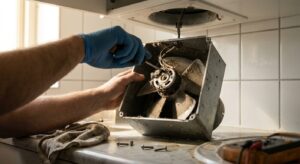
- Always run the range hood exhaust fan during and for 15 minutes after cooking to actively push cooking heat and humidity out of the house rather than letting it mix with your conditioned air.
- Use the microwave instead of the oven for reheating leftovers – a microwave uses roughly 1,200 watts for 3 minutes versus an oven using 2,400 watts for 20 minutes to reheat the same dish.
- Air-dry dishes instead of using the dishwasher’s heated dry cycle, which uses an electric element that adds heat and can account for up to 50 percent of the dishwasher’s total energy use per cycle.
- Pull your refrigerator out from the wall a few inches if it is currently flush against it, ensuring the condenser coils have adequate airflow to exhaust heat efficiently and reduce compressor run time.
- Replace full-oven meals with an air fryer for items under 3 pounds – a 1,500-watt air fryer running 20 minutes uses about 0.5 kWh compared to a 2,400-watt oven running 45 minutes using about 1.8 kWh, saving roughly 1.3 kWh and significant radiated heat per meal.
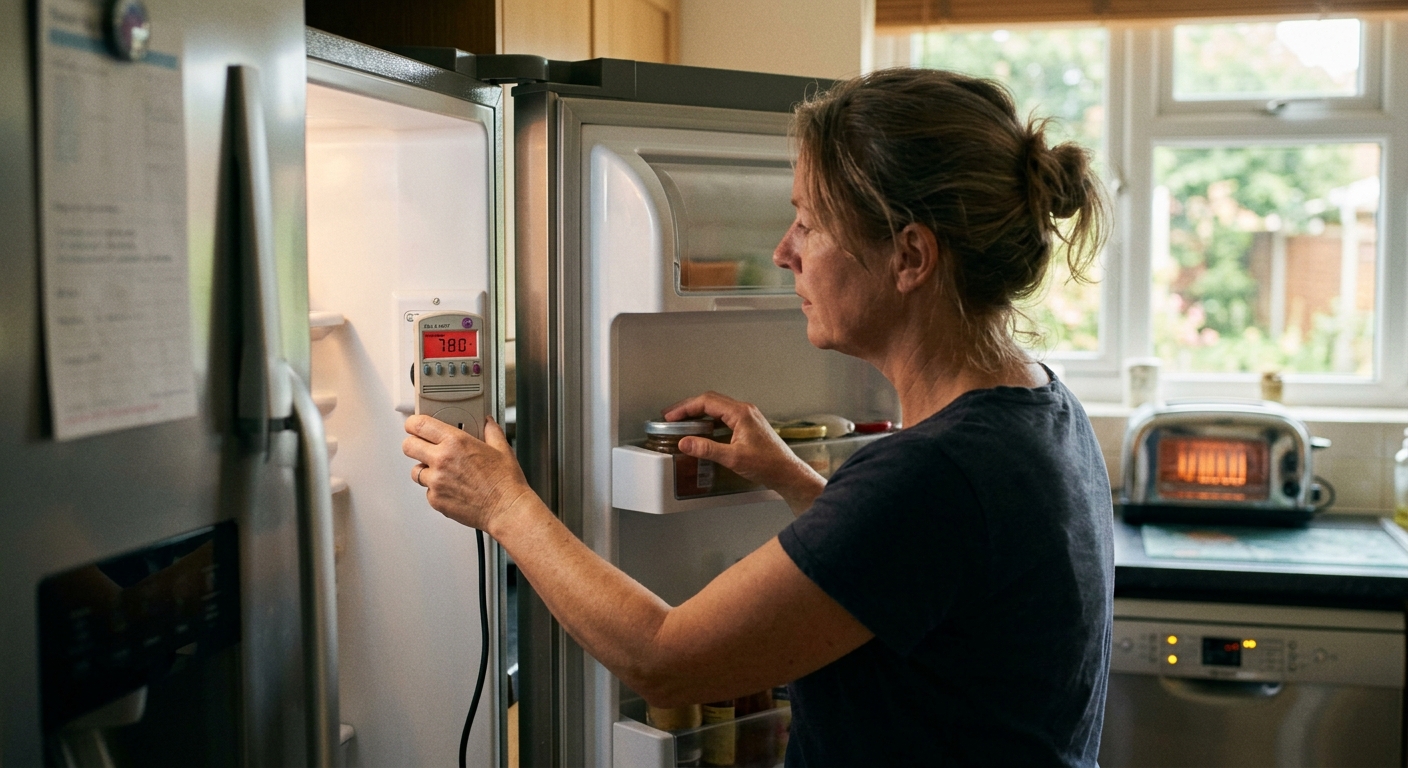
- Purchase a plug-in smart power strip for countertop appliances (coffee maker, toaster, microwave) and set it to cut standby power overnight and during peak hours, eliminating 50 to 100 watts of continuous phantom load.
- Install an induction single-burner cooktop ($40 to $80) for summer stovetop cooking – induction transfers about 85 percent of energy directly to the pan versus 40 to 55 percent for electric coil burners, cutting both cooking time and kitchen heat significantly.
- Add a programmable outlet timer to your dishwasher ($15 to $25) so it runs automatically at 11 PM regardless of when you start it, keeping you on off-peak rates without having to remember to delay the cycle each night.
- Vacuum the condenser coils on the back or bottom of your refrigerator using a coil brush and vacuum – dirty coils can increase refrigerator energy use by 15 to 30 percent and push significantly more heat into the kitchen.
- Replace a refrigerator older than 15 years with a current ENERGY STAR certified model – older units can use 800 to 1,200 kWh per year while modern equivalents use 350 to 500 kWh, saving $50 to $100 annually and reducing continuous heat output to your kitchen.
- Upgrade to an induction range if your cooktop is more than 10 years old – induction is 85 to 90 percent efficient versus 40 to 55 percent for electric coil, and the surface itself stays cool so radiated heat into the kitchen drops dramatically.
- Install or upgrade a ducted range hood rated at 300 to 400 CFM so it can fully capture cooking heat and steam before they mix with your conditioned air, protecting your AC system from humidity and heat spikes.
- Consider a countertop convection oven or smart oven (Breville, Cuisinart) as a full oven replacement for households of 1 to 4 people – these units use 1,800 watts versus 3,500 watts for a full-size electric oven and heat up in 2 to 3 minutes instead of 15.
Why It Works: The Benefits
Replacing oven cooking with an air fryer or Instant Pot four nights per week and shifting dishwasher use to off-peak hours can reduce summer energy costs by $25 to $60 per month depending on your local electricity rate and home size.
Cutting kitchen heat gain by even 3,000 to 5,000 BTUs per evening can reduce your AC runtime by 30 to 60 minutes daily, lowering compressor wear and extending the life of your HVAC system.
Eliminating oven use on hot days can keep your kitchen 8 to 12 degrees cooler during meal prep, making the space noticeably more comfortable and reducing the temperature differential your AC has to overcome.
An air fryer costing $60 to $100 typically pays for itself within one to two summers through energy savings alone when it replaces frequent full-oven use, giving a payback period of 4 to 8 months.
Shifting high-energy kitchen tasks outside of peak rate hours (typically 3 PM to 8 PM) can cut the effective per-kWh cost by 30 to 50 percent for homeowners on time-of-use utility plans.
💰 Savings Impact by Action
Replacing full-oven cooking with an air fryer or countertop convection oven reduces cooking energy use by up to 70 percent and cuts kitchen heat gain, lowering total summer kitchen energy impact by roughly 22 percent.
Shifting dishwasher and oven use outside peak rate hours (3 PM to 8 PM) on time-of-use plans reduces the effective cost per kWh by 30 to 50 percent, translating to roughly 18 percent savings on kitchen appliance costs.
Cleaning condenser coils and replacing worn door seals on a refrigerator can reduce its energy consumption by 15 to 30 percent and meaningfully cut continuous kitchen heat output.
Eliminating standby draw from countertop kitchen appliances using a smart power strip removes 50 to 100 watts of continuous heat-generating phantom load, cutting related energy waste by up to 8 percent.
Disabling the heated dry cycle and air-drying dishes eliminates up to 50 percent of the dishwasher’s per-cycle energy use, reducing both electricity cost and kitchen heat by roughly 12 percent per wash.
🏠 Key Concepts Explained
The Science Behind It
Your air conditioner works by moving heat from inside your home to the outside using a refrigerant cycle. Every BTU of heat your kitchen appliances produce is a BTU your AC must capture and move outdoors, and since residential central AC systems operate at a coefficient of performance (COP) of roughly 2.5 to 3.5, removing 1 BTU of heat costs about 0.3 to 0.4 BTUs of electricity. That means a hot oven adding 10,000 BTUs of heat to your kitchen costs you both the cooking energy and an additional 3,000 to 4,000 BTUs worth of electricity in extra cooling load.
Induction cooking sidesteps this problem through electromagnetic energy transfer. An induction cooktop generates an alternating magnetic field that induces electrical currents directly in the iron or steel of a compatible pan, heating the pan from within. Because the energy transfer happens inside the cookware rather than in a flame or heating element, roughly 85 percent of the electrical input becomes heat in the food. The cooktop surface itself barely warms, and almost no energy radiates into the surrounding air. Compare that to a gas burner, where only 35 to 40 percent of combustion energy reaches the food, with the rest radiating as heat into your kitchen and driving up both your cooling load and indoor air pollutants.
The humidity connection is also underappreciated. Your AC removes moisture from indoor air by cooling it below the dew point, causing water vapor to condense on the evaporator coil and drain away. Every pot of boiling pasta or steaming dishwasher load adds water vapor to your kitchen that your AC must then dehumidify. In humid climates, dehumidification can account for 30 to 40 percent of your AC’s total workload in summer. Running the range hood during cooking and using the dishwasher’s air-dry cycle dramatically reduces this invisible load, allowing your AC to maintain setpoint with shorter and less frequent cycles.
Frequently Asked Questions
▼ Will switching to an air fryer really make a noticeable difference on my electric bill?
Yes, especially if you cook with a full oven frequently. An air fryer uses roughly 70 percent less energy per meal than a conventional oven and adds far less heat to your kitchen. If you replace oven use four times per week all summer, expect to see $15 to $35 savings on your monthly bill, plus reduced AC costs from lower kitchen heat gain.
▼ My kitchen feels hot even when I am not cooking. Could appliances still be the problem?
Absolutely. Your refrigerator runs its compressor continuously and exhausts heat into the kitchen 24 hours a day. An older or poorly maintained fridge can output 300 to 600 watts of heat constantly. Check the condenser coils (dusty coils are the most common culprit), verify the door seals are tight, and make sure the unit has a few inches of clearance from surrounding cabinetry for airflow.
▼ I am on a time-of-use utility plan. Which kitchen appliances should I prioritize shifting off peak hours?
Prioritize the dishwasher first (it is easy to delay and uses both heat and water heating), then any baking or oven use. The dishwasher’s heating element and the oven are your two highest-draw kitchen loads. Shifting both to after 8 PM can cut their effective energy cost by 30 to 50 percent on typical time-of-use rates.
▼ Can renters make meaningful changes without replacing appliances?
Yes. The zero-cost habit changes (shifting dishwasher timing, using the microwave over the oven, running the range hood, air-drying dishes) are all available to renters and require no landlord approval. Adding a personal air fryer or induction burner is also a renter-friendly swap that requires no installation and can be taken when you move.
▼ How do I know if my refrigerator is old enough that replacing it makes financial sense?
If your refrigerator is 15 or more years old, replacement almost certainly pays off. Use the EPA’s ENERGY STAR savings calculator with your model number to compare annual energy use, then divide the price difference by your annual savings to get the payback period. Most homeowners with pre-2008 refrigerators see a 3 to 5 year payback, shorter when cooling cost reduction is factored in.
Quick Tips
- Batch cook in the morning before 10 AM when outdoor temperatures are lowest and your AC is under the least strain, then refrigerate and reheat with a microwave at dinner time.
- Place a box fan in a kitchen window drawing air outward while you cook to create a negative pressure zone that pulls cooking heat and humidity directly outside rather than into your living areas.
- Check your refrigerator door seals by closing the door on a dollar bill – if you can pull it out without resistance, the gasket is worn and the fridge is leaking cold air and working harder than it should.
- On days above 90 degrees Fahrenheit, commit to no-cook or cold meals (salads, sandwiches, charcuterie) at least twice per week – this single habit change can noticeably reduce AC runtime on the hottest days of the summer.
Variations for Your Situation
- Apartment or Rental: Focus entirely on zero-cost habit changes and portable appliance swaps since you cannot modify ductwork, install a range hood, or replace built-in appliances. An air fryer ($60 to $100), a single induction burner ($40 to $70), and a smart power strip ($25 to $40) are all renter-safe upgrades that require no installation and can meaningfully cut your share of the cooling bill.
- Tight Budget (under $50): Start with the dishwasher delayed-start feature (free) and the air-dry setting (free), then vacuum your refrigerator coils using any household vacuum (free). Add a basic outlet timer for the dishwasher at $15 if your unit lacks a built-in delay. These three steps alone can save $20 to $40 per month with zero appliance purchases.
- Older Home (pre-1980): Older homes often have less kitchen ventilation, weaker range hoods, and appliances that predate modern efficiency standards. Prioritize getting a properly ducted range hood installed first since the baseline heat and humidity load from cooking is significantly higher without it. Also check whether your kitchen is on the same HVAC zone as living areas – older single-zone systems are particularly vulnerable to kitchen heat spikes affecting whole-home comfort.