Most homeowners assume that once insulation is installed, it does its job indefinitely. The reality is more complicated. Wall insulation, whether fiberglass batts, blown-in cellulose, or spray foam, degrades over time due to settling, moisture intrusion, air movement, and simple aging. A wall cavity that started at R-13 can lose 20 to 40 percent of its effective thermal resistance over 20 to 30 years, meaning your heating and cooling system works harder every single season to maintain the same comfort level.
The frustrating part is that degraded wall insulation is nearly invisible. You cannot see into your walls, and the symptoms, higher bills, drafty rooms, and uneven temperatures, are easy to blame on your HVAC system instead of the real culprit. Understanding how and why insulation ages helps you catch the problem early, prioritize the right upgrades, and make smart decisions before scheduling expensive HVAC work that will not actually solve the problem.
This post breaks down the science of insulation aging, explains how to spot the warning signs without opening your walls, and walks you through practical approaches from free diagnostics to professional dense-pack retrofits. Whether your home is 15 years old or 60, there is a realistic path to recovering lost performance and cutting your energy bills meaningfully.
What You’ll Need
Click on an item below to shop for the recommended items for this recipe on Amazon.
As an Amazon Associate, we earn from qualifying purchases.
How to Do It
- On a cold day with the heat running, hold your hand 2 to 3 inches from exterior wall surfaces in every room and feel for cold spots or drafts. Mark problem areas with painter’s tape.
- Check electrical outlets and switch plates on exterior walls. Remove the cover plate and hold a lit stick of incense near the gap around the electrical box. Smoke that moves sideways indicates air infiltration through the wall cavity.
- Inspect your utility bills for the past 2 to 3 years. A steady increase in energy use per square foot without a change in habits is a reliable indicator of degrading building envelope performance, not just appliance inefficiency.
- Purchase foam outlet gaskets (available for under $5 per pack of 10) and install them behind every outlet and switch plate on exterior walls. This seals a common air bypass point and takes under 30 minutes for a whole house.
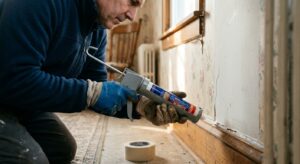
- Seal any visible gaps where wiring, plumbing, or HVAC lines penetrate exterior walls using acoustical sealant or low-expansion spray foam. Pay special attention to basement band joists and attic top plates which bypass wall insulation entirely.
- Identify wall sections that are accessible from an unfinished garage, basement rim joist area, or anywhere drywall has been removed for another repair project. These are your free inspection windows.
- Carefully remove a small section of drywall (about 4 inches by 4 inches) in a suspected problem area, such as a room that is always cold. Use a drywall saw and cut between studs so the patch is straightforward.
- Using a flashlight and your hand, inspect the cavity. Look for sagging batts, voids at the top of the cavity, discoloration from moisture, clumped cellulose, or gaps around electrical boxes and pipes.
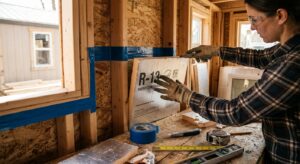
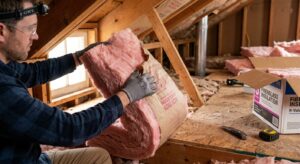
- If batts are sagging or missing, cut new R-15 kraft-faced fiberglass batts to fit snugly in the cavity. Friction-fit them so they fill the full depth without compression, which reduces R-value.
- Seal all electrical box penetrations, pipe penetrations, and top and bottom plate gaps with fire-rated caulk or low-expansion foam before closing the wall. These bypasses are often more impactful than the insulation itself.
- Patch the drywall with a pre-cut drywall plug, joint compound, and paint. The full repair adds under 30 minutes and restores the wall to better-than-original performance.
- Hire a certified building performance contractor or insulation specialist who offers dense-pack blown-in cellulose or fiberglass for existing walls. Request a blower door test before and after to verify air sealing improvement.
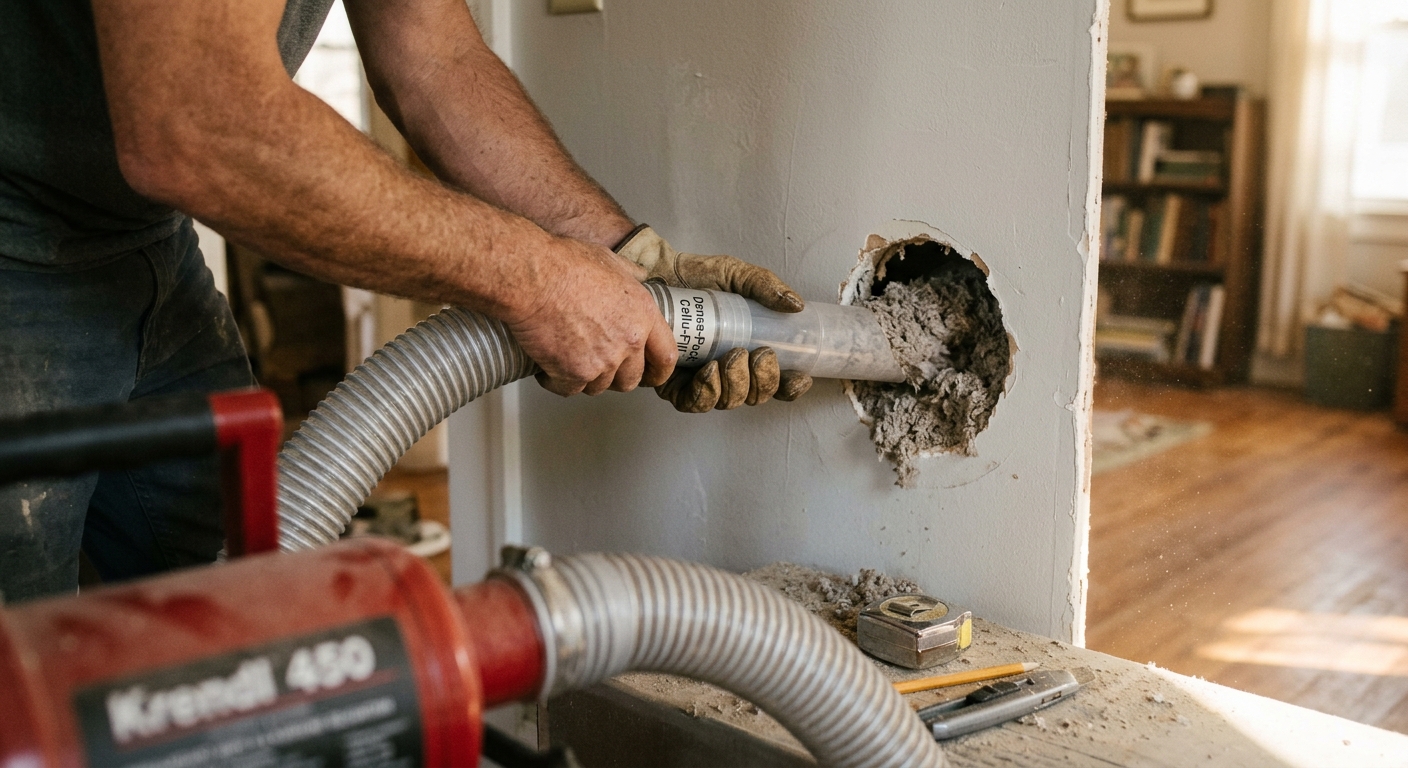
- The contractor drills 2 to 3 inch holes at the top of each stud bay, either from the exterior (removing one row of siding) or from the interior (patching drywall afterward). Confirm which method is used before signing a contract.
- Dense-pack cellulose is blown in at 3.5 to 4 pounds per cubic foot, which is firm enough to resist future settling. This achieves a whole-wall R-value of R-13 to R-15 in a 2×4 framed wall.
- Ask the contractor to simultaneously seal top and bottom plate air bypasses during the retrofit. This combination of air sealing plus dense-pack insulation is what delivers the full 10 to 30 percent energy savings.
- After completion, request a written report with post-installation blower door results and insulation coverage documentation. This paperwork is useful for rebate applications and future home sale disclosures.
- Check with your utility company and the federal residential energy tax credit program (currently 30 percent of insulation costs up to applicable limits under the Inflation Reduction Act) to offset the project cost.
Why It Works: The Benefits
Restoring wall insulation to rated R-value performance can reduce heating and cooling loads by 10 to 30 percent, translating to $150 to $600 per year in savings for a typical 2,000 square foot home depending on climate and energy costs.
Degraded wall insulation causes cold spots and drafts near exterior walls. Restoring or upgrading insulation eliminates those comfort complaints and reduces the temperature differential between rooms by as much as 5 to 8 degrees Fahrenheit in cold climates.
When walls leak heat freely, your furnace or air conditioner runs longer cycles to compensate. Better wall insulation shortens runtime by 15 to 25 percent, extending equipment life and reducing the chance of expensive premature failure.
Dense-pack retrofits and modern foam options also reduce air infiltration through wall cavities, lowering indoor humidity levels in humid climates and reducing the risk of condensation damage to wall sheathing and framing over the long term.
Energy-efficient homes with documented insulation upgrades sell for 2 to 7 percent more on average according to the DOE, and buyers in competitive markets increasingly request energy audits, making insulation upgrades a tangible financial asset.
💰 Savings Impact by Action
Sealing wall cavity air bypasses at outlets, plates, and penetrations reduces convective heat loss by up to 20 percent without touching the insulation material itself.
Installing dense-pack cellulose at 3.5 pounds per cubic foot in previously uninsulated or settled walls reduces whole-wall heat loss by 20 to 30 percent annually.
Replacing sagging or voided fiberglass batts in accessible wall sections restores R-value to original rated levels, recovering up to 15 percent of lost thermal performance.
Adding R-5 to R-10 continuous rigid foam to the exterior during re-siding eliminates stud thermal bridging and can reduce whole-wall heat transfer by 15 to 20 percent.
🏠 Key Concepts Explained
The Science Behind It
Wall insulation works by trapping millions of tiny air pockets within a matrix of fibers or foam cells. Heat transfer by conduction is slowed because air is a poor thermal conductor compared to solid materials, and the fiber matrix prevents the air from circulating via convection. The R-value assigned to any insulation product is measured under laboratory conditions with the material at full thickness, no air movement, and no moisture. Real-world performance in an aging wall diverges from that number in several compounding ways over time.
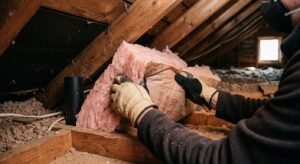
Fiberglass batts, which are the most common wall insulation in U.S. homes built after 1960, are susceptible to two primary failure modes. First, the batts are held in place by friction and gravity, and over decades they can sag or separate, leaving uninsulated triangular voids at the top of stud bays that act as direct conductive pathways to the exterior. Second, air washing occurs when air moves through gaps around electrical boxes, plumbing penetrations, and at the top and bottom plates. This moving air bypasses the insulation entirely and can account for more heat loss than the insulation material itself. Studies by the Oak Ridge National Laboratory found that air infiltration alone can reduce effective R-value by 30 to 50 percent in batt-insulated walls with typical installation defects.
Cellulose, made from recycled paper and treated with boron-based fire retardants, is denser than fiberglass and starts with better air resistance, but it settles. Dry-blown cellulose installed in wall cavities at standard density (1.5 to 2 pounds per cubic foot) can settle 10 to 20 percent in the first few years, creating voids at the top of each bay. Dense-pack installation at 3.5 pounds per cubic foot eliminates settling, which is why it is the preferred retrofit method in building performance work. Meanwhile, open-cell spray foam remains stable but can absorb moisture over time if the vapor barrier is compromised, while closed-cell foam is the most durable option but is rarely used in standard residential wall retrofits due to cost. Understanding these material differences lets you match the right solution to the specific failure mode your walls are experiencing.
Frequently Asked Questions
▼ How do I know if my wall insulation has degraded without tearing open my walls?
The most accessible method is a thermal scan using an inexpensive infrared thermometer or a plug-in thermal leak detector. On a cold evening with the heat running, scan exterior wall surfaces systematically. A well-insulated section will read within 2 to 3 degrees of your room air temperature, while a voided or settled cavity will read 8 to 15 degrees colder. Alternatively, a professional energy auditor can perform an infrared camera scan during a blower door test for $200 to $400, which gives you a complete wall-by-wall map of problem areas.
▼ My house is only 15 years old. Is it too soon to worry about insulation degradation?
Fifteen years is enough time for significant settling in dry-blown cellulose walls and for air washing to degrade batt performance if installation quality was poor. The real question is not age but performance: check your energy bills against similar homes in your area using the EPA’s Home Energy Score or your utility’s free benchmarking tool. If you are using 20 percent more energy per square foot than comparable homes, degraded insulation is a likely contributor regardless of age.
▼ Can I just add more insulation on top of what is already in my walls?
In most cases you cannot add to existing wall cavity insulation without opening the walls, because the cavity is already enclosed. What you can do without opening walls is add continuous insulation to the exterior during a re-siding project, or add rigid foam board to the interior during a remodel. Exterior continuous insulation (R-5 to R-10) also eliminates thermal bridging through studs, which is something cavity-only insulation cannot address, making it a meaningful upgrade even if your existing insulation is still in reasonable condition.
▼ What if my walls have no insulation at all? This was common in pre-1950 homes.
Uninsulated walls are actually an easier problem to solve than degraded insulation because there is no existing material to work around. Dense-pack blown-in retrofit is the standard solution, drilled from the exterior between each stud bay, and typically costs $1.50 to $3.00 per square foot of wall area. A 2,000 square foot home with 1,200 square feet of exterior wall area would cost roughly $1,800 to $3,600, with energy savings of 15 to 30 percent making payback achievable within 4 to 8 years, faster in cold climates.
▼ Will upgrading wall insulation really make a noticeable difference compared to attic insulation?
Attic insulation delivers a faster payback because heat rises and attic bypasses are larger, so that is always the first priority. However, walls represent 15 to 25 percent of a home’s total heat loss surface area and are often at much lower R-values than attics. In a home where the attic is already at R-38 or higher, wall insulation becomes the dominant remaining opportunity, and homeowners consistently report significant comfort improvements, especially elimination of cold exterior walls and drafts, after a dense-pack retrofit.
Quick Tips
- Check your home’s original construction records or permit documents to identify what type of insulation was installed and when. This tells you whether you are dealing with settling cellulose, aging batts, or an originally under-insulated wall.
- Energy audits from a certified BPI (Building Performance Institute) contractor typically cost $200 to $400 and include a blower door test plus infrared camera scan, revealing exactly where your wall insulation is failing before you spend money on repairs.
- If you are repainting or remodeling any exterior-facing room, that is the ideal time to inspect and upgrade wall insulation at the lowest incremental cost since the walls are already disturbed.
- Homes in cold climates (Climate Zones 5 through 7) see the fastest payback on wall insulation upgrades because the temperature differential between inside and outside is larger for more hours per year, meaning more heat is lost per day through degraded insulation.
Variations for Your Situation
- Apartment/Rental: Renters cannot modify wall insulation directly, but they can address the most impactful surface they do control: air sealing at outlets, switch plates, and window frames on exterior walls. A $20 pack of foam outlet gaskets and a tube of removable rope caulk for window perimeters can meaningfully reduce drafts without landlord permission. Document any persistent cold walls with a thermal scan and report them to your landlord as a habitability issue, since degraded insulation can create conditions that violate energy codes in many states.
- Tight Budget (under $50): Focus entirely on air sealing, which addresses the largest single factor in wall performance loss at nearly zero cost. Buy foam outlet gaskets ($5), a can of low-expansion foam ($8), and acoustical sealant ($7). Seal every exterior wall outlet, every pipe and wire penetration you can access from the basement or attic, and the gap under your baseboard trim on exterior walls. This combination costs under $25 and can reduce effective heat loss through walls by 10 to 20 percent by eliminating air bypasses without touching the insulation itself.
- Older Home (pre-1980): Homes built before 1980 have two compounding problems: original insulation that has had 40 to 60 years to degrade, and construction practices that did not include air barriers, vapor retarders, or the blocking details that reduce air washing. Before pursuing any insulation upgrade, test for asbestos (in vermiculite or older spray insulation) and lead paint, both common in this era. A professional energy audit is strongly recommended before DIY work in pre-1980 homes. Dense-pack blown-in cellulose is the preferred retrofit method, and many state weatherization programs offer subsidized or free installation for qualifying income levels.