A heat wave is in the forecast and you already know what comes next: your air conditioner runs non-stop, your home feels stuffy by mid-afternoon, and your next electricity bill makes you wince. Most homeowners react to heat waves instead of preparing for them, and that reactive approach is exactly what drives up energy costs during the hottest days of the year.
Pre-cooling is a simple strategy built on real physics. By lowering your home’s temperature and reducing stored heat in walls, floors, and furniture before the peak heat arrives, you give your AC a head start it would never catch up to otherwise. Utilities and building scientists have studied this approach for decades, and the consensus is clear: strategic pre-cooling can cut your peak cooling costs by 15 to 30% during a heat wave, while actually keeping your home more comfortable throughout the day.
In this post, you will learn the science behind why pre-cooling works, get two practical approaches ranging from zero-cost to a simple DIY setup, and find out exactly what to do the night before and morning of a forecast heat wave. Whether you have central air, a window unit, or a mix of both, these steps will help you beat the heat without paying peak-rate electricity prices all day long.
What You’ll Need
Click on an item below to shop for the recommended items for this recipe on Amazon.
As an Amazon Associate, we earn from qualifying purchases.
How to Do It
- Check the forecast the evening before a predicted heat wave. Note the overnight low temperature and the time peak heat is expected the following day, typically 2 PM to 5 PM.
- If overnight lows will drop below 70 degrees Fahrenheit, open windows on the lower, shaded side of your home and on the upper, opposite side to create a natural cross-ventilation and stack effect. Turn off the AC and let nature do the cooling for free.
- Close all windows, exterior doors, and blinds by 7 AM to 8 AM before outdoor temperatures rise. Closing up early traps the cool air inside before solar and ambient heat can invade.
- Close all south-facing and west-facing window blinds or shades completely before 9 AM. This alone can reduce solar heat gain by up to 30%, which is the single biggest midday heat source in most homes.
- Lower your thermostat to 68 to 70 degrees Fahrenheit between 6 AM and 10 AM while outdoor temperatures are still manageable and your AC runs efficiently. This pre-loads your home’s thermal mass with cold.
- At 10 AM, raise the thermostat to your normal comfort setpoint of 74 to 76 degrees Fahrenheit. Your home’s pre-cooled surfaces will slow temperature rise significantly, reducing AC runtime during the most expensive peak hours.
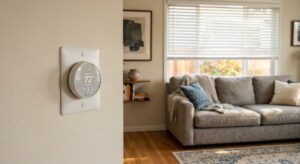
- Purchase a smart or programmable thermostat compatible with your HVAC system. Confirm compatibility using the thermostat manufacturer’s online tool before buying. Popular options include the Ecobee SmartThermostat, Google Nest, and Honeywell Home T6 Pro.
- Turn off power to your HVAC system at the breaker before starting installation. Use a non-contact voltage tester to confirm the power is off before handling wiring.
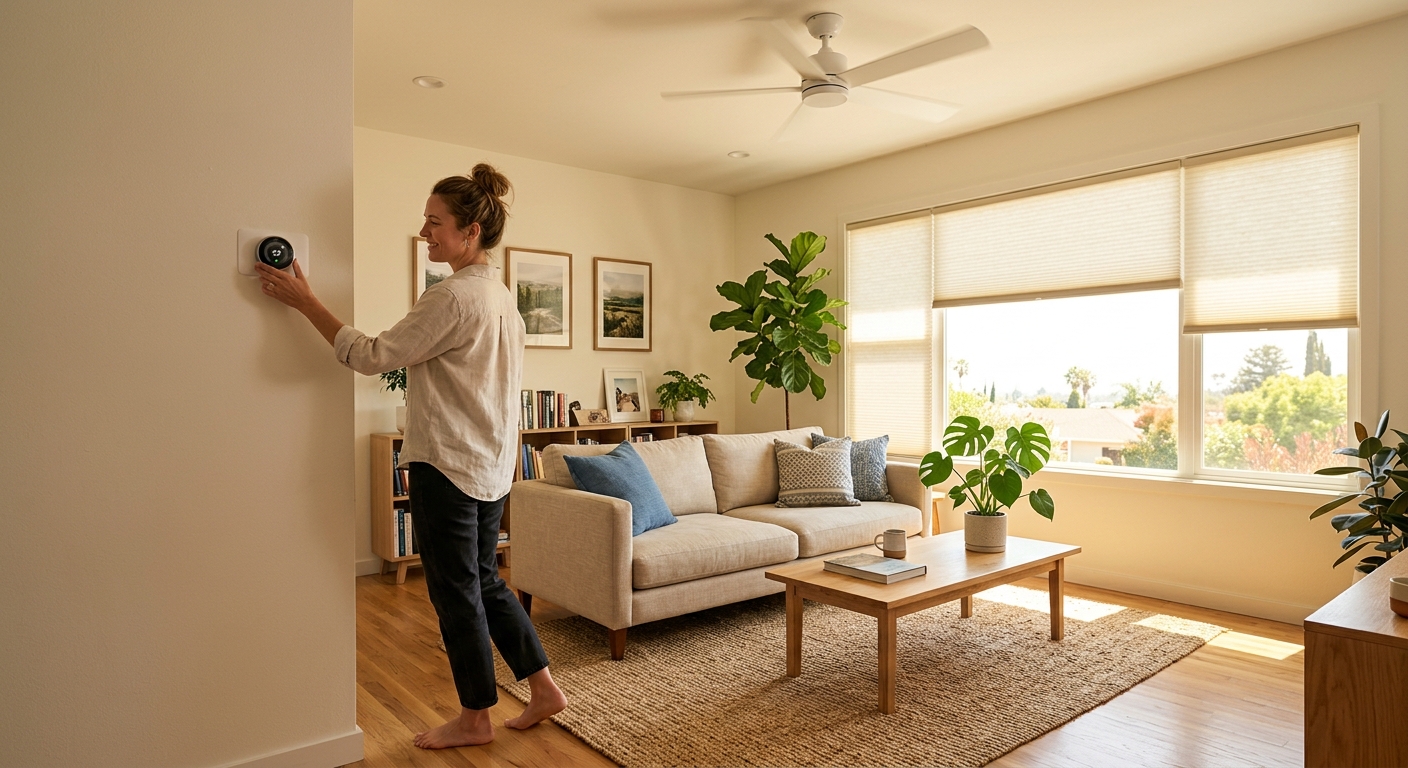
- Follow the manufacturer’s wiring guide to install the new thermostat, connecting wires according to the labeled terminals. Most installations take 30 to 60 minutes and require only a screwdriver.
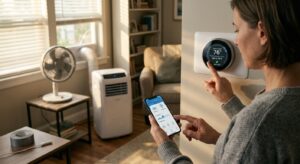
- Restore power and complete the setup wizard on the thermostat or its app. Enter your utility’s peak hours if prompted. Many smart thermostats have a built-in pre-cooling or demand response feature you can enable directly in settings.
- Set a pre-cooling schedule: program the thermostat to drop to 68 to 70 degrees Fahrenheit starting at 5 AM to 6 AM on days when high temperatures exceed 90 degrees Fahrenheit. Set it to return to 74 to 76 degrees Fahrenheit by 10 AM.
- Enable any available demand response or utility savings features in the app. Ecobee and Nest both integrate directly with participating utility programs that can earn you bill credits of $20 to $50 per month during summer peak events.
- Install cellular or honeycomb blackout shades on all south-facing and west-facing windows. These shades provide R-values of 2 to 5 and reduce solar heat gain through windows by 40 to 60%, which directly shrinks your cooling load before you ever touch the thermostat.
- Add a programmable whole-house fan or attic fan if your home has adequate attic venting. Whole-house fans can exhaust an entire home’s air volume in 1 to 3 minutes, flushing heat out overnight far faster than open windows alone.
- Seal any visible attic access hatches, recessed light covers, and HVAC register gaps with weatherstripping or foam gaskets. These are common leakage points where cooled air escapes into unconditioned attic space.
- Place a programmable timer on any window AC units in bedrooms or supplemental zones, set to run at high fan speed between 5 AM and 9 AM to pre-cool those rooms independently before occupants wake up.
- Add door draft stoppers to garage-facing interior doors and an exterior door sweep to your front and back doors. Garages can reach 120 to 140 degrees Fahrenheit on hot days and leak significant heat into the home.
- After upgrades are complete, update your smart thermostat schedule to reflect the reduced heat gain. You may find your comfort setpoint during peak hours can be raised by 2 to 3 degrees without any loss of comfort, saving an additional 6 to 9% on cooling costs.
Why It Works: The Benefits
Running your AC during cooler, off-peak hours instead of peak afternoon windows can cut your daily cooling cost by 15 to 30% during a heat wave, especially if you are on a time-of-use rate plan where peak electricity costs 2 to 3 times more.
Homes that pre-cool maintain temperatures 3 to 6 degrees Fahrenheit cooler during peak afternoon heat compared to homes that start cooling reactively, because the thermal mass is already saturated with cold and slows heat absorption.
AC compressors work hardest and fail most often when running continuously during extreme afternoon heat. Pre-cooling reduces peak runtime by 20 to 40%, cutting wear on the compressor and refrigerant system and potentially extending equipment life by years.
Pre-cooling with night ventilation flushes stale, warm indoor air out through natural stack effect ventilation, replacing it with cooler, fresher outdoor air before windows must be closed for the day.
Shifting AC load away from peak grid demand hours reduces the chance of brownouts in your neighborhood and may qualify you for utility demand-response incentives worth $50 to $200 per summer season in participating utility programs.
💰 Savings Impact by Action
Flushing stored heat overnight when outdoor temps drop below 70 degrees Fahrenheit can reduce next-day cooling energy use by up to 25% by starting the day with fully pre-cooled thermal mass.
Running the AC 3 to 4 degrees cooler during the 5 AM to 10 AM off-peak window saves 15 to 20% on cooling costs because AC systems operate 15 to 25% more efficiently at lower ambient outdoor temperatures.
Closing blackout blinds on south and west windows before 9 AM blocks up to 30% of the total daily cooling load by preventing solar radiation from heating interior surfaces.
DOE and ENERGY STAR data show programmable thermostat scheduling saves an average of 8 to 10% annually on cooling costs by eliminating the manual guesswork in pre-cooling routines.
Sealing attic hatches, recessed lights, and window frame gaps prevents pre-cooled air from escaping into unconditioned spaces, preserving up to 15% more of the thermal cold reserve you built overnight.
🏠 Key Concepts Explained
The Science Behind It
Your home is not just air inside four walls. The drywall, framing, concrete slab, tile floors, furniture, and even books on shelves all have thermal mass, meaning they absorb, store, and slowly release heat energy. When a heat wave arrives, it is not just the air in your home that heats up. It is every surface and material inside it, and those materials hold heat long after sunset. Pre-cooling works by loading all of that thermal mass with cold energy before the heat arrives, creating a buffer that slows temperature rise for hours after you stop actively running your AC.
The physics of air conditioner efficiency also strongly favor morning operation. Your AC’s refrigerant system rejects heat to the outdoor air using a condenser coil. The hotter the outdoor air, the harder the compressor must work to push heat out against that higher ambient temperature. This is described thermodynamically by the coefficient of performance, and it degrades meaningfully as outdoor temperature climbs. At 75 degrees Fahrenheit outdoors, a typical central AC operates near its rated efficiency. At 100 degrees Fahrenheit, the same system may be operating 20 to 30% less efficiently. Running your AC during the cooler morning hours, even if it means slightly over-cooling your space, is genuinely cheaper per unit of cooling delivered than running it during peak afternoon heat.
Humidity management is an underappreciated dimension of pre-cooling. Human thermal comfort depends on both temperature and relative humidity. The body cools itself by evaporating sweat, a process that becomes less effective as humidity rises. An air conditioner dehumidifies as it cools, removing moisture from indoor air as it passes over the cold evaporator coil. By running the AC the night before and morning of a heat wave, you bring indoor relative humidity down from a typical summer level of 55 to 65% toward a more comfortable 40 to 50%. That drier air allows you to tolerate a thermostat setting 2 to 4 degrees higher than you otherwise would without feeling warmer, which compounds your energy savings throughout the peak afternoon hours.
Frequently Asked Questions
▼ My house warms up anyway by 3 PM even after pre-cooling. What am I missing?
The most common culprits are unblocked west-facing windows and air leaks in the attic or around recessed lights. West-facing windows receive direct sun from roughly 1 PM to sunset, pouring in intense heat during peak hours. Close and block those windows completely. Also check your attic access hatch: an unsealed hatch is like a hole in your ceiling connecting your living space to a 130-degree attic. Sealing it with weatherstripping can make a dramatic difference.
▼ Will pre-cooling actually save me money or just shift when I use electricity?
If you are on a flat-rate electricity plan, pre-cooling saves money primarily because your AC runs more efficiently in cooler morning conditions, typically 15 to 25% more efficiently than at peak afternoon temperatures. If you are on a time-of-use plan, the savings are even greater because you are also shifting load from expensive peak rates to cheaper off-peak rates. Either way, the savings are real and show up in the monthly total.
▼ Can I pre-cool with a window AC unit instead of central air?
Yes, window units work well for pre-cooling individual rooms, particularly bedrooms. Run the unit on its highest fan and cooling setting from 6 AM to 10 AM, then close the room door and reduce the unit to a maintenance setting or turn it off entirely. Because a room has much less thermal mass than a whole house, it will warm back up faster, so prioritize pre-cooling the room you will actually occupy during peak heat.
▼ Is it safe to leave windows open overnight before a heat wave?
Night ventilation is safe as long as outdoor air quality is acceptable, you are not in a wildfire smoke region, and the overnight low is actually cooler than your indoor temperature (typically below 70 degrees Fahrenheit). Use window locks or security pins to open windows only a few inches if security is a concern. Close and lock all windows before leaving for the day or before outdoor temperatures begin to rise in the morning.
▼ My thermostat does not have a pre-cool scheduling feature. What can I do?
Any programmable thermostat, even an inexpensive $25 to $40 model, lets you set different temperatures for different times of day. Simply program a 68 to 70 degree Fahrenheit setpoint for the 5 AM to 10 AM window and your normal comfort setpoint for the rest of the day. You do not need a smart thermostat to execute a pre-cooling schedule, only one with basic daily time-block programming.
Quick Tips
- Set a calendar reminder or phone alarm for 10 PM the night before any forecast high above 90 degrees Fahrenheit to start your pre-cooling routine, whether that means opening windows or dropping the thermostat.
- Use free apps like Weather Underground or your utility’s app to get hyper-local overnight low temperature forecasts, which are more relevant than regional TV weather for deciding whether night ventilation will work.
- Freeze one or two gallons of water in sealed containers the night before a heat wave and place them in front of a box fan to boost the cooling effect in a single room if your AC is struggling.
- Cover east-facing windows with temporary sun-blocking film or hang a light-colored curtain during the summer months to reduce early morning solar gain that would otherwise warm your home before you are even awake.
Variations for Your Situation
- Apartment or Renter: If you cannot modify central HVAC or install a smart thermostat, focus on what you can control. Close all blinds before 9 AM, place a window box fan facing outward in one room to exhaust warm air while a second window draws in cooler outdoor air overnight. Purchase a portable smart plug timer for your window AC unit and set it to run at full cool from 6 AM to 10 AM before you wake up. Cellular blackout curtains cost $30 to $80 per window and require no permanent installation.
- Tight Budget Under $50: Start with the zero-cost night routine described in Approach 1 since it costs nothing. Add a $10 to $15 door draft stopper for your main entry and a $5 to $8 roll of foam weatherstripping for drafty windows. If you have a standard programmable thermostat already, use its scheduling feature to drop the temperature by 3 to 4 degrees starting at 5 AM. These three changes together can reduce heat wave cooling costs by 10 to 20% at near-zero investment.
- Older Home Pre-1980: Homes built before 1980 typically have single-pane windows, minimal attic insulation, and significant air leakage, which means heat invades faster and pre-cooling benefits dissipate more quickly. Prioritize air sealing around window frames, electrical outlets on exterior walls, and attic penetrations before relying on pre-cooling. Consider temporary window insulation film kits (roughly $20 to $30 for a multipack) on single-pane windows as a seasonal upgrade. Pre-cool to a lower setpoint, around 67 to 68 degrees Fahrenheit, to compensate for faster heat gain through poorly insulated walls.