You just invested $5,000 or more in a new air conditioner, and your home still feels stuffy at 3pm. The upstairs bedrooms stay 5 to 8 degrees warmer than the rest of the house. Your system runs almost constantly on hot days and your electricity bill is climbing. Sound familiar? You are not alone, and the good news is that your new AC is probably fine.
The truth is that most cooling failures have nothing to do with the equipment itself. Leaky ducts, undersized return vents, poor attic insulation, and air sealing gaps are the silent thieves robbing your new system of its efficiency. A correctly sized, properly installed AC operating inside a leaky, poorly insulated shell is like running a high-performance engine with a clogged air filter. The equipment can only do so much when the building envelope is working against it.
This post walks you through the six most common reasons a new AC still underperforms, how to diagnose each one yourself, and exactly what to do about it. We cover free fixes you can do today, DIY upgrades for the weekend, and the one professional service that consistently delivers the biggest results when everything else has been tried.
What You’ll Need
Click on an item below to shop for the recommended items for this recipe on Amazon.
As an Amazon Associate, we earn from qualifying purchases.
How to Do It
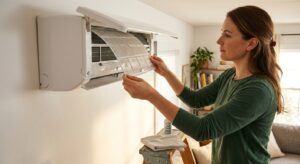
- Check your air filter. A clogged filter is the single most common cause of reduced airflow. Hold it up to light. If you cannot see light through it, replace it immediately. A dirty filter can reduce system airflow by 15% or more.
- Open every supply register fully and make sure none are blocked by furniture, rugs, or curtains. Even one blocked register forces air pressure imbalances throughout the system.
- Walk through the house with interior doors closed and check for supply registers in each room. If a bedroom has a supply register but no return grille, crack the door 1 to 2 inches or install a door undercut to allow air to return. This alone can fix hot room complaints.
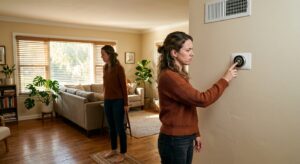
- Check your thermostat fan setting. Make sure it is set to AUTO, not ON. Running the fan continuously in ON mode re-evaporates moisture off the coil between cycles, increasing indoor humidity and making the air feel warmer.
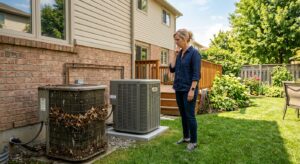
- Inspect the outdoor condenser unit. Clear any debris, vegetation, or objects within 18 inches on all sides. Restricted condenser airflow directly reduces system capacity and can cause the compressor to overheat and short-cycle.
- Look at the large insulated refrigerant line (the suction line) running into your home. If the insulation is missing, torn, or saturated, the line is absorbing heat before refrigerant reaches the coil. Wrap any bare sections with foam pipe insulation from the hardware store.
- Seal attic air bypasses before adding insulation. Use canned spray foam to seal around recessed light cans (use IC-rated foam), top plates where walls meet the attic floor, plumbing and wiring penetrations, and the attic hatch frame. This step alone can reduce cooling load by 10 to 15%.
- If your attic insulation is below R-30, add blown-in fiberglass or cellulose to reach R-38 to R-49 depending on your climate zone. Bags of blown-in insulation rent with the blower machine at most home improvement stores for about $30. Material costs typically run $150 to $250 for an average attic.
- Seal accessible duct connections in the attic, basement, or crawlspace using UL 181-rated foil duct tape or mastic sealant. Pay special attention to the boots where ducts connect to floor or ceiling registers, as these joints are almost always unsealed from the factory.
- Add door sweep weather stripping to the attic access hatch and cover it with an insulated attic tent or rigid foam board cut to fit. An uninsulated attic hatch can have the thermal resistance of a square foot of single-pane glass.
- Install a programmable or smart thermostat if you do not already have one. Set it to raise the temperature by 7 to 10 degrees Fahrenheit during the 8 hours you are away each day. The DOE estimates this saves about 10% annually on heating and cooling combined.
- Apply window film or cellular shades to west and south-facing windows. Low-e window film costs $1 to $3 per square foot and can block 50 to 70% of solar heat gain through glass, reducing afternoon cooling load meaningfully in rooms that face the afternoon sun.
- Schedule a duct blaster or blower door test with a certified home energy auditor. This pressurizes the duct system and quantifies exactly how much air is leaking. If duct leakage exceeds 15% of system airflow, professional duct sealing with Aeroseal or mastic can restore 20 to 30% of lost capacity.
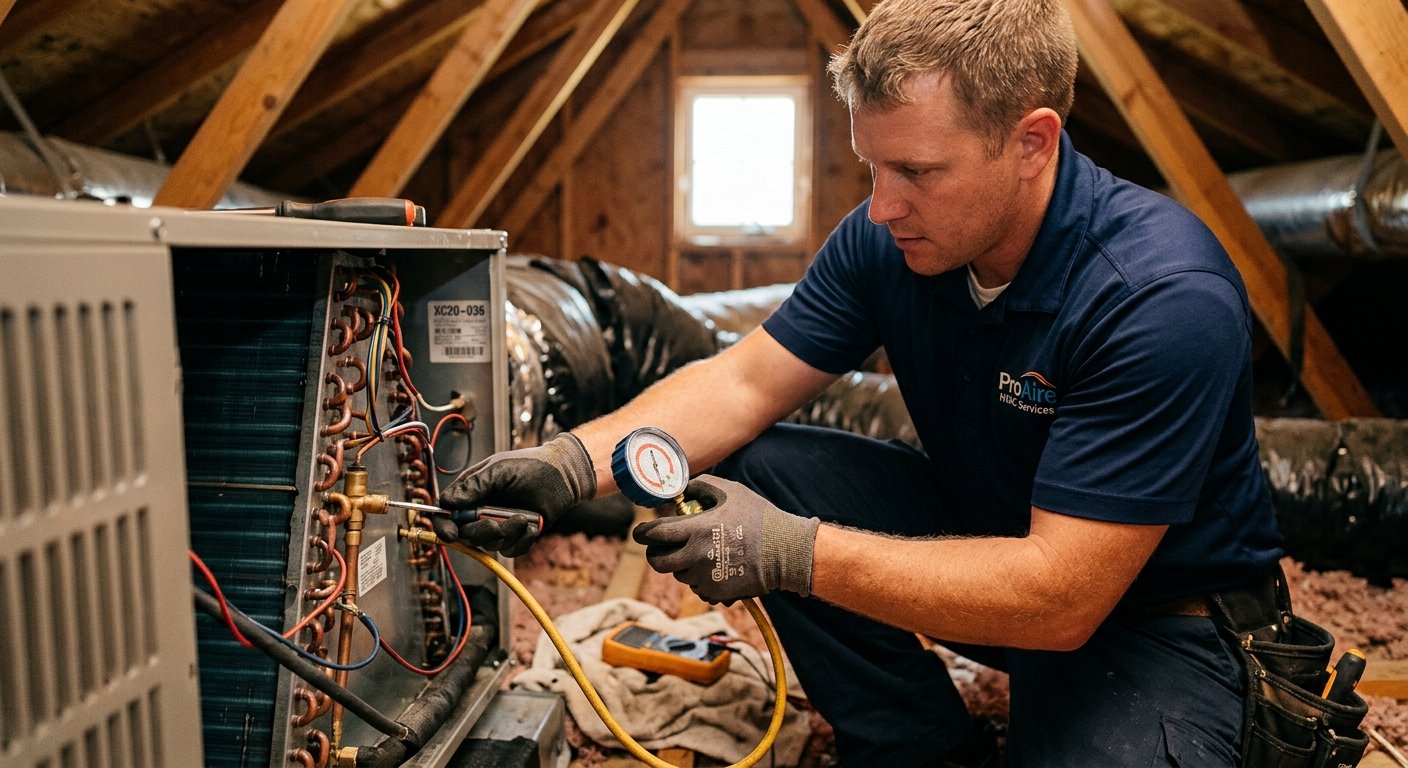
- Request a refrigerant charge verification from your HVAC installer or a licensed technician. Ask them to check both superheat and subcooling values, not just system pressures. A charge that is 15% low reduces efficiency by roughly 20% and the system will never hit setpoint on hot days.
- Ask your HVAC contractor for a copy of the original Manual J load calculation used to size your system. If they cannot produce one or used rule-of-thumb sizing, hire an independent HVAC engineer to perform a proper calculation. Oversized equipment is responsible for a significant percentage of new-install comfort complaints.
- Have a technician perform a static pressure test on the duct system. Total external static pressure above 0.5 inches of water column indicates restriction, usually from undersized ducts, a dirty coil, or an inadequate return air path. This test costs $75 to $150 and pinpoints exactly where airflow is being choked.
- If zoning or room-by-room comfort is the core complaint, discuss adding a zone damper system or a supplemental ductless mini-split for problem areas. Mini-splits run $1,500 to $3,500 installed for a single zone but deliver very precise comfort with efficiencies 30 to 40% higher than central systems in that space.
Why It Works: The Benefits
Addressing duct leakage and air sealing together can reduce cooling costs by 20 to 30% annually, which on a $250 monthly summer bill translates to $50 to $75 saved every month.
Fixing return air restrictions and balancing airflow eliminates the 5 to 10 degree temperature swings between rooms that make bedrooms uncomfortable even when the thermostat reads correctly.
A properly sized and charged system running full cycles removes significantly more moisture than an oversized system short-cycling. Relative humidity dropping from 60% to 45 to 50% makes a 76-degree home feel as comfortable as 72 degrees.
An AC fighting against duct losses, restricted airflow, and excessive heat gain runs longer hours and cycles more frequently, shortening compressor life. Fixing these issues reduces run time and can add 3 to 5 years to equipment lifespan.
Sealing the building envelope reduces the infiltration of outdoor pollutants, allergens, and humidity through uncontrolled gaps, leading to measurably cleaner, drier indoor air.
💰 Savings Impact by Action
Sealing duct leakage from 30% down to under 10% of system airflow recovers up to 25% of cooling capacity that was previously lost to unconditioned spaces.
Upgrading attic insulation to R-38 or higher reduces ceiling heat gain by 15 to 20%, directly reducing the cooling load your AC must overcome each afternoon.
Sealing attic bypasses and envelope penetrations reduces uncontrolled hot air infiltration, cutting cooling load by up to 15% in leaky homes.
A 7 to 10 degree setback for 8 hours per day while away saves approximately 10% on annual cooling costs according to DOE data.
Blocking direct solar gain on west and south windows with film or cellular shades reduces afternoon cooling load by up to 12% in sun-exposed homes.
🏠 Key Concepts Explained
The Science Behind It
Your air conditioner does not actually create cold. It moves heat from inside your home to the outside by cycling refrigerant through a compression-evaporation loop. The indoor evaporator coil absorbs heat from your indoor air (cooling it), and the outdoor condenser coil rejects that heat to the outside. The critical insight is that this process has a finite capacity measured in BTUs per hour. When your building envelope leaks heat faster than your AC can remove it, the system loses the battle no matter how new or expensive it is.
Duct losses compound this problem dramatically. When conditioned air leaks out of duct joints in an unconditioned attic, two bad things happen simultaneously: you lose the cooled air you paid to produce, and the air handler pulls in replacement air from the house faster than it can condition it. This creates negative pressure in the living space, which pulls hot outdoor air in through every crack and gap in the structure. Researchers at Lawrence Berkeley National Laboratory found that duct leakage in the average home effectively reduces HVAC system efficiency by 20 to 30%, meaning a brand-new 16 SEER system can perform like a 12 SEER system purely due to duct losses.
Humidity is the hidden variable most homeowners miss. Air at 75 degrees and 60% relative humidity feels warmer than air at 75 degrees and 45% relative humidity because moisture interferes with your body’s evaporative cooling. An oversized AC that short-cycles removes less moisture per cooling cycle than a properly sized system running longer, fuller cycles. This is why correct sizing, full airflow, and a properly charged system matter so much: your comfort depends on both temperature and humidity removal working together.
Frequently Asked Questions
▼ My new AC was just installed last month. Why is it short-cycling and running for only 5 to 8 minutes at a time?
Short-cycling almost always points to one of three causes: the system is oversized for the actual heat load of the home, the refrigerant charge is incorrect, or airflow is severely restricted. Start by replacing the air filter and making sure all registers are open. If that does not help, call the installing contractor and request a refrigerant charge check and a review of the original equipment sizing calculation. An oversized unit is very difficult to fix without replacing the equipment, but it is covered under most installer warranties if a proper Manual J was never performed.
▼ My downstairs is comfortable but my upstairs is 8 degrees hotter. What is going on?
This is almost always a combination of attic heat gain and inadequate airflow to the upper floor. Heat rises and the upper floor ceiling is directly exposed to a very hot attic. Check your attic insulation depth first: you want a minimum of R-38 in most U.S. climates. Also check whether upstairs supply registers are fully open and whether there are dedicated return grilles on the upper floor. If there is only one central return downstairs, the upper floor has no easy path to return air, creating pressure imbalances that restrict upper-floor airflow. A ductless mini-split for the upstairs is often the most cost-effective permanent solution.
▼ My energy bill is just as high with the new AC as it was with the old one. Should I call the contractor?
Yes, but prepare first. Pull last year’s bills for the same months and compare cooling degree days if possible, since a hotter summer will always cost more regardless of equipment. If the weather is comparable and bills are similar, the most likely causes are excessive duct leakage, an improperly charged system, or the new unit being oversized and short-cycling inefficiently. Request a static pressure test and refrigerant charge verification from the contractor, and ask to see the commissioning report from the original installation.
▼ The AC runs all night but the house never gets below 76 degrees even when I set it to 70. What should I check first?
First, check whether the outdoor condenser coils are dirty or blocked. Dirty condenser coils can reduce system capacity by 20 to 30% and are one of the most overlooked causes of inadequate cooling on new installs. Second, make sure the refrigerant line insulation is intact from the outdoor unit to where it enters the home. Third, check for any supply registers in unused rooms that are partially closed, redirecting air away from occupied spaces. If none of these resolve it, have a technician check refrigerant charge and system static pressure.
▼ Can I add refrigerant myself to boost cooling performance?
No. Adding refrigerant without verifying the actual charge with manifold gauges almost always makes performance worse, not better. If the system has a refrigerant leak, adding more does not fix the leak and refrigerant release to the atmosphere is illegal under EPA regulations. If the system is already correctly charged and you add more, you can cause liquid slugging that destroys the compressor. Always have refrigerant work done by an EPA 608-certified technician.
Quick Tips
- Run your AC on its coolest, sunniest day of the year before the warranty expires. If it cannot maintain setpoint when outdoor temperatures exceed 95 degrees Fahrenheit, document it and call the installer while you are still covered.
- Thermal imaging cameras can be rented for about $50 per day and will make duct leaks, insulation gaps, and air infiltration points visually obvious in about 30 minutes of walking through your home.
- Planting a deciduous tree on the southwest corner of your home provides natural shade in summer while allowing winter sun through. A mature shade tree can reduce cooling load on west-facing walls by up to 30% without any mechanical systems involved.
- Register deflectors (small plastic or magnetic covers that redirect airflow) cost about $10 each and can redirect supply air from a register blowing straight at the floor toward the center of the room, significantly improving air mixing and perceived comfort.
Variations for Your Situation
- Apartment or Rental: If you rent and your AC was recently replaced but still underperforms, your first step is to document the problem in writing to your landlord since the equipment and ductwork are their responsibility. In the meantime, you can legally improve comfort by adding cellular shades or window film on south and west windows (removable and renter-safe), using door draft stoppers to reduce inter-unit air transfer, and placing a box fan facing out in a window on the shady side of the unit in the evening to flush out accumulated heat. Portable evaporative coolers work well in dry climates and cost $100 to $300.
- Tight Budget (Under $50): Focus on the free fixes first: clean or replace the air filter ($10 to $20), clear the outdoor condenser, open all registers, and set the thermostat fan to AUTO. For under $50, add foam pipe insulation to any bare suction line sections ($8 to $15) and seal the most obvious gaps around plumbing under sinks and behind the dryer with canned spray foam ($6 to $10 per can). These steps alone can recover 10 to 15% of cooling performance at minimal cost.
- Older Home (Pre-1980): Homes built before 1980 typically have significantly more air leakage than newer construction, duct systems designed for less efficient equipment, and insulation levels well below current code. In these homes, duct leakage often exceeds 35% of system airflow and attic insulation may be R-11 or less. The biggest bang-for-buck upgrade is professional Aeroseal duct sealing ($1,500 to $2,500) combined with blown-in attic insulation to R-38. Many states offer rebates covering 30 to 50% of these costs through utility programs, so check the DSIRE database at dsireusa.org before paying full price.