Every spring, thousands of homeowners discover their sump pump has failed the hard way: standing in a wet basement while rain pours outside. A sump pump that sits idle all winter can seize, lose its float switch function, or develop a clogged discharge line without any warning. By the time you need it most, it may already be too late.
Basement flooding is not just an inconvenience. The average water damage claim runs between $7,000 and $11,000 according to industry data, and standard homeowners insurance often excludes groundwater flooding. A functioning sump pump is your first and most important line of defense against that financial hit. The good news is that testing and maintaining your pump costs almost nothing and takes only a few minutes.
This guide walks you through exactly how to test your sump pump before spring rain season, what warning signs to look for, and when it makes sense to call a professional or invest in a backup system. Whether your pump is brand new or has been running for a decade, a quick pre-season check could be the most valuable 10 minutes you spend on your home all year.
What You’ll Need
Click on an item below to shop for the recommended items for this recipe on Amazon.
As an Amazon Associate, we earn from qualifying purchases.
How to Do It
- Locate your sump pit, typically in the lowest corner of the basement or crawl space, and remove the cover. Shine a flashlight inside to check water level, visible debris, and the position of the float switch arm or ball.
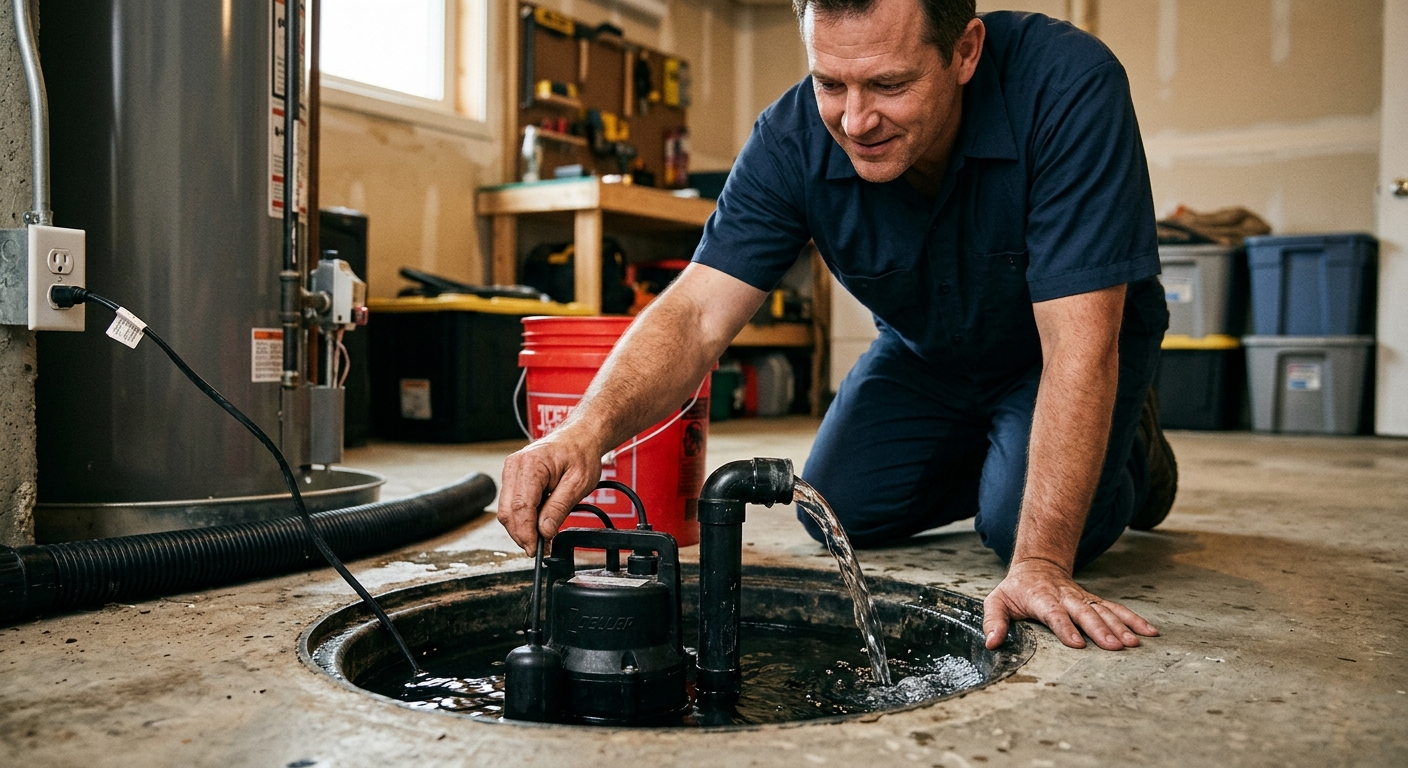
- Pour a 5-gallon bucket of water slowly into the pit and watch the float rise. The pump should activate automatically within seconds of the float reaching its trigger level. Time how long it takes to clear the water: a healthy pump should empty a standard pit in under 2 minutes.
- While the pump runs, trace the discharge line to where it exits the house and verify that water is actually flowing outside. Check that the outdoor termination point is at least 10 feet from the foundation and is clear of ice, debris, or snow.
- Listen carefully as the pump runs. A grinding, rattling, or high-pitched whining sound indicates a worn impeller or bearing and signals that replacement is likely needed before heavy rain season.
- After the pit empties and the pump shuts off, confirm the pump stops cleanly. A pump that continues running after the pit is empty has a stuck float switch and needs adjustment or replacement immediately.
- Check the power cord and outlet for any signs of moisture, corrosion, or tripped GFCI protection. Reset the GFCI if tripped and retest. If it trips again, call an electrician before using the pump.
- Disconnect the pump’s power cord from the outlet before doing anything else. Never work on the pump with power connected. Then disconnect the discharge pipe at the union fitting above the pump if one is present.
- Lift the pump out of the pit and carry it to a utility sink or outdoors. Use a garden hose to flush the intake screen and impeller housing thoroughly, removing any accumulated silt, rust flakes, or mineral deposits.
- Inspect the impeller by shining a light into the intake. Spin it gently with a screwdriver handle: it should rotate freely with no grinding resistance. If it is stiff or damaged, replace the pump rather than reinstalling a compromised unit.
- While the pump is out, scoop or vacuum any sediment from the bottom of the pit using a wet-dry vacuum. Even 2 to 3 inches of silt at the bottom restricts water intake and forces the pump to work harder.
- Inspect the discharge pipe for cracks, loose joints, or evidence of past freezing. Apply PVC primer and cement to any suspect joints. Verify the pipe has a continuous downward slope from pump to exit point with no low spots where water can pool and freeze.
- Reinstall the pump, reconnect the discharge union, and plug back in. Perform the 5-gallon bucket test from the quick fix approach to confirm everything operates correctly before replacing the pit cover.
- Install or test a battery backup alarm if you have one. If you do not have a water alarm, place an inexpensive float-style water alarm ($15 to $25) in the pit set slightly above the normal pump activation level as an early warning system.
- Choose between a dedicated battery backup pump unit ($150 to $300) that sits alongside your primary pump, or a combination unit ($250 to $400) that integrates both primary and backup in one housing. Combination units are simpler to install but cost more upfront.
- Install the backup pump on a platform or mount it in the pit so its intake sits 2 to 3 inches higher than your primary pump’s intake. This ensures the backup only activates when the primary fails or is overwhelmed.
- Connect the backup unit’s discharge to the existing discharge pipe using a Y-connector or a check valve configuration per the manufacturer instructions. Ensure both check valves are installed correctly to prevent backflow.
- Connect the backup pump to its charging unit and plug the charger into a dedicated outlet. A deep-cycle marine battery ($80 to $120, purchased separately for most units) provides 5 to 7 hours of backup pumping under typical load.
- Test the backup system by unplugging your primary pump and performing the 5-gallon bucket test. The backup should activate within seconds as water rises. Confirm the alarm sounds if included.
- Set a calendar reminder to test and recharge the battery every 3 months and replace the battery every 3 to 5 years regardless of apparent condition, as lead-acid batteries degrade silently.
Why It Works: The Benefits
The average basement flood claim costs $7,000 to $11,000, and many groundwater events are excluded from standard homeowners policies. A working sump pump is your primary barrier against that out-of-pocket expense.
Annual testing and cleaning can extend a sump pump’s operational life from the average 7 to 10 years up to 12 to 15 years, saving $150 to $400 on premature replacement costs.
Even a few inches of standing water can trigger mold growth within 24 to 48 hours. Mold remediation typically costs $1,500 to $4,000, an expense that a $0 pump test could prevent entirely.
Homeowners with finished basements or stored valuables face replacement costs well above the average flood claim. A functioning pump protects furniture, appliances, electronics, and sentimental items that insurance may not fully cover.
Knowing your pump has been tested and is operating correctly means you can sleep through a spring thunderstorm rather than checking the basement every hour, reducing stress during the most active storm months of April through June.
💰 Savings Impact by Action
A properly maintained sump pump prevents groundwater flooding in up to 90% of weather events that would otherwise cause basement water intrusion.
Annual cleaning and inspection extends average pump lifespan by up to 40%, delaying a $150 to $400 replacement by 3 to 5 additional years.
Keeping basement moisture below the flooding threshold reduces mold colonization risk by roughly 80%, avoiding $1,500 to $4,000 in remediation costs.
Battery backup systems protect against pump failure during power outages, which coincide with 70% of the highest-volume storm events.
🏠 Key Concepts Explained
The Science Behind It
A sump pump works by lowering water pressure at the inlet using a spinning impeller, the same basic principle as any centrifugal pump. When the impeller spins, it flings water outward by centrifugal force, creating a low-pressure zone at the center that draws groundwater in from the pit. The faster the impeller spins and the tighter its tolerance to the pump housing, the more efficiently it moves water. Sediment, corrosion, and bearing wear all increase the gap between the impeller and housing, reducing flow rate and making the motor work harder for the same output.
Groundwater behavior in spring follows a predictable hydraulic pattern. As snow melts and rain saturates the soil, the water table rises toward the surface. In clay-heavy soils, which drain poorly, this rise can happen within hours of a sustained rain event. The soil surrounding your foundation acts like a sponge, and once it is saturated, hydrostatic pressure pushes water through any available path into your basement. The sump pit is a deliberate low point that intercepts this groundwater before it reaches your floor slab, giving the pump a chance to remove it before pressure builds to the point of seepage through walls or cracks.
The check valve on the discharge line is a critical but often overlooked component. Without it, every time the pump shuts off, the water sitting in the discharge pipe would drain back into the pit, requiring the pump to move that same water again on the next cycle. This back-and-forth, called short cycling, dramatically increases motor wear and reduces the pump’s effective capacity during high-volume events. A functioning check valve holds water in the discharge line, so the pump only ever moves new water. Inspecting and replacing a worn check valve ($10 to $20) is one of the highest-value maintenance steps a homeowner can perform.
Frequently Asked Questions
▼ My sump pump turns on but the water level in the pit is not dropping. What is wrong?
The most likely causes are a clogged intake screen, a failed impeller, or a blocked discharge line. Remove the pump and check the intake screen for debris first since it is the easiest fix. If the screen is clear, shine a light into the impeller housing and try spinning the impeller gently: resistance or wobble means it is damaged. If both are fine, go outside and verify water is actually exiting the discharge pipe while the pump runs, as a frozen or obstructed pipe will cause exactly this symptom.
▼ How do I know if my sump pump is strong enough for my basement?
Pump capacity is rated in gallons per hour (GPH) at a given head height, which is the vertical distance water must travel from the pit to the discharge exit. A typical basement needs 1,800 to 2,200 GPH for moderate groundwater. If your pump runs continuously during moderate rain without clearing the pit, it is undersized. Check your pump’s rating plate and compare it to manufacturer performance curves at your specific head height, which is usually 8 to 12 feet for most homes.
▼ My sump pump worked fine last spring. Does it really need testing again?
Yes. Float switches can stick or corrode in as little as one season, and discharge lines can shift or partially freeze over winter without being fully blocked. The components that fail most often, such as float switches, check valves, and capacitors, degrade gradually and may work fine in casual testing but fail under the sustained load of a real storm event. A 10-minute pour test takes almost no effort and is the only way to confirm the system will perform when it actually matters.
▼ What should I do if my sump pump fails during an active rain storm?
First, use a wet-dry vacuum to remove water from the pit manually to buy time. Call an emergency plumber or home improvement store: many carry replacement pumps in stock and some offer same-day installation services. In the meantime, move valuables off the basement floor and set up fans and dehumidifiers if safe to do so. If water is rising faster than you can manage, contact your insurance company immediately to document the event, even if your policy does not cover groundwater, as documentation supports any future coverage disputes.
▼ Can I install a battery backup sump pump myself or do I need a plumber?
Most homeowners with basic plumbing and tool comfort can install a battery backup pump in 2 to 3 hours using the manufacturer instructions. The main tasks are connecting PVC discharge piping with standard primer and cement, installing a check valve, and wiring the charger to an outlet. No soldering or special licensing is required in most jurisdictions. However, if your primary pump discharge uses cast iron pipe, flexible connectors, or an unusual configuration, a plumber can save you significant trial and error for roughly $100 to $200 in labor.
Quick Tips
- Test your sump pump every spring and fall, not just before one season. Fall testing catches problems before winter when frozen ground can force groundwater up unexpectedly.
- Keep the pit covered with a fitted lid to reduce evaporation into your basement air, which contributes to humidity and mold risk all summer long.
- Write the installation date and last service date on a piece of tape stuck to the pump body so you always know its age at a glance. Pumps older than 10 years should be proactively replaced even if they still run.
- If your pump runs constantly or cycles on and off rapidly during dry weather, you likely have a high water table, a cracked pit liner letting in surface water, or a failed check valve allowing water to cycle back into the pit.
- Pair your sump pump with a smart water sensor that sends a phone alert if water rises in the pit. Models from brands like Govee or Honeywell cost $15 to $30 and can alert you to a pump failure before you have an inch of standing water.
Variations for Your Situation
- Crawl Space Homes: If your sump pump is in a crawl space rather than a full basement, access and ventilation matter more. Always wear a respirator when entering a crawl space and use a headlamp rather than relying on a single flashlight. Crawl space pumps are often smaller pedestal-style units that are more susceptible to debris intrusion. Check that the vapor barrier in the crawl space has not shifted to cover the pit opening, which is a common cause of unexplained pump failures after winter.
- Renters and Condo Owners: If you rent a home with a basement or live in a ground-floor unit, ask your landlord or property manager directly whether the building has a sump pump and when it was last tested. Document the request in writing. You cannot legally perform maintenance on systems you do not own, but you can and should place a $15 to $25 water alarm near any floor drains or low points in your unit. If flooding occurs and you reported the untested pump in writing, that documentation supports any renter’s insurance claim for personal property damage.
- Older Homes (pre-1980): Homes built before 1980 often have footing drains made of clay tile rather than modern perforated PVC. These systems can collapse, clog with roots, or lose slope over decades, meaning your sump pump may receive far more water volume than it was originally sized for. If your pump runs frequently during normal rain or the pit fills faster than expected, have a plumber camera-inspect the footing drain system. Repairing or replacing a failed footing drain costs $3,000 to $10,000 but restores proper system function. Upgrading to a higher-capacity pump, 3,000 GPH or more, is a cheaper short-term measure while planning the larger repair.