Every fall, millions of homeowners flip on the heat for the first time and immediately notice a strange burning smell drifting through the house. The instinct to panic is understandable, but the most common cause is completely benign: dust that settled on your heat exchanger, burners, and ducts over the summer is simply burning off during the first heating cycle. This process typically lasts 20 to 30 minutes and disappears on its own.
The reason this matters is that not every burning smell is harmless. A persistent odor, a smell that returns every time the furnace runs, or anything resembling burning plastic or electrical insulation can signal a cracked heat exchanger, a failing blower motor, or a fire hazard inside the cabinet. Learning to distinguish between a normal first-run smell and a dangerous one is one of the most valuable things a homeowner can know before winter arrives.
This post covers exactly what causes that fall startup smell, how to prepare your furnace so it runs cleanly and efficiently all season, and the specific warning signs that mean you should shut the system down and call a technician immediately. Along the way you will also find tips to improve efficiency by 10 to 20 percent just from proper fall maintenance.
What You’ll Need
Click on an item below to shop for the recommended items for this recipe on Amazon.
As an Amazon Associate, we earn from qualifying purchases.
How to Do It
- Open a window near the furnace or in the main living area slightly before turning on the heat, so the initial dust burn-off smell can escape rather than build up inside.
- Turn the thermostat up 5 degrees above room temperature to trigger a heating cycle, then stand near a supply vent and time how long the smell lasts. A normal dust burn-off resolves within 20 to 30 minutes.
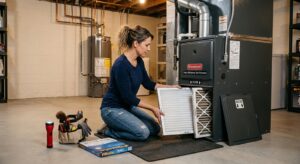
- While the furnace runs, locate the filter slot (usually on the return air side of the air handler or furnace cabinet) and pull out the existing filter. Hold it up to light. If you cannot see light through it, replace it immediately. A fresh filter costs $10 to $25 for a MERV 8 to 11 rating.
- Walk through the house and smell each supply vent. A uniform faint dusty smell is normal. A sharp electrical odor, a chemical smell, or anything resembling exhaust or rotten eggs coming from specific vents is a warning sign to shut the furnace off and call a technician.
- After 30 minutes, confirm the smell is gone. If it persists beyond one full heating cycle or returns every time the furnace runs, proceed to the DIY inspection approach or schedule professional service.
- Turn the furnace power switch OFF (usually a wall switch near the unit that looks like a light switch) and set the thermostat to OFF. Wait 10 minutes for components to cool before opening any panels.
- Replace the air filter with a MERV 8 to 11 pleated filter sized to match your existing filter dimensions. Write the replacement date on the filter frame with a marker and set a calendar reminder for 90 days out.
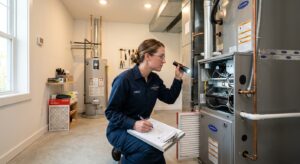
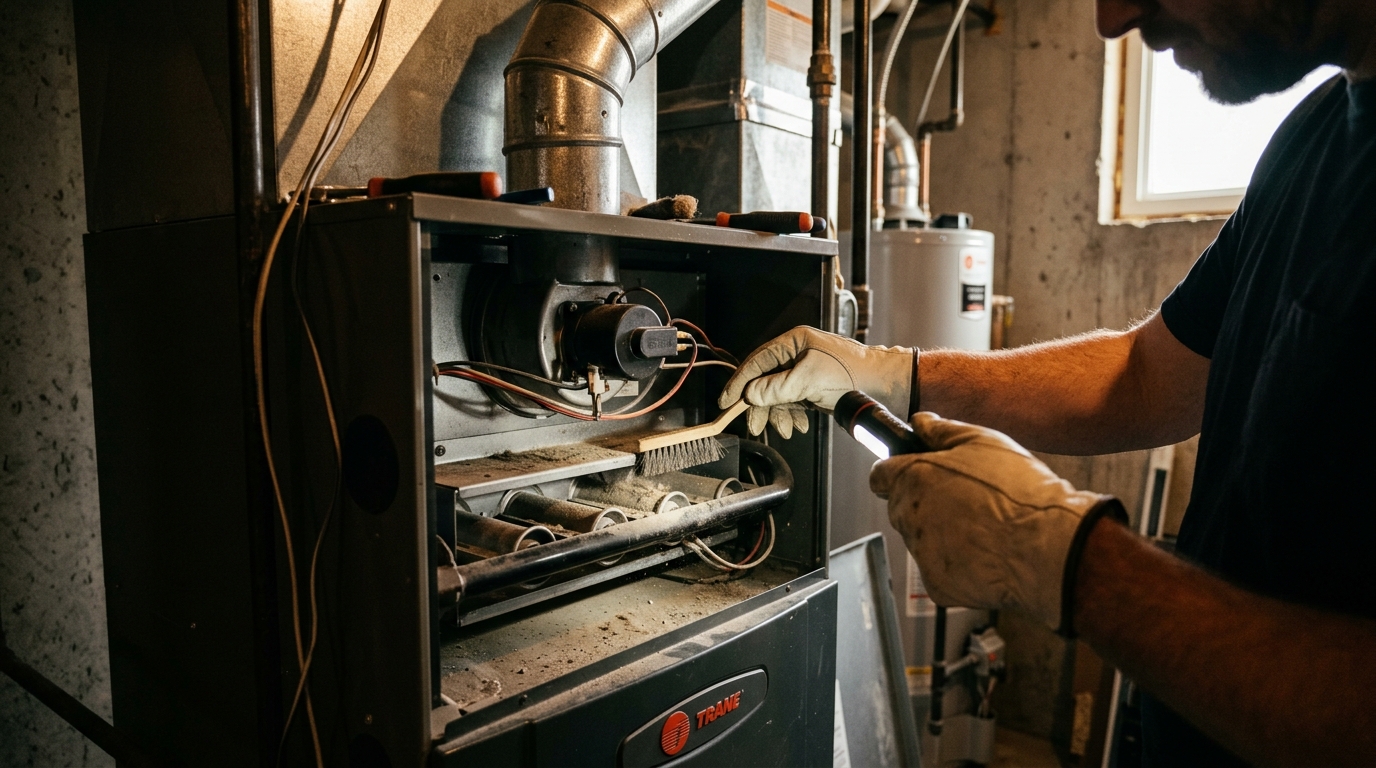
- Use a flashlight to inspect the burner flames if your furnace has a sight glass or removable access panel. Healthy burner flames are blue with a small yellow tip. If flames are primarily yellow or orange, the burners are dirty or the air-to-gas mixture is off, and you should call a technician before running the system.
- Vacuum inside the furnace cabinet around the blower motor and burner area using a vacuum with a brush attachment. Remove any visible dust, debris, or pet hair that has accumulated over the summer. This is the primary source of the fall startup smell.
- Inspect the accessible flue pipe sections above the furnace for rust, gaps, or disconnected joints. A separated flue pipe is a carbon monoxide hazard. If you see any gaps wider than 1/8 inch or rust holes, call a licensed HVAC technician before running the furnace.
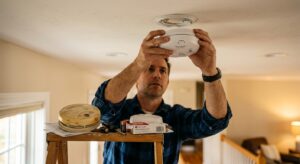
- Install a fresh carbon monoxide detector within 10 feet of the furnace and on each sleeping floor if you do not already have them. CO detectors cost $20 to $30 and should be replaced every 5 to 7 years. Restore power and run the first heating cycle with a window cracked, then check that the smell clears within 30 minutes.
- Schedule a furnace tune-up in September or early October before HVAC companies are overwhelmed with emergency calls. Many utilities offer rebates of $20 to $50 for documented annual maintenance, so check your provider before booking.
- Ask the technician specifically to test heat exchanger integrity using a combustion analyzer or chemical tracer test, measure gas pressure and combustion efficiency (AFUE), and clean the flame sensor and ignitor.
- Request a written report of the flue draft test results, combustion efficiency reading, and any components rated as marginal or near end of life. A properly tuned gas furnace should achieve 80 percent AFUE or higher; high-efficiency condensing furnaces should reach 90 to 98 percent.
- If the technician finds a cracked heat exchanger, do not operate the furnace until it is repaired or the unit is replaced. A cracked heat exchanger on a furnace older than 15 years typically warrants full system replacement since heat exchanger repair costs $500 to $1,500 and may not be warranted on aging equipment.
Why It Works: The Benefits
Running a quick fall inspection and filter change before the heating season starts lets you catch cracked heat exchangers, blocked flues, or faulty ignitors before they become emergencies in January. Carbon monoxide poisoning from a cracked heat exchanger sends roughly 100,000 people to emergency rooms annually in the US.
A clean filter, clean burners, and properly functioning blower can reduce heating energy consumption by 10 to 20 percent compared to a neglected system, according to the US Department of Energy. On a $200 monthly heating bill that is $20 to $40 saved every month through the winter.
Furnaces that receive annual maintenance last an average of 16 to 20 years. Neglected systems commonly fail within 12 to 14 years. At a replacement cost of $3,000 to $7,000, even one extra year of reliable operation more than pays for a season of maintenance.
Replacing a clogged filter and vacuuming accessible duct surfaces at startup removes trapped allergens, mold spores, and fine particles before they recirculate all winter. A MERV 8 to 11 filter captures particles down to 1 to 3 microns, including pet dander and dust mite debris.
Preventive fall maintenance reduces the likelihood of a mid-winter breakdown by catching worn ignitors, dirty flame sensors, and failing capacitors early. Emergency HVAC service calls typically cost $150 to $400 in labor alone, often more on nights and weekends.
💰 Savings Impact by Action
Replacing a clogged filter restores proper airflow and reduces blower energy consumption by up to 15 percent according to the US Department of Energy.
Clean burners restore proper air-to-fuel combustion ratio and can recover 5 to 10 percent of fuel efficiency lost to dirty or misaligned burners.
A professional annual tune-up maintains factory combustion efficiency and reduces the risk of mid-season breakdowns that force the system to run in a degraded state all winter.
Sealing leaky ducts in unconditioned spaces prevents 20 to 30 percent of heated air from escaping before it reaches living areas, per ENERGY STAR estimates.
🏠 Key Concepts Explained
The Science Behind It
The burning smell from a furnace on first startup is almost always the combustion of settled dust particles. Over a summer of sitting idle, household dust, pet dander, skin cells, and fibrous particles settle on every warm surface inside the furnace: the heat exchanger shell, the burner tubes, and the inside walls of the duct system closest to the unit. When the burners ignite and the heat exchanger reaches operating temperatures of 150 to 200 degrees Fahrenheit, this organic material oxidizes rapidly. The result is a sharp, dusty, sometimes acrid smell that most homeowners recognize immediately.
What makes this process self-limiting is simple chemistry: once the dust layer is burned away, there is nothing left to combust and the smell disappears. This is why the odor resolves after one full heating cycle under normal circumstances. However, if the filter is badly clogged, the blower is pushing air inefficiently, or the system is short-cycling because of a thermostat issue, the burn-off takes longer and the smell can persist across multiple cycles, mimicking a more serious problem.
A cracked heat exchanger is the scenario every technician is trained to check for, because it is invisible to the naked eye and genuinely dangerous. The heat exchanger flexes thermally with every heating and cooling cycle. Over 15 to 20 years, this cyclic stress creates micro-fractures in the metal. Because combustion gases (including carbon monoxide) are under slight positive pressure inside the exchanger, they can migrate through even hairline cracks into the supply air stream. CO is odorless at normal concentrations, which is why a cracked heat exchanger can be dangerous without producing any smell at all. This is also why CO detectors are non-negotiable in any home with a gas furnace.
Frequently Asked Questions
▼ The burning smell came back after the second time I ran the furnace this fall. Is that normal?
A smell that returns on the second or third heating cycle is not typical and warrants investigation. Start by replacing the air filter if you have not already, then vacuum inside the furnace cabinet around the blower and burners. If the smell persists beyond a third cycle or has an electrical or chemical character rather than a dusty one, schedule a professional inspection before continuing to run the system.
▼ My furnace smells like burning plastic, not just dust. Should I be worried?
Yes. A burning plastic smell is not normal dust burn-off and usually indicates an overheating electrical component, a wire with damaged insulation, or a foreign object (like a toy or plastic bag) that fell into a duct or near the heat exchanger. Turn the furnace off immediately, check accessible duct openings near the unit for visible debris, and call an HVAC technician if you cannot identify the source yourself. Do not operate the furnace until the cause is found.
▼ How do I know if my heat exchanger is cracked if I cannot see it?
Visual inspection through the sight glass can sometimes reveal obvious rust holes or cracks, but most heat exchanger failures are invisible without proper testing. Signs that suggest a problem include a persistent burning or exhaust-like smell during heating cycles, unexplained headaches or nausea in family members during the heating season, and CO detector alarms. A licensed HVAC technician can perform a combustion analysis or tracer gas test to confirm integrity. If your furnace is over 15 years old, annual professional inspection is the best protection.
▼ Can I just ignore the smell if it goes away on its own?
If the smell is brief (under 30 minutes), occurs only on the very first heating cycle of the fall, and smells like dry dust rather than chemicals or electricity, it is safe to let it burn off. However, this is a good reminder to replace your filter and do a quick cabinet inspection. Ignoring it entirely without those basic steps means you may miss a dirty filter that is straining the blower motor or a piece of debris that could cause a real problem later in the season.
▼ My house smells like burning for hours after the furnace runs. What is going on?
A smell that lingers for hours after the furnace shuts off suggests either a heavily loaded duct system recirculating combusted particles, or something organic trapped in the ducts themselves such as a dead rodent, significant mold growth, or accumulated debris from a badly clogged filter that has been in place for many months. Check and replace the filter first. If the smell has any organic or decay quality rather than a clean dusty odor, have your ducts inspected and consider professional duct cleaning, which typically costs $300 to $500 for a whole-house system.
Quick Tips
- Set a recurring calendar reminder for September 15th each year to do your fall furnace check before the first cold night catches you off guard.
- If you have pets, check your filter monthly during heating season instead of quarterly. Pet hair cuts filter life roughly in half and is a major contributor to the startup burning smell.
- Keep the area around your furnace clear of stored items, cardboard boxes, and laundry. Combustible materials within 3 feet of the furnace can ignite from radiant heat and create a genuine burning smell that is not dust.
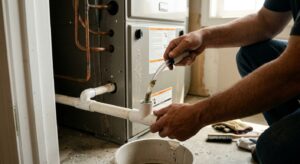
- If you have a high-efficiency condensing furnace with a white PVC flue pipe, also check the condensate drain line each fall. A clogged condensate drain causes the furnace to lock out on a safety switch, which homeowners often misdiagnose as a heating failure unrelated to their startup smell concerns.
Variations for Your Situation
- Apartment or Condo: Renters in apartments typically have fan coil units or heat pumps rather than a gas furnace, so the cracked heat exchanger risk does not apply. However, the same dust burn-off smell occurs when electric resistance heating elements fire up for the first time. Replace the unit filter if your lease allows it (most do), vacuum accessible vent covers, and notify your building manager in writing if the smell persists beyond one cycle so there is a documented record. CO detectors are still strongly recommended even in all-electric buildings.
- Tight Budget (under $30): Focus on the two highest-impact free steps: replace the filter (a basic MERV 8 filter costs $10 to $15) and vacuum inside the accessible furnace cabinet with your household vacuum. These two steps address 80 percent of normal startup smell causes and also improve airflow efficiency enough to reduce heating bills by 5 to 10 percent. Hold off on professional service unless you detect a non-dust smell or the odor persists beyond the first cycle.
- Older Home (pre-1980): Homes built before 1980 often have original or early-replacement furnaces with higher heat exchanger failure rates, unlined flue tiles, and duct systems with significant leakage. Do not rely on DIY inspection alone. Budget $80 to $150 for a professional fall tune-up that includes a heat exchanger test and flue draft measurement. Also check that your CO detectors are less than 7 years old, since older detectors lose sensor sensitivity and may not alarm at dangerous concentrations.