It is one of the most common misconceptions in home improvement: if you add more insulation, your home will be quieter. Or if you hang acoustic panels, your heating bills will drop. Walk into any home improvement store and you will see products marketed with vague language like “insulating” and “sound-absorbing” used almost interchangeably. But thermal insulation and soundproofing are governed by completely different physical principles, and a product that excels at one often does little or nothing for the other.
This matters in practical terms because homeowners make expensive mistakes every year. They blow cellulose into an attic hoping to dampen the noise from a busy road, or they line a wall with acoustic foam thinking it will cut their heating bills. Neither works as hoped. Understanding the difference upfront can save you hundreds or even thousands of dollars in misapplied products and wasted labor, and help you actually solve the problem you set out to fix.
In this post, you will learn exactly how thermal insulation and soundproofing work, where they overlap (and where they do not), and how to choose the right solution for your specific goal. Whether you want a quieter bedroom, lower energy bills, or ideally both, this guide gives you a clear, science-backed action plan.
What You’ll Need
Click on an item below to shop for the recommended items for this recipe on Amazon.
As an Amazon Associate, we earn from qualifying purchases.
How to Do It
- Walk through your home and identify the top noise and draft complaint areas: electrical outlets on exterior walls, gaps around plumbing penetrations under sinks, attic hatches, and gaps at the base of interior walls.
- Use a lit incense stick or a damp hand near suspected gaps on a windy day to locate air leaks. A flickering flame or cold sensation confirms a pathway for both air and sound.
- Apply acoustical caulk (not standard painter’s caulk) around outlet boxes, pipe penetrations, and window frames. Acoustical caulk stays flexible and resists vibration transmission better than rigid caulk.
- Install foam gaskets behind outlet and switch cover plates on exterior walls. These cost about $0.50 each and reduce both thermal and acoustic leakage at one of the most common breach points.
- Add a door sweep to any interior door separating a noisy space (home office, bedroom, laundry room) from living areas. A good sweep costs $15 to $25 and drops perceived sound levels noticeably.
- Check your attic hatch. An unsealed attic hatch is a major thermal and acoustic weak point. Add weatherstripping around the perimeter and rigid foam board on the back of the hatch panel for R-10 or better.
- Define your primary goal in writing before purchasing anything. Write down: ‘I want to reduce noise from the street’ or ‘I want to stop heat loss through this exterior wall.’ This prevents buying the wrong product category entirely.
- For a THERMAL goal on an exterior wall: add rigid foam board insulation (polyisocyanurate, R-6 per inch) to the interior face of the wall before re-drywalling. A single inch of foam adds R-6 and nearly eliminates thermal bridging through studs. This alone can cut wall heat loss by 30 to 40% compared to a batt-only assembly.
- For an ACOUSTIC goal on a shared interior wall: do not add foam board. Instead, add a layer of 5/8-inch Type X drywall over the existing surface using resilient channels spaced 24 inches on center. Resilient channels decouple the new drywall from the stud framing, preventing structure-borne sound transmission. Apply damping compound between the old and new drywall layers.
- For the acoustic approach, seal every penetration in the new layer with acoustical caulk before finishing. A single unsealed gap the size of a keyhole can reduce an STC 50 wall back to STC 35 due to flanking paths.
- For the thermal approach, tape all rigid foam seams with foil tape to create a continuous air barrier, then install new drywall. This also closes flanking paths for air leakage and provides a modest acoustic improvement as a secondary benefit.
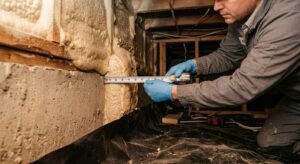
- After completing either upgrade, measure your results: use a plug-in energy monitor and compare monthly utility bills for the thermal upgrade, or use a free decibel meter app on your phone to compare sound levels before and after the acoustic upgrade.
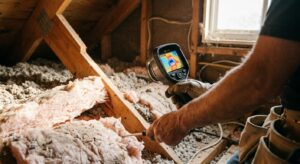
- Schedule a professional energy audit with a BPI-certified auditor. They use a blower door test to measure your home’s total air leakage in CFM50, identify thermal bridging with infrared cameras, and give you a prioritized list of upgrades ranked by payback period. Audits typically cost $150 to $400 but often pay for themselves by preventing misguided upgrades.
- For acoustic concerns, hire an acoustic consultant for a sound level survey before specifying any materials. They measure background noise levels (in dB) and identify whether your problem is airborne sound (voices, traffic), structure-borne sound (footsteps, mechanical vibration), or flanking paths. The solution is completely different for each.
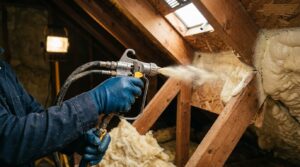
- For a thermal upgrade, request dense-pack cellulose injection into existing wall cavities. This can be done without removing drywall and raises wall R-value from near R-0 (in an empty cavity) to R-13 to R-15, cutting wall heat loss by up to 50%. Payback is typically 4 to 7 years in cold climates.
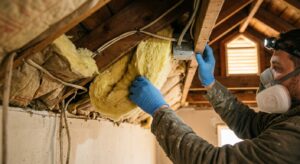
- For a serious acoustic upgrade, ask the contractor to specify a full decoupled assembly: staggered stud or double stud wall, mineral wool batt in cavities (which has a higher density than fiberglass and improves both STC and R-value modestly), two layers of 5/8-inch drywall with damping compound, and acoustical caulk at all perimeter joints.
- Confirm in writing which performance metric the contractor is targeting: R-value for thermal work or STC rating for acoustic work. A contractor who cannot specify both correctly may not understand the distinction.
Why It Works: The Benefits
When you correctly identify your goal, thermal or acoustic, you spend money on materials proven to solve that problem. Homeowners who conflate the two often spend $500 to $2,000 on products that deliver neither meaningful energy savings nor noticeable noise reduction.
Properly specified thermal insulation upgrades, such as bringing an attic from R-19 to R-49, can reduce heating and cooling loads by 15 to 30%, translating to $200 to $600 per year in savings for a typical 2,000-square-foot home in a mixed climate.
A correctly built soundproof wall assembly with decoupling and damping compound can improve STC by 15 to 20 points, reducing perceived loudness by roughly 75%. Acoustic foam alone, which many homeowners reach for first, does not block sound transmission at all.
Proper thermal insulation eliminates cold spots and radiant discomfort near walls in winter, while a well-sealed and insulated envelope keeps indoor temperatures within 2 to 3 degrees Fahrenheit of the thermostat setpoint even during peak outdoor temperature swings.
Sealing penetrations and gaps with acoustical caulk costs as little as $20 to $50 in materials and simultaneously closes pathways for heat loss and flanking sound transmission, making it the single highest-value action for homeowners who want both quieter and more energy-efficient spaces.
💰 Savings Impact by Action
Sealing gaps and penetrations with acoustical caulk reduces conditioned air loss by up to 20% annually and simultaneously closes flanking sound paths.
Upgrading attic insulation from R-19 to R-49 reduces heating and cooling loads by 15 to 25% because the attic is the largest thermal bypass in most homes.
Adding one inch of rigid polyisocyanurate to interior wall faces reduces wall heat loss by 30 to 40% by creating a thermal break across the stud framing.
Injecting dense-pack cellulose into previously empty wall cavities reduces whole-wall heat loss by up to 50% compared to an empty cavity, contributing 10 to 15% to overall heating and cooling savings.
Thermal curtains on single-pane windows reduce window heat loss by 10 to 25%, which can account for 10 to 12% of total heating energy in older homes with large window areas.
🏠 Key Concepts Explained
The Science Behind It
Thermal insulation works by slowing conductive and convective heat transfer. Materials like fiberglass, cellulose, and foam trap air in tiny pockets, preventing heat molecules from moving efficiently from one side of a wall to the other. The R-value system quantifies this resistance: every additional R-1 reduces heat transfer by a measurable percentage based on the temperature differential across the assembly. The governing equation is simple: Heat Flow (BTU/hour) equals Area times Delta-T divided by R-value. Doubling R-value halves heat flow, which is why going from R-13 to R-38 in an attic makes a dramatic difference in energy consumption.
Sound, by contrast, is mechanical energy traveling as pressure waves through air and solid materials. To block sound, you need to convert that mechanical energy into something else, typically heat, through mass and damping, or interrupt its path through decoupling. The Mass Law explains why a heavier wall blocks more sound: denser materials are harder to vibrate. Damping compounds (viscoelastic materials applied between drywall layers) convert vibrational energy into tiny amounts of heat as the material flexes. Decoupling with resilient channels breaks the rigid connection between wall surfaces so that vibrations cannot travel as structure-borne sound from stud to drywall. None of these mechanisms have any meaningful effect on thermal resistance.
The one genuine overlap is air sealing. Air gaps are thermal bypasses that allow convective heat transfer to short-circuit even well-insulated assemblies, and they are also direct acoustic flanking paths where sound travels freely regardless of how massive or damped the surrounding wall is. A gap equivalent to 1% of a wall’s surface area can transmit as much sound as the remaining 99%, and the same gap can cause a well-insulated wall to lose heat faster than a poorly insulated one with no gaps. This is why acoustical caulk, which stays permanently flexible to maintain a seal through seasonal movement, is the one product category that genuinely advances both goals at once.
Frequently Asked Questions
▼ I added insulation to my walls but my home is still noisy. What went wrong?
Standard insulation batts add very little acoustic performance on their own, typically only 3 to 5 STC points, because blocking sound requires mass and decoupling, not just a soft fill material. To meaningfully reduce noise through an existing wall, you need to add mass (an extra layer of drywall), decoupling (resilient channels), and damping compound between layers. If the wall is already built, the most cost-effective next step is to add a second drywall layer on resilient channels over the existing surface without opening the wall.
▼ Will acoustic foam panels help keep my room warmer?
No. Acoustic foam panels are typically only 1 to 4 inches thick and made of open-cell foam with very low R-value, usually around R-0.5 to R-1 total. They absorb sound reflections within the room but do nothing to reduce heat loss through the wall behind them. If you want to improve thermal performance, you need closed-cell spray foam or rigid foam board with proper air sealing, which are entirely different products with entirely different installation methods.
▼ Can I get both better soundproofing AND lower energy bills from one project?
Yes, but you need to layer the solutions deliberately rather than hoping one product does both jobs. Start with thorough air sealing using acoustical caulk (this is the true overlap). Then add rigid foam board for thermal performance and a decoupled drywall layer for acoustic performance. The combined project costs more but addresses both goals with materials proven to work, and the incremental labor cost of doing both at once is much lower than doing them separately.
▼ My contractor says adding more insulation will make my home quieter. Is that accurate?
Partially, but the effect is modest. Filling an empty wall cavity with any insulation material does reduce sound transmission somewhat because the material damps vibrations inside the cavity, but a filled standard wall cavity typically achieves STC 38 to 42 compared to STC 33 for an empty cavity. That is a real but small improvement. For serious noise reduction, you need decoupling and added mass, which are architectural changes, not just insulation additions. Ask your contractor to specify an STC target, not just an R-value target.
▼ What if I rent and cannot modify the walls? Can I still address both noise and heat loss?
For thermal issues, thick curtains with a thermal liner can reduce radiant heat loss through windows by 10 to 25% and also add a small amount of sound absorption. Heavy rugs with a dense pad underneath reduce impact noise transmission to the unit below and provide minor thermal mass. For noise, a white noise machine addresses perception without touching any wall assembly. These are comfort improvements, not true soundproofing or insulation upgrades, but they are renter-safe and cost $50 to $200 total.
Quick Tips
- Always identify your primary goal (thermal or acoustic) before buying any products. Write it down and match every purchase to that goal before spending a dollar.
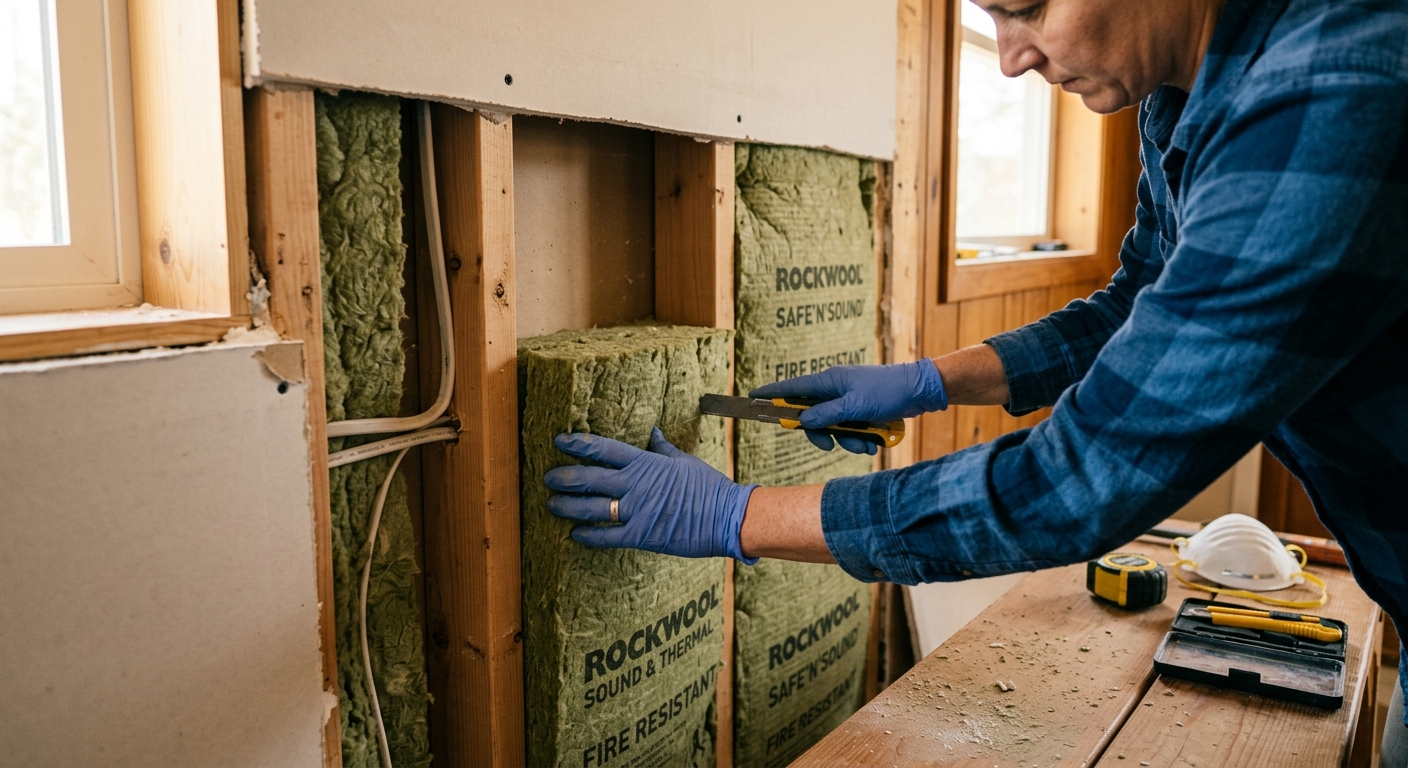
- Mineral wool (Rockwool) batt insulation is the closest thing to a dual-purpose product: it has an R-value of about R-4 per inch (similar to fiberglass) AND a higher density that provides meaningful STC improvement in wall cavities, roughly STC 45 in a standard assembly compared to STC 38 with fiberglass.
- Flanking paths ruin acoustic projects. Sound travels around walls through shared floor joists, ceiling plenums, and HVAC ducts. Sealing duct penetrations with acoustical caulk and lining short duct runs with duct liner can reduce flanking by 5 to 10 STC points.
- Do not confuse soundproofing with sound absorption. Acoustic panels and foam improve the sound quality inside a room by reducing echo. Soundproofing prevents sound from entering or leaving. They are different problems requiring different products, and a room can need both.
Variations for Your Situation
- Apartment/Rental: Renters cannot modify wall assemblies, but heavy thermal curtains (look for curtains with a quilted or multi-layer liner rated for thermal performance) placed close to windows can reduce window heat loss by 10 to 25% and modestly reduce outside noise through the glass. Adding a dense area rug with a thick pad addresses both impact sound transmission downward and adds thermal comfort underfoot. Budget $100 to $300 for curtains and $80 to $200 for a quality rug pad combination.
- Tight Budget (under $50): Focus entirely on air sealing since it is the only action that genuinely improves both thermal and acoustic performance at once. A tube of acoustical caulk costs $6 to $10, foam outlet gaskets are $5 for a pack of ten, and a door sweep runs $15 to $25. Spending $40 to $50 on these three items and one afternoon of installation can meaningfully reduce drafts and lower flanking noise paths without touching a single wall assembly.
- Older Home (pre-1980): Homes built before 1980 often have empty wall cavities with no insulation at all, single-pane windows, and extensive air leakage through plaster cracks and uninsulated attic hatches. The thermal and acoustic deficiencies are both severe, but the priority order is: (1) air seal the attic floor and attic hatch for the highest thermal payback, (2) have dense-pack cellulose blown into wall cavities which addresses both thermal (R-13 to R-15) and acoustic goals modestly, and (3) replace single-pane windows with double-pane units rated for both thermal (low U-factor) and acoustic (STC 28 to 35) performance.