You crank up the heat, wait an hour, and the rest of the house feels fine – but your master bedroom still hovers 5 to 8 degrees colder than the living room. You pile on extra blankets, maybe run a space heater, and accept it as just the way things are. The problem is, that temperature gap is costing you money every single month and pointing to at least one fixable flaw in your home’s thermal envelope or distribution system.
Master bedrooms are almost always located at the far end of the house, frequently over a garage or exterior-facing corner, and often on the second floor. Each of these positions creates a unique vulnerability: more exterior wall exposure, greater distance from the furnace, and proximity to the attic – one of the biggest sources of heat loss in any home. The room is essentially surrounded by cold on multiple sides while being the last stop on the heating system’s delivery route.
This post walks through the six most common reasons a master bedroom runs cold, how to diagnose which one is affecting your home, and three levels of fixes from a free 15-minute adjustment to a weekend DIY project. You will find real numbers on what each fix saves, how long it takes to pay back, and when to call in a professional.
What You’ll Need
Click on an item below to shop for the recommended items for this recipe on Amazon.
As an Amazon Associate, we earn from qualifying purchases.
How to Do It
- Check every supply vent in the bedroom and make sure none are blocked by furniture, curtains, or rugs. A vent even partially obstructed by a bed frame can reduce airflow by 30 to 50%.
- Open the vent damper fully by rotating the lever parallel to the airflow direction, then walk through every other room and partially close vents in rooms that are already comfortable. This redirects pressure toward the underserved bedroom.
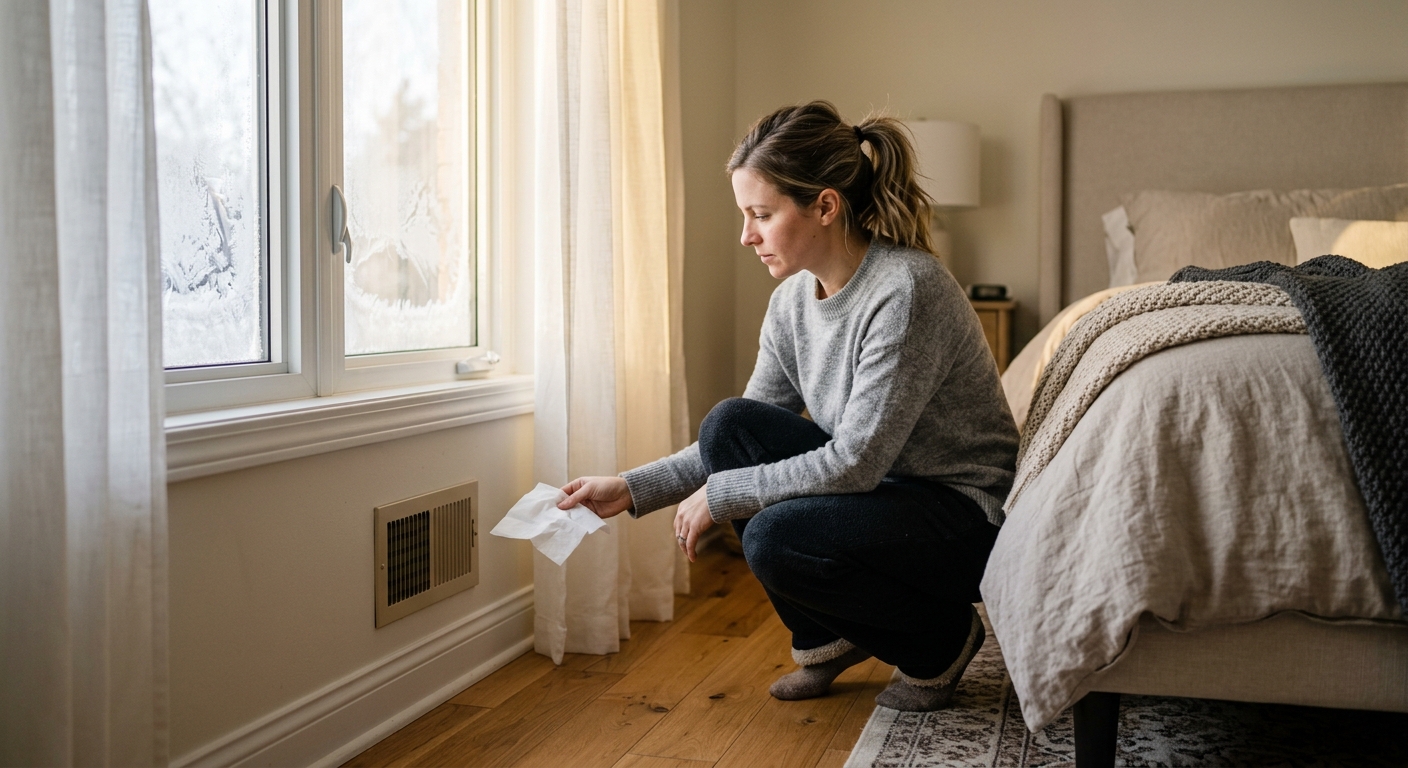
- Close the bedroom door and hold a thin piece of tissue near the bottom gap. If it gets sucked toward the door, you have a return air imbalance. Fix it by trimming 1 inch from the bottom of the door to allow air to return to the central return, or install a 4×12 inch transfer grille in the wall.
- Check the attic access hatch if it is in or near the master bedroom. Press your hand near its edges during a cold night. If you feel cold air, add foam weatherstripping around the hatch frame and place a rigid foam insulation panel on top of the hatch door.
- Check the furnace filter. A clogged filter reduces static pressure across the whole system, but rooms farthest from the air handler suffer most. Replace any filter you cannot see light through.
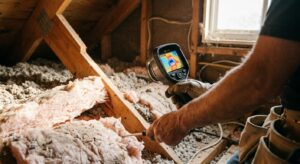
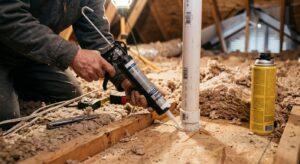
- Go into the attic above the master bedroom on a cold day and look for frost or moisture, which marks where warm air is escaping. Use a can of spray foam to seal around any ceiling light fixtures (use fire-rated foam for recessed cans), wire penetrations, and plumbing stacks.
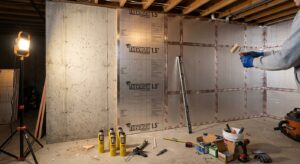
- Seal the top plate – the framing at the very top of the bedroom walls – with caulk or low-expansion spray foam. This band of framing is the single most common attic bypass and can account for 10 to 20% of a home’s total air leakage.
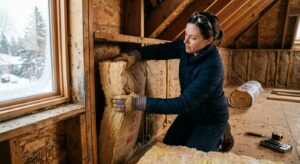
- Check the attic insulation depth directly above the bedroom. Current DOE recommendations for most climates call for R-38 to R-60. If you see less than 10 inches of fiberglass batts or 8 inches of cellulose, add insulation until you reach the recommended depth. Blown-in cellulose costs roughly $0.50 to $1.00 per square foot as a DIY project.
- Inspect exterior-facing walls for outlets and switch plates. Remove the covers, press a finger into the gap around the electrical box, and seal it with a pre-cut foam gasket (sold in packs for about $5). These small gaps are surprisingly effective cold air entry points.
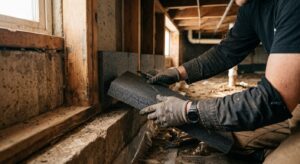
- Weatherstrip the bedroom window if it rattles or you can feel cold air when you stand within 12 inches of the glass. Use V-strip weatherstripping on the sash channels and apply a bead of removable window rope caulk along the interior glass edge for the season.
- If the bedroom is over a garage, check the ceiling of the garage for insulation batts between the floor joists. Add R-19 or R-30 batts if the cavity is empty, which can raise floor temperature in the bedroom above by 4 to 8 degrees.
- Hire an HVAC technician to perform a duct leakage test (duct blaster test) on your system. Industry averages show 20 to 30% of conditioned air is lost through duct leaks before it reaches living spaces, and a bedroom at the end of a long run bears the worst of it.
- Request that the technician measure airflow at each supply register using an airflow hood. This tells you exactly how many cubic feet per minute each room receives versus what it should receive based on its square footage.
- Have the technician adjust or install balancing dampers inside the duct branches feeding well-served rooms, redirecting pressure to the master bedroom. On some systems this is a 30-minute adjustment; on others it requires adding a damper for $50 to $150 in parts.
- Ask about adding a dedicated return air grille in the master bedroom if the room is consistently pressurized (door bows outward slightly when closed). This is a 1 to 2 hour job and is often the single most impactful change for a pressure-starved room.
- If the duct run to the bedroom exceeds 35 feet, ask about insulating the duct itself if it passes through an unconditioned attic or crawlspace. Uninsulated ducts lose 10 to 15% of their heat content before the air arrives, and wrapping them with R-6 duct wrap pays back in 2 to 3 heating seasons.
Why It Works: The Benefits
Addressing duct balance and air sealing typically closes a 5 to 8 degree temperature gap between rooms, eliminating the need for supplemental space heaters and making the room genuinely comfortable overnight.
Sealing attic bypasses and adding insulation above a master bedroom can reduce whole-home heating costs by 10 to 25%, with the DOE reporting average annual savings of $200 to $600 for homes that upgrade attic insulation from R-11 to R-49.
A 1,500-watt space heater running 8 hours a night costs roughly $40 to $55 per month at average electricity rates. Fixing the root cause eliminates that ongoing expense within one or two heating seasons.
Sleep researchers consistently find that 65 to 68 degrees Fahrenheit is the optimal bedroom temperature for deep sleep. Fixing a cold master bedroom means you can actually reach and hold that target temperature without waking up cold at 3 a.m.
When one room stays cold, the thermostat in a warmer part of the house satisfies before the bedroom reaches setpoint, causing the system to cycle more frequently. Balancing airflow reduces short-cycling and can extend furnace life by several years.
💰 Savings Impact by Action
Sealing attic bypasses above the bedroom reduces conditioned air loss by up to 20% of total heating energy, per Lawrence Berkeley National Laboratory estimates.
Upgrading attic insulation from R-11 to R-49 above a master bedroom reduces heat loss through the ceiling by up to 25%, lowering whole-home heating costs proportionally.
Correcting duct imbalances and sealing duct leaks restores up to 15% of heating output that was previously lost before reaching the bedroom.
Adding a proper return air path to a pressure-imbalanced bedroom can increase heat delivery to that room by up to 25%, reducing whole-system run time by roughly 10 to 12%.
Weatherstripping and caulking a single drafty bedroom window reduces infiltration heat loss through that opening by up to 30%, contributing roughly 5 to 10% to overall room heating efficiency.
🏠 Key Concepts Explained
The Science Behind It
Heat moves in three ways: conduction (through solid materials), convection (through air movement), and radiation (electromagnetic waves between surfaces). A cold master bedroom is usually losing heat through all three simultaneously. The exterior walls and attic floor conduct heat outward, the stack effect drives cold air infiltration through gaps in the building envelope, and your body radiates warmth toward cold window glass and uninsulated walls whether or not the air temperature has caught up yet.
The duct system adds a fourth layer of complexity. Forced-air furnaces move heat by pressurizing warm air into supply ducts and pulling return air back to the air handler. This system is only as balanced as its design allows. When a bedroom sits at the end of a long duct branch, friction loss reduces both the pressure and the volume of air delivered. The American Society of Heating, Refrigerating and Air-Conditioning Engineers (ASHRAE) recommends that no supply duct run exceed a pressure drop of 0.1 inches of water column per 100 feet, but many residential systems, especially those that have been modified over the years, far exceed this limit on bedroom branches.
Attic bypasses are the most underappreciated factor. Warm air at ceiling level is under slight positive pressure from the HVAC system, and any gap – a recessed light, a top plate crack, a wire hole – acts as a chimney. The buoyancy of warm air means it actively pushes into these gaps and rises into the cold attic, pulling cold air in behind it through lower-level cracks. The Lawrence Berkeley National Laboratory has estimated that sealing these bypasses in a typical home is equivalent to closing a 1.5 square-foot hole in the exterior wall. Sealing them above the master bedroom first attacks the problem where the thermal stakes are highest.
Frequently Asked Questions
▼ Why is my master bedroom cold even though the vent is blowing warm air?
A vent blowing warm air but low volume is the most common version of this problem. Put your hand over the vent and compare the airflow force to a vent in a room that stays comfortable. If it feels weak, you have a duct flow issue. Partially closing vents in well-served rooms for one week will tell you quickly if the problem is system pressure versus insulation.
▼ My bedroom is over the garage and it is always freezing. What is the fastest fix?
The garage ceiling is almost certainly uninsulated or under-insulated. Head into the garage, look up at the floor joists, and check for insulation batts between them. Adding R-19 kraft-faced batts between the joists with the kraft facing upward toward the living space is a half-day project that typically raises floor temperature by 5 to 8 degrees and costs $60 to $120 in materials.
▼ We have a two-story house and only the second-floor master is cold. Is this an insulation or HVAC problem?
It is usually both, but start with the attic insulation and air sealing since second floors are directly below the biggest thermal weak point in the house. If the attic is properly insulated to R-38 or better and the room is still 5-plus degrees colder than downstairs, then duct pressure is the next suspect – second-floor duct runs are typically longer and the air has to travel against slight gravity effects, reducing delivery.
▼ Can I just use a space heater to fix the cold bedroom problem?
A space heater will keep you warm but costs $40 to $55 per month in electricity to run through a typical winter night, versus the $5 to $15 monthly difference a properly insulated and balanced room would add to your heating bill. Over one heating season, fixing the root cause almost always pays back the investment, and the space heater approach also signals to your thermostat that heat demand is satisfied, potentially underheating the rest of the house.
▼ I sealed the attic bypasses and added insulation but the room is still cold. What am I missing?
At this point the problem is almost certainly in the duct system. Schedule an HVAC service call and specifically request airflow measurements at each register – many technicians do not do this automatically unless asked. The combination of a duct leakage test and per-register airflow data will pinpoint whether you need a damper adjustment, a return air grille, or duct repairs upstream of the bedroom branch.
Quick Tips
- Run your heat at setpoint for one full hour, then use an inexpensive infrared thermometer to scan exterior walls and the ceiling of the bedroom. Cold spots below 55 degrees Fahrenheit on an interior surface on a 30-degree day almost always indicate a missing insulation batt or a significant air leak directly behind that spot.
- If the master bedroom shares a wall with a garage, that wall needs insulation rated for fire separation in addition to thermal performance. Use unfaced R-13 or R-15 batts covered with half-inch drywall, not just exposed batts.
- Thermal curtains on bedroom windows can reduce radiant heat loss by 25 to 30% on single-pane windows at a cost of $30 to $80 per window, making them one of the highest return-per-dollar investments for cold bedrooms.
- Smart vents that connect to a room sensor can automatically redirect airflow to an underserved room and cost $80 to $120 per vent. They are not a replacement for fixing duct leaks, but they are a practical solution when duct work is inaccessible.
Variations for Your Situation
- Apartment or Rental: Renters cannot modify ducts or attic insulation, but can make a meaningful difference with draft snakes at the door base ($10 to $20), thermal curtains on windows ($30 to $80), foam gaskets behind outlet covers (under $10 for a pack), and a smart space heater with a thermostat set to 65 degrees as a backup rather than a primary source. Ask your landlord in writing about any persistent temperature gap, as most jurisdictions require landlords to maintain minimum heating standards of 68 degrees Fahrenheit in living spaces.
- Tight Budget Under $50: Focus on the three zero-cost or near-zero-cost steps first: open the vent damper fully, trim the door for return air clearance, and rearrange furniture off any vents. Then spend $5 on foam outlet gaskets for every exterior-wall outlet in the room and $8 on rope caulk for window edges. Combined, these steps address infiltration and return air balance for under $15 and often close 30 to 50% of the temperature gap.
- Older Home Pre-1980: Homes built before 1980 typically have less than R-11 attic insulation, single-pane windows, and minimal wall insulation. The attic air sealing and insulation upgrade is especially high-value here – you may be starting from essentially no thermal protection above the bedroom. Prioritize sealing top plates and around any penetrations before adding insulation layers, since blowing new insulation over unsealed bypasses just buries the problem. Budget $300 to $500 for a full attic air seal and insulation upgrade to R-49 in a bedroom section, with an expected payback of 2 to 4 years in fuel savings.